

Tech
Christian Militants Are Using Instagram to Recruit—and Becoming Influencers in the Process

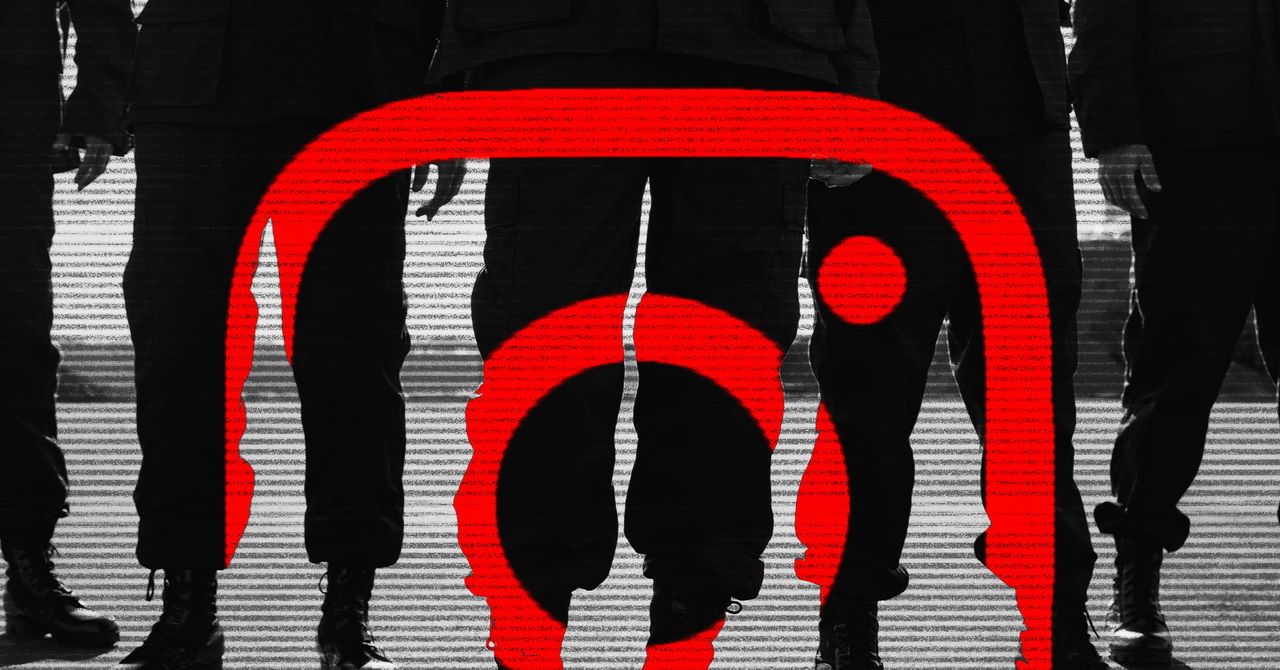
Many of these Christian nationalist militia groups also call themselves “guerillas” as opposed to militias, implying that their “enemy” is the government rather than civilian population. While Jon Lewis, a research fellow at the program on extremism at George Washington University, is alarmed by the brandification of overtly accelerationist or Christian nationalist content on Instagram, he’s skeptical that the armed groups pose a genuine threat. “They do their off-the-grid guerilla training, they shoot their video for their Instagram account, and then they go back to their mom’s basement,” he said. “I’m not sure how many of these 16-year-olds are really prepared for a real guerilla warfare campaign against the US military.”
This new movement of Christian nationalist militias online sits at a growing crossover between gun culture and Christian nationalism, a union perhaps best exemplified by the popularity of Christian “guntuber” Lucas Botkin and the company he founded, “T-Rex Arms.” In this Venn diagram of subcultures, culture war rhetoric is paired with exhortations to take up arms to protect Christian and traditional family values.
“The guns help push the religion, and the religion helps push the guns,” says Lewis. “You get these networks that are steeped in that kind of rhetoric, and when you combine that with offline mobilization and weapons training, it doesn’t really bode well.”
Instagram is already home to a sprawling and well-established community of gun enthusiasts, tactical gear brands, and firearms influencers, and abounds with potential recruitment opportunities for this emergent paramilitary movement. It’s not uncommon for groups of firearms enthusiasts to gather in the woods on the weekends to engage in airsoft training or hunting. What sets this movement apart from more legitimate “sports” organizations is their emphasis on recruitment and the fact they conceal their faces in imagery, says Paul. “And then there’s the explicit Christian ideology they’re trying to push.” (WIRED attempted to contact several accounts in this ecosystem; some initially agreed to be interviewed, before growing suspicious that this reporter was “a fed.”)
It’s not exactly clear what this new crop of Bible-thumping paramilitary extremists thinks they’re preparing or fighting for, given that President Donald Trump took office in January and stacked his administration with Christian nationalists.
Since the emergence of the modern militia movement in the late 1980s, paramilitary activity has typically waxed and waned according to whichever political party was in power. Higher levels of paramilitary activity were generally observed during Democratic administrations, as movement leaders could rabble rouse and recruit around perceptions of an overreaching government or looming gun control, as well as conspiracy theories about a coming “New World Order.” (To that end, Kill Evil sells a t-shirt emblazoned with the slogan “Christ World Order.”) That pattern broke during the first Trump Administration, as militia activity surged, galvanized by the mainstreaming of conspiracy theories and anti-government sentiment.
Groups within this new guard make their political views known through the type of content they share to Instagram Stories, which delete after 24 hours: for example, screenshots of posts by white nationalist Jared Taylor about immigration, posts about declining birth rates, or anti-Muslim memes. As for their broader mission, these militant influencers are generally preparing for “end times,” they tend to say, though it’s not always clear what that means. Some take an accelerationist approach, preparing for a conflict that they see as an inevitable response to “degeneracy” and political decay. “There is no more political solution,” one account posted in July, along with a photograph of a Roman bust portraying the Greek god of war, Ares, in Tivoli, Italy. “Some hills are worth dying on, if not for yourself, for your children.” For others, the mission may be more about a primordial battle between good and evil, and coming “armageddon.”
“If you don’t train, you’ll die,” one account posted, along with a photograph of a man in a skull mask and a long gun. “Get together with friends, family, or do it alone. Whatever you gotta do, make sure that YOU aren’t a liability.”












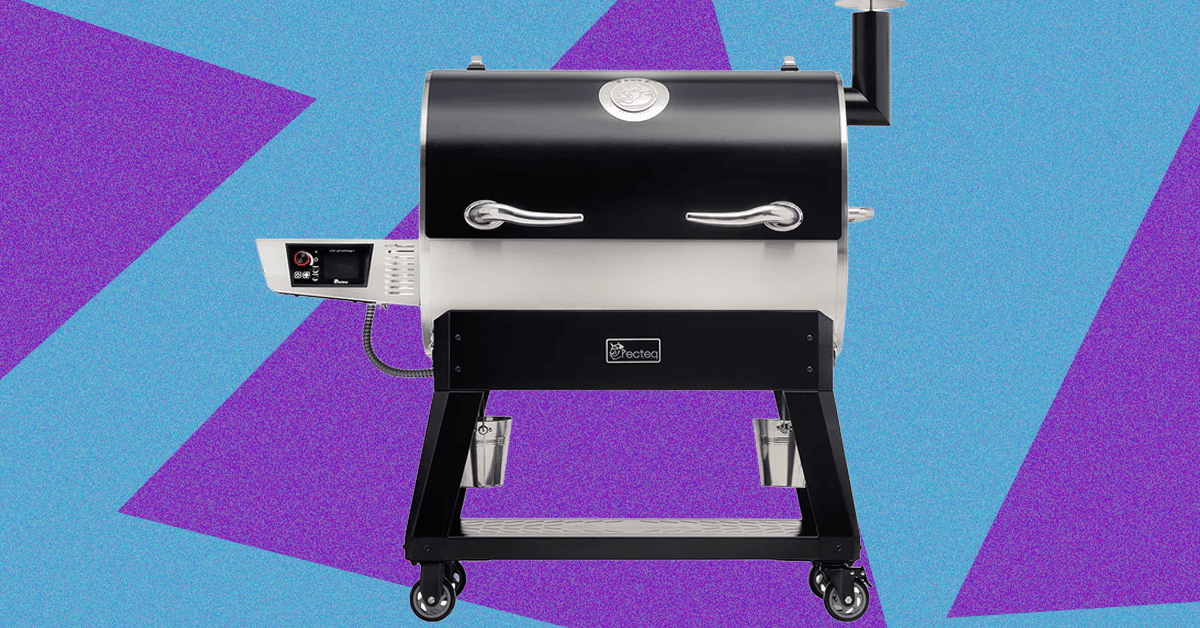
While my love of smoked meats is well-documented, my own journey into actually tending the fire started just last spring when I jumped at the opportunity to review the Traeger Woodridge Pro. When Recteq came calling with a similar offer to check out the Flagship 1600, I figured it would be a good way to stay warm all winter.
While the two smokers have a lot in common, the Recteq definitely feels like an upgrade from the Traeger I’ve been using. Not only does it have nearly twice the cooking space, but the huge pellet hopper, rounded barrel, and proper smokestack help me feel like a real pitmaster.
The trade-off is losing some of the usability features that make the Woodridge Pro a great first smoker. The setup isn’t as quite as simple, and the larger footprint and less ergonomic conditions require a little more experience or patience. With both options, excellent smoked meat is just a few button presses away, but speaking as someone with both in their backyard, I’ve been firing up the Recteq more often.
Getting Settled
Photograph: Brad Bourque
Setting up the Recteq wasn’t as time-consuming as the Woodridge, but it was more difficult to manage on my own. Some of the steps, like attaching the bull horns to the lid, or flipping the barrel onto its stand, would really benefit from a patient friend or loved one. Like most smokers, you’ll need to run a burn-in cycle at 400 degrees Fahrenheit to make sure there’s nothing left over from manufacturing or shipping. Given the amount of setup time and need to cool down the smoker after, I would recommend setting this up Friday afternoon if you want to smoke on a Saturday.

The main job of Google Chrome is to give you a window to the web. With so much engaging content out there on the internet, you may not have given much thought to the browser framework that serves as the container for the sites you visit.
You’d be forgiven for still using the default toolbar configuration that was in place when you first installed Chrome. But if you take a few minutes to customize it, it can make a significant difference to your browsing. You can get quicker access to the key features you need, and you may even discover features you didn’t know about.
If you’re reading this in Chrome on the desktop, you can experiment with a few customizations right now—all it takes is a few clicks. Here’s how the toolbar in Chrome is put together, and all the different changes you can make.
The Default Layout
Take a look up at the top right corner of your Chrome browser tab and you’ll see two key buttons: One reveals your browser extensions (the jigsaw piece), and the other opens up your bookmarks (the double-star icon). There should also be a button showing a downward arrow, which gives you access to recently downloaded files.
Right away, you can start customizing. If you click the jigsaw piece icon to show your browser extensions, you can also click the pin button next to any one of these extensions to make it permanently visible on the toolbar. While you don’t want your toolbar to become too cluttered, it means you can put your most-used add-ons within easy reach.
For the extension icons you choose to have on the toolbar, you can choose the way they’re arranged, too: Click and drag on any of the icons to change its position (though the extensions panel itself has to stay in the same place). To remove an extension icon (without uninstalling the extension), right-click on it and choose Unpin.
Making Changes

Click the three dots up in the top right corner of any browser window and then Settings > Appearance > Customize your toolbar to get to the main toolbar customization panel, which has recently been revamped. Straight away you’ll see toggle switches that let you show or hide certain buttons on the toolbar.

“The trade-off isn’t only ethical or economic,” Andreaux adds. “It’s also about reliability, privacy and personal security.”
Abed Kataya, digital content manager at SMEX, a Beirut-based digital rights organization focused on internet policy in the Middle East and North Africa, says piracy in the region is shaped less by culture than by structural barriers.
“I see that piracy in MENA is not a cultural choice; rather, it has multiple layers,” Kataya tells WIRED Middle East.
“First, when the internet spread across the region, as in many other regions, people thought everything on it was free,” Kataya says. “This perception was based on the nature of Web 1.0 and 2.0, and how the internet was presented to people.”
Today, he says, structural barriers still lead many users towards illegal platforms. “Users began to watch online on unofficial streaming platforms for many reasons: lack of local platforms, inability to pay, bypassing censorship and, of course, to watch for free or at lower prices.”
Payment access also remains a major factor. “Not to mention that many are unbanked, do not have bank accounts, lack access to online payments, or do not trust paying with their cards and have a general distrust of online payments,” Kataya adds.
Algerian students also share external hard drives loaded with television series, while in Lebanon streaming passwords are frequently shared across households. In Egypt, large Telegram channels distribute content across different genres, including Korean dramas, classic Arab films and underground music.
“We grew up solving problems online,” says Mira. “When something is blocked, you find a way around it. It’s … a fundamental human instinct.”
Streaming Platforms Adapting
Andreaux says StarzPlay has tried to address some of the payment barriers that limit streaming adoption in the region. “StarzPlay recognized early that payment friction was a regional barrier to adoption,” he says. “That’s why we invested in flexible subscription models and alternative payment methods, including telecom-led billing options that make access easier across different markets.”
At the same time, international media companies are working together to combat piracy through the Alliance for Creativity and Entertainment (ACE), a coalition of film studios, television networks and streaming platforms that targets illegal distribution of films, television and sports content. Its members include global companies such as Netflix as well as regional players like OSN Group, which operates the streaming service OSN+ across the Middle East and North Africa.
Kataya notes that legitimate streaming platforms are still expanding across the region. “The user base of official streaming platforms has been growing in the region,” he says. “For example, Shahid, the Saudi platform, is expanding and Netflix has dedicated packages for the region.”
“Other players, like StarzPlay and local platforms in Egypt, are also finding their place,” Kataya adds. “Social media also plays a huge role, especially when a film is widely discussed or controversial.”
Piracy carries legal and security risks, Andreaux says. “Rather than just ‘free streaming’, piracy exposes consumers to malware and insecure payment channels,” he says. “It also weakens investment in local content by depriving creators of revenue and reducing jobs.”
But the structural barriers described by users across the region remain. For many viewers in North Africa and the Levant, the challenge is not choosing between piracy and legality—it is whether legitimate access exists at all.


Two ships hit near Strait of Hormuz as fears grow of oil price rises

IRGC Claims Missile Strikes on US Aircraft Carrier Amid Escalation

Maggie Gyllenhaal details emotional reunion with brother Jake Gyllenhaal

ICE cotton ticks higher on crude oil rally

Pakistan carries out precision strikes on seven militant hideouts in Afghanistan

Eye-popping rise in one year: Betting on just gold and silver for long-term wealth creation? Think again! – The Times of India

-
 Fashion1 week ago
ICE cotton ticks higher on crude oil rally
-
 Politics1 week ago
Pakistan carries out precision strikes on seven militant hideouts in Afghanistan
-
Business1 week ago
Eye-popping rise in one year: Betting on just gold and silver for long-term wealth creation? Think again! – The Times of India
-

 Entertainment1 week ago
Viral monkey Punch makes IKEA toy global sensation: Here’s what it costs
-

 Sports1 week ago
Kansas’ Darryn Peterson misses most of 2nd half with cramping
-
 Entertainment1 week ago
Saturday Sessions: Say She She performs "Under the Sun"
-
 Business1 week ago
Equinox chairman says ‘health is the new luxury’ as wellness spending soars
-

 Sports1 week ago
How James Milner broke Premier League’s appearances record