

Business
Gold prices dip, take cue from global market | The Express Tribune


KARACHI:
Gold prices in Pakistan fell on Wednesday, tracking losses in the international market, as investors booked profits after the precious metal scaled the $3,700-per-ounce mark in the previous session. Attention then turned to the US Federal Reserve’s policy verdict, which was expected later in the day.
According to the All Pakistan Sarafa Gems and Jewellers Association (APSGJA), the price of gold per tola declined by Rs2,400 to settle at Rs388,600. Similarly, the rate for 10 grams of gold dropped by Rs2,058 to Rs333,161. A day earlier, domestic prices had held steady at Rs388,100 after touching a record high.
Internationally, spot gold was down 0.1% at $3,685.39 per ounce, as of 10:49 am EDT (1449 GMT), after hitting a record high of $3,702.95 on Tuesday, according to Reuters.
Silver prices also followed the downward trend in Pakistan, with the per-tola rate decreasing by Rs109 to Rs4,387, APSGJA said.
Interactive Commodities Director Adnan Agar said the market was closely watching the Federal Reserve’s decision and tone. “If the Fed cuts rates by 25 basis points with a dovish statement, gold could rise again. But if the outlook remains hawkish and data-dependent, prices may fall,” he noted.
Agar cautioned that gold remains heavily overbought after doubling in price over the past two years, rising from $1,800 to $3,700 per ounce without any major correction. “A healthy adjustment towards $3,500-$3,550 is possible before any sustainable rally. Otherwise, the market risks a sharp correction of $300-400,” he added.
Analysts say the outcome of Fed’s meeting will set the short-term trajectory for gold, which has surged on global uncertainties but now faces pressure for a technical correction.
Meanwhile, the Pakistani rupee extended its upward streak against the US dollar in the inter-bank market, posting a slight appreciation. By the day’s close, the local currency stood at 281.50 per dollar, inching up one paisa compared to the previous session. This marked the rupee’s 29th consecutive session of gains. On Tuesday, the currency had ended at 281.51.
The State Bank of Pakistan (SBP) raised a total of Rs195 billion through the auction of short-term government securities but rejected all bids for a longer-term floating-rate bond, reflecting a selective approach to debt management.
The auction for Market Treasury Bills (MTBs) saw strong demand, with the bank accepting Rs201.87 billion in face value out of a total bid amount of over Rs1.07 trillion. In stark contrast, all bids for the 10-year Pakistan Investment Bond — Floating Rate (PFL), which totalled over Rs502 billion, were declined.
The accepted MTB bids carried high yields as cut-off rates ranged from 10.7445% for one-month bill to 10.9999% for 12-month papers, signalling persistent inflationary pressures and a tight monetary policy stance. The complete rejection of all bids for the longer-duration PFL underscores a significant disconnect between investor yield expectations and the central bank’s pricing strategy for long-term debt. This outcome highlights a prevailing investor preference for short-term securities amid ongoing macroeconomic uncertainty.








Business
Middle East conflict may hit India’s exports beyond region if prolonged, says government – The Times of India
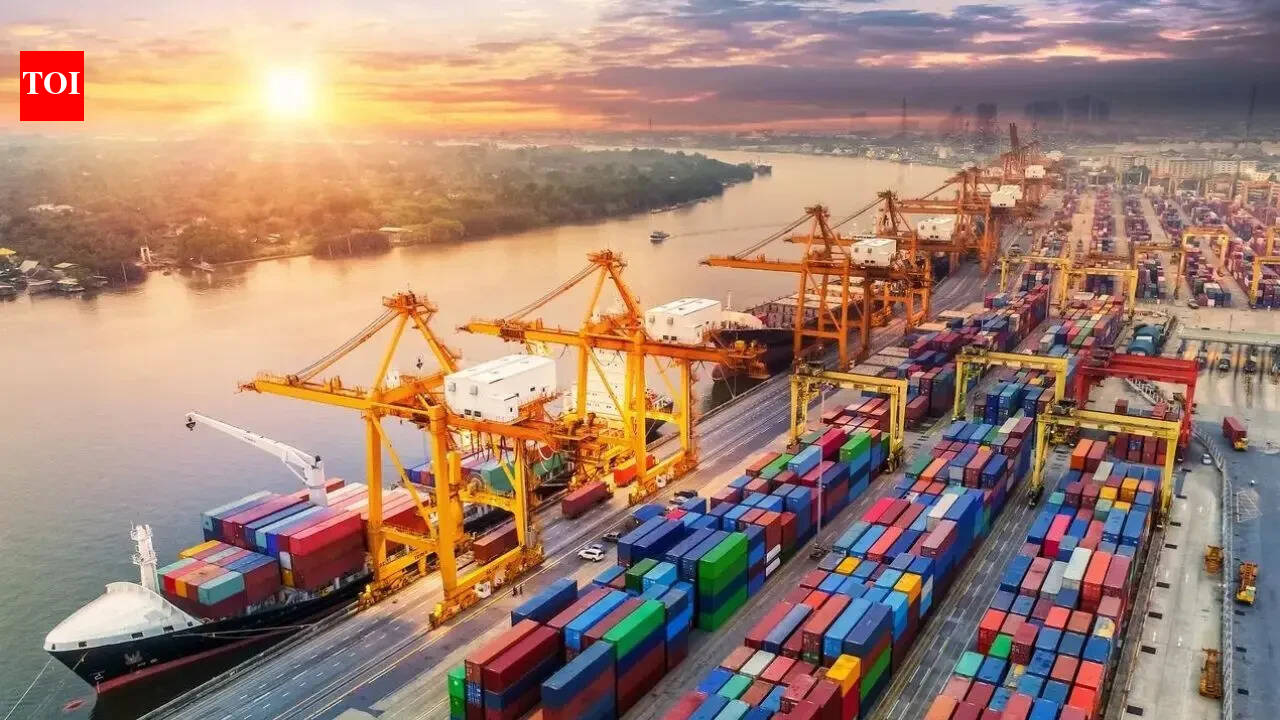
A prolonged conflict in Middle East could begin to hurt India’s exports not just to the region but also to other global markets, as disrupted supply chains ripple outward, commerce secretary Rajesh Agrawal said on Saturday, He also urged the pharmaceutical industry to reduce dependence on imported raw materials and build more resilient export and import linkages.Speaking on the sidelines of ‘Chintan Shivir – Scaling Up Pharma Exports’ in Hyderabad, Agrawal said the government has already seen an impact on both imports and exports over the past month because of the Middle East crisis, with energy imports and regional trade flows under pressure.
“Middle East is also an important market. Around 12-13 per cent of our exports go to the region. So, that will directly get impacted. And if it goes on for long, maybe our exports to other parts of the world will also get impacted as some of the value chains will rotate back. We are cognizant of it,” Agrawal told reporters, as per news agency PTI.He said the exact impact of the conflict on India’s trade would become clearer in the next couple of weeks, but indicated that both exports and imports could see some decline.“And I assume, it will not only be a one-way traffic, in terms of export going down, but it will also be imports having some downfall,” he said.Agrawal cautioned that even if the war ends soon, the disruption may linger for months or even years, depending on the extent of damage to supply chains and infrastructure.“So, at this juncture, it will be very difficult to take a very long-term view on it,” he said.He said the Centre is trying to ensure that supply chains face the minimum possible disruption, while acknowledging that some trade numbers may soften in the near term.
Pharma sector already feeling supply pressure
The commerce secretary said the pharmaceutical sector has already seen some impact in the availability of key intermediates and solvents because supply chains are getting affected by the regional crisis.Agrawal said all arms of the government are working to prioritise limited LPG supply and are attempting to ease the situation by diversifying imports and sourcing from alternative suppliers.“So, as we are able to resolve that overall supply, we will try to alleviate some of the pain in every sector. The Pharma sector will be one of the priority sectors,” he said.He added that the government and industry are jointly working on ways to make supply chains more resilient.
Call for self-reliance in APIs, bulk drugs and intermediates
At the same event, Agrawal asked the pharmaceutical industry to use the current geopolitical uncertainty as a trigger to reduce dependence on critical imported inputs and strengthen domestic capacity.Addressing industry stakeholders in Hyderabad, he stressed “the importance of ensuring greater self-reliance by meeting 80-90 per cent (or higher) of domestic pharmaceutical requirements through indigenous production, while reducing critical import dependencies in APIs, bulk drugs, and intermediates”.He also emphasised the “importance of insulating import supply chains in a geopolitically fragmented world, where availability may be important”.Agrawal called for a broader strategic repositioning of India as a global hub for quality, affordable pharmaceuticals, saying that quality would remain the decisive factor in healthcare. He urged the sector to build a stronger quality ecosystem to enhance global trust and align with emerging areas such as biologics and biosimilars.He also encouraged the industry to shift from a volume-driven to a value-driven model, with greater focus on innovation and new patents, while maintaining India’s strength in generics.
Exports remain on positive path despite uncertainty
Despite the geopolitical overhang, Agrawal said India’s exports in the last financial year were expected to remain on a positive trajectory.The broader pharmaceutical export picture remains resilient. India’s pharma exports stood at $30.47 billion in 2024-25, up 9.4 per cent over the previous year.During April–February 2025-26, pharma exports reached $28.29 billion, registering growth of over 5 per cent compared with the corresponding period of the previous year.India remains the third-largest producer of pharmaceuticals globally by volume and 14th by value, underscoring both the sector’s scale and the stakes involved in insulating it from external shocks.
Business
India Pharmaceutical Exports: India’s pharma exports rise 5.6% to $28.29 billion till Feb in FY26; sector seen doubling to $130 billion by 2030 – The Times of India
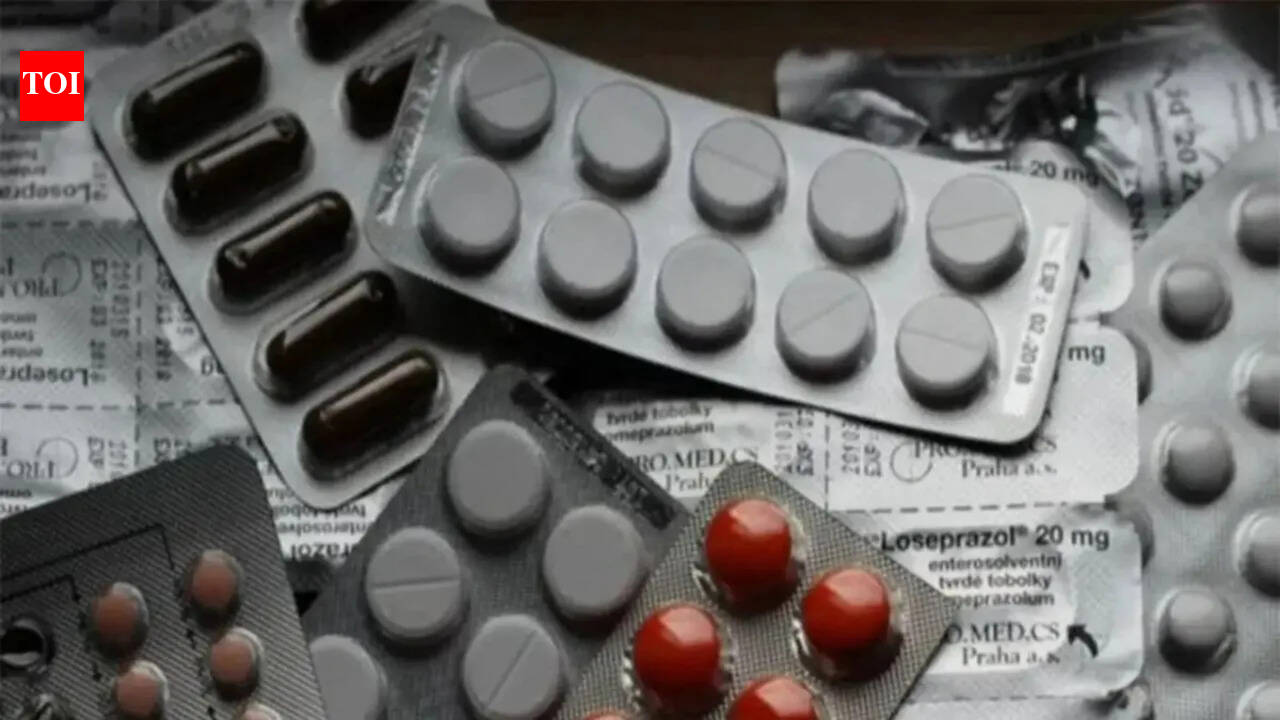
India’s pharmaceutical exports remained on a growth track in the last financial year despite global headwinds, crossing $28 billion during April–February FY26, while industry leaders said the sector is on course to nearly double in size to $130 billion by 2030.Speaking at the inaugural session of the ‘Chintan Shivir: Scaling Up Pharma Exports’ on Saturday, K Raja Bhanu, director general of the Pharmaceuticals Export Promotion Council of India (Pharmexcil), said pharma exports stood at $28.29 billion in April–February FY26, marking a 5.6 per cent increase over the same period of FY25.“Despite global challenges, pharmaceutical exports have been among the few sectors to maintain growth momentum. Exports during April–February FY26 stood at $28.29 billion, reflecting a growth of 5.6 per cent compared to the same period in FY25, led by formulations, biologicals, vaccines and AYUSH products,” Bhanu said.Bhanu said the Indian pharmaceutical sector, currently valued at around $60 billion, is projected to grow to $130 billion by 2030. He added that pharma exports reached $30.47 billion in FY2024–25, recording a 9.4 per cent year-on-year growth despite global pricing pressures and trade volatility.He said Pharmexcil is targeting $65 billion in exports by 2030, backed by policy prioritisation, diversification beyond traditional markets, higher FDI inflows and faster regulatory clearances.India currently ranks third globally in pharmaceutical production by volume, with shipments reaching more than 200 markets, he said. Bhanu also noted that over 60 per cent of India’s pharma exports go to highly regulated markets, highlighting the sector’s quality and compliance standards.According to him, the United States accounts for 34 per cent of India’s pharmaceutical exports, followed by Europe at 19 per cent.Commerce secretary Rajesh Agrawal said the sector is likely to stay on a positive trajectory even if export targets prove difficult to meet in dollar terms, given the weakening rupee.“The target we have set appears difficult to meet, but we will remain on a positive trajectory,” Agrawal said.He added that regardless of whether targets are achieved in dollar terms, export growth would still reflect positively in rupee terms as the Indian currency continues to weaken against the US dollar.Pharmexcil chairman Namit Joshi said India is likely to end the current financial year at levels comparable to FY25, while flagging the effect of front-loaded US buying.“That is why we expect to end up close to last year’s performance, with some growth coming from that,” Joshi said.Joshi said tariff-related issues in 2025 led to higher procurement of medicines worth $1.6 billion in the US, above normal levels, and that this is expected to influence FY26 numbers.
US tariff backdrop may shape future outlook
While the immediate focus remains on export resilience, the external environment—especially in the US, India’s biggest pharma market—could become a key variable going forward.The US has announced a fresh tariff framework targeting patented drugs and certain high-value pharmaceutical ingredients manufactured outside America, with duties of up to 100 per cent set to take effect between August and September 2026 after a transition period.However, the near-term hit to India may be limited because generic medicines are currently exempt, and about 90 per cent of India’s pharmaceutical exports to the US are generics, as per a GTRI report. The report said India exported $9.7 billion worth of pharmaceuticals to the US in 2025, accounting for 38 per cent of its global pharma exports of $25.8 billion.
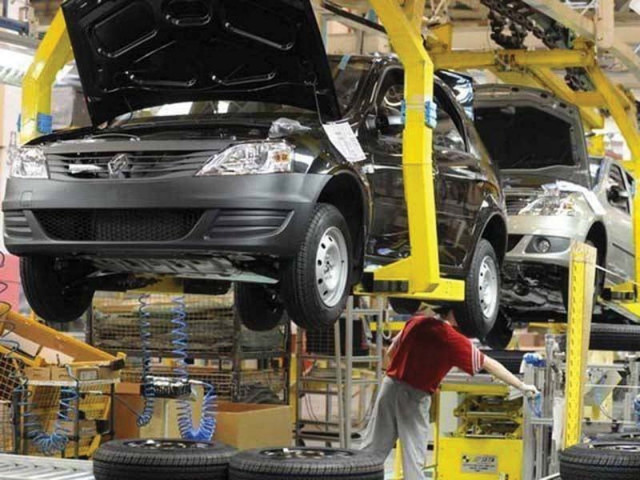
Industry experts warn CKD imports fuel trade deficit as localisation fails to keep pace
The three Japanese carmakers lacked innovation and competitiveness, despite the incentives offered to them in the previous policies, said government officials as they announced the auto policy. PHOTO: FILE
KARACHI:
In the last two auto policies, the government aimed to increase competition in the auto sector by lowering entry barriers through tax incentives, an objective the country has largely achieved.
The sector now stands at a point where it is necessary to push new entrants to begin localising parts of their vehicles so that it becomes productive, creates jobs and adds value, rather than remaining consumption-driven and placing a burden on already strained foreign exchange reserves.
“Pakistan cannot achieve sustainable economic growth while expanding its auto sector on imports instead of localisation,” said Mashood Khan, Director of the Small and Medium Enterprises Development Authority (SMEDA).
Khan said Pakistan’s auto industry is facing a growing structural challenge as the import of completely knocked down (CKD) and semi knocked down (SKD) kits continues to rise, leading towards an import-driven assembly of vehicles. What was intended to promote localisation and technology transfer ultimately led to increased reliance on imported components, which was not the original goal.
This trend is particularly concerning given Pakistan’s limited foreign exchange reserves and narrow export base, where rising imports directly contribute to a widening trade deficit and increased dependence on external financing, he stressed.
Historically, CKD and SKD imports were intended as temporary mechanisms to support the development of domestic manufacturing capacity. However, instead of declining with industrial maturity, imports have steadily increased from 2021-22 to 2025-26.
“This reflects that localisation has not kept pace with industry growth,” said Khan.
Rather than evolving into a value-added manufacturing sector, the industry is increasingly operating as a sub-assembly ecosystem with minimal local content.
A key factor behind this imbalance is the policy framework that allows new entrant OEMs to import CKD and SKD kits at concessional tariff rates with relatively relaxed localisation requirements. These incentives were initially aimed at attracting investment, increasing competition and promoting technology transfer. However, the ground reality suggests otherwise. Many new entrants have established assembly-based operations, importing major components from countries such as China and Korea while contributing limited localisation within Pakistan.
Speaking on the issue, Ali Asghar Jamali, CEO of Indus Motors, said Pakistan remains an attractive and growing auto market with strong future potential, but emphasised that increasing localisation requires a shift in strategy. He noted that the country must develop core upstream industries such as steel, aluminium, plastics and chemicals to support a complete domestic value chain.
He also stressed that a stable long-term policy framework of 15 to 20 years is essential to build investor confidence and encourage global players to bring in capital and technology, which would ultimately support localisation.
Jamali further highlighted that consistency in policies is key to attracting meaningful foreign investment. “When investors see stability and growth potential, they are more willing to invest, and that naturally leads to higher localisation,” he said, adding that localisation and investment must go hand in hand.
Offering a critical perspective, Abdul Rehman Aizaz said previous auto policies introduced in 2016 and 2021 succeeded in attracting new entrants but failed to enforce localisation requirements effectively. As a result, many companies relied on what he described as “screwdriver assembly” – importing semi-assembled units rather than developing local manufacturing capabilities.
He explained that in several cases, vehicles were imported as SKD kits, where major components arrived pre-assembled and were simply fitted together in Pakistan. This limited the role of local vendors and reduced opportunities for domestic value addition. “Even components that could have been assembled locally were brought in as complete sub-assemblies,” he said.
Aizaz noted that these practices continued for more than half a decade, allowing companies to benefit from policy concessions without investing in localisation. He pointed out that cars introduced under such policies often contained as much as 90% to 100% imported components, compared with about 50% in more localised vehicles produced by established players. This imbalance significantly increased the import bill and contributed to foreign exchange outflows.
He further added: “The policy did not deliver meaningful benefits to consumers either.” Despite increased competition, affordable vehicles for middle-income groups remained limited, while small cars continued to be dominated by older models. Some new entrants introduced vehicles that failed to gain traction due to pricing and market mismatch.
At the same time, local auto parts manufacturers faced declining business volumes as imported components replaced domestically produced parts. This, Aizaz said, hindered technological progress and reduced opportunities for SMEs, weakening the overall industrial ecosystem.
Experts also expressed concern over the broader economic implications of rising CKD and SKD imports, noting that the trend has contributed to Pakistan’s widening trade deficit and increased reliance on external financing.
Looking ahead, Aizaz raised concerns about the government’s upcoming electric vehicle (EV) policy, warning that it risks repeating past mistakes. While the policy includes significant incentives and subsidies to promote EV adoption, he argued that it does not adequately address localisation. “If parts continue to be imported at this scale, it will put further pressure on foreign exchange reserves,” he cautioned.
He also highlighted inconsistencies in tax structures, noting that imported components are often taxed at lower rates than locally produced parts, discouraging domestic manufacturing. Additionally, he questioned the classification of certain vehicles, such as plug-in hybrids and range-extended electric vehicles, as EVs despite their continued reliance on internal combustion engines.


Africa’s GDP growth to stabilise at 4.3% in 2026, 4.5% in 2027: AfDB

$180 bn apparel glut deepens as Asian mills sit on unsold stock

Chelsea’s Liam Rosenior: Enzo Fernández comments ‘not what people think’

-
 Business1 week ago
How do you spot a fake online review?
-

 Entertainment1 week ago
Lee Sang-bo dies at 45: Funeral details revealed
-

 Sports1 week ago
Illinois defense gets tough, ousts Houston to reach Elite Eight
-

 Sports1 week ago
USMNT handed reality check by Doku, Belgium ahead of World Cup
-

 Sports1 week ago
2026 NCAA men’s hockey tournament: Schedule, results
-

 Fashion1 week ago
China rolls out tariff cuts on Congo imports from April 1
-
 Fashion1 week ago
EU apparel imports slump 15.48% YoY in Jan; Bangladesh hardest hit
-
Uncategorized6 days ago
[CinePlex360] Please moderate: “Further tariff