

Entertainment
Sonny Curtis on a career spanning Buddy Holly and Mary Tyler Moore


The theme song to “The Mary Tyler Moore Show” is familiar to generations of TV watchers. The name of the man who wrote and sang it, less so.
Who can turn the world on with her smile?
Who can take a nothing day, and suddenly make it all seem worthwhile?
Well, it’s you, girl, and you should know it
With each glance and every little movement you show it
Love is all around, no need to waste it
You can have the town, why don’t you take it
You’re gonna make it after all
But by the time Sonny Curtis recorded “Love Is All Around” in 1970, he’d “made it” several times over himself, as a songwriter, as a recording artist, and as an early bandmate of the legendary Buddy Holly.
Born in 1937 in rural West Texas, Curtis grew up picking cotton on his father’s farm. “Oh, it was a miserable job,” he told correspondent Mo Rocca. “The heavier the cotton sack gets, the worse it is, man.”
CBS News
His love of music came from family. His aunt taught him to play the guitar, and while working those fields, Curtis dreamed up his own songs: “Driving a tractor, you go down half a mile that way, and when you get there, you turn around and come back a half mile this way. You have plenty of time to write a song!”
Curtis was just 14 when he met a young Buddy Holly in nearby Lubbock. “Buddy had black hair, but he had dyed it blonde, and it was growing out. And he reminded me of a black-and-tan coon hound. We sorta skipped all the niceties and got our guitars and started playing.”
Rocca asked, “How quickly did you realize this guy’s serious about music?”
“Buddy, he exuded confidence. He just knew he was gonna make it big one day.”
The two became fast friends, bonded by their love of music. Sometimes, Curtis said, he’d spend the night at Buddy’s. The two would wake up at midnight and flip on the car radio for a show out of Shreveport, Louisiana, to hear some of the rhythm and blues voices that would shape rock ‘n’ roll: “We heard, oh, Big Mama Thornton and Lonnie Johnson, and Lead Belly, Little Richard, Ray Charles, you name it.”
“Were you just absorbing this?” asked Rocca.
“Oh, boy, were we ever, yeah!”
Buddy and Sonny had formed a band and were still figuring out their own sound, when a then little-known Elvis Presley came to town. “And I mean, the girls were goin’ nuts, man. And that really got our attention. All a sudden, we thought, this not only involves music, this involves pretty girls!”
When Elvis came back to town in 1956, Buddy and Sonny’s band was the opening act. “Well, I guess we were right there sort of at the beginning of rock ‘n’ roll.”
“What was Elvis like backstage?” asked Rocca.
“He was just an old boy.”
The band went on to record some demos, but wasn’t making much money.
So, Curtis left to tour with country star Slim Whitman. “He treated me kind of like a little brother,” Curtis said. “I remember I’d be on the stage and he’d come over and say, ‘Now don’t be nervous.'”
Meanwhile, Buddy Holly formed a new band, which would prove to be seminal. The Crickets shot to fame, appearing on “The Ed Sullivan Show.”
Rocca asked, “When that was happening, did you feel a little left out, like, ‘Ugh’?”
“I did feel kind of like the train left the station and I wasn’t on it, you know?” Curtis replied.
But on February 3, 1959, Curtis’ friend and former bandmate died in a plane crash near Clear Lake Iowa.
Curtis served as a pallbearer.
“Buddy Holly was 22 when he died,” Rocca said.
“Yes. Can you imagine the amount of music he pumped into the system in a short period of, like, 18 months? No telling how much he would’ve contributed had he been around.”
By that time, Curtis had joined the Crickets. But with Holly gone, the band felt rudderless.
It was Curtis’ talent for songwriting that helped put the wind back in his sails. His song “Walk Right Back” became a big hit for the Everly Brothers:
And then there’s this classic, which Curtis claims he wrote in about 20 minutes: “I Fought the Law”:
“I Fought the Law” has been covered by artists from The Bobby Fuller Four to The Clash.
Sonny Curtis is 84 now. He and Louise, his wife of more than 50 years, live outside Nashville, where they raised their daughter, Sarah. He is enshrined in Nashville’s Musicians Hall of Fame – as is his old guitar.
In 2012, the year the Crickets retired, they were inducted into the Rock ‘n’ Roll Hall of Fame.
But it’s a song Curtis wrote for the small screen that may be his most enduring legacy.
In 1970, he was living in Los Angeles when he got a call from a friend about a new sitcom being produced for Mary Tyler Moore: “It was just this young girl gets jilted in this small community, and she moves to the big city of Minneapolis, gets a job at a news station. And that was about it.”
Curtis wrote the theme song based on a four-page description of the show. “I honed in on the part that she rented an apartment she had a hard time affording, and wrote, ‘How will you make it on your own?’ … ‘This world is awfully big, and girl, this time you’re all alone.'”
Within just a few hours, Curtis was summoned to the studio to play his song for producer James L. Brooks. Curtis recalled, “I got my guitar out and I sang it to him. He smiled and said, ‘Sing that again.’ And I had to sing it about ten times. And before I left that afternoon, the room was full of people standing all around the walls. I thought, ‘I believe I got a shot at this!'”
WEB EXTRA: Sonny Curtis on writing the “Mary Tyler Moore Show” theme song
Rocca said, “It wasn’t a given that you’d write and sing it.”
“No. As a matter of fact they didn’t want me to sing it. I said, ‘I wanna sing this,’ you know? And I was probably more pushy than I should have been, if I’da known better. But fortunately, I didn’t know better at the time!”
When the show became a hit, Curtis was asked to rework his song: “When they started to do the second season, he said, ‘Sonny, she’s obviously made it. And we have to have some new lyrics.'”
For a man whose career dates back to the birth of rock ‘n’ roll, Sonny Curtis remains disarmingly humble. “Oh, I’ve always sort of had a rule, don’t give advice in a crowd,” he laughed.
But when pressed, he will share some wisdom: “If they say, ‘Man, you oughta go back to Texas ’cause you’ll never make it,’ just look at them and say, ‘No, you’re wrong, because I am gonna make it.'”
Rocca replied, “You know, I should write this down, ’cause this sounds like a song right here!”
For more info:
Story produced by Michelle Kessel. Editor: Lauren Barnello. Illustrations: Mitch Butler.

It’s been two decades now since an American has brought a major singles title back home.
The current list of players is still looking for the big win, with Frances Tiafoe being the one fans have been pinning hopes on.
He is ranked 21st in the world, yet he enjoyed his closing run at Roland Garros last year by finishing in the quarter-finals.
He is not the one who came close to the finishing line, several others have also been unable to end the twenty-year drought.
In a recent media appearance, just before the tournament kicked off, Tiafoe speaks his mind.
He said, “It’s been nice for a long time. I think we’ve been killing. It’s a matter of we just have some guys. It’s just top heavy, man.”
Tiafoe sounds off on American tennis, adding, “We’ you know, they’re gatekeeping hard. I mean, I think, you know, Fritz has been top ten for a bunch of years.
“Ben’s cracked in there. He’s kind of solidified himself being a top ten guy. I mean, I’ve been top 20 majority of years the last four years. Tommy as well. He’s been flirting in and out, so.”
Tiafoe explains, “We got Korda, I mean, you know, if he’s healthy, you know, he’s always, again, top 20.
“But it’s his manner of just putting these weeks together, and trying to do the ultimate goal, and one of us try to win, and this type of event.”
“You know, Ben won 1000, you know, Fritz won 1000, you know, I’ve been final of a 1000, so we’re all flirting with the top of the game. We just got to kind of get over the line,” Tiafoe concluded.
Andy Roddick remains the last man standing who won the US Open title back in 2003, almost two decades ago.
This time at French Open, only Shelton will be the top-seeded American who kicks off his campaign on the clay court.
Entertainment
American Music Awards airing tonight with performances from Billy Idol, Keith Urban, Teyana Taylor and more

The American Music Awards kick off the unofficial start of summer tonight, celebrating the best in music and featuring performances from such artists as Billy Idol, Keith Urban, Teyana Taylor and others.
The show airs on CBS television stations and streams on Paramount+ starting at 8 p.m. ET/5 p.m. PT.
The AMAs boast of being the world’s largest fan-voted awards show. Voting for most of the categories closed earlier this month, but people can still vote online or on Instagram for social song of the year and tour of the year through the first half hour of the show.
Queen Latifah serves as host this year, returning to the AMAs stage after co-hosting in 1995 and performing over the years.
Taylor Swift leads the nominations with eight following last year’s release of “The Life of a Showgirl,” which is up for album of the year and best pop album. Two songs from the album also received nods: “The Fate of Ophelia” for song of the year, best music video and best pop song, and “Elizabeth Taylor” for song of the summer.
Swift has already won 40 times at the AMAs, which is more than any other artist. She’s also up for artist of the year and best female pop artist this year.
Morgan Wallen, Olivia Dean, Sabrina Carpenter and Sombr were right behind Swift with seven nominations each.
But the awards are only part of the show. Billy Idol, who’s known for such hits as “Dancing With Myself,” “Rebel Yell” and “White Wedding,” will receive a lifetime achievement award and perform a medley of some of his hits on the AMAs stage.
Scott Dudelson/Getty Images for Coachella
Keith Urban will perform a track from his upcoming yacht rock album “Flow State.” Teyana Taylor, who won a Golden Globe in January for her performance in “One Battle After Another” and is up for best female R&B artist at the AMAs, will perform a medley from her album, “Escape Room.”
There will also be performances by some groups that have amassed huge followings over the years, with Hootie and the Blowfish, New Kids on the Block and The Pussycat Dolls taking the stage.
K-pop superstars BTS will also make a special appearance. Following a nearly four-year hiatus for the members to fulfill their mandatory military service, the group began a world tour in March and will appear at their first awards show in four years at the AMAs. They are nominated for three awards as well.
Who’s performing at the 2026 American Music Awards?
Here’s a list of all the announced performers at the American Music Awards:
- Billy Idol
- Hootie and the Blowfish
- Karol G
- Katseye
- Keith Urban
- Maluma
- New Kids on the Block
- The Pussycat Dolls, with a guest appearance by Busta Rhymes
- Riley Green
- Sombr
- Teddy Swims
- Teyana Taylor
- Twenty One Pilots
How to watch the 2026 American Music Awards
- What: The 2026 American Music Awards show
- Date: Monday, May 25, 2026
- Time: 8 p.m. ET/5 p.m. PT
- Location: MGM Grand Garden Arena in Las Vegas
- On TV: Live on CBS television stations. Find your local station here.
- Online stream: Live on Paramount+
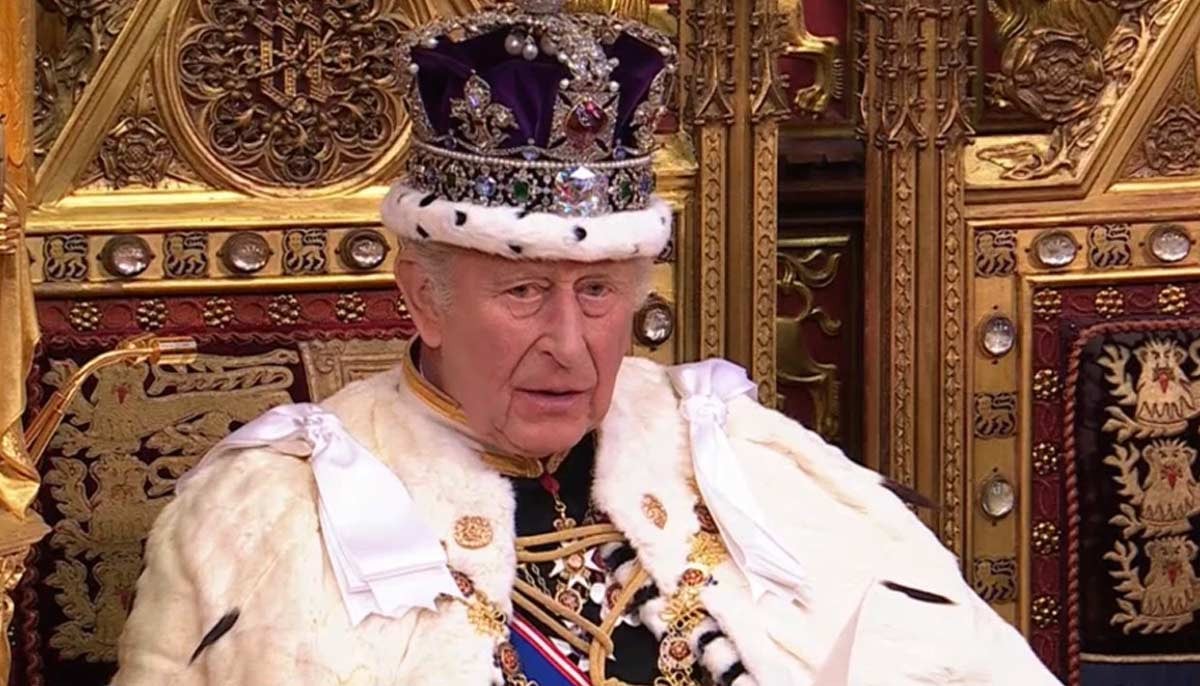
The royal family’s famouse show faces serious calls to conduct a review of its safety protocols after a heartbreaking loss.
The British monarch, 77, has reportedly taken an action to ensure safety meassure after a young soldier’s detah during a King’s Troop, Royal Horse Artillery performance earlier this month.
Lance Bombardier Ciara Sullivan, 24, lost his life after falling from her horse on May 15.
Heartbroken Britons urged officials to take notice of their concerns. They questioned whether traditional ceremonial practices, including the use of historic headwear rather than modern protective helmets, should continue in public displays.
She had been wearing the regiment’s ceremonial busby hat as part of the King’s Troop full dress uniform.
The insider claimed: “The organisers need to adopt smart strategy to save lives.
“We may face the same situation in the future if the measures are nt taken.”
The First World War-era QF 13-pounder field artillery, constructed from steel and wood with large spoked wheels, is pulled at speed by six horses arranged in three rows.
During performances, riders guide the heavy weaponry through complex arena manoeuvres and sharp turns.
“These carriages were invented centuries ago, before modern safety measures. They are not fit for purpose and nor are the hats. There should be a serious review of horse displays like this,” one source told the Mail.
Another said: “The continued use of traditional headwear that offers only limited protection has to be reviewed in an activity where serious head injuries are an ever-present risk.”
It announced the following morning: “The Royal Windsor Horse Show is continuing as planned, with the omission of The King’s Troop, Royal Horse Artillery display.”
After the shocking incident, Chief Superintendent Michael Loebenberg said: “We are appealing for anyone with information or material relating to the sad death of a military rider at Royal Windsor Horse Show yesterday to please get in touch.”
“At this stage, we have not found any suspicious circumstances. We are working with the Ministry of Defence, the Defence Accident Investigation Branch and Royal Windsor Horse Show organisers HPower to gather as much information as possible to understand how this happened.”
Buckingham Palace released a statment, saying that the King was “greatly shocked and saddened” by the tragedy.
The monarch also conveyed his condolences privately to her family.


Vietnam launches Hai Phong customs pilot from June 1

Is American men’s tennis in trouble as French Open begins?

Memorial Day Deals on Our Top Smart Bird Feeders, Camera Bags, and More

-

 Tech1 week ago
Why Is Your Grill So Dumb? The Best Grills Set Temp Like an Oven
-

 Tech1 week ago
This Solar-Powered Smart Sprinkler Keeps My Lawn Watered Without Any Power Cables
-

 Fashion4 days ago
ICE cotton sees mixed trend as rain forecasts weaken sentiment
-

 Fashion5 days ago
US cotton planting advances to 41%, concerns persist in Texas
-

 Fashion1 week ago
Turkiye’s current account deficit expected to widen in 2026: Minister
-

 Fashion1 week ago
India’s Pearl Global’s FY26 revenue crosses $521 mn milestone
-

 Entertainment1 week ago
Princess of Wales praised as ‘step ahead’ of royal family
-

 Tech1 week ago
A Danish Couple’s Maverick African Research Finds Its Moment in RFK Jr.’s Vaccine Policy