

Fashion
Burberry: Rock ‘n’ roll revamped


Published
September 22, 2025
Burberry climaxed the five-day London Fashion Week Monday night with a cool and concise rock ‘n’ roll revival show that refreshed the marque with plenty of punch and polish.
Staged inside a tent in the northwest corner of Hyde Park, the show attracted a great front row: Jason Statham and Rosie Huntington-Whiteley; rapper Skepta and soccer legend, Ian Wright; Elton John and David Furnish; songstress Raye and soul singer, Olivia Dean.
Designer Daniel Lee’s intention was clear from the opening looks and chords: a bright waxed plaid trench dress worn with rugged boots on a model with Marianne Faithfull hair; followed by a waxed denim trench on a guy with a Hendrix afro. The soundtrack: a great booming remix of “Planet Caravan” by Black Sabbath. A band that Lee’s Harley Davidson-riding dad adored, and whose singer Ozzy Osborne recently passed this year.
Matter of fact, not a single ensemble would look out of place on a rock star: from the dolly bird white moulded A-line cocktails finished in chains and golden or turquoise macramé party sheathes for gals. To suede lace Lothario rocker trenches for guys, to some seriously crisp suits, cut with peg legs and snug jackets.

Lee kept the brand’s plaid theme going with great waxed parkas, girly pants or military boots. Leather posh hippie spy coats and bags with long fringes, all looked great as the Black Sabbath montage, including “You Won’t Change Me”, boomed out.
Like the collection, the palette had plenty of kick: acid green, salmon pink, bitter yellow; attention- seeking, but all the better for that.
“Summertime in the UK is so synonymous with music culture. This year felt extra special, with the Oasis tour, Beyoncé at Glastonbury, Kendrick was here. Every few days incredible music at festivals, and the Beatles movie is coming up. But it was a wonderful mod ballet at Saddler’s Well that first got me thinking how to celebrate that… Musicians have always had incredible style, and I wanted that exchange between music and fashion,” Lee explained backstage.
Underlining his goal is to make clothes that require skill to produce and evoke emotion. “It’s what separates luxury from great UK high street labels, skill and know-how and making historic techniques relevant for today,” Daniel added.

The overall look was perhaps not so path-breaking. Nonetheless collectively the collection – with its unexpected techniques – seemed very of the moment. Just right for today.
The show comes at a delicate moment for Burberry, the United Kingdom’s leading luxury brand, Burberry suffered a 15% decline in annual revenue in the 12 months ending March 29 to £2,461 million, while operating profit plummeted over 90% to a mere £26 million. This collection, however, seemed very commercially savvy, and timely.
The night before, the house unveiled its latest retail concept, Scarf Bar, whose debut space was inside Burberry’s giant Regent Street flagship.
“Scarf Bar offers 200 styles of Burberry scarves, from heritage to new creations. We plan to open 30 Scarf Bars in the next three months,” beamed CEO Joshua Schulman, who joined Burberry 15 months ago in July, 2024.

Offering a great selection of classic and punchier new plaids, made in a selection of materials: cashmere, mohair, wool and silk, or mixes of all four. Situated on the south side of the store, the Scarf Bar cleverly utilizes a slightly forgotten retail space that opens out on to Vigo Street. It’s also a smart example of Schulman – a veteran retailer with experience at department store giant Neiman Marcus.
Schulman, according to UK media reports, is the highest paid luxury executive in Britain. The 52-year-old Los Angeles-born Schulman, who was also previously CEO of Michael Kors, Coach and Jimmy Choo, reputedly has an annual salary of £2.6 million.
Since arriving, Schulman has ordered a reset, and in May unveiled plans to lay off 1,700 people or some 20% of its workforce, tough decisions greeted positively by shareholders. With the group’s share price rising 50% since his appointment.

Schulman has a major task on his hands, and a major upside if he is successful. Should he double Burberry’s share price in three years he will earn a £3.6 million bonus.
Post-show, both designer and CEO were in an ebullient mood, hosting a bash inside Chiltern Firehouse, the 26-suite London hotel famed as a celebrity hangout, which is also undergoing a restoration since burning wood from a pizza oven caused a huge fire back in February. The fact that Chiltern Firehouse would permit a soft pop-up for Burberry, a reminder of house’s unique position in Britain.
But tonight, far from being a “Bonfire of the Vanities”, Burberry suddenly began looking in pretty good shape.
Copyright © 2025 FashionNetwork.com All rights reserved.











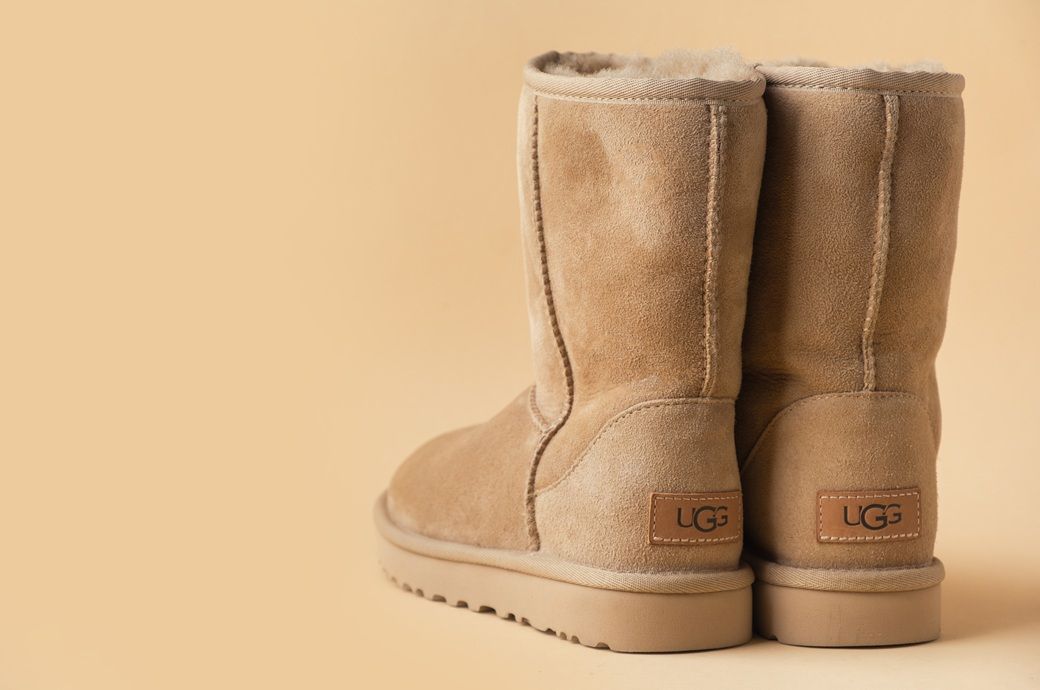
Kenneth Straka, Senior Product Development Manager at Deckers Outdoor Corporation, said that Deckers places strong emphasis on sustainability, noting that founder John Luke often reminded the team that the French word for sustainability is durability. This idea aligned with discussions at the Global Fashion Summit, where the theme centred on “Building Resilient Futures” in the sustainable and circular economy.
Durability has helped UGG become one of the most sought-after boot brands and a key sales driver for Deckers, alongside its sportswear brand Hoka. “One of the things we think about in terms of circularity is making products that last a long time and remain with consumers throughout their lives. We want products that consumers can wear for ** or ** years,” Straka said in an interview with Fibre*Fashion on the sidelines of the Global Fashion Summit in Copenhagen.

In the Tiruppur market, cotton yarn prices increased by ****;*–* per kg in this week despite sluggish local demand. Prices were quoted higher because of limited supply from spinning mills. A trader from the Tiruppur market told Fibre*Fashion, “Domestic demand remained limited, but spinning mills are not relying solely on the domestic market for cotton yarn sales. They are focusing more on exports, where demand and prices remain attractive. Mills have raised yarn prices following higher ICE cotton prices and the CCI’s increase in auction base prices, although ICE cotton has witnessed a sharp decline over the past two days.”
In Tiruppur, knitting cotton yarn prices were noted as: ** count combed cotton yarn at ****;***–*** (~$*.**–*.**) per kg (excluding GST), ** count combed cotton yarn at ****;***–*** (~$*.**–*.**) per kg, ** count combed cotton yarn at ****;***–*** (~$*.**–*.**) per kg, ** count carded cotton yarn at ****;***–*** (~$*.**–*.**) per kg, ** count carded cotton yarn at ****;***–*** (~$*.**–*.**) per kg, and ** count carded cotton yarn at ****;***–*** (~$*.**–*.**) per kg.
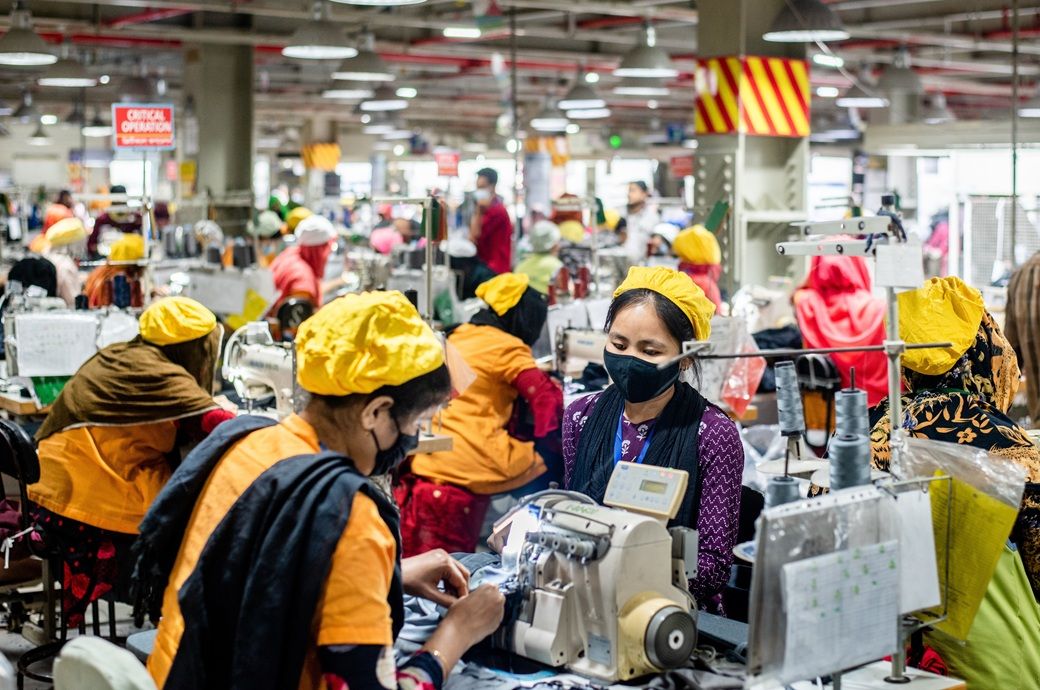
BGMEA president Mahmud Hasan Khan said they discussed export diversification within the garment sector, reopening of closed factories and many factories’ struggle for survival.
Representatives of two top Bangladesh garment trade bodies recently met PM Tarique Rahman and urged him to ensure uninterrupted power and energy supply, quick release of export receipts from banks, reopening of closed factories and easing of customs regulations.
BKMEA raised concerns about misuse of the bond facility and urged action against violators of bond licences.
104 factories have informed the BGMEA about their closure till now, Khan said. BGMEA will scrutinise these cases to identify the genuine reasons for the closures.
Following the scrutiny, the association will send recommendations for reopening these factories, as the government is working to open a Tk 200-billion fund to assist their revival.
BKMEA president Mohammad Hatem said some 400 factories closed in the last three years—nearly 300 of them due to non-cooperation from banks. He said banks release export receipts to exporters’ lien accounts, but delays in payment often force loans into default, leaving exporters unable to pay suppliers on time.
He also demanded uninterrupted supply of power and gas to industrial units as recent shortages of fuel oil have severely affected productivity, according to domestic media ooutlets.
Hatem raised concerns about misuse of the bond facility and urged action against violators of bond licences.
He also called for easing the rules of the National Board of Revenue, particularly customs procedures, to smoothen export and import processes and reduce lead times.
Fibre2Fashion News Desk (DS)


Military jets’ crew members safely eject after Idaho air-show collision

Pete Davidson’s friends support comic against ex Elsie Hewitt allegations

Indy 500: Counting Down The 10 Best Finishes In Race History

-

 Entertainment5 days ago
Conan O’Brien hat tricks as Oscar host
-

 Tech1 week ago
Could Contact-Tracing Apps Help With the Hantavirus? Not Really
-

 Tech1 week ago
I Tried the Best Captioning Smart Glasses, and Only One Leads the Pack
-

 Fashion5 days ago
Italy’s Zegna Group’s Q1 growth boosted by strong organic performance
-

 Sports1 week ago
Bobby Cox, legendary Atlanta Braves manager who led 1995 World Series champions, dead at 84
-

 Entertainment1 week ago
Martin Short: Facing tragedy with joy
-

 Entertainment1 week ago
Tom Brady gets back at Kevin Hart during Netflix roast
-

 Entertainment1 week ago
Martha Stewart: How to make an omelet