

Business
Pakistan inks Rs1.27tr financing deal to tackle power sector debt – SUCH TV


An official invitation issued by the Central Power Purchasing Agency (Guarantee) Limited (CPPA-G) states that the repayment burden will fall on electricity consumers, who are already paying a surcharge of Rs3.23 per unit on their monthly bills.
The signing, reportedly scheduled at the Prime Minister’s Office, is a centrepiece of Pakistan’s $7 billion International Monetary Fund (IMF) programme, which requires stringent energy sector reforms and long-term fiscal discipline.
Prime Minister Shehbaz Sharif, currently attending the UN General Assembly session in New York, will join the ceremony virtually, highlighting the political importance attached to the initiative.
Sources said that the financing package is designed to permanently retire legacy debts without burdening the national exchequer.
Under the plan, commercial banks will extend Rs617 billion in fresh loans at a concessional rate of KIBOR minus 0.90 basis points, to be repaid in 24 equal quarterly instalments over six years.
The effective interest rate is expected to range between 10.50% and 11.5%. The repayment will be funded through the existing debt service surcharge collected from consumers, generating Rs323 billion annually.
Of the Rs1.275 trillion facility, Rs683 billion will clear the liabilities of the Power Holding Company (PHL), while Rs592 billion will settle arrears of Independent Power Producers (IPPs).
In mid-June 2025, the federal cabinet approved the plan, describing it as a record achievement for securing financing below the three-month KIBOR benchmark.
Officials state that the move will help stabilise Pakistan’s fragile power sector by easing liquidity pressures and reducing reliance on emergency budgetary support.
However, with the circular debt stock standing at Rs1.66 trillion by the end of July 2025, the challenge of containing future build-ups remains daunting.
The substantial loan package is intended to significantly reduce the country’s circular debt stock, bringing it down from Rs1.614 trillion to just Rs339 billion.
This follows months of intensive negotiations and financial restructuring spearheaded by the government’s Task Force on Power, which has already led to a notable decline in circular debt from a peak of Rs2.381 trillion earlier this year.
To recover the loan over the next six years, a debt service surcharge (DSS) of Rs3.23 per unit has been embedded in the electricity tariff.
Government officials clarified that this surcharge is already in effect and will remain in place throughout the repayment period.
Although the DSS previously faced a 10% cap, the ceiling has now been lifted to fulfil structural benchmarks under the ongoing IMF programme.
However, authorities emphasised that there are no immediate plans to raise the surcharge rate further.
The commercial banks will deduct the surcharge amount at source when collecting electricity bill payments from consumers.
Unlike a previous loan of Rs658 billion extended to the power sector under government guarantee, the current financing arrangement does not involve a sovereign guarantee.
Instead, the loan is extended directly to CPPA, backed by the power sector’s substantial receivables, marking a significant shift in risk-sharing and financial responsibility.
The CPPA’s Board of Directors has already approved the revised terms in collaboration with the participating banks.
The government has also reduced its initially proposed loan amount from Rs1.275 trillion to Rs1.225 trillion after PHL settled part of its liabilities and cleared several key payments.
The restructuring process was further supported by the termination of six non-performing IPP contracts, waivers amounting to Rs387 billion in late payment interest (LPI), and the clearance of Rs348 billion in outstanding arrears — of which Rs127 billion was paid through budgeted subsidies and Rs221 billion by CPPA directly.
Once the Rs1.225 trillion loan is fully disbursed, officials expect the remaining circular debt of Rs339 billion to be addressed through additional reforms and efficiency improvements in power distribution companies (Discos).
The high-profile signing ceremony will be attended by top government functionaries, including Deputy Prime Minister Ishaq Dar, federal ministers for power, finance, economic affairs, petroleum, planning and information technology, along with the governor of the State Bank of Pakistan, chairman of the National Electric Power Regulatory Authority, and country heads of IMF, World Bank, and Asian Development Bank.
Chief executives from CPPA-G, PHL, and Discos, including Lesco, Mepco, Pesco, Hesco, and others will also be present.
Senior representatives from 18 commercial banks involved, including HBL, NBP, UBL, MCB, Meezan Bank, and Bank Alfalah, will witness the formalisation of the agreement.
This strategic financial intervention is seen as a pivotal step towards restoring fiscal discipline in the power sector, fulfilling IMF programme commitments, and setting the stage for broader energy sector reforms.




Food bills are set to soar as much as 10 per cent this year as a direct consequence of the Iran war, a key industry body has warned.
The Food and Drink Federation (FDF), which represents 12,000 food and drink manufacturers, has hiked its inflation forecast for the year from 3.2 per cent to between nine and 10 per cent.
During the 2022 cost of living crisis, food inflation rose at a rate of 10.9 per cent, figures from the Food and Drink Federation (FDF) show, while the following year was even worse at 14.6 per cent.
Since then, it had dropped back to 2.7 per cent (2024) and 4.2 per cent (2025), but while this year had originally been forecast to deliver food inflation of 3.2 per cent, the latest assessment is that it will instead see a huge rise in the second half of 2026.
The FDF said the current situation is “unprecedented and hard to predict”, but it’s “clear that food inflation is going to rise in the months ahead”.
How much that adds to the average bill depends on the size and frequency of a consumer’s usual grocery habits, but on average, bills could rise by around £588, according to some estimates.
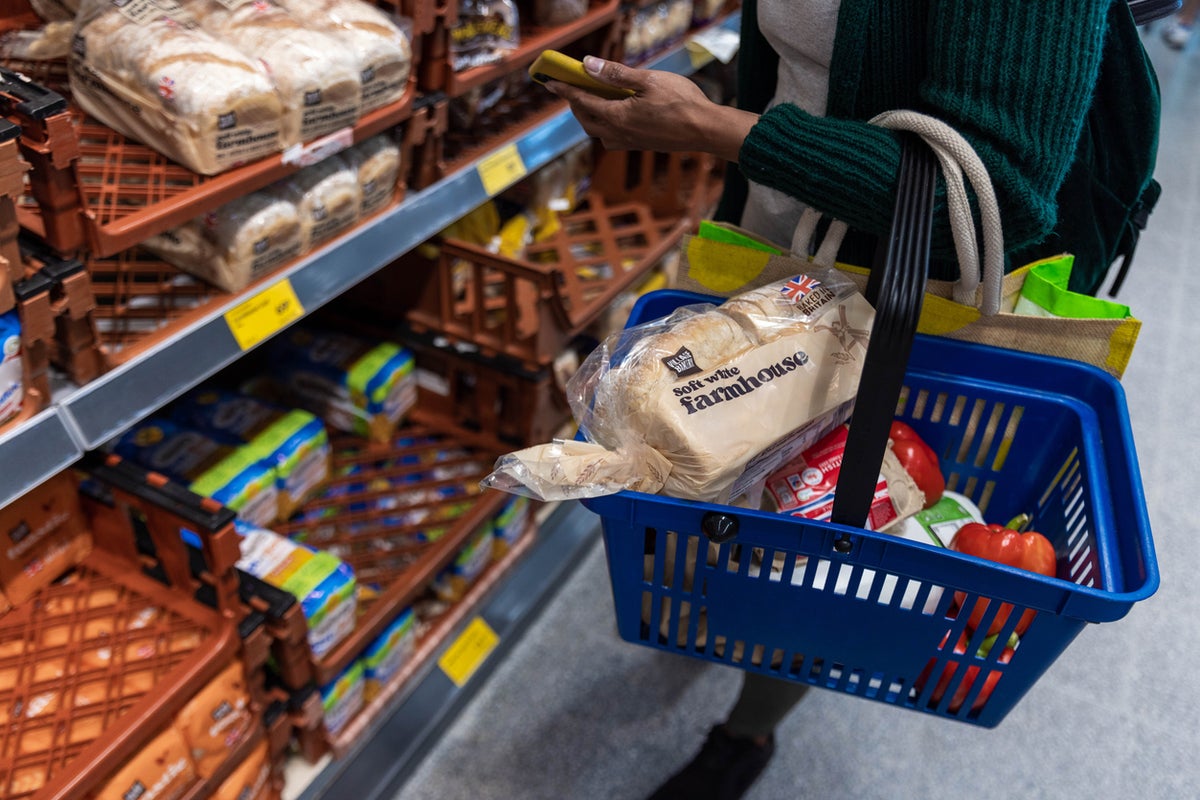
Consumer rights and review site Which? frequently assesses UK supermarkets for cost, and at the start of 2026, an average basket of 89 shopping products cost £161.56 at Aldi and up to £217.02 at Waitrose.
Assuming food inflation lands at the mid-point of the FDF forecast, 9.5 per cent, and that all products and supermarkets applied that uplift equally, that would move the costs of those shops up to £176.91 and £237.64 respectively.
Research from confused.com suggested the average UK household spent £119 each week on food shopping, which is £6,188 each year; a 9.5 per cent uplift to that equates to an extra £588 annually, or a total of just over £130 per week and £6,775 annually.
Chancellor Rachel Reeves is due to meet with some supermarket chiefs on Wednesday, including Sainsbury’s and Tesco, over discussions to assess the upcoming impact of price rises on the cost of living. The Treasury has described it as a “fact-finding” conversation.
Last month, Asda boss Allan Leighton called on Labour to do more to help businesses after creating “a lot of constraints” for them.
For food manufacturers, there is both a concern now and another yet to come in terms of energy cost rises.
Diesel – used in farm machinery – is up by 80 per cent since the start of the war, while fertiliser costs could increase further, as well as supply being constrained. The FDF also points to lost sales due to cancelled shipments to the Middle East, with UK firms regularly exporting cheese, cereals, chocolate and more to the region.
Dr Liliana Danila, chief economist at The Food and Drink Federation, said: “The food and drink sector is already feeling the force of this geopolitical shock. As one of the UK’s energy-intensive industries, manufacturers are facing mounting energy bills, rising transport and packaging costs and disruption across key supply chains.
“These pressures are hitting simultaneously and are a significant challenge for businesses to absorb.
“The current situation is unprecedented and hard to predict; however, given the scale and speed of these cost increases, and despite companies’ best efforts not to pass price increases on, it’s clear that food inflation is going to rise in the months ahead.”
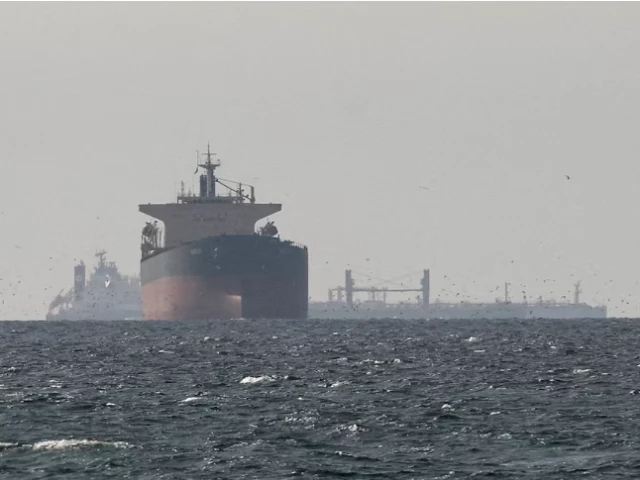
The FDF says its upgraded inflation figures were based on “assumptions that the Strait of Hormuz opens to cargo traffic within the next two to three weeks”, as has been suggested by Donald Trump this week, and that most commodities, including oil, gas and fertiliser production, return to normal within a year.
In the past few months, the FDF has repeatedly called for the government to offer support to businesses in the sector from rising energy bills in the same way as it does to those in some other manufacturing areas.

GST collections: India’s net Goods and Services Tax (GST) collections increased to Rs 1.78 lakh crore in March 2026, marking a rise of 8.2% compared to the previous month, according to official figures released on Wednesday.Gross GST revenue for March stood at Rs 2 lakh crore, which is an 8.8% increase over the same month last year.Abhishek Jain, Indirect Tax Head & Partner, KPMG says, “GST collections continue to show steady 9% annual growth, supported by strong import activity this month and consistent compliance. While export refunds have eased this month but remain healthy overall for the year”Refunds during the month totalled Rs 0.22 lakh crore, up 13.8% on a year-on-year basis, which resulted in net GST collections of Rs 1.78 lakh crore.Domestic GST revenue reached Rs 1.46 lakh crore, registering a growth of 5.9%, while revenue from imports was recorded at Rs 0.54 lakh crore, rising sharply by 17.8% during the period.Post-settlement GST figures across states presented a varied trend. While industrially advanced states recorded strong growth, several others reported a decline.Maharashtra contributed the highest amount to the overall collections at Rs 0.13 lakh crore on a pre-settlement basis, followed by Karnataka and Gujarat.Among states showing an increase in post-settlement SGST collections were Himachal Pradesh, Punjab, Uttarakhand, Haryana, Rajasthan, Uttar Pradesh, Bihar, Gujarat, Maharashtra, Karnataka, Kerala, Tamil Nadu, Telangana and Andhra Pradesh, among others.On the other hand, states such as Jammu and Kashmir, Chandigarh, Delhi, Arunachal Pradesh, Meghalaya, Assam, West Bengal, Jharkhand, Odisha, Chhattisgarh and Madhya Pradesh, among others, registered a decline in post-settlement SGST revenues.

A wave of bullishness swept the Pakistan Stock Exchange on Wednesday, pushing the 100 Index up by more than 5,000 points to reach 153,700.
The surge reflects increased investor confidence and strong trading activity across major sectors.


New Zealand’s apparel imports down 11% to $216 mn in Jan-Feb

Brandy Norwood reveals truth about Wanya Morris relationship in new memoir
Food prices to rise by almost 10% due to Iran war, warns key industry body

-

 Politics1 week ago
Afghanistan announces release of detained US citizen
-

 Sports1 week ago
Broadcast industry CEO says consolidation is ‘essential’ to compete for NFL soaring media rights prices
-

 Tech1 week ago
Can a Home Appliance Fix the Problem of Soft-Plastic Waste?
-
 Business1 week ago
Property Play: Home flippers see smallest profits since the Great Recession, real estate data firm says
-

 Entertainment1 week ago
UN warns migratory freshwater fish numbers are spiralling
-
 Business1 week ago
Gold prices soar in Pakistan – SUCH TV
-

 Fashion1 week ago
ICE cotton slips on weaker crude, profit booking
-
 Business1 week ago
More women are entering wealth management, but few are in advisory roles, study finds