

Fashion
Camera expresses belief in Italian future; Lorenzo Bertelli concerned Armani might pass into foreign hands


Published
September 24, 2025
Prada senior executive and family heir Lorenzo Bertelli on Wednesday expressed concern that the house of Giorgio Armani might pass into foreign hands, a common apprehension among senior Italian luxury executives.
“Naturally, I fully respect the right of Signor Armani to do as his wishes with his own company. But, of course, we would be disappointed if Armani passed into foreign control,” said Bertelli, speaking at a breakfast with editors to meet the board of the Camera della Moda, Italian fashion’s governing body.
Held inside private members club Cipriani, the morning get together was hosted by a Camera board that included many of Italy’s top luxury decision makers: Renzo Rosso of Diesel, Luigi Maramotti of Max Mara, Remo Ruffini of Moncler, and Gildo Zegna, Alfonso Dolce and Camera CEO Carlo Capasa. Between them, the board members control a score of luxury marques, with annual sales of over €12 billion, so one tends to pay attention to their opinion.
Under the terms of the will of Armani, who passed away on September 4, his heirs are obliged to sell 15% of his company to a major luxury group within 18 months or float the company on the stock market in a public tender offer. Furthermore, Armani listed three key candidates, two of whom are French – luxury giant LVMH and beauty behemoth L’Oreal, along with eyewear leader EssilorLuxottica, a Franco-Italian group.

This April, Prada acquired 100% of Versace in a $1.25 billion deal from New York fashion group Capri Holdings, repatriating an iconic Milan house from American to Italian control. The price was a significant discount of the $2.1 billion the Versace family sold out for in 2018, reflecting changing valuations in fashion brands in a slower market. On Friday, Dario Vitale will stage his debut show for Versace in Milan, the first since the retirement of Donatella Versace.
The breakfast took place on the second day of the six-day Milan Fashion Week, which opened Tuesday with the first collection by Demna at Gucci, Italy’s single largest luxury brand. And will climax on Friday with the 50th-anniversary show of Giorgio Armani and the opening of a retrospective of the designer’s creations inside the Pinacoteca di Brera, Milan’s greatest art museum.
The season comes at a moment when Italian luxury has been buffeted by fines levied due to unfair working conditions by Italian authorities against several major companies including LVMH’s Dior and Armani.

CEO Capasa conceded that there has been “major issues in supply chain,” but revealed that the Camera has been working with the government on developing a law to regulate the issue. Local media reports have sometimes characterized the issue as, in part, bold-faced name brands using Chinese sweatshops in Italy.
“We are presenting a law to address this issue in November. But you must remember irregular workers make up only about 30,000 people out of 600,000 working in Italy,” in fashion and luxury manufacturing, Capasa argued.
Adding that picking out a couple of hundred bags and suits that had been made in under the radar ateliers, out of several million items made per year in the peninsula, “is not so fair.”
Entering the discussion, Maramotti cautioned that the Camera has been working for 18 months on this issue.
“Some things are not so simple to regulate. This sort of activity happens at our third level of supply,” he insisted, before adding: “I love Chinese people, they have brought so much to Italy.”
Maramotti opined that too much attention is being placed on creating a giant group, when what was needed was support for small companies and artisans.
“Unfortunately, in France, the fashion industry is no longer there in terms of production,” he noted in warning.

Over 600,000 people work in the greater fashion business in Italy, the Camera estimates, though international conflicts and the collapse of Chinese consumer demand for luxury products has placed many labels under stress.
“It’s a time of deep divisions in the world with lots of problems. Also, we forget that fashion can have a positive message. But, in my view, we are going to have a strong fashion week,” added Capasa.
In a busy season, Milan will host 171 events, including 54 in-person shows, the same number as in February.
“We are very proud to be Italian and to defend our system. We are ethical and serious and proud of the fact that many of our houses are still controlled by the founding family after 100 years,” added Gildo Zegna, whose grandfather Ermenegildo founded the marque in 1910.
“I believe that the Camera, led by Carlo Capasa, has done a very good job. We are dependent on our supply system and that must be defended, especially the small companies and not just the big ones,” added Zegna, before cautioning that U.S. tariffs posed a major threat by inflating prices in the United States.

Zegna, whose firm at one stage manufactured most of Armani’s men’s apparel, also pointedly expressed his “gratitude to Signor Armani, our god and leader.”
In his remarks, Renzo Rosso focused on the need of all companies need to grow through a sustainable model.
“We Italians can create strong groups, look at Remo and I,” he smiled. Noting that his group OTB had four runway fashion brands, he signaled that the key to success was hard work and our creativity.
“Right now, we don’t have traffic inside the stores. So, we must work even harder. And we need to be positive. Even if sometimes it’s often easier to attract more readers with bad news. Maybe you could all write about something positive?” said Renzo, in a gentle admonishment of certain critics at the breakfast.
Copyright © 2025 FashionNetwork.com All rights reserved.








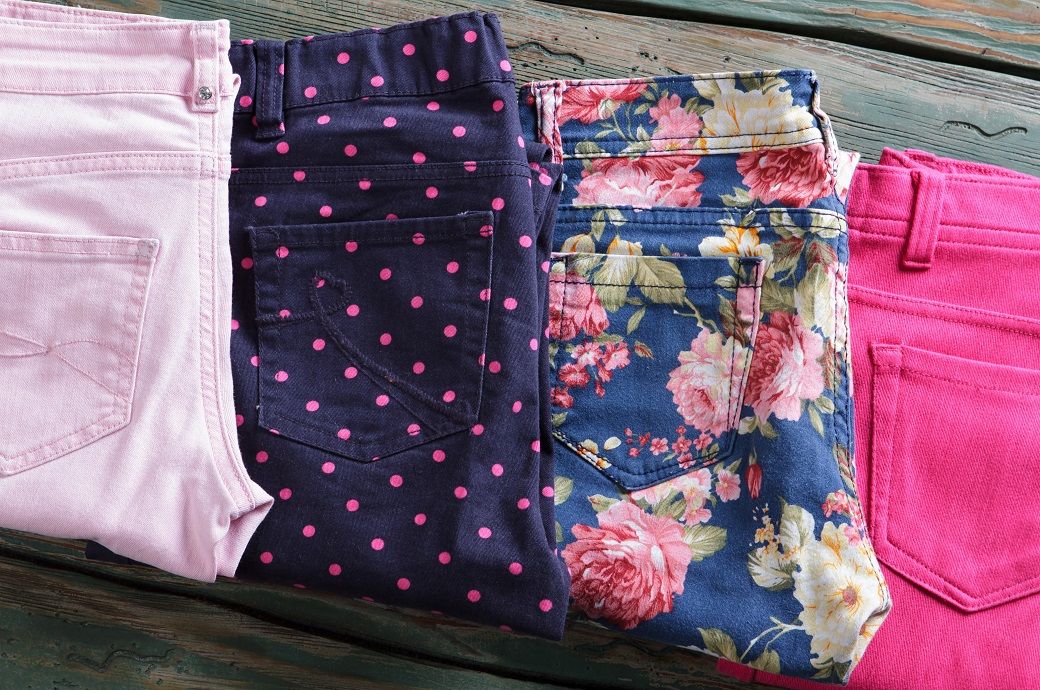
Indonesia’s apparel exports rose modestly to $8.705 billion in 2025 from $8.316 billion in 2024, reflecting gradual recovery.
The US remained dominant, accounting for over 56 per cent of shipments, highlighting growing market dependence.
While Japan, South Korea and Europe offered stability, exports stayed concentrated in key products and segments.
Source link
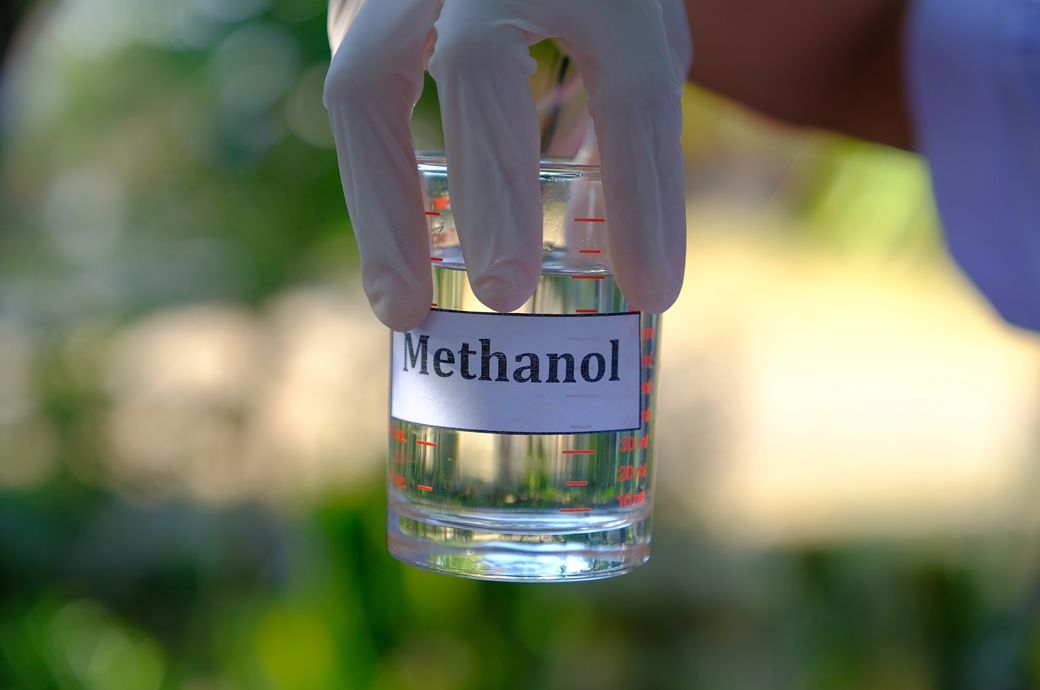
Methanol prices in India have surged nearly 150 per cent from pre-Iran–US tension levels, tracking a sharp rise in crude oil and tightening global energy markets.
Hormuz disruption risks, limited rerouting capacity, rising freight and insurance costs, and constrained imports are fuelling volatility, with prices seen approaching ₹90 per kg.
Source link
The easing in the rate of decline reflects moderating downward pressure from energy markets, particularly crude oil prices, which continue to influence industrial pricing trends, CBS said in a press release.
Manufacturing output prices in the Netherlands fell 2.3 per cent YoY in February 2026, a smaller decline than January’s 2.5 per cent, according to CBS.
The drop was driven by lower crude oil prices, though the pace of decline eased.
Petroleum prices remained subdued.
On a monthly basis, prices rose 0.3 per cent, signalling mild recovery in domestic and export markets.
In February, the average price of a barrel of crude oil stood at nearly €59, down by over 18 per cent YoY. This compares with January, when Brent crude averaged around €55 per barrel, registering a sharper annual decline of more than 27 per cent.
Petroleum-derived product prices also showed a narrower contraction, falling by 9.1 per cent YoY in February compared to a steeper 15.6 per cent drop in January.
On a month-on-month (MoM) basis, however, manufacturing output prices edged higher by 0.3 per cent in February. Export prices rose by 0.4 per cent, while domestic market prices increased by 0.3 per cent, indicating a modest recovery in short-term pricing momentum.
Fibre2Fashion News Desk (SG)


AI Has Flooded All the Weather Apps

Indonesia’s apparel exports at $8.7 bn; 56% shipments to US

King Charles important annual tradition hit with setback as warning issued

-

 Politics1 week ago
Afghanistan announces release of detained US citizen
-

 Sports1 week ago
Broadcast industry CEO says consolidation is ‘essential’ to compete for NFL soaring media rights prices
-

 Entertainment1 week ago
UN warns migratory freshwater fish numbers are spiralling
-

 Tech1 week ago
Can a Home Appliance Fix the Problem of Soft-Plastic Waste?
-
 Business7 days ago
Property Play: Home flippers see smallest profits since the Great Recession, real estate data firm says
-
 Business1 week ago
Gold prices soar in Pakistan – SUCH TV
-

 Fashion1 week ago
ICE cotton slips on weaker crude, profit booking
-
 Business1 week ago
More women are entering wealth management, but few are in advisory roles, study finds