

Fashion
Camera expresses belief in Italian future; Lorenzo Bertelli concerned Armani might pass into foreign hands


Published
September 24, 2025
Prada senior executive and family heir Lorenzo Bertelli on Wednesday expressed concern that the house of Giorgio Armani might pass into foreign hands, a common apprehension among senior Italian luxury executives.
“Naturally, I fully respect the right of Signor Armani to do as his wishes with his own company. But, of course, we would be disappointed if Armani passed into foreign control,” said Bertelli, speaking at a breakfast with editors to meet the board of the Camera della Moda, Italian fashion’s governing body.
Held inside private members club Cipriani, the morning get together was hosted by a Camera board that included many of Italy’s top luxury decision makers: Renzo Rosso of Diesel, Luigi Maramotti of Max Mara, Remo Ruffini of Moncler, and Gildo Zegna, Alfonso Dolce and Camera CEO Carlo Capasa. Between them, the board members control a score of luxury marques, with annual sales of over €12 billion, so one tends to pay attention to their opinion.
Under the terms of the will of Armani, who passed away on September 4, his heirs are obliged to sell 15% of his company to a major luxury group within 18 months or float the company on the stock market in a public tender offer. Furthermore, Armani listed three key candidates, two of whom are French – luxury giant LVMH and beauty behemoth L’Oreal, along with eyewear leader EssilorLuxottica, a Franco-Italian group.

This April, Prada acquired 100% of Versace in a $1.25 billion deal from New York fashion group Capri Holdings, repatriating an iconic Milan house from American to Italian control. The price was a significant discount of the $2.1 billion the Versace family sold out for in 2018, reflecting changing valuations in fashion brands in a slower market. On Friday, Dario Vitale will stage his debut show for Versace in Milan, the first since the retirement of Donatella Versace.
The breakfast took place on the second day of the six-day Milan Fashion Week, which opened Tuesday with the first collection by Demna at Gucci, Italy’s single largest luxury brand. And will climax on Friday with the 50th-anniversary show of Giorgio Armani and the opening of a retrospective of the designer’s creations inside the Pinacoteca di Brera, Milan’s greatest art museum.
The season comes at a moment when Italian luxury has been buffeted by fines levied due to unfair working conditions by Italian authorities against several major companies including LVMH’s Dior and Armani.

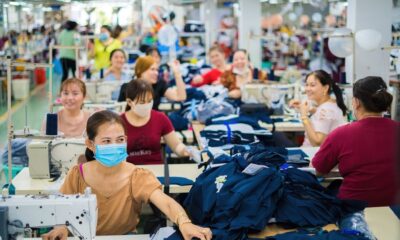
CEO Capasa conceded that there has been “major issues in supply chain,” but revealed that the Camera has been working with the government on developing a law to regulate the issue. Local media reports have sometimes characterized the issue as, in part, bold-faced name brands using Chinese sweatshops in Italy.
“We are presenting a law to address this issue in November. But you must remember irregular workers make up only about 30,000 people out of 600,000 working in Italy,” in fashion and luxury manufacturing, Capasa argued.
Adding that picking out a couple of hundred bags and suits that had been made in under the radar ateliers, out of several million items made per year in the peninsula, “is not so fair.”
Entering the discussion, Maramotti cautioned that the Camera has been working for 18 months on this issue.
“Some things are not so simple to regulate. This sort of activity happens at our third level of supply,” he insisted, before adding: “I love Chinese people, they have brought so much to Italy.”
Maramotti opined that too much attention is being placed on creating a giant group, when what was needed was support for small companies and artisans.
“Unfortunately, in France, the fashion industry is no longer there in terms of production,” he noted in warning.

Over 600,000 people work in the greater fashion business in Italy, the Camera estimates, though international conflicts and the collapse of Chinese consumer demand for luxury products has placed many labels under stress.
“It’s a time of deep divisions in the world with lots of problems. Also, we forget that fashion can have a positive message. But, in my view, we are going to have a strong fashion week,” added Capasa.
In a busy season, Milan will host 171 events, including 54 in-person shows, the same number as in February.
“We are very proud to be Italian and to defend our system. We are ethical and serious and proud of the fact that many of our houses are still controlled by the founding family after 100 years,” added Gildo Zegna, whose grandfather Ermenegildo founded the marque in 1910.
“I believe that the Camera, led by Carlo Capasa, has done a very good job. We are dependent on our supply system and that must be defended, especially the small companies and not just the big ones,” added Zegna, before cautioning that U.S. tariffs posed a major threat by inflating prices in the United States.

Zegna, whose firm at one stage manufactured most of Armani’s men’s apparel, also pointedly expressed his “gratitude to Signor Armani, our god and leader.”
In his remarks, Renzo Rosso focused on the need of all companies need to grow through a sustainable model.
“We Italians can create strong groups, look at Remo and I,” he smiled. Noting that his group OTB had four runway fashion brands, he signaled that the key to success was hard work and our creativity.
“Right now, we don’t have traffic inside the stores. So, we must work even harder. And we need to be positive. Even if sometimes it’s often easier to attract more readers with bad news. Maybe you could all write about something positive?” said Renzo, in a gentle admonishment of certain critics at the breakfast.
Copyright © 2025 FashionNetwork.com All rights reserved.







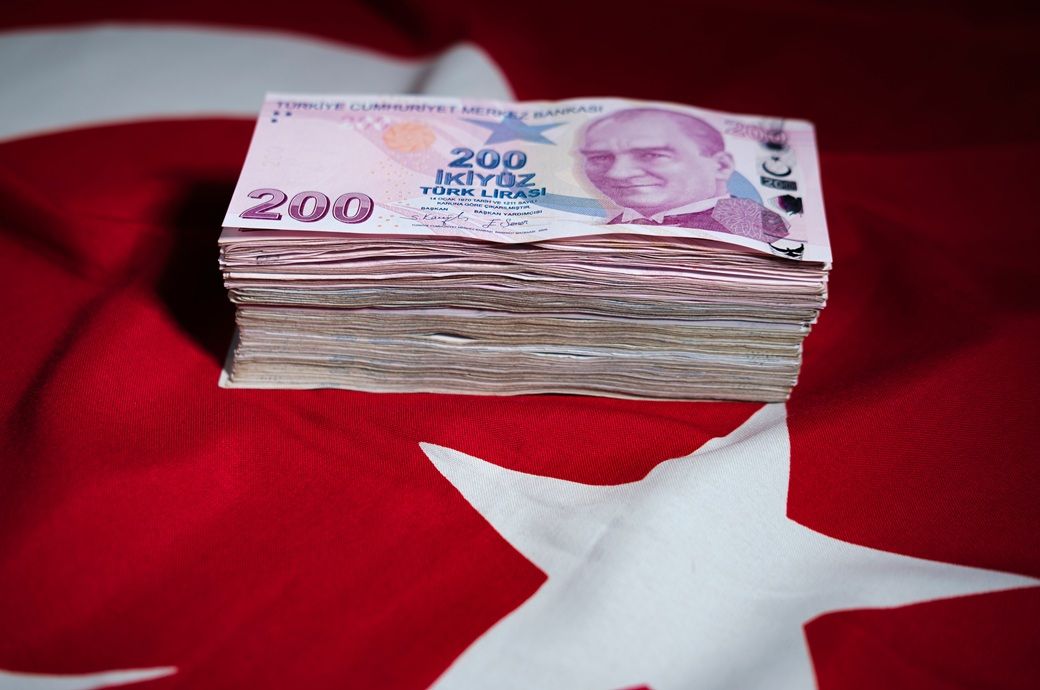
Current account excluding gold and energy indicated net deficit of $3.9 billion, while goods saw a deficit of $9.5 billion.
Turkiye recorded a current account deficit (CAD) of $9.6 billion in March, the country’s central bank said.
Treasury and Finance Minister Mehmet Simsek said the CAD is expected to widen this year, due to high energy and non-energy commodity prices.
Simsek said the deterioration is likely to remain temporary and manageable, thanks to stronger macroeconomic fundamentals and policy gains.
According to annualised data, current account deficit recorded as $39.7 billion (2.6 per cent of gross domestic product) in March, while the goods deficit recorded as $77.8 billion.
Simsek said the deterioration is likely to remain temporary and manageable thanks to stronger macroeconomic fundamentals and policy gains, domestic media outlets reported.
Turkiye is heavily reliant on imported energy, whose prices spiralled due to the Middle East conflict.
Simsek said elevated global commodity prices would put pressure on the external balance, but emphasised that the government’s economic programme had improved resilience against such shocks.
He said foreign direct investment (FDI) inflows totalled $1 billion in March, bringing annualised foreign direct investment to $12.6 billion.
The new investment incentive package under discussion in parliament now is expected to strengthen the country’s financing structure and support long-term capital inflows, he added.
Fibre2Fashion News Desk (DS)
During the first quarter of ****, the UK’s imports of textile fabrics eased down *.** to £*,*** million (~$*,*** million), against £*,*** million in January-March **** but slightly higher from £*,*** million in the fourth quarter of ****. Its imports of fibre were noted at £** million (~$***.** million) steady as £** million in Q*, **** but slightly lower than £** million in Q*, ****.
During the third month of this year, the country’s clothing imports declined *.** per cent to £*.*** billion (~$*.*** billion), compared with £*.*** billion in March ****. But the inbound shipment was slightly higher month on month compared with £*.*** billion in February ****.

Higher rents, utility bills and fuel prices are eating away at already thin profit margins, it found.
High inflation is cutting deep into Bangladesh consumer spending, with weak demand turning one of the biggest concerns for businesses, DCCI said.
Higher rents, utility bills and fuel prices are eating away at already thin profit margins.
DCCI’s economic position index revealed that consumers have sharply reduced spending as the cost of living continues to rise.
SMEs are feeling the pressure the most.
The chamber’s economic position index (EPI) revealed that consumers have sharply reduced spending as the cost of living continues to rise, putting pressure on retailers, transport operators and other service providers.
Small and medium enterprises (SMEs) are feeling the pressure the most as they struggle to manage higher operating costs without losing customers.
Businesses also cited difficulties in obtaining bank loans, while delays in licensing and other regulatory procedures are adding to costs.
The DCCI report identified a shortage of skilled workers, particularly in technical and customer service roles, as another challenge for the sector.
The country’s inflation rose to 9.04 per cent in April from 8.71 per cent in March, according to official statistics.
Fibre2Fashion News Desk (DS)


Turkiye’s current account deficit expected to widen in 2026: Minister

UK’s clothing imports fall 3% in Q1, sharply lower than Q4 2025
RBI sees no signs of excess credit risk, keeps countercyclical capital buffer inactive

-

 Entertainment6 days ago
Conan O’Brien hat tricks as Oscar host
-

 Tech1 week ago
Could Contact-Tracing Apps Help With the Hantavirus? Not Really
-

 Fashion5 days ago
Italy’s Zegna Group’s Q1 growth boosted by strong organic performance
-

 Sports1 week ago
Bobby Cox, legendary Atlanta Braves manager who led 1995 World Series champions, dead at 84
-

 Entertainment1 week ago
Martin Short: Facing tragedy with joy
-

 Entertainment1 week ago
Tom Brady gets back at Kevin Hart during Netflix roast
-

 Sports1 week ago
Jacob Fatu unleashes vicious assault on Roman Reigns after World Heavyweight Championship loss at WWE Backlash
-

 Entertainment1 week ago
Martha Stewart: How to make an omelet