

Politics
UN sanctions on Iran set to return as nuclear diplomacy fades

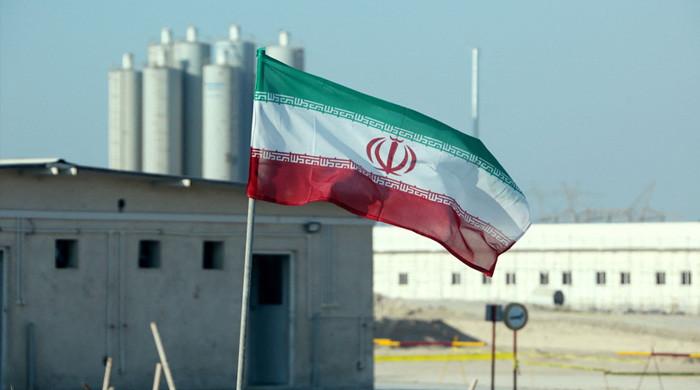
- UN inspectors return, West demands more nuclear progress.
- Sanctions start Sunday, target nuclear, missile-linked entities.
- Pezeshkian rejects uranium deal, accuses West of pressure.
Iran was set to come under sweeping UN sanctions late Saturday for the first time in a decade — barring an unexpected last-minute breakthrough — after nuclear talks with the West floundered.
The UN nuclear watchdog on Friday said that inspectors had been allowed to return to Iranian sites, but Western powers did not see enough progress to agree to a delay after a week of top-level diplomacy at the UN General Assembly.
European powers set the clock ticking a month ago for the “snapback” of the UN sanctions, accusing Iran of failing to come clean on its nuclear program — including through countermeasures it took in response to Israeli and US bombing.
Iran on Saturday recalled its envoys in Britain, France and Germany for consultations, after the three European countries triggered the mechanism, Iranian state television said.
The sanctions are set to go into effect at 0000 GMT on Sunday (8:00pm on Saturday in New York).
They will set up a global ban on working with companies, people and organisations accused of developing Iran’s nuclear program or ballistic missiles.
Iranian President Masoud Pezeshkian said there was no reason to reach a deal when, in his view, Israel and the United States were seeking to use the pressure to topple the Islamic republic.
“If the goal had been to resolve concerns on the nuclear program, we could easily do that,” Pezeshkian told reporters, as he insisted again that Iran will never pursue nuclear weapons.
Pezeshkian, who met during the week with French President Emmanuel Macron, said France had proposed that Iran give up its stockpile of highly enriched uranium in return for a one-month delay in the return of sanctions.
“Why would we put ourselves in such a trap and have a noose around our neck each month?” he said.
He accused the United States of pressing the Europeans not to reach a compromise.
Steve Witkoff, Trump’s friend and roving negotiator, had said that the United States does not want to hurt Iran and was open to further talks.
But Pezeshkian charged that Witkoff lacked seriousness, saying he had backtracked on agreements during earlier talks — which abruptly stopped when Israel launched its military campaign.
No Russia enforcement
The sanctions are aimed at imposing new economic pain to pressure Iran, but it remains to be seen if all countries will enforce them.
Russian deputy ambassador Dmitry Polyansky said Friday that Moscow, a top partner of Iran, considered the reimposition of sanctions “null and void.”
Russia and China sought at the Security Council Friday to delay the reimposition of sanctions until April but failed to muster enough votes.
The United States already has unilateral sanctions on Iran and has tried to force all other countries to stop buying Iranian oil, although companies from China have defied the pressure.
Trump imposed a “maximum pressure” campaign during his first term when he withdrew from a landmark 2015 nuclear agreement negotiated under former president Barack Obama, which had offered sanctions relief in return for drastic curbs on Iran’s nuclear program.
The new sanctions mark a “snapback” of the UN measures that were suspended under the 2015 deal, which had been strongly supported by Britain, France and Germany after Trump’s withdrawal.
The International Crisis Group, which studies conflict resolution, said in a report that Iran seemed dismissive of the snapback as it had already learned to cope with the US sanctions.
But it noted that the snapback was not easy to reverse as it would require consensus at the Security Council.
“It is also likely to compound the malaise around an economy already struggling with high inflation, currency woes and deepening infrastructure problems,” the report said.
Israeli Prime Minister Benjamin Netanyahu in a defiant UN address Friday urged no delay in the snapback and hinted that Israel was willing to again strike Iran’s nuclear program, after the 12 days of bombing in June that Iranian authorities say killed more than 1,000 people.
Pezeshkian said that Iran would not retaliate against the sanctions by leaving the nuclear Non-Proliferation Treaty, warning that unnamed powers were seeking a “superficial pretext to set the region ablaze.”
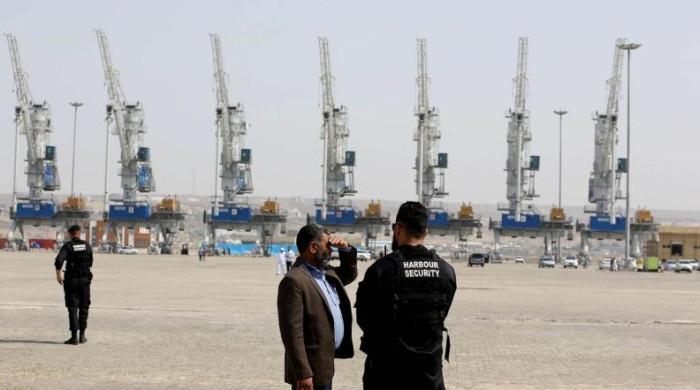
- New Delhi incurs $120m losses after exiting port development deal.
- Congress leader terms move “a new low” in India’s foreign policy.
- Experts say actions raise concerns about India’s role at Chabahar.
The Indian government, led by Prime Minister Narendra Modi, has come under heavy fire at home after it withdrew from the Chabahar port agreement with Iran, with critics arguing the move was a strategic retreat rather than a proactive foreign policy decision.
New Delhi was forced to abandon its involvement in the port after the United States imposed a 25% tariff on countries doing business with Tehran, The Economic Times reported on Thursday.
According to the publication, India’s withdrawal was carried out without any formal announcement, resulting in the loss of $120 million already paid to Iran.
The amount had been transferred before the decision to disengage and is now considered unrecoverable, the report stated.
The state-run company working at the port, India Ports Global Limited (IPGL), saw its board of directors submit collective resignations after the decision, while the company’s official website has also been shut down.
Congress party leader Pawan Khera termed the move “a new low” in the Modi-led government’s foreign policy.
“So the question is not of Chabahar Port or of Russian oil. The question is: Why is Modi allowing USA to arm-twist India?” he asked in an X post.
India assumed responsibility in 2024 for developing Chabahar port under a 10-year arrangement with Iran.
Meanwhile, a foreign journal reported that the $120 million already paid to Iran can now be used by it at its discretion for the port’s construction and development.
Observers described India’s withdrawal from Chabahar port as another major setback for New Delhi.
The Congress party sharply criticised the Modi-led government over the decision, saying the Indian prime minister “has once again surrendered to Trump”.
“$120 million of India’s taxpayers’ money was invested by the Modi government in this strategically important project, but now it’s all gone up in smoke,” read a post on the party’s X handle.
The Indian opposition party recalled Modi hailing the agreement as “a major strategic win”, saying India’s control over the port has been relinquished, with complete silence from the government.
“Unfortunately, Modi has bowed before Trump’s pressure and compromised India’s national interest,” the party stated.
Meanwhile, economic affairs experts believe the latest actions reinforced concerns surrounding India’s role at Chabahar.
They voiced concerns that India was using the port for nefarious objectives, saying that IPGL’s conduct suggested it was created primarily to acquire control of Chabahar.
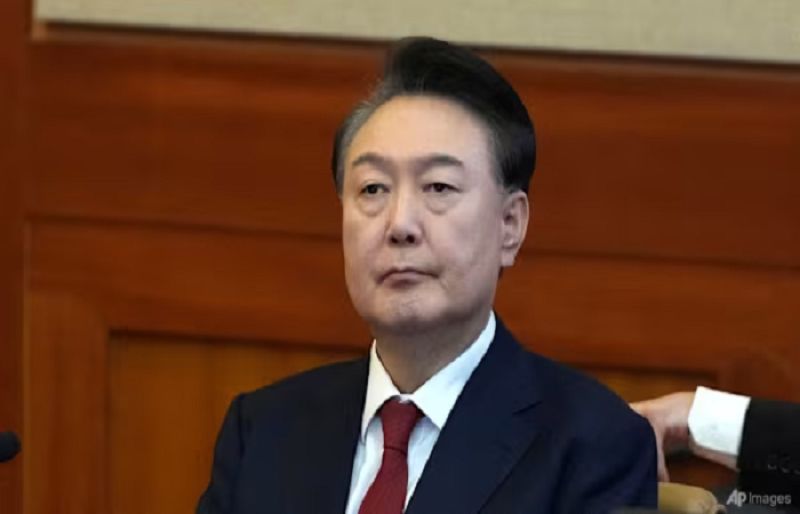

A South Korean court on Friday sentenced former President Yoon Suk Yeol to five years in prison on charges that included obstructing attempts by authorities to arrest him following his failed bid to impose martial law in December 2024.
The Seoul Central District Court found Yoon guilty of mobilising the presidential security service to block authorities from executing an arrest warrant that had been legally issued by a court to investigate him for his martial law declaration.
In televised proceedings, he was also found guilty of charges that included fabricating official documents and failing to comply with the legal process required for martial law.
The ruling is the first related to the criminal charges Yoon faces over his botched martial law declaration.
“The defendant abused his enormous influence as president to prevent the execution of legitimate warrants through officials from the Security Service, which effectively privatised officials … loyal to the Republic of Korea for personal safety and personal gain,” the lead judge on the three-justice panel said.
Speaking outside the court immediately after the decision, one of Yoon’s lawyers, Yoo Jung-hwa, said the former president would appeal the ruling. “We express regret that the decision was made in a politicised manner,” she said.
He could face the death sentence in a separate trial on a charge of masterminding an insurrection by declaring martial law without justification.
Yoon has argued it was within his powers as president to declare martial law and that the action was aimed at sounding the alarm over the obstruction of government by opposition parties.
Yoon, who also denied Friday’s charges, could have faced up to 10 years in jail over the obstruction charges related to when he barricaded himself inside his residential compound in January last year and ordered the security service to block investigators.
He was finally arrested in a second attempt involving more than 3,000 police officers. Yoon’s arrest was the first ever for a sitting president in South Korea.
Parliament, joined by some members of Yoon’s conservative party, voted within hours to overturn his surprise martial law decree and later impeached him, suspending his powers.
He was removed from office in April last year by the Constitutional Court, which ruled he violated the duties of his office.
While Yoon’s bid to impose martial law lasted only about six hours, it sent shockwaves through South Korea, which is Asia’s fourth-largest economy, a key US security ally, and long considered one of the world’s most resilient democracies.
- Judge finds Yoon guilty of obstructing justice and other crimes.
- Separate insurrection verdict is scheduled for February 19.
- Yoon faces another trial over alleged drone flights to North Korea.
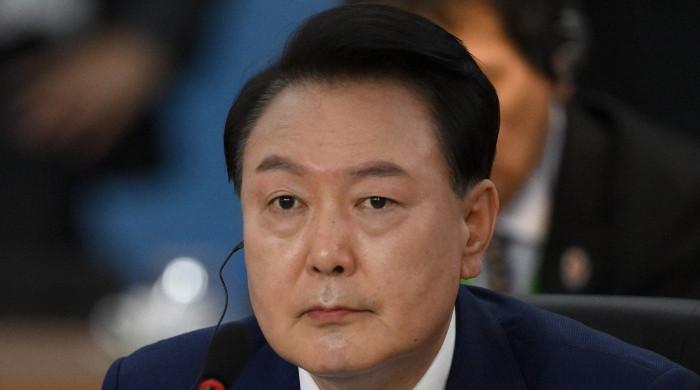
SEOUL: A South Korean judge sentenced former president Yoon Suk Yeol on Friday to five years in prison for obstructing justice and other crimes linked to his disastrous martial law declaration and in its chaotic aftermath.
It is the first in a series of verdicts for the disgraced ex-leader, whose brief suspension of civilian rule in South Korea on December 3, 2024 prompted massive protests and a showdown in parliament.
Now ousted from power, he faces multiple trials for actions taken during that debacle and in the turmoil that followed.
On Friday Judge Baek Dae-hyun at Seoul’s Central District Court said he found Yoon guilty of obstruction of justice by blocking investigators from detaining him.
Yoon was also found guilty of excluding cabinet members from a martial law planning meeting.
“Despite having a duty, above all others, to uphold the Constitution and observe the rule of law as president, the defendant instead displayed an attitude that disregarded the… Constitution,” Baek said.
“The defendant’s culpability is extremely grave,” he said.
But Yoon was not guilty of forging official documents due to lack of evidence, the judge said.
Yoon has seven days to appeal, he added.
Prosecutors had called for a 10-year prison term, while Yoon had insisted no law was broken.
Yoon defiant
It comes days after prosecutors in a separate case demanded Yoon be sentenced to death for his role as the “ringleader of an insurrection” in orchestrating the imposition of martial law.
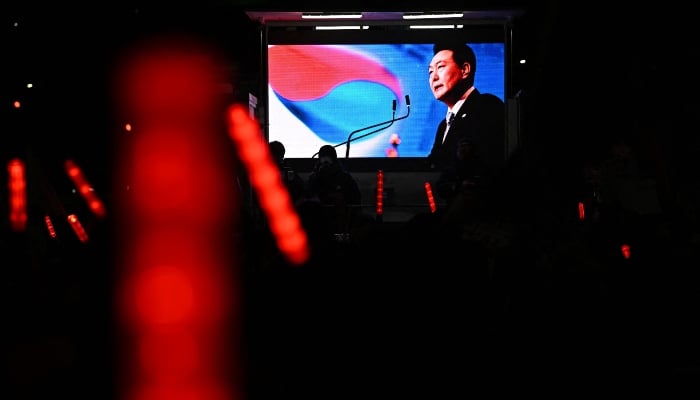
They argued Yoon deserved the severest possible punishment as he had shown “no remorse” for actions that threatened “constitutional order and democracy”.
If he is found guilty it is highly unlikely the sentence will actually be carried out, as South Korea has had an unofficial moratorium on executions since 1997.
Yoon was seen smiling in court as the prosecutors demanded the punishment.
And the former leader and top prosecutor has remained defiant, saying his martial law declaration was a lawful exercise of his presidential authority.
In closing remarks on Tuesday, he insisted the “exercise of a president’s constitutional emergency powers to protect the nation and uphold the constitutional order cannot be deemed an act of insurrection”.
He accused the then-opposition party of having imposed an “unconstitutional dictatorship” through their control of the legislature.
“There was no other option but to awaken the people, who are the sovereign.”
The court is scheduled to rule on the insurrection charges on February 19.
Yoon also faces a separate trial on charges of aiding the enemy, over allegations he ordered drone flights over North Korea to bolster his case for declaring martial law.


Japan’s Fast Retailing names Francesco Risso as GU creative director
Reliance Industries Q3 Results: Revenue Rises 10% On Digital, Oil-To-Chemicals Growth

Sophie Turner triggers mixed reaction with ‘Tomb Raider’ reveal

-
 Politics1 week ago
UK says provided assistance in US-led tanker seizure
-

 Entertainment1 week ago
Does new US food pyramid put too much steak on your plate?
-

 Entertainment1 week ago
Why did Nick Reiner’s lawyer Alan Jackson withdraw from case?
-
 Sports5 days ago
Clock is ticking for Frank at Spurs, with dwindling evidence he deserves extra time
-
 Business1 week ago
Trump moves to ban home purchases by institutional investors
-
 Sports1 week ago
PGA of America CEO steps down after one year to take care of mother and mother-in-law
-

 Tech4 days ago
New Proposed Legislation Would Let Self-Driving Cars Operate in New York State
-
Sports7 days ago
Commanders go young, promote David Blough to be offensive coordinator