

Politics
Ex-FBI chief Comey indictment escalates Trump’s campaign to chill opposition

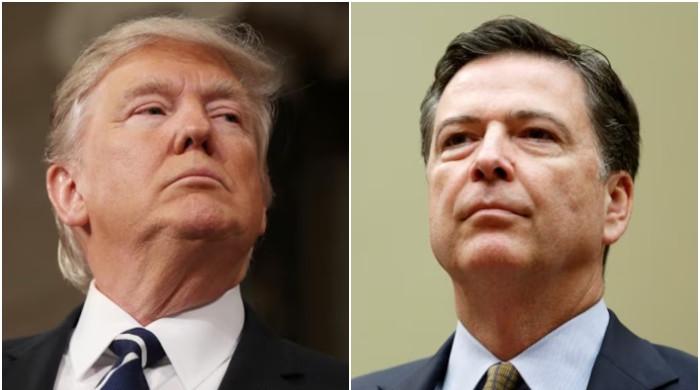
- Comey indictment faces significant legal hurdles, experts say.
- Trump’s actions may aid Comey’s defense against prosecution.
- Indictment seen as part of broader effort against adversaries.
WASHINGTON: The US criminal case against former FBI director James Comey shatters norms of independence in federal investigations and will face significant hurdles in court, according to legal experts.
But for President Donald Trump, the final verdict may matter less than the move to exact retribution against an official who investigated him and the warning to others he sees as political enemies.
Comey, who was indicted on Thursday on charges of false statements and obstruction of a congressional proceeding, led the FBI when it began an investigation into ties between Trump’s 2016 campaign and the Russian government.
Comey has professed his innocence and vowed to fight the case in court.
Since Trump returned to office in January, he has used his powers as president to hamstring law firms that represented causes he dislikes, leveraged federal funding to force changes at universities and fired prosecutors who took part in investigations against him.
He has also pushed for charges against former National Security Adviser John Bolton, New York Attorney General Letitia James and Democratic Senator Adam Schiff.
When asked about the Comey indictment on Friday, Trump told reporters, “I think there will be others.”
The indictment marked the first time his administration used the power of criminal prosecution against a prominent adversary. It came after Trump openly demanded Comey face charges and called for the removal of a prosecutor who did not think the case was strong.
“The ripple effect from this is huge,” said Rebecca Roiphe, a law professor at New York University. “If you are someone who opposes the president or the administration or poses some kind of obstacle to its agenda, you are doing so at grave risk.”
Justice Department leaders have depicted the case as a strike against political corruption and the improper use of law enforcement. Trump and his allies have long claimed the Russia investigation was a politically biased effort to undermine his first administration.
“Today’s indictment reflects this Department of Justice’s commitment to holding those who abuse positions of power accountable for misleading the American people,” Attorney General Pam Bondi said in a statement.
Deputy Attorney General Todd Blanche denied that the Justice Department was pressured to indict Comey, telling Fox News’ “America Reports” that Trump “wants us to do our job.”
Legal hurdles ahead
The case against Comey faces several legal obstacles to a potential conviction, legal experts said.
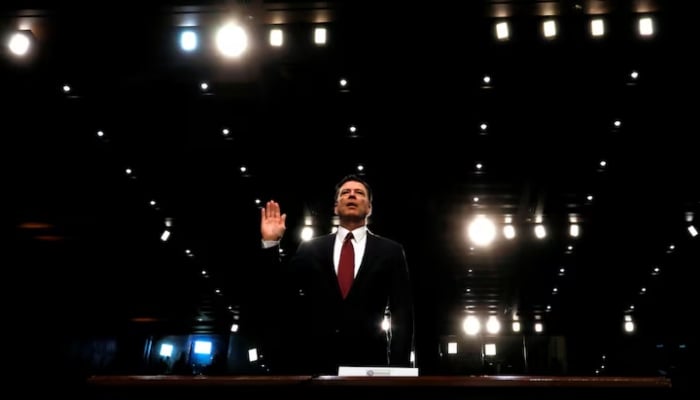
It is being led by Lindsey Halligan, a lawyer who represented Trump in civil litigation and has no previous prosecutorial experience.
In an unusual move, Halligan, whom Trump named US Attorney for the Eastern District of Virginia, personally presented the case to a grand jury, sources told Reuters. No career prosecutors in the office signed the indictment.
Prosecutors must prove both that Comey’s statement was false and that it had a substantial impact on a congressional investigation into the FBI’s handling of probes into Trump and his 2016 election rival Democrat Hillary Clinton.
The indictment alleges that Comey lied when he told Republican Senator Ted Cruz of Texas in 2020 that he stood behind previous testimony that he had not authorised anyone at the FBI to be an anonymous source in news reports.
The indictment does not name the investigation or the news report at issue, but a source familiar with the matter told Reuters that it relates to Comey’s alleged move to authorise his friend, law professor Daniel Richman, to share information about an investigation related to Clinton. The document does not detail the evidence gathered against Comey.
“The underlying premise of the false statement charge is at best incredibly thin,” said Bradley Moss, a lawyer specialising in national security cases.
Another potential obstacle is Trump’s own intervention in the probe. Halligan’s predecessor Erik Siebert, another Trump appointee, resigned under pressure after expressing misgivings about the case.
Trump then mentioned Comey by name in a social media post, demanding “JUSTICE MUST BE SERVED, NOW!” After the indictment, Trump wrote of Comey, “HE LIED” and “there is no way he can explain himself out of it.”
Such statements could be grist for a defense argument that the prosecution is vindictive or selective, meaning that Comey was improperly singled out for prosecution.
Legal experts said such arguments are difficult to win, but the record of Trump’s actions and statements could give Comey a strong case.
A larger message
The indictment against Comey comes as the Justice Department is pursuing investigations of James and Schiff, who have both played roles in investigations into Trump, over claims of mortgage fraud.
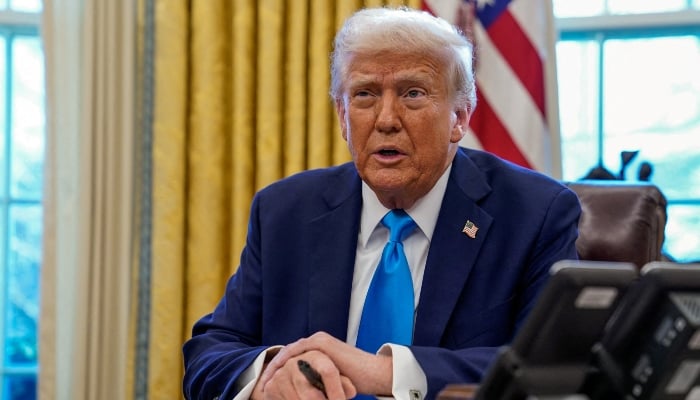
Bolton is under probe for potential mishandling of classified documents.
All have denied wrongdoing.
Critics of the administration fear the Comey indictment could presage a larger effort to use criminal law against Trump’s rivals and critics, part of a broader push to intimidate adversaries and stifle dissent.
It also shatters decades-old Justice Department norms that criminal investigations should be insulated from political pressure. An indictment puts a defendant at risk of prison time and even a successful defense can cost huge sums of money.
Trump successfully campaigned in 2024 in part on a vow of political retribution against those he argued had improperly targeted him and his political movement. Trump, who faced four criminal indictments during his years out of power, has long claimed that the legal system was improperly turned against him.
In July, the White House X account posted an image of Trump against a backdrop of fireworks and American flags.
“I was the hunted,” the text on the image read. “NOW I’M THE HUNTER.”
- New Delhi incurs $120m losses after exiting port development deal.
- Congress leader terms move “a new low” in India’s foreign policy.
- Experts say actions raise concerns about India’s role at Chabahar.
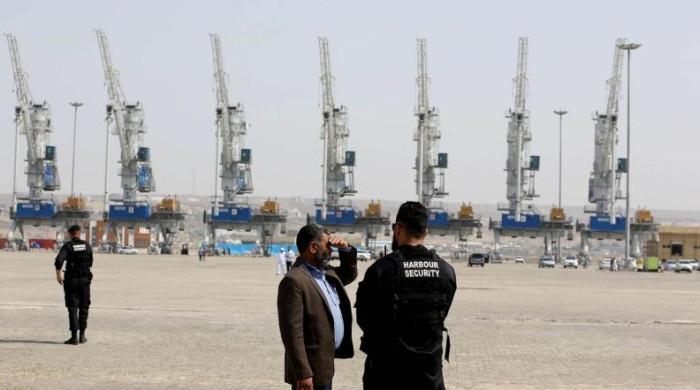
The Indian government, led by Prime Minister Narendra Modi, has come under heavy fire at home after it withdrew from the Chabahar port agreement with Iran, with critics arguing the move was a strategic retreat rather than a proactive foreign policy decision.
New Delhi was forced to abandon its involvement in the port after the United States imposed a 25% tariff on countries doing business with Tehran, The Economic Times reported on Thursday.
According to the publication, India’s withdrawal was carried out without any formal announcement, resulting in the loss of $120 million already paid to Iran.
The amount had been transferred before the decision to disengage and is now considered unrecoverable, the report stated.
The state-run company working at the port, India Ports Global Limited (IPGL), saw its board of directors submit collective resignations after the decision, while the company’s official website has also been shut down.
Congress party leader Pawan Khera termed the move “a new low” in the Modi-led government’s foreign policy.
“So the question is not of Chabahar Port or of Russian oil. The question is: Why is Modi allowing USA to arm-twist India?” he asked in an X post.
India assumed responsibility in 2024 for developing Chabahar port under a 10-year arrangement with Iran.
Meanwhile, a foreign journal reported that the $120 million already paid to Iran can now be used by it at its discretion for the port’s construction and development.
Observers described India’s withdrawal from Chabahar port as another major setback for New Delhi.
The Congress party sharply criticised the Modi-led government over the decision, saying the Indian prime minister “has once again surrendered to Trump”.
“$120 million of India’s taxpayers’ money was invested by the Modi government in this strategically important project, but now it’s all gone up in smoke,” read a post on the party’s X handle.
The Indian opposition party recalled Modi hailing the agreement as “a major strategic win”, saying India’s control over the port has been relinquished, with complete silence from the government.
“Unfortunately, Modi has bowed before Trump’s pressure and compromised India’s national interest,” the party stated.
Meanwhile, economic affairs experts believe the latest actions reinforced concerns surrounding India’s role at Chabahar.
They voiced concerns that India was using the port for nefarious objectives, saying that IPGL’s conduct suggested it was created primarily to acquire control of Chabahar.
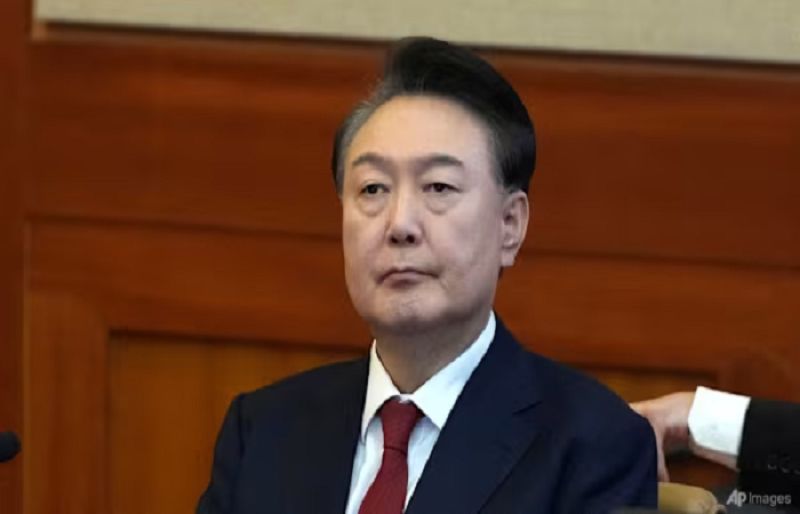

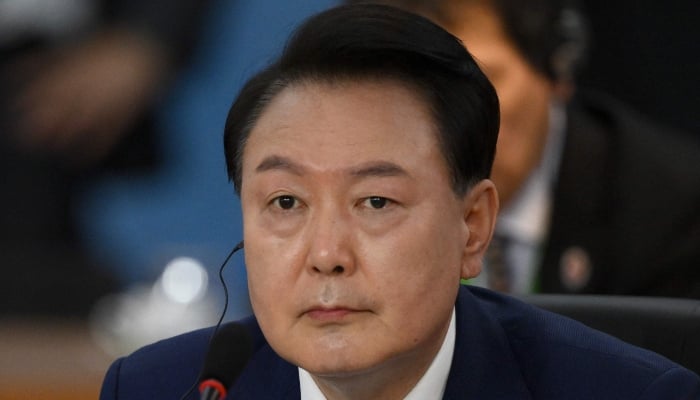
A South Korean court on Friday sentenced former President Yoon Suk Yeol to five years in prison on charges that included obstructing attempts by authorities to arrest him following his failed bid to impose martial law in December 2024.
The Seoul Central District Court found Yoon guilty of mobilising the presidential security service to block authorities from executing an arrest warrant that had been legally issued by a court to investigate him for his martial law declaration.
In televised proceedings, he was also found guilty of charges that included fabricating official documents and failing to comply with the legal process required for martial law.
The ruling is the first related to the criminal charges Yoon faces over his botched martial law declaration.
“The defendant abused his enormous influence as president to prevent the execution of legitimate warrants through officials from the Security Service, which effectively privatised officials … loyal to the Republic of Korea for personal safety and personal gain,” the lead judge on the three-justice panel said.
Speaking outside the court immediately after the decision, one of Yoon’s lawyers, Yoo Jung-hwa, said the former president would appeal the ruling. “We express regret that the decision was made in a politicised manner,” she said.
He could face the death sentence in a separate trial on a charge of masterminding an insurrection by declaring martial law without justification.
Yoon has argued it was within his powers as president to declare martial law and that the action was aimed at sounding the alarm over the obstruction of government by opposition parties.
Yoon, who also denied Friday’s charges, could have faced up to 10 years in jail over the obstruction charges related to when he barricaded himself inside his residential compound in January last year and ordered the security service to block investigators.
He was finally arrested in a second attempt involving more than 3,000 police officers. Yoon’s arrest was the first ever for a sitting president in South Korea.
Parliament, joined by some members of Yoon’s conservative party, voted within hours to overturn his surprise martial law decree and later impeached him, suspending his powers.
He was removed from office in April last year by the Constitutional Court, which ruled he violated the duties of his office.
While Yoon’s bid to impose martial law lasted only about six hours, it sent shockwaves through South Korea, which is Asia’s fourth-largest economy, a key US security ally, and long considered one of the world’s most resilient democracies.
- Judge finds Yoon guilty of obstructing justice and other crimes.
- Separate insurrection verdict is scheduled for February 19.
- Yoon faces another trial over alleged drone flights to North Korea.
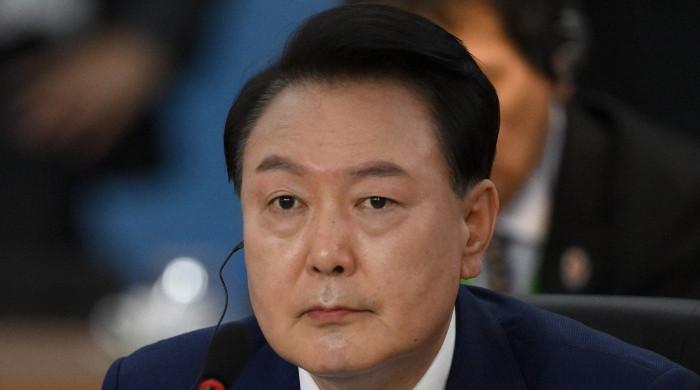
SEOUL: A South Korean judge sentenced former president Yoon Suk Yeol on Friday to five years in prison for obstructing justice and other crimes linked to his disastrous martial law declaration and in its chaotic aftermath.
It is the first in a series of verdicts for the disgraced ex-leader, whose brief suspension of civilian rule in South Korea on December 3, 2024 prompted massive protests and a showdown in parliament.
Now ousted from power, he faces multiple trials for actions taken during that debacle and in the turmoil that followed.
On Friday Judge Baek Dae-hyun at Seoul’s Central District Court said he found Yoon guilty of obstruction of justice by blocking investigators from detaining him.
Yoon was also found guilty of excluding cabinet members from a martial law planning meeting.
“Despite having a duty, above all others, to uphold the Constitution and observe the rule of law as president, the defendant instead displayed an attitude that disregarded the… Constitution,” Baek said.
“The defendant’s culpability is extremely grave,” he said.
But Yoon was not guilty of forging official documents due to lack of evidence, the judge said.
Yoon has seven days to appeal, he added.
Prosecutors had called for a 10-year prison term, while Yoon had insisted no law was broken.
Yoon defiant
It comes days after prosecutors in a separate case demanded Yoon be sentenced to death for his role as the “ringleader of an insurrection” in orchestrating the imposition of martial law.
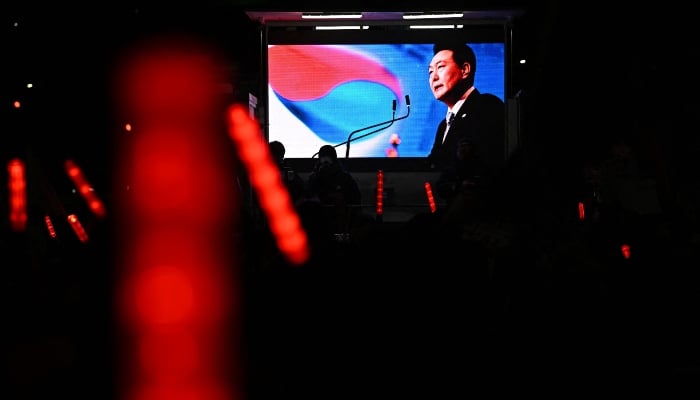
They argued Yoon deserved the severest possible punishment as he had shown “no remorse” for actions that threatened “constitutional order and democracy”.
If he is found guilty it is highly unlikely the sentence will actually be carried out, as South Korea has had an unofficial moratorium on executions since 1997.
Yoon was seen smiling in court as the prosecutors demanded the punishment.
And the former leader and top prosecutor has remained defiant, saying his martial law declaration was a lawful exercise of his presidential authority.
In closing remarks on Tuesday, he insisted the “exercise of a president’s constitutional emergency powers to protect the nation and uphold the constitutional order cannot be deemed an act of insurrection”.
He accused the then-opposition party of having imposed an “unconstitutional dictatorship” through their control of the legislature.
“There was no other option but to awaken the people, who are the sovereign.”
The court is scheduled to rule on the insurrection charges on February 19.
Yoon also faces a separate trial on charges of aiding the enemy, over allegations he ordered drone flights over North Korea to bolster his case for declaring martial law.


Japan’s Fast Retailing names Francesco Risso as GU creative director
Reliance Industries Q3 Results: Revenue Rises 10% On Digital, Oil-To-Chemicals Growth

Sophie Turner triggers mixed reaction with ‘Tomb Raider’ reveal

-

 Politics1 week ago
UK says provided assistance in US-led tanker seizure
-

 Entertainment1 week ago
Does new US food pyramid put too much steak on your plate?
-

 Entertainment1 week ago
Why did Nick Reiner’s lawyer Alan Jackson withdraw from case?
-

 Sports6 days ago
Clock is ticking for Frank at Spurs, with dwindling evidence he deserves extra time
-
 Business1 week ago
Trump moves to ban home purchases by institutional investors
-
 Sports1 week ago
PGA of America CEO steps down after one year to take care of mother and mother-in-law
-

 Tech4 days ago
New Proposed Legislation Would Let Self-Driving Cars Operate in New York State
-
Sports7 days ago
Commanders go young, promote David Blough to be offensive coordinator