

Business
From PepsiCo to Taco Bell, dirty soda is taking over


Utah-based drink chain Swig coined “dirty soda” back in 2010. Fifteen years later, the trend is fueling innovation everywhere from PepsiCo to McDonald’s, infusing the sluggish beverage category with new life.
“Dirty soda” drinks use pop as a base, followed by flavored syrups, cream or other ingredients. While Swig claims credit — and the trademark — for dirty soda, TikTok videos and the reality TV show “The Secret Lives of Mormon Wives” have helped the trend spread far and wide, outpacing even the soda chain’s speedy expansion.
Now, consumers can find it nearly everywhere, from grocery store aisles to fast-food chains.
In a few weeks, Pepsi plans to unveil two ready-to-drink dirty soda-inspired beverages at the National Association of Convenience Stores trade show in Chicago. The new drinks, the Dirty Dew and the Mug Floats Vanilla Howler, follow on the heels of the Pepsi Wild Cherry & Cream flavor, which hit shelves earlier this year.
“I think it’s a great opportunity for people like us, like PepsiCo, and for consumers to experience soda in a new way — and in some ways, an old way,” Pepsi Beverages North America Chief Marketing Officer Mark Kirkham told CNBC, comparing the rise of dirty soda to root beer floats and the soda shops of yore.
PepsiCo’s lineup of dirty soda-inspired drinks includes Pepsi Wild Cherry & Cream, Dirty Mountain Dew and Mug Floats Vanilla Howler.
Source: PepsiCo
Dirty soda has also drawn new interest beyond beverage players. According to Datassential, 2.7% of U.S. eateries offer a carbonated soft drink that includes cream or milk, up from 1.5% a decade ago.
Newcomers to the trend include TGI Fridays, which launched dirty soda as a limited-time menu item this summer that could be spiked with alcohol. McDonald’s is testing flavored sodas, like a “Sprite Lunar Splash,” at more than 500 locations after winding down its drinks-focused spinoff CosMc’s in June. Yum Brands’ Taco Bell has also been offering limited-time menu items, like a dirty Mountain Dew Baja Blast.
Swig sets a trend
These days, Swig has grown to more than 140 locations across 16 states. So far this year, its same-store sales have risen 8.2%, according to the privately held company. The Larry H. Miller Company, an investment firm founded by the former Utah Jazz owner, bought a majority stake in Swig in 2022 for an undisclosed sum.
“I think we’re doing for soda what Starbucks did for coffee,” Swig CEO Alex Dunn said.
As Swig has grown, so have the number of chains looking to emulate its success. Rival soda shops like Sodalicious, Fiiz and Cool Sips are also benefiting from the trend. Coffee shops, like Dutch Bros., have also added it to their menus. And now fast-food chains are hopping on the bandwagon.
“It validates that this is a category, and McDonald’s and Taco Bell wouldn’t be getting into it if it wasn’t something that had broad appeal that they could sell everywhere, in thousands of locations,” Dunn said. “It’s kind of flattering that we created a category that now everybody is copying.”
For restaurants, adding dirty soda to the menu is easier than it might sound.
“It’s a custom drink offering that, one, allows the brands to leverage something that they already have right there: their soda machine,” said Erica Holland-Toll, culinary director at The Culinary Edge, which advises restaurants on food and beverage innovation. “Two, it incorporates either a one-touch ingredient, or if they’re already open for breakfast, it’s quite likely that they’ve got a creamer in house.”
On the other hand, offering customizable coffee drinks is usually much more difficult — which has contributed to the struggles at Starbucks.
“The espresso world — that’s so much more complicated,” Holland-Toll said.
Dirty soda also has wide appeal. With less caffeine than coffee, consumers can drink it all day long. Plus, it’s “much more accessible” than some coffee house trends, like an espresso tonic, according to Holland-Toll. The bright colors of many dirty sodas also make them more attractive to consumers, who were likely introduced to the trend via a TikTok video.
But perhaps above all, dirty soda can help restaurants draw in customers who are otherwise feeling thrifty.
“It’s an affordable fun treat. You’re not going out and spending $30 or $50, right?” said Sally Lyons Watt, chief advisor of consumer goods and foodservice insights for Circana. “It’s something that people can walk away saying, ‘Wow, that was yummy’ or ‘I feel better because I just had that.'”
A pop for beverage companies
Swig drinks.
Courtesy: Swig
A “fun treat” for consumers is adding up for beverage companies, helping reverse the decades-long trend of declining soda consumption in the U.S.
As health concerns mount and the array of beverage options expands, Americans have been drinking less soda for roughly two decades. In 2004, soda consumption peaked at 15.3 billion gallons, according to Beverage Marketing; by 2024, that figure had slid to 11.87 billion gallons. But consumption of carbonated soft drinks has been ticking up in the last two years, with 2025 estimated to reach 11.88 billion gallons. The rise of dirty soda, plus the growing popularity of prebiotic sodas, has likely helped the segment halt its downward trajectory.
Over the years, iced coffee has been stealing what the beverage industry calls “share of throat” from soda. With dirty soda, consumers can marry their love of customizing a cold drink with the lower caffeine content and taste of soda.
“The carbonation makes it feel lighter in your mouth than coffee, for example,” Holland-Toll said.
Dirty soda has also been attracting younger consumers who previously didn’t drink much Pepsi or Dr Pepper. Swig’s core customer base is young women between the ages of 18 and 35, according to Dunn.
That’s true for Holly Galvin, a 31-year-old human resources professional based in Davenport, Iowa. She told CNBC that she rarely drank soda — until she saw dirty soda take the spotlight in the “The Secret Lives of Mormon Wives” last year. Now she makes her own dirty soda once or twice a week at home. With the onset of autumn, her go-to recipe these days uses Diet Dr Pepper as a base, with pumpkin spice creamer and a sprinkle of pumpkin pie spice on top.
Broadly, younger consumers are more inclined to seek out new drinks compared with older cohorts. Nearly three-quarters of Generation Z try a new beverage every month on average, according to Keurig Dr Pepper’s 2025 trend report.
Beverage companies say that they are seeing a broader halo effect for soda as a result of the trend.
“For us, it serves as a recruitment tool, bringing new users into the trademark,” said Katie Webb, vice president of innovation and transformation for Keurig Dr Pepper. “It really draws them all the way back to the base brand, which ends up being extremely impact for us long after.”
And just as craft cocktail culture led to the rise of canned cocktails, the popularity of dirty soda is leading beverage giants to cash in with ready-to-drink versions that capitalize on the trend. Dr Pepper Creamy Coconut was the company’s most successful limited-time carbonated soft drink to date, based on retail dollar sales, according to Webb. And Kirkham said Pepsi Wild Cherry & Cream has been one of the fastest-growing flavor segments for the company.
“Some trends start retail and move over to foodservice,” Circana’s Lyons Wyatt said. “This one was a foodservice trend moving into retail.”
With Pepsi Wild Cherry & Cream and next year’s launch of Dirty Dew and the Mug Floats Vanilla Howler, Kirkham expects that consumers will become even more creative with their concoctions.
“I think it’s actually giving [consumers] the chance to experiment even more and customize more,” he said. “Now you have a brand new base.”



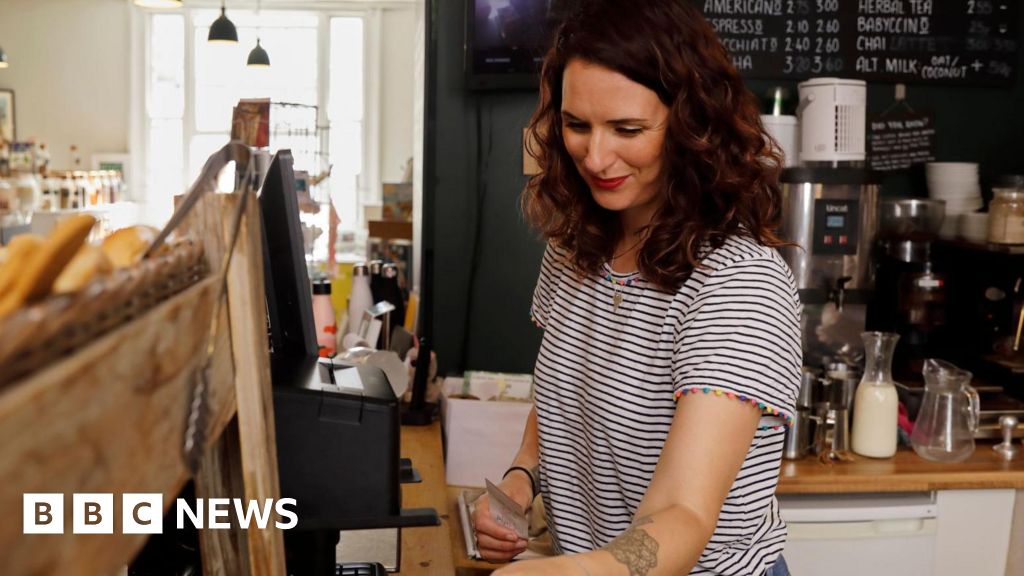
But Spencer says his business is being squeezed from every angle – as well as minimum wage, he has had increases in business rates, national insurance, and statutory sick pay. He also expects energy bills to go up because of the war in the Middle East.

Visa Inc. signage on the floor of the New York Stock Exchange (NYSE) in New York, US, on Wednesday, Jan. 28, 2026.
Michael Nagle | Bloomberg | Getty Images
Visa is launching six new tools using artificial intelligence to modernize the process of disputing credit card charges, the company told CNBC exclusively.
The digital payments company said the tools are designed to reduce the costs and frustration of “outdated” dispute processes for multiple entities involved in the payments process: merchants, issuers and acquirers.
“Some of the challenges are these back-office systems are still largely manual,” Andrew Torre, Visa’s president of value-added services, told CNBC. “We really had to think differently about how we approach this at scale.”
In 2025, Torre said, Visa processed more than 103 million charge disputes globally, marking a 35% increase since 2019.
“Our goal is to streamline this as much as possible,” Torre said. “We’d love to be able to see that growth rate come down.”
Visa’s new tools are part of a larger push by major banks and financial institutions to incorporate AI into their businesses — both internally and in consumer-facing applications. JPMorgan Chase and Goldman Sachs have both said they’re already using AI to hire fewer people. BNY spent $3.8 billion on technology in 2025, or about 19% of its revenue.
Visa said three of its six new tools focus on merchants, allowing them to address potential disputes before they escalate, managing disputes with generative AI responses and providing a deeper level of detail on order insights to manage confusion over unfamiliar charges.
For example, Torre said, many disputes are borne out of cardholders not recognizing a specific charge on their statements. With the new tool, Visa will be able to provide further details to financial institutions to show cardholders that data at a deeper level, according to the company.
The other three tools are built for issuers and acquirers, using predictive AI models to aid in case-by-case analysis, analyzing documents for summaries and auto fill and establishing an AI-powered dispute platform to manage the entire process in one location, Visa said.
“We’ll be able to get them insights and data so they can move from being reactive to proactive,” Torre said.
Torre said Visa’s new AI tools are part of a broader host of solutions for consumers, including a subscription manager announced last week that allows cardholders to cancel unnecessary subscriptions directly on the manager.
The automation will save time, money and unnecessary confusion for both parties, he added. Most of the tools will be generally available later this year, the company said.
“We really believe that disputes in this solution makes it much easier to manage and resolve,” Torre said. “We think it has better outcomes for everyone.”
Business
Stock market today (April 1, 2026): Which are the top gainers and losers in Nifty50 and BSE Sensex today? Check list – The Times of India

Benchmark equity indices Sensex and Nifty ended nearly 2 per cent higher on Wednesday, starting the new financial year on a firm footing as global markets rallied on hopes of a potential de-escalation in the ongoing West Asia conflict.The 30-share BSE Sensex jumped 1,186.77 points or 1.65 per cent to settle at 73,134.32. During intra-day trade, it surged 2,017.03 points or 2.80 per cent to 73,964.58.The broader NSE Nifty rose 348 points or 1.56 per cent to close at 22,679.40. A decline in crude oil prices also supported investor sentiment.
Nifty50 top gainers
- Trent (+7.00%)
- InterGlobe Aviation (+6.02%)
- Kwality Wall’s (+5.79%)
- Adani Ports SEZ (+5.55%)
- BEL (+4.51%)
- SBI (+3.93%)
- Eicher Motors (+3.64%)
- Jio Financial Services (+3.50%)
- Eternal (+3.30%)
Nifty50 top losers
- Dr Reddy’s (-3.61%)
- HDFC Life (-2.99%)
- Cipla (-2.32%)
- Sun Pharma (-1.64%)
- NTPC (-1.62%)
- Apollo Hospitals (-1.53%)
- Power Grid (-1.12%)
- Max Healthcare (-0.36%)
- UltraTech Cement (-0.29%)
Sensex top gainers
- Trent (+7.00%)
- InterGlobe Aviation (+6.02%)
- Adani Ports SEZ (+5.55%)
- BEL (+4.51%)
- SBI (+3.93%)
- Eternal (+3.30%)
- L&T (+2.96%)
- Titan Company (+2.89%)
Sensex top losers
- Sun Pharma (-1.64%)
- NTPC (-1.62%)
- Power Grid (-1.12%)
- UltraTech Cement (-0.29%)
- Bharti Airtel (-0.03%)
“Indian equity markets opened the new financial year on a positive note, with stocks soaring on fresh optimism surrounding a potential de-escalation of the Middle East conflict and easing of energy supply disruptions,” said Ponmudi R, CEO of Enrich Money.He added that US President Donald Trump’s remarks suggesting the US could withdraw from Iran “whether we have a deal or not” within the next two to three weeks provided the trigger for a broad rally in global risk assets.“Indian equity markets opened FY27 on a strong note, driven by improving risk appetite following US President Donald Trump’s remarks hinting at a potential resolution to the West Asia conflict,” said Vinod Nair, Head of Research at Geojit Investments Limited.In the US, markets ended significantly higher on Tuesday, with the Nasdaq Composite surging 3.83 per cent, the S&P 500 rising 2.91 per cent and the Dow Jones Industrial Average gaining 2.49 per cent.Brent crude, the global oil benchmark, declined 0.22 per cent to USD 103.7 per barrel.Stock markets were closed on Tuesday on account of Shri Mahavir Jayanti.Foreign Institutional Investors (FIIs) offloaded equities worth Rs 11,163.06 crore on Monday, while Domestic Institutional Investors (DIIs) bought shares worth Rs 14,894.72 crore, according to exchange data.


Taylor Swift, Travis Kelce wedding planning comes to life: Details

Lulus expands wholesale reach with Amazon, Victoria’s Secret
Minimum wage rises to £12.71 an hour as firms warn of impact

-

 Politics1 week ago
Afghanistan announces release of detained US citizen
-

 Tech1 week ago
Can a Home Appliance Fix the Problem of Soft-Plastic Waste?
-

 Sports1 week ago
Broadcast industry CEO says consolidation is ‘essential’ to compete for NFL soaring media rights prices
-
 Business1 week ago
Property Play: Home flippers see smallest profits since the Great Recession, real estate data firm says
-

 Entertainment1 week ago
UN warns migratory freshwater fish numbers are spiralling
-
 Business1 week ago
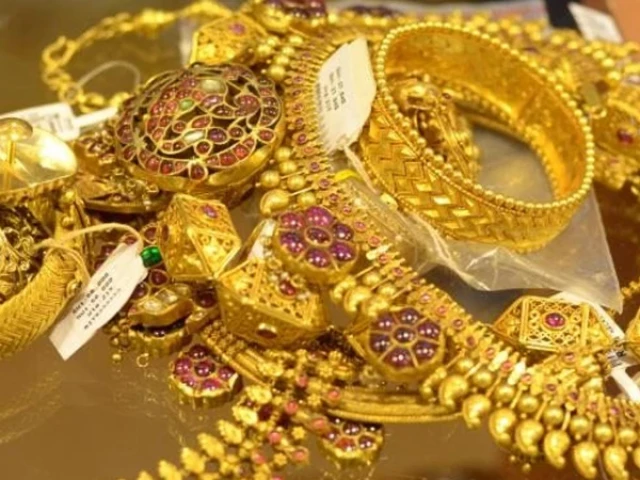
Gold prices soar in Pakistan – SUCH TV
-

 Fashion1 week ago
ICE cotton slips on weaker crude, profit booking
-
 Business1 week ago
More women are entering wealth management, but few are in advisory roles, study finds