

Entertainment
A case for fuel reforms

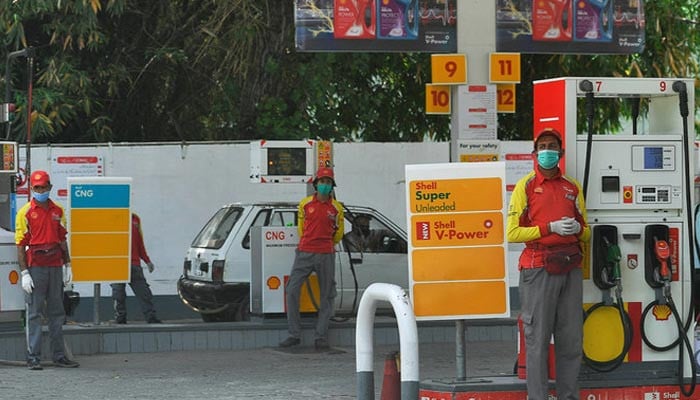
Pakistan’s fuel crisis is often framed as global oil prices and question of subsidies, but in reality it is more consequential as a question of strategic foresight, structure fragility and weak statecraft. This results in domestic inflation, external deficits, currency depreciation and social stress with almost no absorption capacity.
Earlier this month, in a single adjustment cycle, the petrol hit Rs450 and diesel Rs500 per litre, headlines blamed Middle East crisis, but in reality, it is a predictable consequence of deferred investment, policy fragmentation, and institutional inertia.
Pakistan consumes approximately 500,000 barrels of oil per day whereas the country’s domestic production is around 70,000 to 80,000. We import 20% crude oil and 80% refined oil, and that 80% of supply depends on imports denominated in US dollars. And whenever rupee depreciation even slightly, this translates directly into additional costs of billions of dollars.
Earlier when crude prices went up above $110 per barrel, the effect was predictable and compounded, and resulted in 40% to 50% single-cycle domestic price increase. Although, unprecedented but it is the eventual outcome of a system incapable of absorbing shocks, reflecting weak governance, underutilised infrastructure, therefore, fiscal designs consider energy as an instrument for revenue rather than a strategic asset.
Scale always strengthens the resilience as India processes 5.5 million barrels daily across its 23 refineries whereas Chinese exceeds 12 million barrels a day across 30 facilities. The UK is refining 1.1 million barrels daily despite diminishing domestic output. Pakistan operates with five refineries with the capacity of 450,000 barrels combined but refine only 60,000 barrels a day.
In 2007, the government announced an expansion plan to upgrades these refineries and their storage capacity but even after 15 years, it remains largely unimplemented. On papers and meetings in the official circles, there is so much movement but in reality, there has been a minimal progress. Our five refineries (Parco, Cnergyico, NRL, ARL and PRL) do not lack refining capacity but lack modern refining capability, as four out of five refineries are very basic (hydroskimming) with low complexity. Thus structural failure is compounded by investment delays, moreover, these refineries are underutilised because the configurations misalign with domestic petrol and diesel demand.
This underutilisation leads to an import of 80% to 85% refined fuel at a premium cost of $10–15 per barrel, thus, further inflating the annual oil bills to $10–20 billion, with crude alone exceeding $5 billion in peak years. This operational and structural weakness exacerbates macroeconomic stress, thus depleting foreign exchange reserves, worsening the current account deficits and unfortunately due to this, circular debt now running into trillions of rupees. Subsidies briefly soften the crises but defer inevitable corrections, concentrating shocks and compounding fiscal risk.
Then there is so-called petroleum levy (PL), embedded in this dynamic and become a de facto tax collection instrument. For government, it is easy to collect, bypasses provincial revenue sharing, and faces little resistance compared to taxing entrenched interests. Through this levy, government collected Rs1.22 trillion (around $4.7 billion) in FY2024-25. The PL represents 35% to 40% of retail petrol prices.
In current FY2025-26, government has already collected more than Rs1,000 billion through the petroleum levy and will exceed the target in this regard. This is roughly more than 100 billion a month tax collection avenue without any efforts towards documenting and structuring the informal economy.
Ordinary citizens, especially the working and lower middle class are struggling in their daily lives due to this dual burden of energy cost and actual taxation embedded in transport, goods and services. Supervision gaps further corrode prospective revenue, with oil marketing companies occasionally failing to remit full PL collections, while subsidies exceeding Rs100 billion provide insignificant relief.
Pakistan must prioritise building modern, export-oriented oil refineries with strong jet fuel (100,000 bpd) output to offset crude imports into USD-generating export.
As global fuel demand evolves, the aviation fuel remains structurally resilient as there is no medium-term EV kind of threat there. Modern-day oil refinery needs a capital of $5-10 billion and will take 4-5 years’ time for development. Instead of relying on FDI, CPEC or Saudi support (as this has been the case, it’s ideal but has delayed the progress of this initiative for more than two decades).
Under the SIFC, a sovereign-led model finance by provincial participation (an annual five per cent share from their NFC Award), 2% from strategic foreign reserves and 20% allocation of a portion of petroleum levy revenues can anchor this initiative and will be a considerable step towards our sustainability and self-sufficiency in fuel consumption and production. National strategic assets are always developed without reliance on foreign funding or investment. Our nuclear programme is a clear example of this.
This initiative will not only strengthen our foreign exchange reserves and safeguard our energy security, but also help us in transforming from consumption-driven policy to long-term, investment-led national resilience strategy. Pakistan should have prioritised this initiative long before proliferating its domestic market with oil marketing companies.
They are low-barrier capital-flow retail and marketing segments producing visible growth while stagnating the primary resilience – this expanded the consumer access but critically constrained the production capacity and shock absorption.
India set up theJamnagar refinery in 2000 with a 1,000,000 bpd capacity. During Ukraine war it benefited from cheap crude oil from Russia, refined at the Jamnagar refinery and exported refined gasoline and jet fuel to Europe. This initiative under their 1990s economic reforms earned them significant levels of foreign exchange.
For Pakistan, case for structural reform is financially compelling and viable. A greenfield refinery of 200,000 barrels per day, costing $5 billion, this will reduce imports and generate $1.2-1.5 billion in annual savings, recovering investment in six to seven years.
Even a 15% global price drop extends ROI only to eight or nine years; a 20% rupee depreciation raises savings to $1.7 billion, shortening the payback period to five or six years. Sensitivity analysis confirms that investing in resilience is not a luxury but a fiscal and strategic responsibility.
The implications are far-reaching and go beyond energy as highlighted in my previous article regarding reforms in Pakistan Railways. The Railways handles less than 5% of the cargo, over 90% is by road transport. This reliance increases fuel consumption, import bills and economic inefficiency.
Even promising policies of EV electric vehicle adoption remain largely symbolic. Without $1 billion investment in charging infrastructure, grid modernisation and tariff rationalisation, EVs in Pakistan cannot significantly decrease fuel demand.
A synchronised five-year investment package could produce 12% to 15% returns through import substitution and foreign exchange savings, but without systemic alignment, these initiatives remain conjectural.
Pakistan’s frequent fuel crises have similar recurrences – reactive and politically driven energy policy intensifies instability. We are a firefighting nation, addressing symptoms like price adjustments, subsidies and levy collections will never let us focus on the causes.
Decades of deferred investment, governance failures, bureaucratic fragmentation and electoral short-termism for political mileage have left our energy sector far from a platform for progress and development into a cyclical vulnerability.
To get out of this diurnal round we need decisive leadership, must stabilise the Pak rupee, segregate energy policy from political rhetoric, streamline regulatory approvals and fully committed medium-term infrastructure expansion. We can further harmonise Institutional credibility through the SIFC platform together with policy continuity and strategic vision. These are prerequisites for initiating or attracting investment in any sector.
Paying for expensive petrol for our vehicles is not an accident. It is due to a structural inevitability facilitated and coordinated by a system that merges revenue extraction with energy provision. Developed and civilised countries absorb global fuel shocks with their robust governance and infrastructure mechanism. Our system transfers them directly to the citizens. Unless we reform and priorities resilience over relief, every international fuel crisis will translate into domestic hardship on us. Energy reforms are no longer optional but a test of leadership, as they are the only solution to energy sovereignty.
The writer is a political economist, public policy commentator and advocate for principled leadership and regional cooperation across the Muslim world.
Disclaimer: The viewpoints expressed in this piece are the writer’s own and don’t necessarily reflect Geo.tv’s editorial policy.
Originally published in The News

Offset is coming back stronger after his shooting accident which altered his plans, but he still showed up – even taking the stage on a wheelchair.
The 34-year-old rapper spoke about his recovery and accident in a new interview, sharing how he kept his morale up and continued pushing himself.
“You’ve got to keep pushing like the Energizer Bunny, man. Keep this s— pushing. Don’t got time to be slowing down.” Offset told the Creators Inc. Podcast on Thursday, March 23.
Speaking about his performance mid-recovery, the Annihilate hitmaker noted, “You got to go G6 — G5, sorry. Had them bring the bed out, lay on that thing for six hours, go to sleep. You cool.”
The rapper also hinted at his new album in the same interview, saying, “I’m trying to drop soon. Couple months from now. I don’t got no date yet, but getting the creative and all s— to go together. Removing songs, making new songs, just off life because all my s— always be off of life experiences. You know what I mean? What happens in my real life, I just put it in my music.”
Despite the Florida accident, Offset shared that he maintains a “gladiator mentality” which motivates him to push forward instead of being held down by such incidents.
“The show don’t ever stop at the end of the day. I was blessed enough to be able to still move, you know what I mean? So, I’m still moving. I didn’t really have a checklist for it,” he said.
The Open It Up singer added, “I don’t want nobody feel sorry for me or no s— like that. People get shot every day, bro, like, I’m blessed. I can keep pushing, so why would I just sit down? I got to keep pushing. I got to keep going.”

Ellen Burstyn, known for her Oscar-winning role in “Alice Doesn’t Live Here Anymore,” has spent seven decades in Hollywood, but she tells “CBS Mornings” that poetry has also shaped her life as she discusses her new book “Poetry Says It Better.”
Source link

The 2026 NFL Draft was completed with full of trades and surprises on Thursday night, April 23.
In a significant move, the Las Vegas Raiders opted for Indiana quarterback Fernando Mendoza with the No.1 overall pick.
After the first round, some teams are all in on their future, while others are dangerously close to being counted out.
Who’s in
The Las Vegas Raiders are in without a doubt. With the first overall pick, they drafted quarterback Fernando Mendoza, the winner of the Heisman Trophy, who will be the face of the franchise going forward.
All four teams in the NFC East are in contention now. The New York Giants are in after drafting Arvell Reese from Ohio State and tackle Francis Mauigoa. The Dallas Cowboys are in after trading up to select “transformative” safety Caleb Downs. Even the Philadelphia Eagles and Washington Commanders landed top talent.
The Los Angeles Rams are looking to build for the future. By taking Alabama quarterback Ty Simpson with the 13th overall pick, they’ve guaranteed themselves their man under center when Matthew Stafford retires.
Who’s out
The New York Jets didn’t find the right path. Despite having three first-round picks, officials panned their haul, calling edge rusher David Bairly at No. 2 a major reach.
Another setback was the Arizona Cardinals. Selecting a running back like Jeremiyah Love with an underperforming offensive line and dire needs defensively made one wonder if the team had already tanked.
The Miami Dolphins disappointed just as much. Following their spending in free agency on a quarterback such as Malik Willis, they didn’t provide him with anything worthwhile offensively.
Predictions for round 2 and round 3
As rounds 2 and 3 are approaching, analysts make major predictions.
Starting with Round 2, San Francisco will select Emmanuel McNeil-Warren as their safety selection at No. 33 overall, while Arizona selects Carson Beck as a future starting quarterback at No. 34 overall.
Buffalo will be taking a chance by selecting Josh Allen’s red zone target in Denzel Boston at No. 35 overall, while New York adds to their depth with Jermod McCoy at No. 37 overall.
Meanwhile, Baltimore is going for yet another falling star in Avieon Terrell at No. 45 overall. Teams that need a quarterback will watch closely as the Steelers draft Garrett Nussmeier at No. 53 overall.
In Round 3, Philadelphia drafts an offensive tackle to help improve their offensive line with Caleb Tiernan at No. 68 overall, while Cleveland takes care of one more defensive player.
Miami selects tight end Oscar Delp at No. 75 overall, and Pittsburgh looks to continue rebuilding its secondary. As the third round progresses, expect runs on receivers and interior offensive linemen.


Offset teases new album plans after recent shooting accident
Intel bags big gains! Chipmaker’s shares jump 26% on blockbuster results; how Trump admin benefits – The Times of India

Ellen Burstyn reflects on how poetry impacts her life

-

 Fashion1 week ago
France’s LVMH Q1 revenue falls 6%, shows resilience amid Iran war
-

 Tech1 week ago
CYBERUK ’26: UK lagging on legal protections for cyber pros | Computer Weekly
-

 Sports5 days ago
WWE WrestleMania 42 Night 2: Live match results and analysis
-
 Business1 week ago
PepsiCo earnings beat estimates as North American food business improves
-

 Sports5 days ago
NCAA men’s gymnastics championship: All-time winners list
-

 Sports1 week ago
Faheem Ashraf backs Islamabad United’s push, calls league a ‘career-changing platform’
-

 Tech1 week ago
Anthropic Plots Major London Expansion
-

 Tech1 week ago
Cyber Essentials closes the MFA loophole but leaves some organisations adrift | Computer Weekly