

Fashion
A summer roundup of news from the beauty industry: amidst flagging results and economic turbulence

Published
August 27, 2025
As summer draws to a close, it’s time to take stock for global beauty players. The 2025 summer season has been marked by mixed financial publications, against a backdrop of slowing consumer spending, markets that have become unpredictable and, above all, the forthcoming rise in customs duties in the United States.
While some companies fared better than others, all had to contend with a more complex economic reality. Here’s a look at the main players in the sector: France’s L’Oréal and the Americans, Coty and Estée Lauder.
Coty in transition, between falling sales and possible asset disposals
The American group Coty saw its sales fall by 4% in its fiscal year ending June 30, 2025, for net sales of $5.89 billion (€5.07 billion). Demand remains weak, particularly in North America, and retailers are clearing their inventories rather than placing new orders. The group has indicated that it is going through a “transition year” and is counting on a return to growth in the second half of fiscal 2026.
Faced with this tense economic situation, Coty has launched a new phase of transformation called All-in to Win, which involves restructuring around 700 jobs. At the same time, market speculation has been circulating since June about a possible sale of assets, notably in luxury and consumer cosmetics. France’s Interparfums may be in the running.
Estée Lauder deepens losses and accelerates restructuring
For the other American giant, Estée Lauder, the results published at the end of August were particularly alarming. The group recorded a net loss of $546 million in the fourth quarter of its 2025 fiscal year, a figure almost double that of last year. This underperformance is largely due to the implementation of a restructuring plan announced in February, the total cost of which is estimated at between $1.2 and $1.6 billion. In all, between 5,800 and 7,000 jobs will be eliminated worldwide.
The general decline in sales, down 8% for the full year to $14.3 billion (€12.3 billion), affected all segments except perfume, which remained stable. The group was particularly hard hit by the collapse of travel retail sales, which fell by 28%.
Despite this, Estée Lauder remains hopeful of a rebound as early as 2026, betting on a gradual recovery, selective price increases, and double-digit growth in e-commerce. However, management anticipates a negative impact of around $100 million from U.S. tariffs in the current financial year.
L’Oréal forges ahead, buoyed by North America
In this tense climate, L’Oréal is doing rather well. At the end of July, the French group published sales up 1.6% to 22.47 billion euros for the first half of 2025, with net income up 1% excluding exceptional items. The United States is positioned as the main contributor to this growth, despite the introduction of new customs duties of up to 15% on cosmetics imported from Europe.
For the moment, management is downplaying the impact of these tariffs, describing the situation as “manageable”. L’Oréal already manufactures half of its products sold in North America in its four local plants, has built up strategic stocks, notably for its luxury and fragrance ranges, and is planning moderate price adjustments.
The group is also continuing to invest and strengthen its position, with the acquisition announced in June of the Color Wow brand, specialized in hair care products. CEO Nicolas Hieronimus says he is “ambitious” for the second half-year, while acknowledging an uncertain economic climate for both businesses and consumers.
While performances are mixed, global beauty players all share one observation: the market has become more volatile, purchasing behavior more unpredictable, and economic pressures increasingly difficult to circumvent.
Inventory adjustments, restructuring, industrial relocation, price increases, or asset disposals… the strategies differ, but all aim to maintain balance in an environment that has become highly unstable.
This article is an automatic translation.
Click here to read the original article.
Copyright © 2025 FashionNetwork.com All rights reserved.










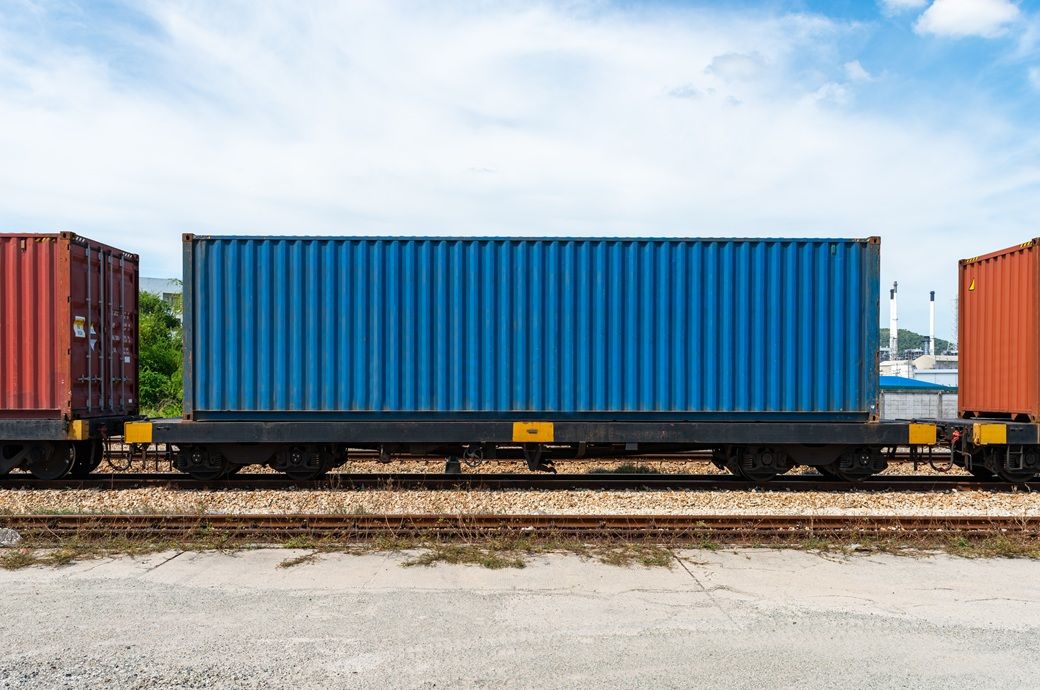
The agreement covers the construction and operation of a 360-kilometre railway linking the main mining areas of Al-Shidiya and Ghor Al-Safi to the Port of Aqaba.
The United Aran Emirates and Jordan recently an agreement to develop a railway network in Jordan and establish the UAE-Jordan Railway Company.
The agreement covers the construction and operation of a 360-kilometre railway linking the main mining areas of Al-Shidiya and Ghor Al-Safi to the Port of Aqaba.
The project aims at transporting 16 million tonnes of phosphate and potash annually.
The project aims at transporting 16 million tonnes of phosphate and potash annually, with a total investment value of $2.3 billion. Both phosphate and potash are chemicals used in the textile industry.
The agreement was signed by UAE Minister of Energy and Infrastructure Suhail bin Mohamed Al Mazrouei and Jordan’s Minister of Transport Nidal Al-Qatamin.
The UAE-Jordan Railway Company was formally established as a joint venture between Abu Dhabi’s L’IMAD Holding Company (L’IMAD) and several Jordanian stakeholders, according to an official release in the UAE.
The joint venture will be responsible for the implementation, operation and maintenance of Jordan’s railway network through its executing arm, Etihad Rail, the developer and operator of the UAE’s national railway network.
The project will enhance Jordan’s export capabilities and logistics efficiency by directly linking phosphate and potash production sites to the Port of Aqaba, significantly reducing transport time and costs.
It will also support comprehensive economic development and open wide prospects for job creation across multiple sectors, leveraging the extensive expertise of Etihad Rail.
Fibre2Fashion News Desk (DS)

With more than two decades of experience in the sports industry, James brings a unique combination of skills, which will help PUMA use creative direction as an important strategic lever to establish itself as a top-3 global sports brand.
Puma has appointed James Carnes as senior vice president creative direction.
Reporting to Maria Valdes, he will oversee creative direction, innovation, and product excellence.
With over two decades of experience, including leadership roles at Adidas, he will align design strategy with business goals to strengthen Puma’s global brand appeal and market position.
“James is a very highly regarded leader in our industry and he has been instrumental in shaping some of the most influential performance and lifestyle products, labels, and platforms,“ said Maria Valdes. “With a strong background in industrial design and a deep understanding of both athletes and consumers, he will play an important role in getting our customers and consumers excited about PUMA once again.”
Until 2021, James held several leadership positions in design, creative direction and strategy at adidas, both in Herzogenaurach and Portland, Oregon. Most recently he worked as an independent consultant and investor in the wider industry.
At PUMA, James will align creative direction with the company’s overall strategic ambitions, set the seasonal direction for the Business Units and create a long-term look and feel for the brand across consumer touch points.
“Creative Direction is about more than seasonal trends and colours. It is about defining how PUMA holistically presents itself in the market, harnessing the company’s portfolio of world class innovation, and deeply connecting with consumers,” said James Carnes. “We have the amazing opportunity to modernize the image and style of one of the most iconic sports brands in the world and I look forward to leading our teams and collaborating with my colleagues to make this happen.”
Note: The headline, insights, and image of this press release may have been refined by the Fibre2Fashion staff; the rest of the content remains unchanged.
Fibre2Fashion News Desk (RM)
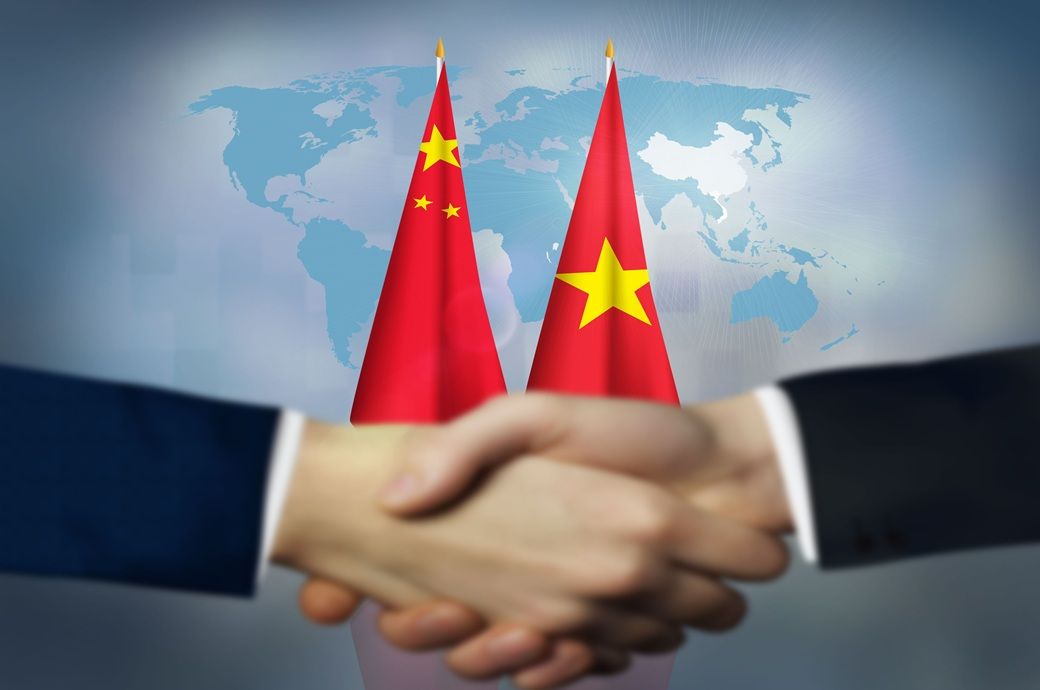
China will step up building a higher-level China-Vietnam community with a shared future that carries strategic significance, Chinese President Xi Jinping said while holding talks with visiting Vietnamese President To Lam.
China and Vietnam are accelerating efforts to navigate bilateral trade towards a more balanced and sustainable course.
President Xi Jinping recently held talks with visiting Vietnamese President To Lam.
During the visit, Vietnamese Minister of Industry and Trade Le Manh Hung called for a restructuring of production, trade and supply chains alongside stronger investment cooperation.
Xi said both countries should work together in their modernisation drive, accelerate the alignment of development strategies and prioritise infrastructure connectivity.
While meeting Chinese Minister of Commerce Wang Wentao during the state visit, Vietnamese Minister of Industry and Trade Le Manh Hung called for a restructuring of production, trade and supply chains alongside stronger investment cooperation.
Wang said both sides should focus on implementing the high-level common perceptions, including raising bilateral trade turnover to $500 billion in future.
Hung urged China to expand imports of Vietnamese goods, broaden the list of products eligible for tariff preferences and further open its market. He also called for the mutual recognition of quarantine results for agro-forestry-fishery products, facilitation of Vietnamese exports via cross-border e-commerce, and expansion of Vietnam’s trade promotion offices across Chinese localities, according to a Vietnamese news agency.
China will continue to support Vietnam in setting up additional trade promotion offices, following those already established in Chongqing, Hangzhou and Haikou, Wang responded.
China also expressed readiness to support Vietnam’s stronger exports through cross-border e-commerce, encouraging greater visibility of the Vietnam National Pavilion on Chinese e-commerce platforms beyond JD.com to better promote Vietnamese products to Chinese consumers.
China has consistently been Vietnam’s largest trading partner and second-largest export market, while Vietnam continues to be China’s biggest trading partner in the Association of Southeast Asian Nations (ASEAN).
Fibre2Fashion News Desk (DS)


2026 NFL draft: Louis Riddick’s favorite prospects, sleepers

Karachi Kings win toss, opt to bowl first against Multan Sultans

As Iran war strains ties with Trump’s US, UK looks to Europe

-

 Sports6 days ago
The case for Man United’s Fernandes as Premier League’s best
-

 Entertainment6 days ago
Palace left in shock as Prince William cancels grand ceremony
-

 Politics1 week ago
Chinese, Taiwanese will unite, Xi tells Taiwan opposition leader
-
 Business1 week ago
100% road tax waiver for electric cars, new rules for 2, 3 and 4 wheelers – what Delhi govt’s draft EV policy says – The Times of India
-

 Entertainment1 week ago
Dua Lipa hits major career high ahead of wedding with Callum Turner
-
 Business6 days ago
UK could adopt EU single market rules under new legislation
-
 Business1 week ago
The FAA wants gamers to apply for air traffic control jobs
-

 Fashion6 days ago
Energy emerges as biggest cost driver in textile margins