

Business
Ads for ‘misleading’ prostate supplements and home testing kits banned

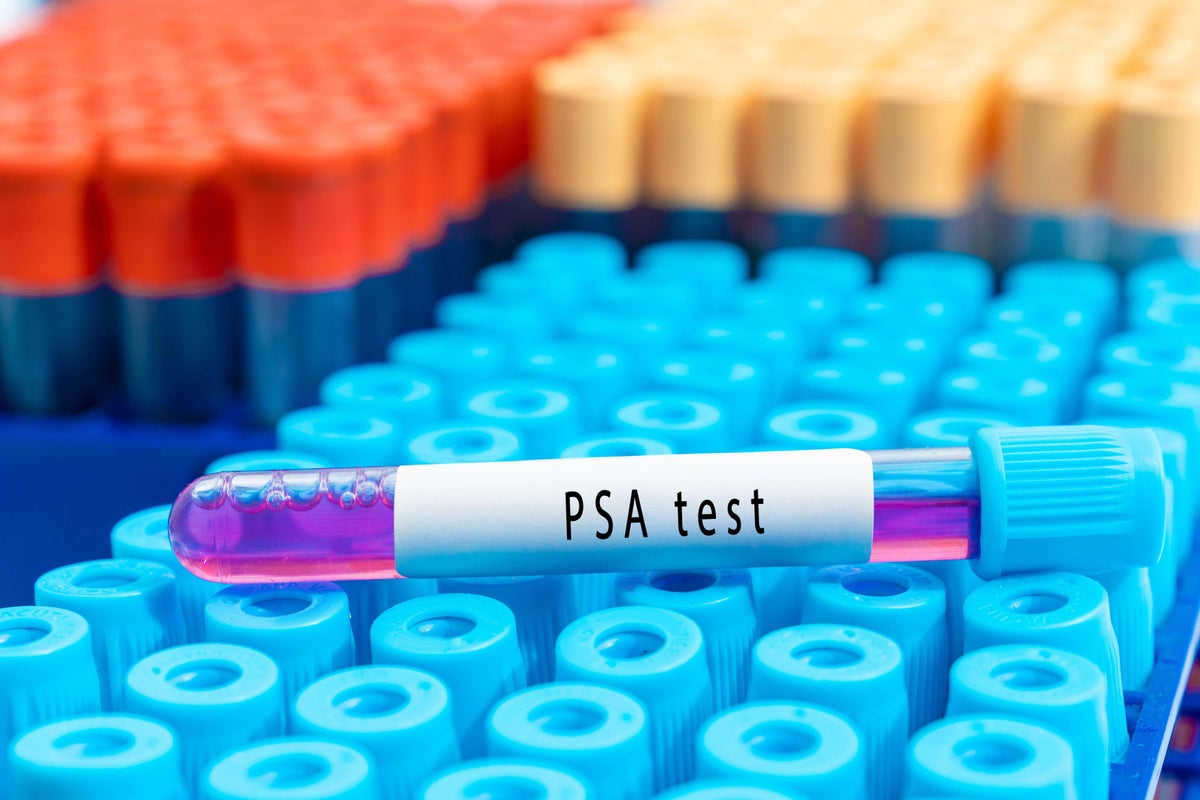
Ads for prostate supplements and home testing kits have been banned over concerns they could mislead vulnerable people or steer them away from appropriate medical advice.
The Advertising Standards Authority (ASA) banned ads for four supplement brands – Nutrisslim, Nutreance, Muxue Trade and Impact Herbs – for making claims that their products could treat medical issues such as enlarged prostate, urinary flow problems or prostate inflammation.
None of the products were authorised medicines and advertising rules state that food products, including supplements, cannot make medicinal claims.
Nutreance, trading as Top 5 Supplements, said its ads did not state or imply that its product treated, cured or prevented any disease or medical symptoms, and the ads made no references to diseases, diagnoses, pathological conditions or clinical outcomes.
Nutrisslim, trading as Nature’s Finest by Nutrisslim, said the claims used in its ads related to botanical ingredients, which it understood could be used in advertising.
It said “visual materials” featuring a doctor and any related references had been removed from its website, including a reference to the product being “doctor-formulated”.
Impact Herbs, trading as Impact Supps, and Muxue did not respond to the ASA.
The ASA also banned ads from two home testing kit companies – Self Check and Lifelab Testing – for claiming that Prostate-Specific Antigen (PSA) tests could diagnose or rule out prostate cancer.
Self Check said its products were CE certified for self testing in line with UK legislation.
It further said that every product page contained a disclaimer that informed consumers that because the tests were not 100% at diagnosing a specific medical condition, they may wish to speak to their NHS GP first, who could arrange a test if needed.
It also said that it had removed the word “cancer” in the headings and descriptions of the Google ads for the product.
Lifelab also said it held the correct CE markings for an in-vitro diagnostic device, and that the product was suitable for sale in the UK.
It also said the ads had been removed and would not be used again.
A PSA test alone cannot do either, and in both cases the ads failed to make clear that these tests had limitations.
The ASA came across the ads during a sweep of healthcare claims using its AI-powered Active Ad Monitoring system.
The ASA said many of the claims it had seen in the latest investigations were “unacceptable”, and had not only broken a number of its rules but risked misleading vulnerable people, or steering those who needed it away from appropriate medical advice.
It said this was “especially worrying when it comes to men’s health”, adding that prostate symptoms could be worrying and, for some, difficult to talk about, meaning that ads promising quick fixes or simple answers “can seem even more appealing”.
However, misleading claims could give false reassurance or make it harder for people to know when to speak to a doctor, “which is why it’s so important that information about prostate health is accurate and responsible”, the ASA said.
Jess Tye, regulatory projects manager at the ASA, said: “When it comes to health, people deserve honesty.
“Misleading ads about prostate supplements or tests can cause real harm, and today’s rulings hold advertisers to account.
“We’re continuing to monitor this sector closely, using our AI tools to spot problem ads early on. And if someone does have a concern about an ad they’ve seen, we’d encourage them to get in touch.”
Joseph Burt, head of diagnostics and general medical devices at the Medicines and Healthcare products Regulatory Agency (MHRA), said: “The MHRA welcomes the ASA’s action to tackle misleading claims about PSA home-testing kits.
“At-home or over-the-counter PSA tests help members of the public monitor their prostate health, but are not a definitive test for prostate cancer. These tests must not claim to detect prostate cancer, and consumers should carefully check the labelling and read the instructions for use.
“The MHRA has recognised the expansion of over-the-counter tests, including PSA tests.
“As part of our surveillance of medical devices, we continue to monitor the safety of these devices. Manufacturers of these tests have an important role in ensuring information about direct-to-consumer tests are put into context for the general public who use these tests as well as monitoring the use of the tests.”
Amy Rylance, assistant director of health improvement at Prostate Cancer UK, said: “We are very pleased to see the ASA getting proactive in identifying and banning these dangerous and misleading adverts.
“There is no evidence that supplements can treat, cure or prevent prostate problems, and they should not be used in place of speaking to a doctor about your risk of prostate cancer, or more general concerns about your prostate health.
“While there are a range of at-home PSA self-test kits on the market currently, the accuracy and safety of these tests is not proven, and so we only recommend getting a PSA blood test from a healthcare professional.
“It’s important to remember that prostate cancer often has no symptoms in its earlier, more treatable stages, so it’s crucial for a man to understand his own risk and not to wait for potential signs or symptoms. Any men worried about their risk of prostate cancer or looking to find out more about testing can take Prostate Cancer UK’s 30-second online Risk Checker.”
Consumers can check the registration status of PSA tests via the MHRA’s Public Access Registrations Database.
Anyone concerned about the quality or safety of a PSA test should report it to the MHRA via the Yellow Card scheme.
Under the changed system customers collect points rather than reward coupons, with £1 spent equalling one point.
Source link

There have been extra jitters in UK government debt markets ahead of Thursday’s local and national elections.
Source link
Business
Sugarcane price hike: Govt raises FRP to Rs 365/quintal for 2026-27, farmers to benefit from higher returns – The Times of India

The government has increased the fair and remunerative price (FRP) of sugarcane by Rs 10 to Rs 365 per quintal for the 2026-27 season beginning October, PTI reported.The decision was approved by the Cabinet Committee on Economic Affairs (CCEA), chaired by Prime Minister Narendra Modi.“The FRP will be Rs 365/quintal for a basic recovery rate of 10.25 per cent,” Union Minister Ashwini Vaishnaw said after the meeting.The revised FRP is 2.81 per cent higher than the current rate of Rs 355 per quintal for the 2025-26 season.For every 0.1 per cent increase in sugar recovery above 10.25 per cent, the FRP will rise by Rs 3.56 per quintal, providing an incentive to mills for higher efficiency.To safeguard farmers supplying to mills with lower recovery rates, the government has decided that there will be no deduction in FRP for recovery below 9.5 per cent. In such cases, farmers will receive Rs 338.3 per quintal in the 2026-27 season.The production cost of sugarcane for 2026-27 has been estimated at Rs 182 per quintal, making the FRP 100.5 per cent higher than the cost.“Farmers are expected to get more than Rs 1 lakh crore,” Vaishnaw said.The move is expected to benefit nearly one crore sugarcane farmers, along with farm labourers and workers engaged in sugar mills.The FRP has been fixed based on recommendations of the Commission for Agricultural Costs and Prices (CACP) and consultations with state governments and stakeholders.The sugar sector supports the livelihoods of around five crore farmers and their families, and about five lakh workers directly employed in sugar mills, besides those involved in related activities such as transportation.Sugar mills are required to purchase sugarcane from farmers at the FRP or higher.Vaishnaw said the FRP has been increased every year over the past decade, and the latest revision will also support ethanol production from surplus sugarcane.On cane dues, he said that in the 2024-25 season, about Rs 1,02,209 crore, or nearly 99.5 per cent, of the total payable dues of Rs 1,02,687 crore had been cleared as of April 20, 2026.For the ongoing 2025-26 season, Rs 99,961 crore, or 88.6 per cent, has been paid out of total dues of Rs 1,12,740 crore.


AS-level Business Studies paper allegedly leaked online

Italy’s Meloni warns over AI deepfakes after false photos circulate

Oprah’s Book Club: Author Douglas Stuart reads “John of John” excerpt

-

 Tech1 week ago
A Brain Implant for Depression Is About to Be Tested in Humans
-

 Sports1 week ago
Pro wrestling star Steph De Lander reveals how colleague’s advice helped lead her to title triumph at ACW
-

 Tech1 week ago
Almost 90% of women leave tech industry within 10 years | Computer Weekly
-
 Business1 week ago
‘I had £20,000 stolen and had to fight a 13-month fraud reporting rule to get it back’
-

 Entertainment1 week ago
Norway joins Type 26 Frigate Programme to boost NATO naval power
-

 Entertainment1 week ago
Melania Trump says ABC should ‘take a stand’ on late-night host Kimmel
-

 Tech1 week ago
This Ambitious Laptop Doesn’t Leave Much Room for Your Hands
-
 Business6 days ago
PSX plunges over 4,800 points | The Express Tribune