

Business
Advance Tax Deadline: Process And Penalty After You Miss The December 15 Payment


Last Updated:
Taxpayers who missed the third instalment deadline for advance tax in 2025-26 financial year may be liable to face interest charges.

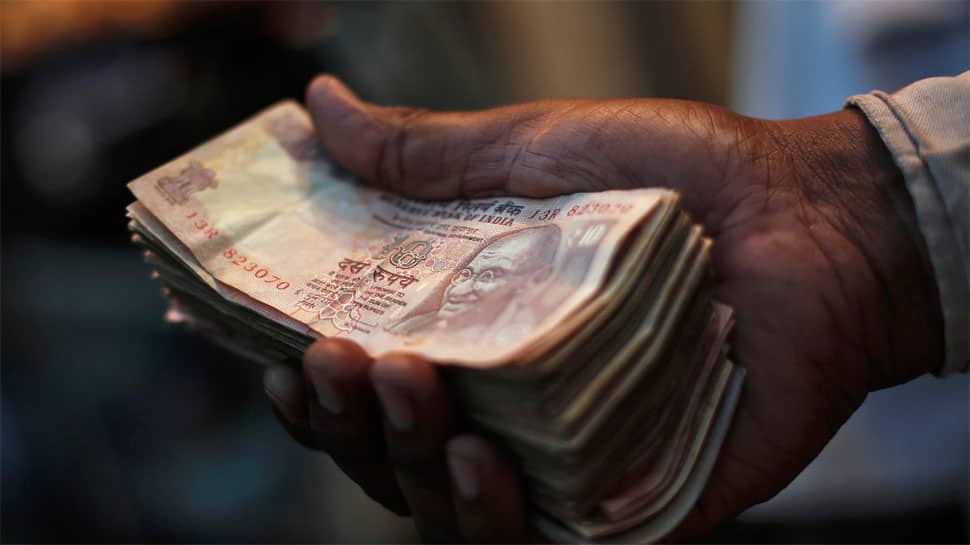
The advance tax becomes mandatory if their TDS fall short and doesn’t cover the charges.(Representative Image)
The deadline to pay the third instalment of advance tax for the financial year 2025-26 passed for the taxpayers on Monday, December 15. Anyone whose income beyond salary from freelancing, business rents or investments amounted to tax liabilities over Rs 10,000 was required to make the advanced payment. Individuals who failed to comply with the deadline are now set to face interest charges.
The advanced tax is expected to be paid via scheduled instalments by both salaried and non-salaried brackets. The salaried class usually pays the advance tax through the monthly Tax Deducted at Source (TDS). The advance tax becomes mandatory if their TDS fall short and doesn’t cover the charges.
Advanced Tax Instalments
The advanced tax is paid across four instalments during a financial year. At each stage, taxpayers are required to pay a part of their estimated annual tax liability. The period begins from June and spans till March the following year. The deadlines and portions for each tax payment are as following:
15 per cent of estimated tax liability – By June 15
45 per cent of estimated tax liability – By September 15
75 per cent of estimated tax liability – By December 15
100 per cent of estimated tax liability – By March 15
Failure To Pay Advanced Tax Instalments
If a taxpayer misses the December 15 advanced tax instalment deadline, they face no outright penalty for the same, according to the Income Tax Act. However, interest charges are imposed on such individuals for shortfall or late payments under the 1961 Income Tax Act.
Upon missing the deadline, a taxpayer is charged 1 per cent simple interest per month. The interest will be calculated for three months on the shortfall against the required 75 per cent advanced tax point by December 15.
Individuals who miss the deadline for the third instalment can also pay the remaining advance tax in one go before the 15 March deadline. No additional interest is charged for falling short of the year-end target if an individual covers the total advance tax dues eventually.
Who Is Exempted From Advance Tax Payment?
Not all taxpayers have to keep their thinking cap on for advance tax payments and deadlines in a financial year. Senior citizens, i.e., individuals aged 60 and above, who receive no income from business or profession, are exempted from advance tax payments.
“These individuals are not required to pay advance tax even if they receive a pension, interest, or capital gains income,” said Namit Saxena, Special Public Prosecutor and Income Tax India official, as quoted by The Mint.
 Click here to add News18 as your preferred news source on Google.
 Delhi, India, India
December 16, 2025, 18:10 IST
Read More

Gold and silver prices have continued to drop sharply in a “brutal” sell-off after hitting record highs in recent weeks.
The precious metals began falling on Friday in response to US President Donald Trump’s nomination for the incoming chairman of the Federal Reserve.
His choice for former Fed governor Kevin Warsh to replace current chairman Jerome Powell when his term ends in May soothed some investor nerves, which boosted the US dollar but saw appetite for safe-haven investments gold and silver slump in response.
Gold and silver suffered their worst trading days for decades on Friday and were down heavily again on Monday, with spot prices off by another 7% and 11% respectively at one stage.
Silver had plunged by nearly 30% on Friday and gold dropped over 9% in its worst one-day drop since 1983.
Gold and silver had been enjoying a record breaking rally as investors sought refuge amid global geopolitical uncertainty, conflict and tariff woes.
Ipek Ozkardeskaya, senior analyst at Swissquote, said: “The sell-off has been far more brutal than I, and many, expected.”
He added: “For silver, the rally on the way up was faster than gold’s, so the correction on the way down is faster too.”
Kathleen Brooks, research director at XTB, added: “If the sell off continues, then gold and silver are at risk of eroding their losses for the year so far.
“The historic move lower in silver prices has not stemmed a fall at the start of this week.
“Traders have not yet found a level that they are happy to buy the dips, and the timing of Chinese Lunar New Year in mid-February could accelerate the sell off, as Chinese traders reduce risk ahead of the holiday.”
UK and US stock markets are expected to open in the red on Monday, as the gold and silver rout has a knock on effect on mining giants, while Brent oil was also 5% lower.
Derren Nathan, head of equity research at Hargreaves Lansdown, said: “Mining stocks are likely to feel the heat as metal prices scramble to find a floor.
“Oil prices are also trending the wrong way for investors in commodity-focused companies.”
Mumbai: Lower revenue as a share of GDP has been more than offset by cuts to subsidies and spending on current schemes, leading to the smallest fiscal consolidation in six years, likely positive for growth, a new report has said.
The fiscal consolidation for FY27 is the slowest in six years. And the budgeted disinvestment, which is a below-the-line funding item, is likely to see the highest rise in six years, the report from HSBC Global Investment Research said.
“The central government continues with fiscal consolidation, though signing up for a gentler path for FY27; the fiscal impulse will likely turn neutral after several years in the negative, and this should be good news for GDP growth,” the research firm added.
The report said that the services sector was the focus of the Budget, “with ambitious plans and increased outlays for medical institutions, universities, tourism, sports facilities, and the creative economy.”
Urban infrastructure saw a renewed push with each City Economic Region (CER) set to receive get Rs 50 billion over 5 years.
Seven new high-speed rail corridors will connect major cities, the report noted, adding large cities will also get an incentive of Rs 1 billion if they issue municipal bonds worth more than Rs 10 billion.
The report highlighted policy priorities, saying, “new manufacturing sectors were given incentives, namely biopharma, semiconductors, electronic components, rare earth corridors, chemical parks, container manufacturing, and high-tech tool rooms.”
Direct taxes are expected to grow faster than nominal GDP while indirect taxes will expand more slowly, with gross tax revenues budgeted to rise about 8 per cent year‑on‑year, the report said.
Central government set a fiscal deficit target of 4.3 per cent of GDP for FY27 after a 4.4 per cent estimate for FY26, and nominal GDP growth was pegged at 10 per cent.
Business
India’s $5 trillion economy push: How ‘C+1’ strategy could turn country into world’s factory

New Delhi: India is preparing for a major economic transformation. The Union Budget 2026-27 lays out measures that could make the country the top choice for global manufacturing using the popular ‘China +1’ (C+1) strategy. This comes as international companies rethink supply chains after COVID-19 disruptions, rising trade tariffs and geopolitical tensions.
India has positioned itself as the backup factory for the world that is ready to absorb international demand in case of any crisis in China or Taiwan.
The government has offered tax breaks for cell phone, laptop, and semiconductor makers, making India more attractive to foreign investors. Reducing bureaucratic hurdles for global firms, the budget also strengthens the National Single Window System to simplify business procedures. The message is clear: India is ready to step in as a global manufacturing hub, ensuring supply continuity for the world.
The expressway to a $5 trillion economy
China presently dominates about 40% of global manufacturing. Its factories supply critical products worldwide, but 2026 is expected to be a turning point. Expanding influence and economic opacity have made global companies seek alternatives.
India has leveraged this moment, offering a comprehensive incentive package for foreign manufacturers. Analysts call it more than policy; it is a blueprint to become a $5 trillion economy and reclaim India’s historic position as a global industrial leader.
Why the world needs India now
The COVID-19 pandemic exposed the dangers of over-reliance on a single supplier. When China halted medical exports, nations realised the need for diversified supply chains. Major companies such as Apple and Samsung now see India as a dependable alternative.
China’s aging workforce and rising labour costs further enhance India’s appeal. With 65% of its population under 35, India offers a vast, skilled and affordable workforce for decades. The geopolitical uncertainty surrounding Taiwan, which produces 90% of advanced chips, has also created demand for a secure manufacturing backup. India is stepping in to fill that gap.
How India stands to gain from China’s challenges
India’s budget, 2026-27, slashes import duties on cell phone and laptop components, turning the country into a hub for component manufacturing, not just assembly. Electronics exports are projected to cross $120 billion by 2025.
The government has also launched a Rs 1.5 lakh crore semiconductor mission, attracting companies like Tata and Micron to establish advanced chip plants in India. In the chemical sector, stricter environmental regulations in China have shut down several plants, benefiting Indian companies such as Privi Specialty and Aarti Industries, which are now filling gaps in global supply chains.
Incentives for companies
The Production Linked Incentive (PLI) scheme promises cash rewards for output, covering over 14 sectors. This is India’s answer to Chinese subsidies. From land acquisition to electricity connections, the National Single Window System now enables businesses to clear all approvals through a single portal.
Infrastructure investment has also received a massive boost, with Rs 11.11 lakh crore allocated under PM GatiShakti. New ports and dedicated freight corridors are being built to ensure that exports from India reach the world faster and cheaper than ever before.
India’s moves points to a strategic shift in global manufacturing. By rolling out the red carpet for foreign companies and investing heavily in infrastructure, technology and policy reforms, the country is poised to become the go-to destination for global supply chains. The C+1 formula is not only a concept; it is a roadmap to turn India into the next industrial superpower and a $5 trillion economy.


Grammy host Trevor Noah receives stern response from Trump after Epstein dig

NHL outdoor game sees its 1st goalie fight between Vasilevskiy, Swayman
Gold and silver sell-off gathers steam in correction after record highs

-

 Sports6 days ago
PSL 11: Local players’ category renewals unveiled ahead of auction
-

 Entertainment5 days ago
Claire Danes reveals how she reacted to pregnancy at 44
-

 Tech1 week ago
ICE Asks Companies About ‘Ad Tech and Big Data’ Tools It Could Use in Investigations
-
 Business6 days ago
Banking services disrupted as bank employees go on nationwide strike demanding five-day work week
-

 Fashion1 week ago
Spain’s apparel imports up 7.10% in Jan-Oct as sourcing realigns
-

 Sports5 days ago
College football’s top 100 games of the 2025 season
-

 Politics1 week ago
Fresh protests after man shot dead in Minneapolis operation
-
 Business1 week ago
Should smartphones be locked away at gigs and in schools?