

Business
Advance Tax Deadline: Process And Penalty After You Miss The December 15 Payment

Last Updated:
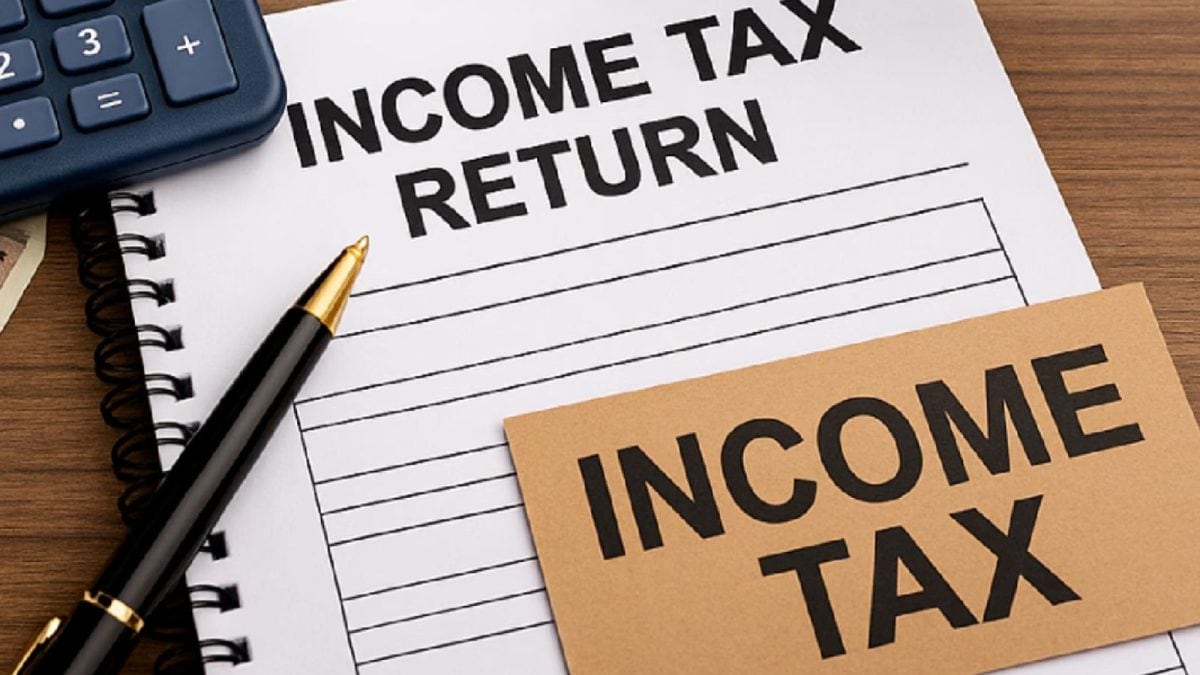
Taxpayers who missed the third instalment deadline for advance tax in 2025-26 financial year may be liable to face interest charges.

The advance tax becomes mandatory if their TDS fall short and doesn’t cover the charges.(Representative Image)
The deadline to pay the third instalment of advance tax for the financial year 2025-26 passed for the taxpayers on Monday, December 15. Anyone whose income beyond salary from freelancing, business rents or investments amounted to tax liabilities over Rs 10,000 was required to make the advanced payment. Individuals who failed to comply with the deadline are now set to face interest charges.
The advanced tax is expected to be paid via scheduled instalments by both salaried and non-salaried brackets. The salaried class usually pays the advance tax through the monthly Tax Deducted at Source (TDS). The advance tax becomes mandatory if their TDS fall short and doesn’t cover the charges.
Advanced Tax Instalments
The advanced tax is paid across four instalments during a financial year. At each stage, taxpayers are required to pay a part of their estimated annual tax liability. The period begins from June and spans till March the following year. The deadlines and portions for each tax payment are as following:
15 per cent of estimated tax liability – By June 15
45 per cent of estimated tax liability – By September 15
75 per cent of estimated tax liability – By December 15
100 per cent of estimated tax liability – By March 15
Failure To Pay Advanced Tax Instalments
If a taxpayer misses the December 15 advanced tax instalment deadline, they face no outright penalty for the same, according to the Income Tax Act. However, interest charges are imposed on such individuals for shortfall or late payments under the 1961 Income Tax Act.
Upon missing the deadline, a taxpayer is charged 1 per cent simple interest per month. The interest will be calculated for three months on the shortfall against the required 75 per cent advanced tax point by December 15.
Individuals who miss the deadline for the third instalment can also pay the remaining advance tax in one go before the 15 March deadline. No additional interest is charged for falling short of the year-end target if an individual covers the total advance tax dues eventually.
Who Is Exempted From Advance Tax Payment?
Not all taxpayers have to keep their thinking cap on for advance tax payments and deadlines in a financial year. Senior citizens, i.e., individuals aged 60 and above, who receive no income from business or profession, are exempted from advance tax payments.
“These individuals are not required to pay advance tax even if they receive a pension, interest, or capital gains income,” said Namit Saxena, Special Public Prosecutor and Income Tax India official, as quoted by The Mint.
 Click here to add News18 as your preferred news source on Google.
 Delhi, India, India
December 16, 2025, 18:10 IST
Read More

After the drop in gold price, Bitcoin price also fell.
Bitcoin fell below $77,000 in the global market, Bitcoin price fell by more than 13% in a week.
Bitcoin’s highest price in 6 months fell below $126,000, Bitcoin price has dropped by more than $49,000.
Last Updated:
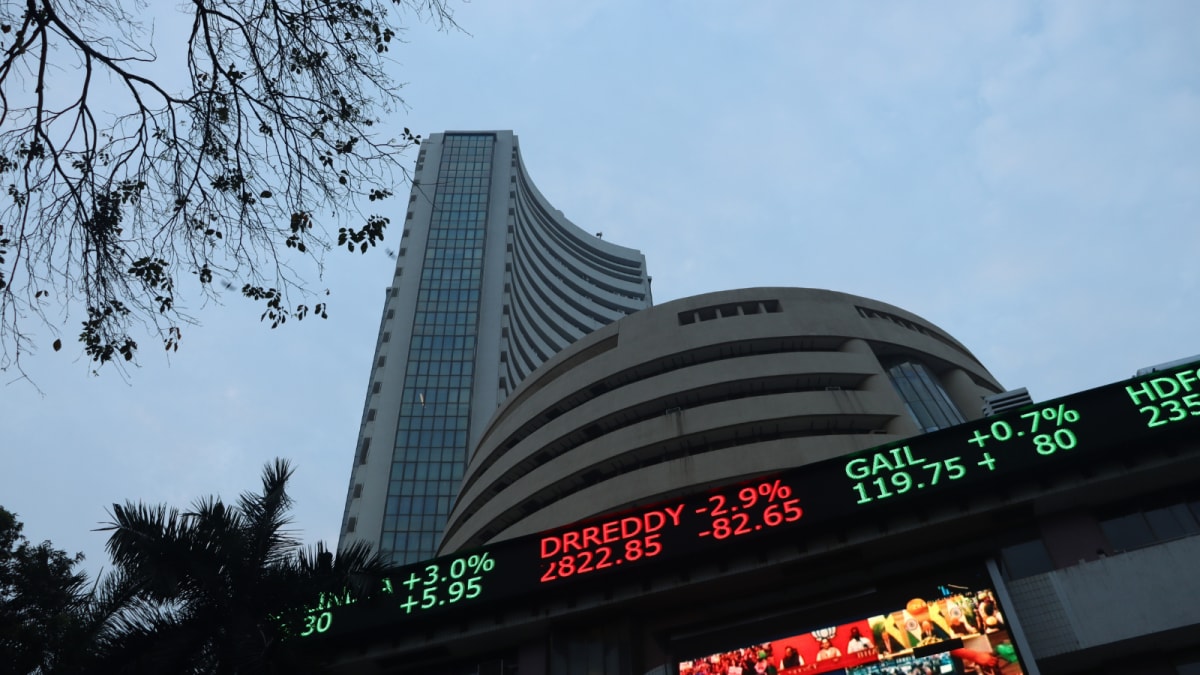
The BSE Sensex is trading higher by 371 points, or 0.47%, at 81,090.24, while the NSE Nifty rises by 70 points to trade above 24,850 at 24,889.25.


Stock Market Today.
Market Updates Today: A day after the market crash following the Budget’s provision to hike Securities Transaction Tax (STT), the domestic equity market on Monday saw heightened volatility. After opening nearly flat, the NSE Nifty rose to the day’s high, then touched the day’s low before sharply recovering to trade at the day’s high of 25,093.
As of 3:16 pm, the BSE Sensex surged by 932 points, or up 1.13%, to 81,641.87 in the afternoon trade and the NSE Nifty rose by 267 points, or up 1.07%, to trade above 25,000 at 25,093.27. After opening nearly flat, the NSE Nifty rose to the day’s high, then touched the day’s low before sharply recovering to trade at the day’s high of 25,093.27.
Among the 30 Sensex shares, 25 stocks were trading in the green. Among the top gainers were PowerGrid, Adani Ports, BEL, Reliance, Mahindra & Mahindra, Larsen & Toubro, and IndiGo, rising by up to 7.91%. The laggards were Axis Bank, Infosys, Titan, TCS, and Trent, falling by up to 1.97%.
After opening nearly flat, at around 9:30 am, the BSE Sensex jumped by 350 points to 81,112.03 in the opening trade, while the NSE Nifty rose 91 points to trade above the 24,900 level at 24,910.85. However, the benchmarks gave up all gains and declined to day’s low amid heavy volatility.
Aakash Shah, technical research analyst at Choice Equity Broking Private Ltd, said, “Near-term sentiment remains cautious despite some support from domestic technical indicators. The broader market direction will largely be influenced by global equity cues, crude oil price movements, and institutional fund flows.”
On Sunday, the Nifty saw an aggressive sell-off after the Budget 2026 announcement to hike STT, plunging nearly 870 points from 25,440 to an intraday low of 24,571, before staging a partial recovery to close at 24,825.
“A strong bearish candle was formed, with the index closing decisively below the 200-day EMA, indicating a deterioration in trend strength. Immediate resistance is placed at 24,950–25,000, while key support lies in the 24,650-24,700 zone. The RSI slipped to 31, reflecting oversold conditions, while India VIX surged 10.73% to 15.09, highlighting elevated market volatility,” Shah said.
On Sunday, February 1, foreign institutional investors (FIIs) sold equities worth Rs 588 crore, while domestic institutional investors (DIIs) also remained net sellers, offloading shares worth Rs 682 crore, adding to the pressure on the market.
V K Vijayakumar, chief investment strategist at Geojit Investments Ltd, said, “Yesterday’s market selloff resulting in 495 point crash in Nifty was a knee-jerk reaction to the sharp increase in STT on F&O trades. This was not a revenue-raising measure, but a decision to discourage retail traders from complex F&O trading, in which 92% of them were losing money. This decision is in the interest of retail investors. But this decision impacted the market sentiments, which were already impacted by the decision to make no changes in the LTCGs tax, which a section of the market was expecting rather unrealistically.”
It is important to understand that the Budget is a growth-oriented Budget with fiscal prudence. The 10% nominal GDP growth projected in the Budget is achievable and has the potential to deliver around 15% earnings growth in FY27. The market will soon start discounting this positive. But it is possible that FIIs may continue to sell impacting the market. Retail investors should keep their cool and remain invested and continue to invest systematically. A significant upturn in the market may take time; perhaps a retreat from AI trade globally. We don’t know when this will happen. But we know that an earnings rebound is imminent in response to this growth oriented Budget. That is a clear positive, he added.
February 02, 2026, 09:34 IST
Read More

Gold and silver prices have continued to drop sharply in a “brutal” sell-off after hitting record highs in recent weeks.
The precious metals began falling on Friday in response to US President Donald Trump’s nomination for the incoming chairman of the Federal Reserve.
His choice for former Fed governor Kevin Warsh to replace current chairman Jerome Powell when his term ends in May soothed some investor nerves, which boosted the US dollar but saw appetite for safe-haven investments gold and silver slump in response.
Gold and silver suffered their worst trading days for decades on Friday and were down heavily again on Monday, with spot prices off by another 7% and 11% respectively at one stage.
Silver had plunged by nearly 30% on Friday and gold dropped over 9% in its worst one-day drop since 1983.
Gold and silver had been enjoying a record breaking rally as investors sought refuge amid global geopolitical uncertainty, conflict and tariff woes.
Ipek Ozkardeskaya, senior analyst at Swissquote, said: “The sell-off has been far more brutal than I, and many, expected.”
He added: “For silver, the rally on the way up was faster than gold’s, so the correction on the way down is faster too.”
Kathleen Brooks, research director at XTB, added: “If the sell off continues, then gold and silver are at risk of eroding their losses for the year so far.
“The historic move lower in silver prices has not stemmed a fall at the start of this week.
“Traders have not yet found a level that they are happy to buy the dips, and the timing of Chinese Lunar New Year in mid-February could accelerate the sell off, as Chinese traders reduce risk ahead of the holiday.”
UK and US stock markets are expected to open in the red on Monday, as the gold and silver rout has a knock on effect on mining giants, while Brent oil was also 5% lower.
Derren Nathan, head of equity research at Hargreaves Lansdown, said: “Mining stocks are likely to feel the heat as metal prices scramble to find a floor.
“Oil prices are also trending the wrong way for investors in commodity-focused companies.”


Canada could lift GDP 7% by easing internal trade barriers
Investors suffer a big blow, Bitcoin price suddenly drops – SUCH TV
Post-Budget Session: Bulls Push Sensex Up By Over 900 Points, Nifty Reclaims 25,000

-

 Sports6 days ago
PSL 11: Local players’ category renewals unveiled ahead of auction
-

 Entertainment5 days ago
Claire Danes reveals how she reacted to pregnancy at 44
-
 Business6 days ago
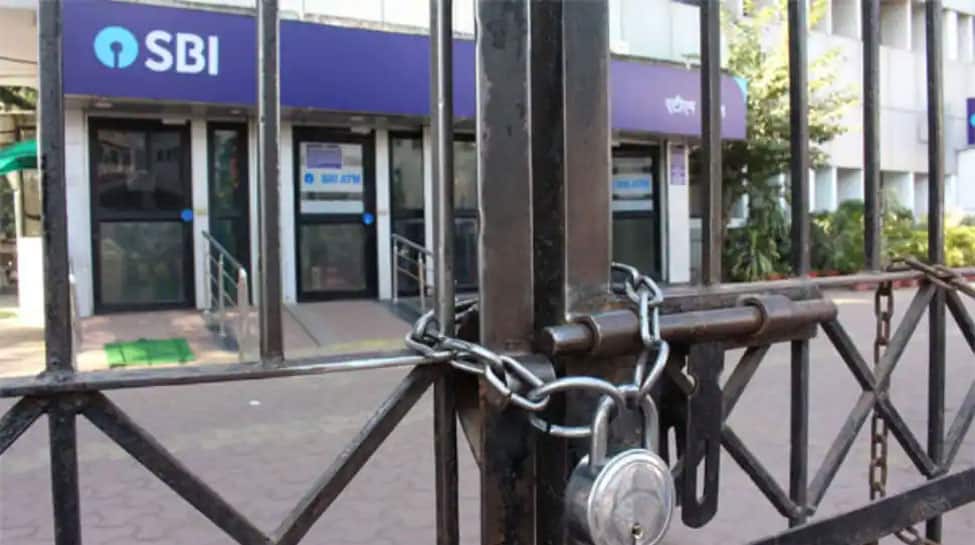
Banking services disrupted as bank employees go on nationwide strike demanding five-day work week
-

 Tech1 week ago
ICE Asks Companies About ‘Ad Tech and Big Data’ Tools It Could Use in Investigations
-

 Fashion1 week ago
Spain’s apparel imports up 7.10% in Jan-Oct as sourcing realigns
-

 Sports6 days ago
College football’s top 100 games of the 2025 season
-

 Politics1 week ago
Fresh protests after man shot dead in Minneapolis operation
-

 Entertainment1 week ago
Natasha Lyonne fails at sobriety after 20 years