

Politics
Afghanistan says working with Tajikistan to investigate deadly border clash

- Tajik forces killed three alleged militants crossing from Afghanistan.
- Taliban say they are jointly investigating with Tajikistan.
- Kabul warns of attempts to damage bilateral ties.
Afghanistan’s Taliban authorities said on Saturday they were working with neighbouring Tajikistan to investigate a border clash earlier this week that killed five people, including two Tajik guards.
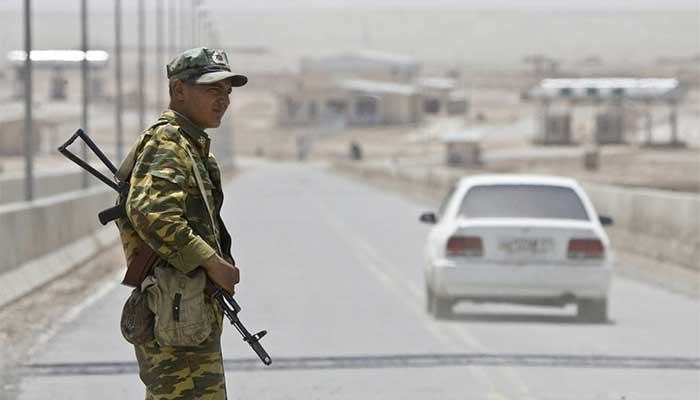
Tajikistan announced on Thursday that three members of a “terrorist” group had crossed into the Central Asian country “illegally” at Khatlon province, which borders Afghanistan.
Tajik security forces killed the trio, but two border guards also died in the clash, the Tajik national security committee said.
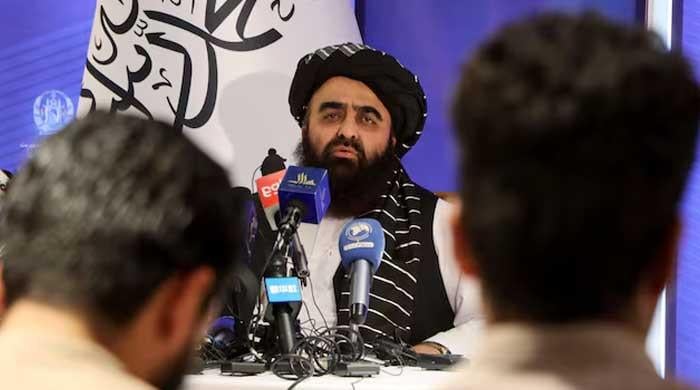
Afghan Foreign Minister Amir Khan Muttaqi said on Saturday that “we have started serious investigations into the recent ‘incidents’ on Tajik soil.
“I spoke to the foreign minister of Tajikistan, and we are working together to prevent such incidents,” he told an event in Kabul.
“We are worried that some malicious circles want to destroy the relations between the two neighbouring countries,” the minister added, without elaborating.
Tajikistan shares a mountainous border of about 1,350 kilometres (839 miles) with Afghanistan and has had tense relations with Kabul’s Taliban authorities, who returned to power in 2021.
Unlike other Central Asian leaders, Tajik President Emomali Rakhmon, who has been in power since 1992, has criticised the Taliban and urged them to respect the rights of ethnic Tajiks in Afghanistan.
At least five Chinese nationals were killed, and several were wounded in two separate attacks along the border with Afghanistan in late November and early December, according to Tajik authorities.
According to a UN report in December, a militant group, Jamaat Ansarullah, “has fighters spread across different regions of Afghanistan” with a primary goal “to destabilise the situation in Tajikistan.”
Dushanbe is also concerned about the presence in Afghanistan of members of Daesh in Khorasan.
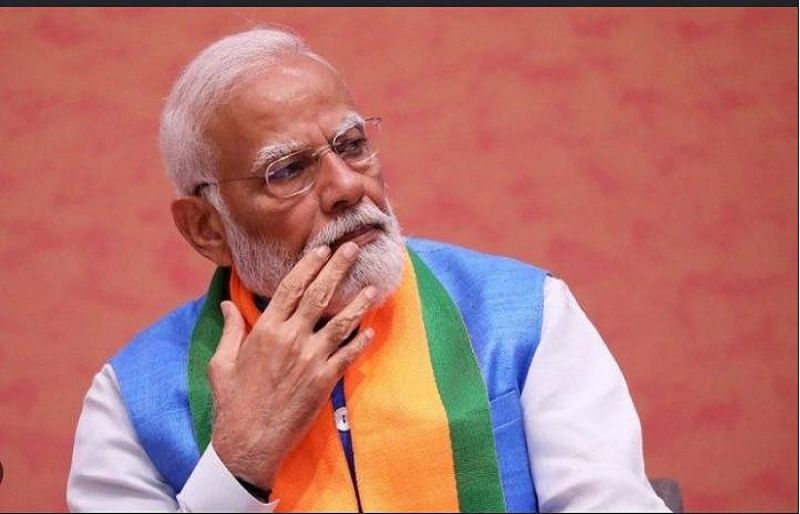
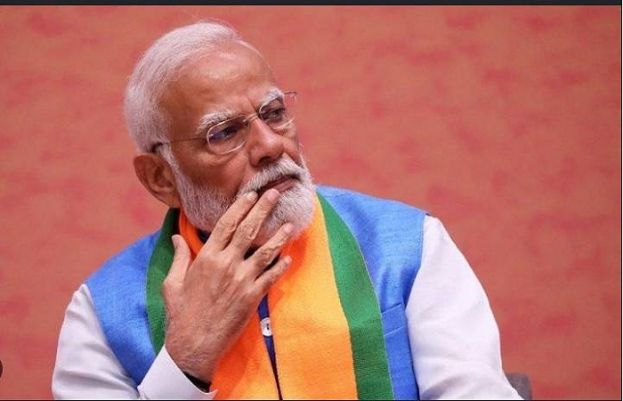
The year 2025 ended as a year of failures and defeats in Indian foreign policy as New Delhi faced a barrage of diplomatic setbacks at the global leve.Expectations in India related to Prime Minister Narendra Modi failed to materialize.
Indian newspaper The Hindu described 2025 as a year of broken promises in the country’s foreign policy due to failure to meet expectations.
According to The Hindu, symbolic diplomacy, personal relationships and narrative-building could not prove to be a substitute for real economic, military and diplomatic power.
According to The Hindu newspaper, India made promises not only to itself but also to its partners that it did not have the influence and power to implement.
On relations with the US, The Hindu newspaper says that 2025 has proven to be the most difficult year for India this century.
The 25 percent tariff, additional restrictions on Russian oil and H-1B visa bans have proven that India’s partnership with Washington is conditional and self-serving.
According to The Hindu newspaper, India has been reduced to a limited role in the US National Security Strategy 2025 compared to 2017.
Despite all the high-level meetings regarding China and Russia, no tangible security progress could be made on the Line of Actual Control.
Investment barriers remained and India remained limited to a mere symbolic presence.
In the energy sector, The Hindu newspaper clarified that India backtracks on Russian oil deal under US pressure.
The Hindu newspaper calls Pahalgam false flag operation a serious security failure.
It was also admitted that there was no global diplomatic support for Indian military operations after the Pahalgam attack.
The silence on aircraft losses after the Indian operation damaged India’s reputation.
The announcement of the Saudi-Pakistan bilateral defence agreement was an additional blow to India.
According to The Hindu newspaper, Indian analysts now consider Pakistan’s leadership to be “tough and capable of organizing”.
The Hindu newspaper admits that India-Bangladesh relations have reached their highest level ever.
Finally, The Hindu newspaper warns that India is moving away from the “Vishu Guru” narrative and towards the “Vishu Victim” one.
According to the newspaper, India’s blaming of others is the biggest obstacle to reform and realistic policymaking.
According to experts, The Hindu newspaper has exposed India’s weak diplomacy.
India must understand that only showy diplomacy cannot achieve practical results.
The newspaper’s admission of diplomatic failure confirms Pakistan’s position that India’s foreign policy is mostly based on optics, not practical results.
This analysis by The Hindu newspaper indicates the fact that India is no longer an indispensable strategic partner for the United States.
This point reinforces Pakistan’s position that India’s deterrence narrative has failed to convince at the global level.
The newspaper’s admission that some countries supported Pakistan’s military operations has exposed India’s diplomatic failure.
The Indian newspaper The Hindu’s admission of the capabilities of the Pakistani leadership negates the Indian claim that Pakistan is weak or isolated on the global level.
India, which has expressed concern over the atrocities on minorities in Bangladesh, must condemn and prevent such attacks on minorities in its own country.
- African Union rejects recognition of Somaliland.
- Somalia condemns Israel’s move as unlawful.
- Egypt, Turkey, Djibouti discuss Horn of Africa tensions.
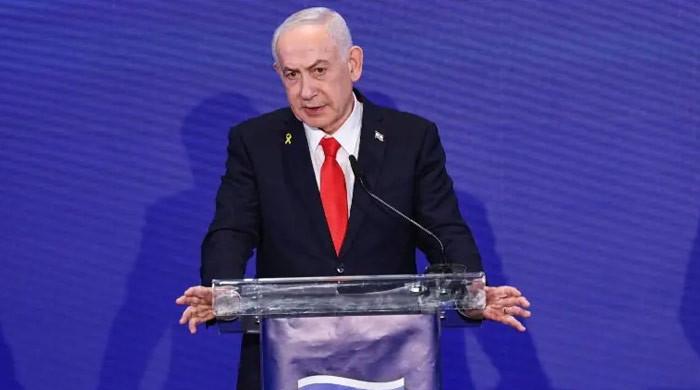
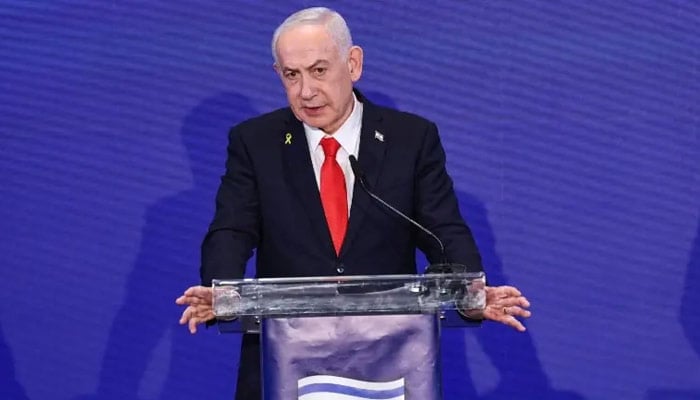
Israel became the first country to formally recognise the self-declared Republic of Somaliland as an independent and sovereign state on Friday — a decision that could reshape regional dynamics and test Somalia’s longstanding opposition to secession.
Prime Minister Benjamin Netanyahu said Israel would seek immediate cooperation with Somaliland in agriculture, health, technology and the economy. In a statement, he congratulated Somaliland’s president, Abdirahman Mohamed Abdullahi, praised his leadership and invited him to visit Israel.
Netanyahu said the declaration “is in the spirit of the Abraham Accords, signed at the initiative of President Trump.”
The 2020 accords were brokered by Trump’s first administration and included Israel formalising diplomatic relations with the United Arab Emirates and Bahrain, with other countries joining later.
Netanyahu, Foreign Minister Gideon Saar and Somaliland’s president signed a joint declaration of mutual recognition, the Israeli statement said.
Abdullahi said in a statement that Somaliland would join the Abraham Accords, calling it a step toward regional and global peace. He said Somaliland was committed to building partnerships, boosting mutual prosperity and promoting stability across the Middle East and Africa.
But Somalia’s government condemned Israel’s move as an “unlawful step” and a “deliberate attack” on its sovereignty, rejecting any recognition of Somaliland, according to a statement from the prime minister’s office.
“The federal government affirms its determination to pursue all necessary diplomatic, political, and legal measures, in accordance with international law, to defend its sovereignty, unity, and internationally recognised borders,” the statement said.
Egypt said Foreign Minister Badr Abdelatty held phone calls on Friday with his counterparts from Somalia, Turkey and Djibouti to discuss what they described as dangerous developments in the Horn of Africa following Israel’s announcement.
The ministers condemned Israel’s recognition of Somaliland, reaffirmed their full support for Somalia’s unity and territorial integrity, and warned that recognising breakaway regions posed a threat to international peace and security, Egypt’s foreign ministry said.
The African Union also rejected any recognition of Somaliland, reaffirming its “unwavering commitment” to Somalia’s unity and territorial integrity and warning that such moves risked undermining peace and stability across the continent, the AU Commission chair said.
Somaliland has enjoyed effective autonomy — and relative peace and stability — since 1991 when Somalia descended into civil war, but the breakaway region has failed to receive recognition from any other country.
Over the years, Somalia has rallied international actors against any country recognising Somaliland.
The former British protectorate hopes that recognition by Israel will encourage other nations to follow suit, increasing its diplomatic heft and access to international markets.
In March, Somalia and Somaliland denied receiving any proposal from the United States or Israel to resettle Palestinians from Gaza, with Mogadishu saying it categorically rejected any such move.
- Ceasefire deal follows days of talks between Thailand, Cambodia.
- Nearly one million displaced by Thailand-Cambodia border clashes.
- Both sides agree to cooperate on demining efforts, combating cybercrime.
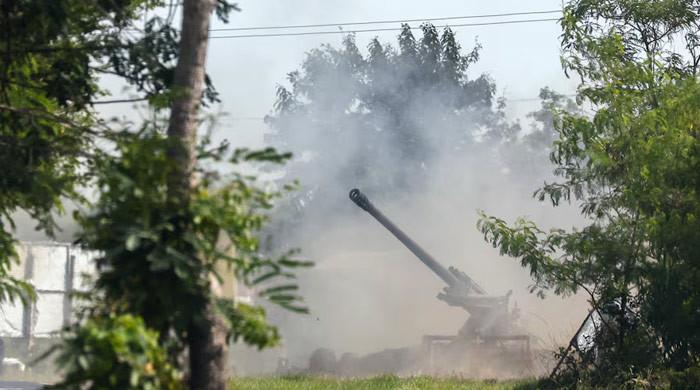
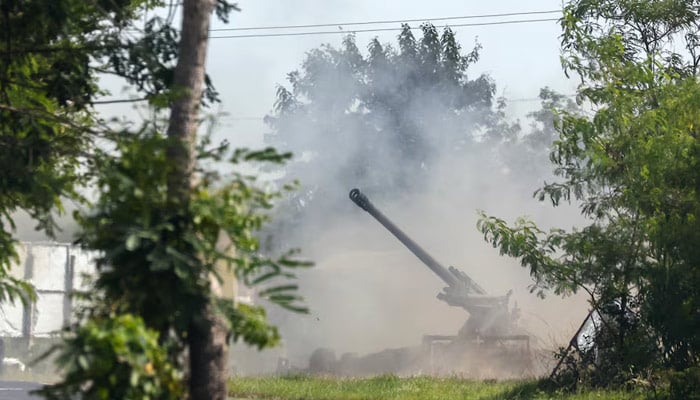
Thailand and Cambodia agreed to an “immediate” ceasefire on Saturday, the two countries said in a joint statement issued by the Cambodian side, pledging to end weeks of deadly border clashes.
The neighbours’ long-standing border conflict reignited this month, shattering an earlier truce and killing at least 47 people, according to official counts. Around a million people have also been displaced.
“Both sides agree to an immediate ceasefire after the time of signature of this Joint Statement with effect from 12:00 hours noon (local time) on 27 December 2025, involving all types of weapons, including attacks on civilians, civilian objects and infrastructures, and military objectives of either side, in all cases and all areas,” said the statement signed by the two countries´ defence ministers.
Both sides agree to freeze all troop movements and allow civilians living in border areas to return home as soon as possible, the statement said.
They also agree to cooperate on demining efforts and combating cybercrime.
The ceasefire will go into effect at 12:00pm (0500 GMT) to end the battling over a smattering of ancient temples in disputed zones along the two countries´ shared frontier.
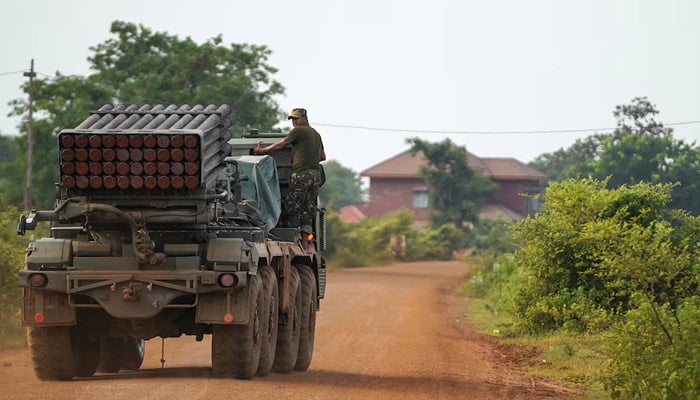
It comes after three days of border talks announced following a crisis meeting of foreign ministers from the Association of Southeast Asian Nations (ASEAN), of which both Cambodia and Thailand are members.
The United States, China and Malaysia also pushed for the warring neighbours to resume their ceasefire.
The three countries brokered a truce to end five days of deadly clashes in July, but the ceasefire was short-lived.


Perry Bamonte, guitarist for The Cure, dies after “short illness” at 65

Melissa Gilbert ends long rivalry with familiar face from past

NFL Week 17 highlights: Texans’ C.J. Stroud throws for two TDs in 1Q
Alabama turned Oklahoma’s College Football Playoff dream into a nightmare

Rare look inside the secret LEGO Museum reveals the system behind a toy giant’s remarkable longevity

Gold prices in Pakistan Today – December 20, 2025 | The Express Tribune

-
Sports1 week ago
Alabama turned Oklahoma’s College Football Playoff dream into a nightmare
-
 Entertainment1 week ago
Rare look inside the secret LEGO Museum reveals the system behind a toy giant’s remarkable longevity
-
Business1 week ago
Gold prices in Pakistan Today – December 20, 2025 | The Express Tribune
-
 Business1 week ago
Rome: Tourists to face €2 fee to get near Trevi Fountain
-

 Entertainment1 week ago
India drops Shubman Gill from T20 World Cup squad
-

 Entertainment1 week ago
Zoe Kravitz teases fans with ring in wedding finger
-

 Tech1 week ago
We Tried and Tested the Best Gifts for Plant Lovers With Our Own Green Thumbs
-

 Fashion1 week ago
Columbia launches star-studded US Curling team uniforms for 2026