

Fashion
Area CG’s Fernando Rius says luxury is not about buying something expensive, it is about understanding the culture, history, and time invested


Published
December 26, 2025
Reading “A Career in Fashion,” the autobiography of the celebrated Bill Cunningham (published in Spanish by Editorial Superflua), fills the reader with a healthy envy. There are figures who trace astonishing character arcs with their lives and seem to live more than one life. Cunningham was a milliner, a young salesman in a New York department store, a columnist for Women’s Wear Daily and, in the final stage of his life- the one that launched him to stardom on social media- a street-style photographer famed for criss-crossing the Big Apple on his bicycle in his blue jacket. The life of Fernando Rius, who founded the agency Area Comunicación Global in 1995, has something of the same quality.
A conversation with Rius and a simple question (“how did you get started in this?”) is enough to realise that he has also lived many lives. He was involved in the launch and development of Cabás, which could be described as Madrid’s first “concept store,” stocking pieces by Issey Miyake, Azzedine Alaïa, Francis Montesinos, and Adolfo Domínguez. He was buying director at Loewe, working alongside Enrique Loewe, and, in Vogue Spain’s early years, he wrote runway reports and designer interviews for the title.
Three decades ago, Fernando Rius shaped a communications agency which, without abandoning its family character and boutique spirit, has established itself beyond Spain’s borders, with a team of fifty people and offices in Mexico City and Lisbon, in addition to Madrid. As the agency marks its 30th anniversary, having specialised in the luxury segment since its inception, FashionNetwork.com talks to its founder about the past, present, and future of the sector.
FNW: How did you come up with the idea of creating a communications agency at a time when this concept hardly existed in Spain?
Fernando Rius: When I found myself in need of reinvention, I realised that I had very comprehensive experience, from dressing a window to heading a brand’s buying, doing trunk shows, writing for a magazine, producing fashion shoots… I knew the whole process, from the conception of a fabric to its sale, including the creation of desire through a publication. That had been my experience for 18 years and the logical next step was to set up a consultancy. All this has taken shape over 30 years to create what Area is today. In the early days, I didn’t have the clarity or vision I have now.
FNW: And how did your first clients come?
F. R.: Someone spoke about me in Italy. I had excellent contacts from my time at Condé Nast, and a team in Italy asked whether I would handle communications for their brand. At the time, I wasn’t entirely sure what they were asking of me, but I said yes. That brand was Tod’s, and it was my first client, along with Calvin Klein, which was entering a new chapter. They asked me to organise an event in Madrid for the opening of their boutique on Ortega y Gasset, with Kate Moss as the special guest.
I launched the agency with those two clients, plus consultancy for Loewe and for Zegna. I worked with a Spanish designer named Roberto Verino, and with another—Roberto Torretta—who had not yet launched his brand; I began advising him, and two years later he took to the Cibeles runway. Then came the CityTime group, Ralph Lauren, Gucci, and Burberry. Over the years, the agency has grown around the fashion sector, and also lifestyle.
FNW: How have you managed to stay focused amid this growth?
F. R.: We have had fascinating clients, from 30-year-old premium spirits to music boxes that take a year to make and cost as much as a plane. We’ve handled brands, products and projects that have given us a unique inside view of luxury. We have worked with major houses, but always in very close, almost family-like settings, where we have been able to engage in very direct dialogue with the brands and their creators.
This has given us a very privileged insight because we have experienced true luxury. Luxury is not buying something expensive; it is understanding the culture, the history, the time that lies behind each product.
FNW: In the last 30 years the world of communication has changed a lot, largely thanks to (or because of) technology. How do you get along with it?
F. R.: We have always tried to be very consistent with the principles that led me to create the agency. We go hand in hand with technology, but we don’t let it dominate us. We embrace the new: we have had an office in the metaverse for three years; we did a “press day” with augmented reality in the middle of the pandemic because we wanted to allow journalists, who were at home, to take a virtual- but almost physical- trip to our offices and to the world that had shut down at that time: the catwalk shows, the showrooms, and travel. Now, of course, we use artificial intelligence, but with an internal code of ethics that the team has to respect. What we cannot do is allow artificial intelligence to supplant the human brain and our ability to think- and to make mistakes.
FNW: Historically, Spain has not been a big market for luxury. What is it like to work in the sector in this country?
F. R.: Spain is now far more interesting than before due to geographic, social, cultural, and economic shifts. There are people coming to invest, but Spain has never been a country that has contributed in any radical way to the growth of the big brands. We do our bit, but we are not China, the United Kingdom or the United States. That gives you a very special perspective because you learn to live with your reality: we have to hold our own against the United States and all the big European- and, of course, Asian- capitals when it comes to results or delivering what is asked of us. But we work for a market that represents a very small percentage of the revenues of the big firms. That teaches you to be tremendously dynamic, efficient, and competitive with lean structures. And it forces you to learn to survive, but above all to be creative in a state of, shall we say, permanent crisis.
FNW: If we talk about crises, in the last three decades the sector and the economy have gone through a few. How have you navigated them?
F. R.: Area has so far survived the September 11 attacks, the fall of Lehman Brothers, and Covid, which doesn’t mean there couldn’t be a crash tomorrow that wipes us out. I mean we have survived all that by adapting and being enormously flexible. It is true that, in 2014, I began to seriously consider that Area needed to diversify risk and I realised that I couldn’t expand either into the United States or further within Europe because my clients were all European or North American. I could see that some of our clients already wanted to enter Latin America, so in 2014 I went to Mexico, began exploring the market and, after various twists and turns, we opened a subsidiary that has now been operating for 11 years.
Mexico is a very dynamic market. And Mexico keeps you humble: when you think you have achieved something, you go back to square one and have to start all over again. It has been an absolutely fascinating experience and, to be very honest, it is what allowed us to survive times as hard as the Covid pandemic in 2020. We also have a small office in Portugal that we use to triangulate Iberia with Latin America.
FNW: With your experience and expert eye, how do you see the current situation of fashion and its near future?
F. R.: The future of fashion lies in restoring primacy to those who have the talent and in accepting that the mass market is a battlefield, but it must once again be nourished by the creative ideas of those who really take the risk, day in and day out, of putting a wild idea on the table. I think fashion has to go back to dressing “immense minorities.” I think the sector is going to experience an interesting catharsis in the coming years; the big groups will find themselves needing to start divesting not of loss-making brands, but of brands they cannot, or do not know how to, manage. And we have to give the power back to the creator, to the person who really has the ideas, and let them develop those ideas.
FNW: How do you envisage the next decades for Area?
F. R.: Growing steadily, seeking synergies, but always keeping two things: the family environment and a small structure. My motto is “think small” because, if you think small, you’ll create on a grand scale. I see Area, more than ever, as a human, humanist project, where technology can only be at the service of creativity and not the other way round. Obviously, I hope Area will outlive me, and that is the future I would like it to have.
This article is an automatic translation.
Click here to read the original article.
Copyright © 2025 FashionNetwork.com All rights reserved.



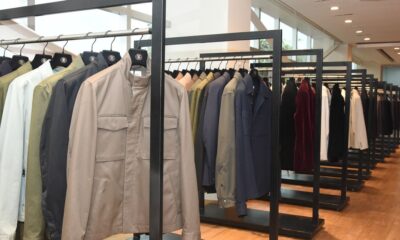


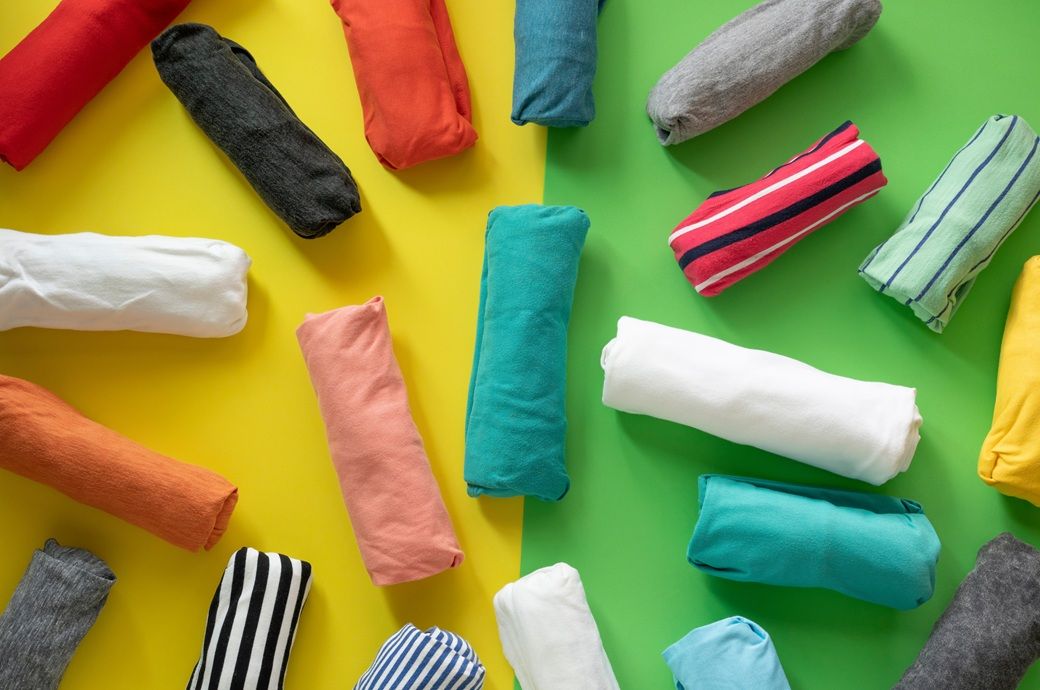
During the first quarter of ****, the UK’s imports of textile fabrics eased down *.** to £*,*** million (~$*,*** million), against £*,*** million in January-March **** but slightly higher from £*,*** million in the fourth quarter of ****. Its imports of fibre were noted at £** million (~$***.** million) steady as £** million in Q*, **** but slightly lower than £** million in Q*, ****.
During the third month of this year, the country’s clothing imports declined *.** per cent to £*.*** billion (~$*.*** billion), compared with £*.*** billion in March ****. But the inbound shipment was slightly higher month on month compared with £*.*** billion in February ****.
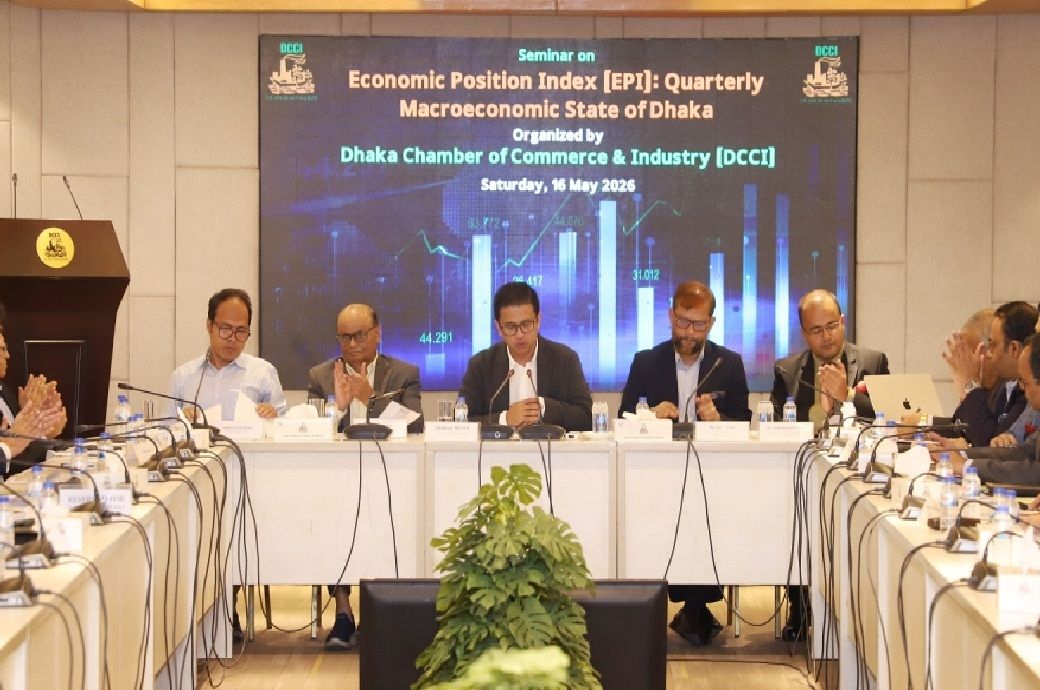
Higher rents, utility bills and fuel prices are eating away at already thin profit margins, it found.
High inflation is cutting deep into Bangladesh consumer spending, with weak demand turning one of the biggest concerns for businesses, DCCI said.
Higher rents, utility bills and fuel prices are eating away at already thin profit margins.
DCCI’s economic position index revealed that consumers have sharply reduced spending as the cost of living continues to rise.
SMEs are feeling the pressure the most.
The chamber’s economic position index (EPI) revealed that consumers have sharply reduced spending as the cost of living continues to rise, putting pressure on retailers, transport operators and other service providers.
Small and medium enterprises (SMEs) are feeling the pressure the most as they struggle to manage higher operating costs without losing customers.
Businesses also cited difficulties in obtaining bank loans, while delays in licensing and other regulatory procedures are adding to costs.
The DCCI report identified a shortage of skilled workers, particularly in technical and customer service roles, as another challenge for the sector.
The country’s inflation rose to 9.04 per cent in April from 8.71 per cent in March, according to official statistics.
Fibre2Fashion News Desk (DS)
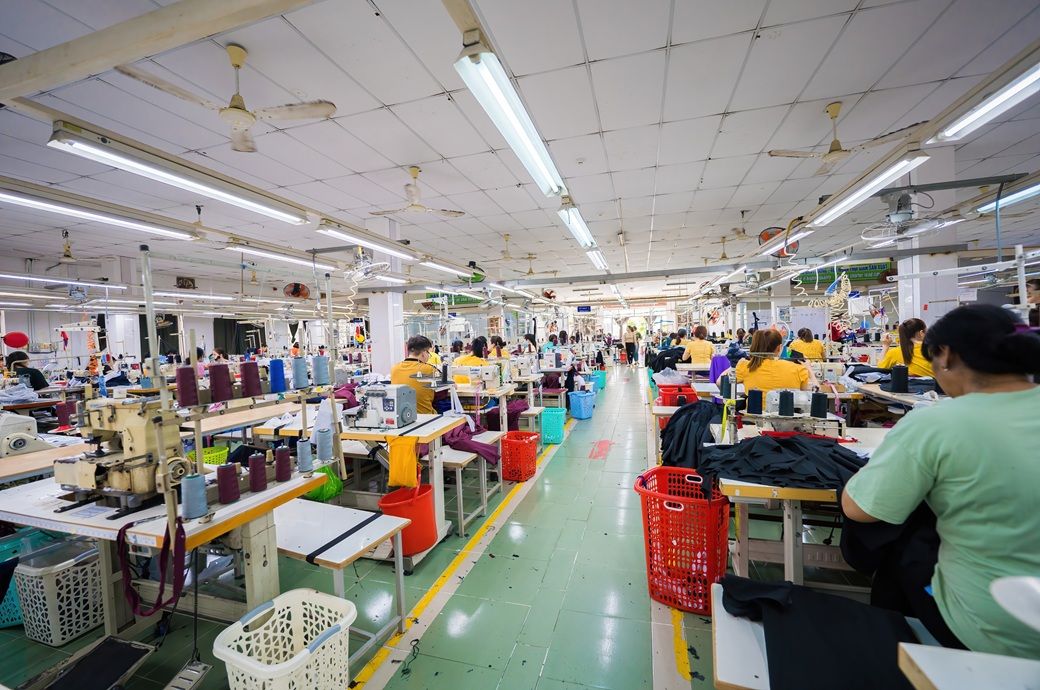
With sustainability benchmarks rising, companies are rethinking how they produce and deliver, pivoting toward greener, more circular models that reduce waste, emissions, and resource use.
The stakes are high. In 2025, Vietnam’s exports to the EU reportedly reached $56.2 billion, up 10.1 per cent year on year, underscoring how pivotal Europe is for the country’s manufacturing base.
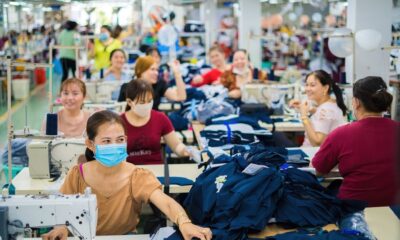
Vietnam’s textile and footwear exporters are accelerating sustainability efforts as stricter EU regulations reshape market access requirements.
Rising compliance pressure from measures such as CBAM and ESPR is pushing manufacturers toward circular production, cleaner technologies and greater supply-chain transparency, though limited green finance remains a major challenge for smaller firms.
The EU market, nevertheless, comes with its own challenges as access to this market increasingly depends on meeting strict environmental and product-design requirements.
The EU is rolling out an ambitious sustainability agenda, including the Carbon Border Adjustment Mechanism (CBAM) and the Ecodesign for Sustainable Products Regulation (ESPR). Together, these measures are changing what global suppliers must document, design, and decarbonise.
ESPR shifts expectations toward durability, repairability, and recyclability, while pushing manufacturers to reduce products’ overall environmental footprint. Supply chains are also expected to become more transparent through Digital Product Passports, and practices such as destroying unsold goods being phased out gradually.
For Vietnam’s exporters, compliance is becoming a baseline requirement to keep EU orders and remain competitive.
Recognising this, both the Government and industry players are stepping up. Vietnam’s long-term development strategy for textiles and footwear, which stretches to 2030 with a vision toward 2035, places sustainability at its core. The plan charts a path toward efficient, environmentally responsible growth anchored in a circular economy, where materials are reused, waste is minimised, and production cycles are closed rather than linear.
Crucially, it also provides a legal backbone to help businesses align with global sustainability trends.
On the ground, change is already underway. Textile and apparel manufacturers are investing in renewable energy, upgrading machinery, and fine-tuning production processes to cut emissions and resource use. These shifts are not just about compliance; they are about future-proofing operations in a market where green credentials increasingly determine who wins contracts.
However, the transition has not been entirely seamless. A key barrier seems to be access to green finance, especially for small and medium-sized enterprises. Large firms can more readily fund clean technologies and certification, while smaller suppliers often struggle to fund the shift, risking exclusion from high-value export markets if they cannot keep pace.
There is also a growing recognition that policy support needs to go further. As Vietnam leans into a circular economy, industry voices are calling for a more cohesive and comprehensive framework, one that not only sets clear standards for circular products but also actively incentivises recycling, cleaner production, and sustainable innovation.
Without this, progress risks being uneven, with smaller firms left behind.
Momentum is, nevertheless, building as manufacturers and policymakers push for better-aligned standards and support mechanisms. The goal is to narrow the gap between sustainability ambition and day-to-day implementation across the sector.
The aim is clear: create an ecosystem where businesses of all sizes can invest in circular solutions, strengthen their export capabilities, and meet the EU’s exacting standards head-on.
Fibre2Fashion News Desk (DR)


UK’s clothing imports fall 3% in Q1, sharply lower than Q4 2025
RBI sees no signs of excess credit risk, keeps countercyclical capital buffer inactive

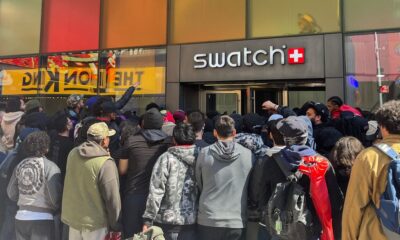
The Catastrophic Swatch x Audemars Piguet Launch Was Entirely Predictable and Utterly Avoidable

-

 Entertainment6 days ago
Conan O’Brien hat tricks as Oscar host
-

 Tech1 week ago
Could Contact-Tracing Apps Help With the Hantavirus? Not Really
-

 Fashion5 days ago
Italy’s Zegna Group’s Q1 growth boosted by strong organic performance
-

 Sports1 week ago
Bobby Cox, legendary Atlanta Braves manager who led 1995 World Series champions, dead at 84
-

 Entertainment1 week ago
Martin Short: Facing tragedy with joy
-

 Entertainment1 week ago
Tom Brady gets back at Kevin Hart during Netflix roast
-

 Entertainment1 week ago
Martha Stewart: How to make an omelet
-

 Sports1 week ago
Jacob Fatu unleashes vicious assault on Roman Reigns after World Heavyweight Championship loss at WWE Backlash