

Fashion
Already the start of major maneuvers at Kering?


Published
September 15, 2025
Luca de Meo seems intent on reshuffling the deck at Kering. At the French luxury group’s annual general meeting in September, the new Italian boss, who joins from Renault, took a straight line to express his vision. The new roadmap will be announced in early 2026, but he and his team will be making adjustments before the end of the year, he explained.
An understatement. Luca de Meo is due to officially take up his post this Monday at the Paris headquarters of the parent company of Gucci, Saint-Laurent, Bottega Veneta, McQueen, Boucheron and Balenciaga, and has already begun the big maneuvers.
According to WWD and Miss Tweed, Francesca Bellettini, the former CEO of Saint-Laurent, who has been Kering’s Deputy CEO in charge of house development since September 2023, will be in charge of the group’s core business. In this role, all the group’s general managers now report to her. Within the management committee, which was headed by François-Henri Pinault (who remains chairman of the Board as of September 15), Jean-Marc Duplaix was the other deputy managing director, in charge of operations.
This appointment to Gucci’s general management, if confirmed, would imply the departure of Stefano Cantino. Recruited from Louis Vuitton in May 2024 as deputy CEO of Kering’s flagship fashion house, which was then headed by Jean-François Palus, Cantino took over as CEO of Gucci on January 1. If these changes are confirmed, the Italian will have held the reins of the Roman house for only nine months.
For Bellettini, this potential move would be a major challenge, as de Meo has made no secret of the urgent need to turn around the group’s flagship, which accounts for some 40% of global sales in the first half of 2025, as much as a return to its roots. Having been with the group for over twenty years, the Italian executive initially joined Gucci in 2003, where she was director of strategic planning and associate director of merchandising, before transferring to Bottega Veneta and then helping Saint-Laurent grow, first at the end of the Slimane era and then with Anthony Vaccarello.
Media reports announcing this change of challenge for the director suggest that these moves could be made official at the beginning of the week.
This article is an automatic translation.
Click here to read the original article.
Copyright © 2025 FashionNetwork.com All rights reserved.




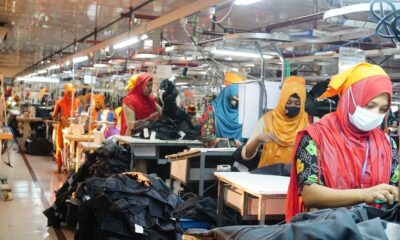






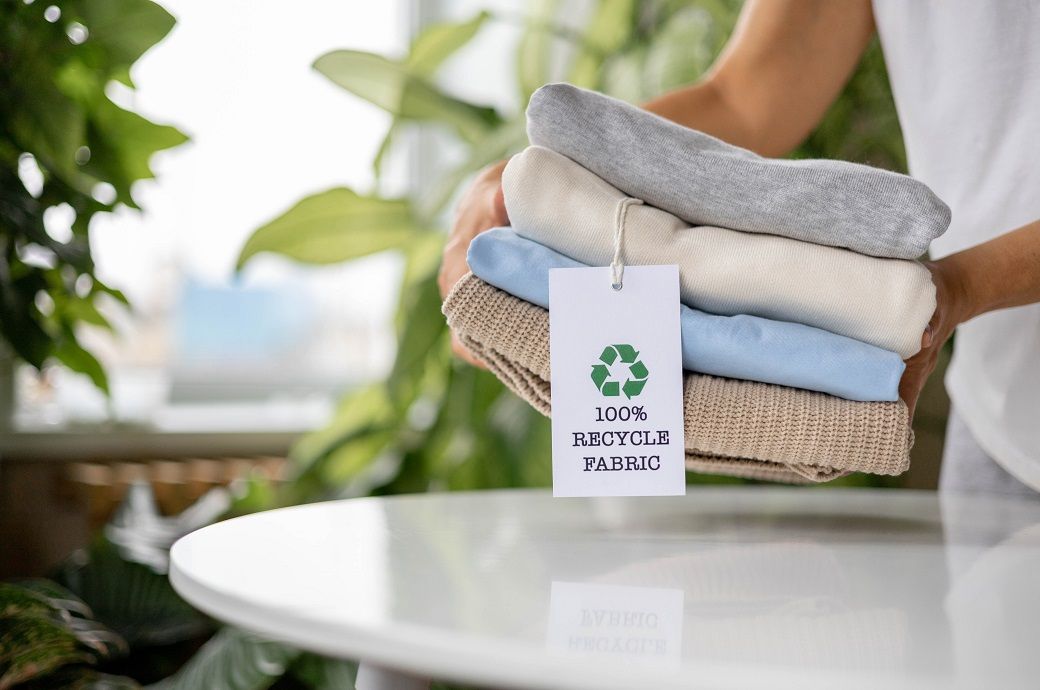
Industry stakeholders said the Budget signals a transition away from volume-driven growth towards a value-led, low-carbon and traceable textile ecosystem, supported by initiatives such as the Text-ECO initiative, the National Fibre Scheme, Samarth 2.0, and sustainability-linked capacity building.
Indian textile industry has welcomed the Budget for its strong focus on sustainability, circularity and responsible manufacturing.
Industry leaders said the measures signal a shift towards value-led, low-carbon and traceable growth.
Initiatives such as Text-ECO, Samarth 2.0 and the National Fibre Scheme are seen as strengthening competitiveness, skills and sustainable sourcing across the value chain.
Shruti Singh, Country Director–India at Canopy Planet, said, “This Budget creates enabling conditions for India to lead in manufacturing of low carbon textile fibres and paper packaging. Investing in circular material ecosystems can meet business ESG goals, create domestic fibre security and global export competitiveness,” she said. Singh added that as demand grows across textiles, packaging and paper-based applications, the real test will lie in responsible sourcing. “For companies linked to forest-based supply chains, this is a moment to strengthen traceability, reduce deforestation risk, and move sustainability from intent to execution,” she noted.
From a fashion brand perspective, Amar Nagaram, co-founder of Virgio, said the Budget clearly links sustainability with innovation and design-led growth. “India’s next phase of growth will be driven by the convergence of design, technology and sustainability. The emphasis on sustainable textiles, MSME scale-up, AI-led innovation and design education reflects a long-term vision to move Indian manufacturing up the global value chain,” he said. Nagaram added that the policy direction supports responsible production, data-driven decision-making, and positions India as a credible global hub for future-ready fashion and lifestyle businesses.
At the manufacturing end, Sabhari Girish, chief sustainability officer at Sulochana Cotton Spinning Mills, Tiruppur, said that sustainability and circularity receiving prominence in the Budget is encouraging for the sector. “Circularity and sustainability taking a prominent spot in the Budget speech is a positive signal. The announcement of Text-ECON will help Indian textile companies showcase their environmentally friendly contributions to the world,” he said. Girish noted that upcoming FTAs with the UK and EU are expected to sharpen the focus on sustainability, adding that Samarth 2.0 will play a critical role in skilling the workforce with updated technologies across the value chain, from fibre to garments.
He also pointed out that the National Fibre Scheme could enhance the quality and global competitiveness of Indian-made fibres, though capital-intensive modernisation will require a clear funding roadmap. “Adopting best practices needs more support, and a proper roadmap will help indigenous fibres take centre stage,” Girish said, while welcoming the proposal to upgrade sports goods manufacturing as a boost for R&D and technical textiles.
Industry experts said the Budget’s sustainability-led approach aligns closely with stricter environmental regulations in markets such as the EU and UK, and could strengthen India’s positioning as a responsible, compliant and future-ready sourcing destination.
Fibre2Fashion News Desk (KUL)
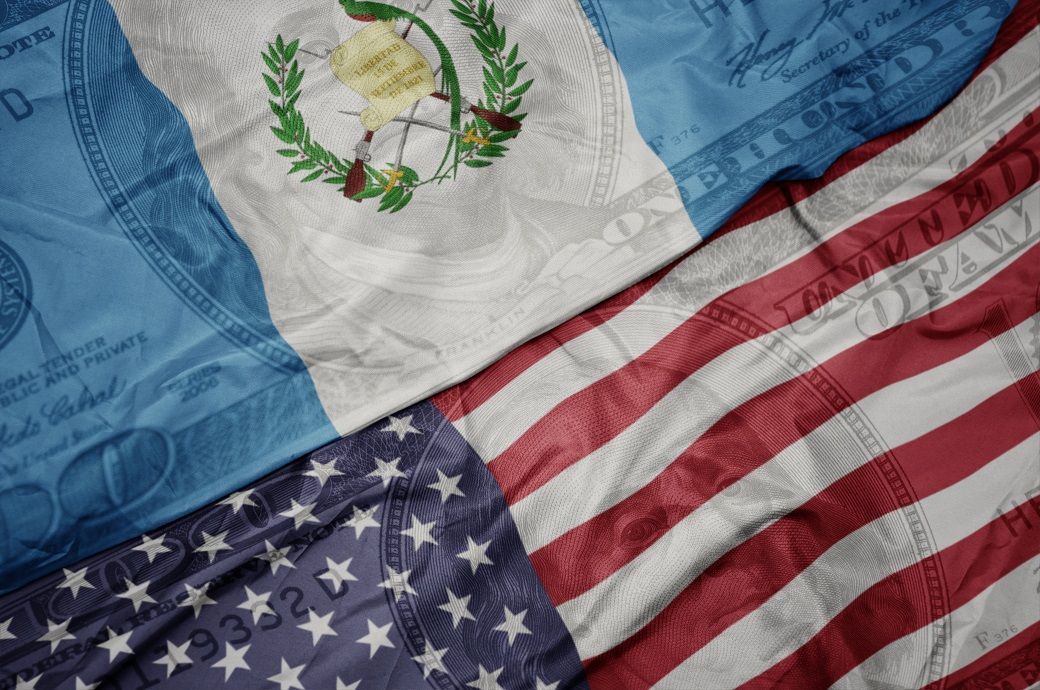
“President Trump’s leadership is forging a new direction for trade that promotes partnership and prosperity in Latin America, further strengthening the American economy, supporting American workers, and protecting our national security interests,” said Ambassador Greer in a USTR release.
USTR Jamieson Greer and Guatemala’s Minister of Economy Adriana Gabriela Garcia recently signed the US-Guatemala Agreement on Reciprocal Trade.
The agreement addresses trade barriers facing American workers and producers, expands and solidifies markets for US exports and strengthens strategic economic ties in the Western Hemisphere, Greer said.
US trade body NCTO welcomed the signing.
The agreement addresses trade barriers facing American workers and producers, expands and solidifies markets for US exports and strengthens strategic economic ties in the Western Hemisphere, he said.
“This agreement builds on our long-standing trade relationship and shared interest in reinforcing regional supply chains,” he added.
The key terms of the agreement includes breaking down non-tariff barriers for US industrial and exports, advancing trade facilitation and sound regulatory practices; protecting and enforcing intellectual property; preventing barriers for digital trade; improving labour standards; strengthening environmental protection; strengthening economic security alignment; and confronting state-owned enterprises and subsidies.
Guatemala has committed to take steps to restrict access to central level procurement covered by its free trade agreement commitments for suppliers from non-free trade agreement partners, permitting exemptions as necessary, in a manner comparable to US procurement restrictions.
Welcoming the announcement, National Council of Textile Organizations (NCTO) president and chief executive officer Kim Glas said the agreement marks an important step toward strengthening the US textile supply chain.
“Guatemala is a key partner in the CAFTA-DR [Dominican Republic-Central America-United States Free Trade Agreement] region, with nearly $2 billion in two-way textile and apparel trade. Together, the region operates as an integrated co-production platform that is essential to the US textile supply chain,” he noted.
The US-Western Hemisphere textile and apparel supply chain remains ‘a critical strategic alternative’ to China and other Asian producers, he added.
Fibre2Fashion (DS)

Canada could boost long-term economic output by nearly 7 per cent if it dismantles policy-related barriers that restrict the movement of goods, services, and labour across provinces, according to new analysis by the International Monetary Fund (IMF).
Despite being one of the world’s most open economies globally, Canada’s internal market remains fragmented, with non-geographic barriers equivalent to an average 9 per cent tariff nationwide.
Canada could raise long-term GDP by nearly 7 per cent by removing internal trade barriers that restrict interprovincial movement of goods, services, and labour, new analysis shows.
Policy-related frictions act like a 9 per cent internal tariff nationwide.
Liberalising high-impact sectors could deliver productivity-led gains worth about C$210 billion (~$153.04 billion).
Model-based estimates suggest that fully removing these barriers could add around C$210 billion (~$153.04 billion) to real GDP over time, driven largely by productivity gains rather than short-term demand, IMF said in a release.
While full liberalisation will be gradual, targeted reforms in high-impact sectors could deliver sizable benefits and improve economic resilience. Analysts argue that stronger federal–provincial coordination, wider mutual recognition of standards and credentials, and transparent benchmarking of internal trade barriers will be key to turning Canada’s fragmented domestic market into a more integrated national economy.
Fibre2Fashion News Desk (HU)


17 more athletes join lawsuit vs. ex-NC State sports medicine director
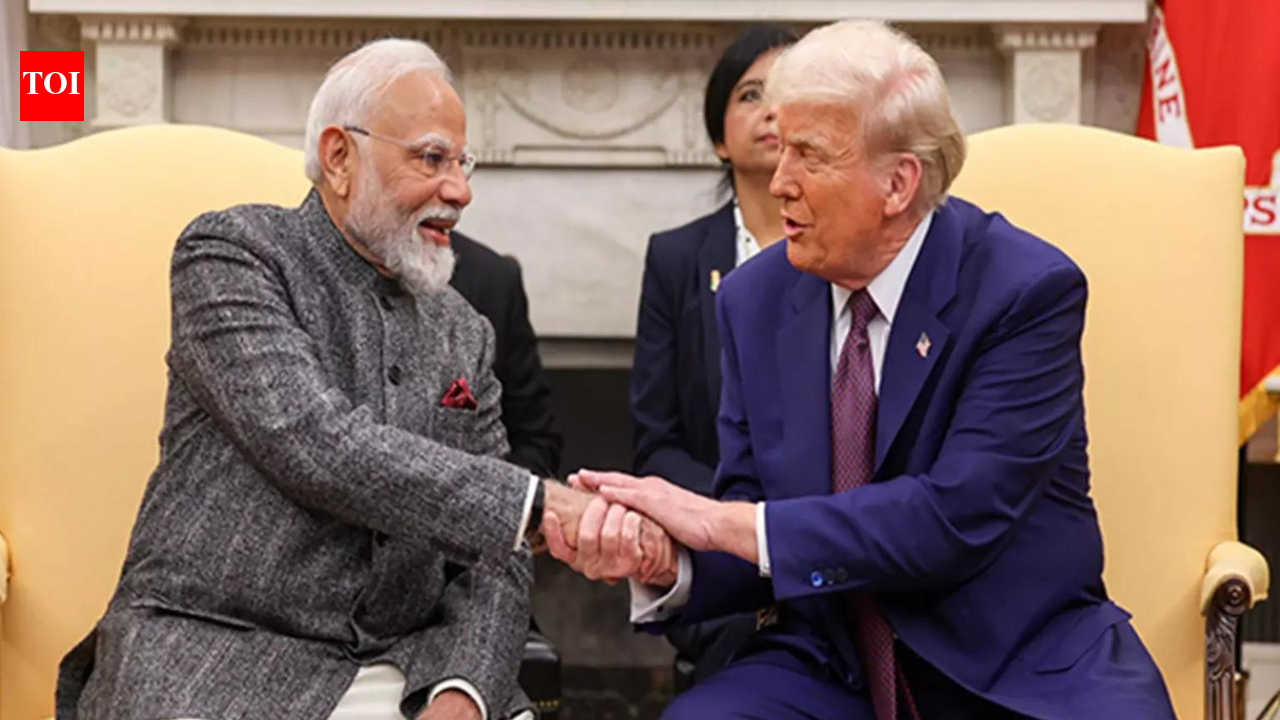
Trade deal done, says Trump; PM Modi thanks him for cutting tariff to 18% – The Times of India

Halle Berry reveals major plans for 2026

-

 Sports6 days ago
PSL 11: Local players’ category renewals unveiled ahead of auction
-

 Entertainment6 days ago
Claire Danes reveals how she reacted to pregnancy at 44
-
 Business7 days ago
Banking services disrupted as bank employees go on nationwide strike demanding five-day work week
-

 Fashion1 week ago
Spain’s apparel imports up 7.10% in Jan-Oct as sourcing realigns
-

 Sports6 days ago
College football’s top 100 games of the 2025 season
-

 Politics6 days ago
Trump vows to ‘de-escalate’ after Minneapolis shootings
-
 Business1 week ago
Should smartphones be locked away at gigs and in schools?
-

 Fashion1 week ago
Australian wool prices climb again as exporters drive demand