

Fashion
Amazon’s layoffs show how AI is coming for India


By
Bloomberg
Published
November 2, 2025
Amazon.com Inc.’s latest global layoffs should come as a singular warning to India. For policymakers dealing with the world’s largest youth population, AI suddenly poses a very real risk to jobs, wages, and a white-collar future.
The e-commerce and cloud services giant’s elimination of 14,000 corporate positions worldwide may not have a large direct impact on its sizeable Indian workforce. The more worrying thing is the kind of occupations at risk: Generative artificial intelligence is starting to affect more than just entry-level computer programming.
Outsourcing hubs like Bengaluru and Hyderabad are already feeling the pinch from AI. But Amazon’s cuts may affect finance, marketing, human resources and tech employees, according to local media reports. That puts many more sectors on notice and validates a growing body of academic work.
After parsing nearly 200 years of data on labor markets and technological change, finance scholars at Northwestern University and the Massachusetts Institute of Technology have concluded that advances in natural-language processing may favor occupations that are lower-educated, lower-paid, and more male-dominated, such as construction and trucking.
It would be a dramatic departure from how previous innovation affected demand for workers. As Huben Liu and his coauthors explain, until the 1980s IT revolution, most advances in automation supplanted manual effort while supporting cognitive tasks. Take, for instance, Irving Colburn’s early-20th-century invention of a machine to substitute hand-blown glass in window panes. The blowers’ wages fell 40%. Within one generation, mechanization drove an entire class of artisans out of business.
By contrast, the arrival of electronic calculators in the 1970s helped accountants and auditors to become more productive. It didn’t replace them. The tilt toward services such as finance and health care favored women, facilitating their entry into the workforce as 20th-century innovations also eased the burden of domestic chores.
Over time, these improvements went global, but the hard-won gains may now reverse. With the capital costs of implementing AI expected to become cheaper each year, cognitive tasks that don’t require at least five years of specific vocational preparation will be at risk from automation, the researchers say. That includes many entry-level jobs, such as analyzing financial statements at Wall Street firms.
Mechanized production of sheet glass did little to hurt women. At the cusp of automation in 1900, they held few of the 53,000 jobs in the US glass industry. Employers preferred men. (In 1900, the industry employed twice as many children under 16 as women.) But to lose out now to Lilli, McKinsey & Co.’s proprietary AI tool that’s drafting client proposals and preparing slide decks? That would certainly rankle, especially since it’s named after the first woman professional hired by the consulting firm in 1945.
All this may come as a particularly harsh blow to the 375 million Indians who are between 10 and 24 years old. At 18.5%, youth unemployment in cities is alarmingly high. Young women’s participation in the labor force is abysmally low at under 22%. Large-scale adoption of AI tools by companies will further muddy the picture. In a separate paper, London School of Economics professor Luis Garicano and his coauthor examine a realistic scenario: If AI does away with entry-level grunt work, which employer will bother to train fresh graduates? How will they rise up the career ladder to higher-wage positions?
Artificial intelligence may still surprise us by creating new tasks that don’t yet exist. It’s also possible that young people will invest in their own AI training. But if Amazon is any indication, the technological exposure of higher-educated, better-paid, and more women-oriented occupations is indeed high.
This won’t be the first shock to India’s labor market in modern times. Its cotton spinners and weavers, among the world’s best in the early 18th century, took a large hit from the Industrial Revolution. As the economy struggles to move from lower-middle to higher-middle income, AI is threatening its biggest advantage: the youth bulge it enjoys against other countries that are rapidly aging.
The right approach to AI would contain both carrots and sticks. The preponderance of Chinese large language models among the world’s top 20, as highlighted by my colleague Catherine Thorbecke, makes it obvious that India isn’t doing enough fundamental research. This must change. The government also needs to read the riot act to outsourcing firms. They have to halt share buybacks and invest in meaningful AI projects, not just data centers.
Finally, the broader corporate sector should be given generous tax breaks for research and development. Instead of coming up with generic copies of drugs going off patent in the West, pharmaceutical companies must be encouraged to use AI to discover new molecules.
The next quarter-century offers the most-populous nation a chance to get rich before it grows old. Ending up on the wrong side of technological change for the second time in 300 years won’t be a good outcome — either for India, or the world. Amazon’s job cuts are the proverbial canary in the coal mine. The time to act is now, before the outlook for white-collar work turns more toxic.










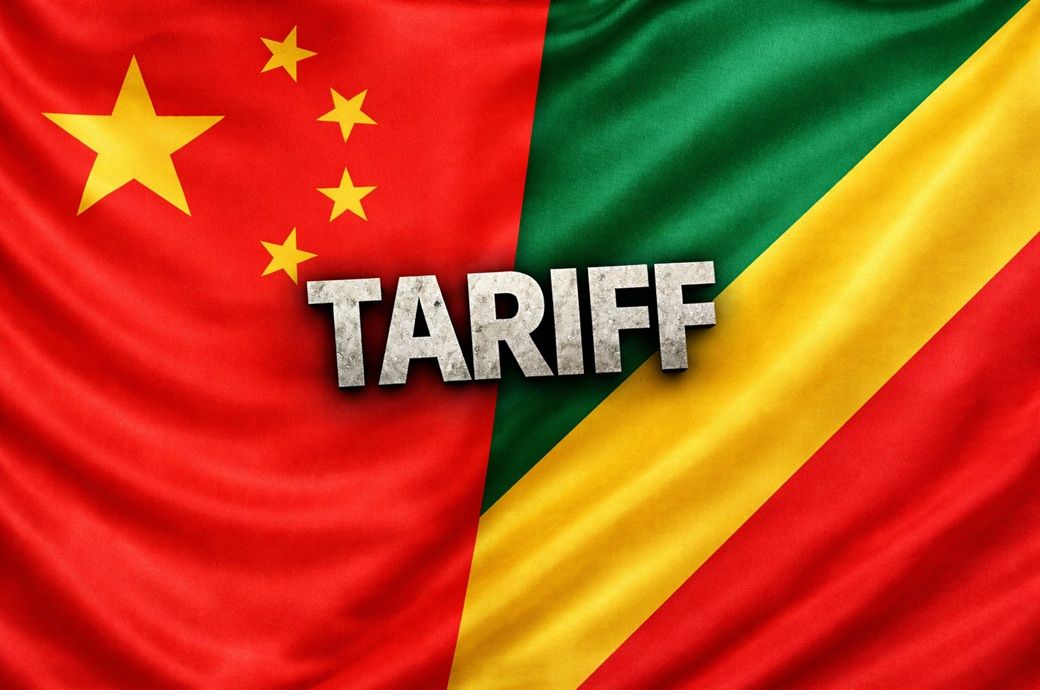
The measure implements tariff reduction commitments made under the ‘Early Harvest Arrangement of the Agreement on Economic Partnership for Shared Development’ between the two countries.
China will implement preferential tariff rates on selected imports from the Republic of the Congo starting April 1 under the Early Harvest Arrangement of their economic partnership agreement.
The move announced by the Customs Tariff Commission, is aimed at fulfilling tariff reduction commitments, enhancing bilateral trade cooperation and advancing long-term economic ties between the two countries.
The commission said the move is in line with China’s tariff law and reflects the country’s continued efforts to expand opening-up and strengthen trade ties with African partners.
Officials stated that the preferential tariff treatment will help deepen bilateral economic and trade cooperation and support the development of a higher-level community with a shared future between China and the Republic of the Congo.
The Early Harvest Arrangement, signed in November 2025, marked the first such agreement of its kind between China and an African country, paving the way for broader market access and phased tariff reductions.
Fibre2Fashion News Desk (JP)
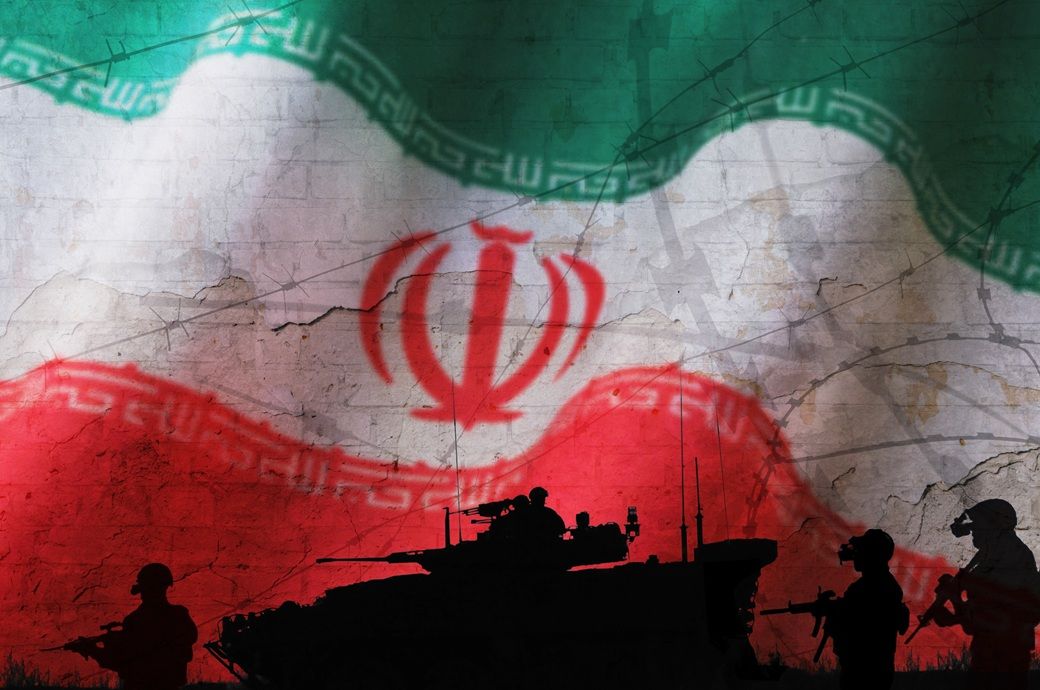
These countries are particularly vulnerable to rising oil prices and potential supply disruptions, it noted in a recent article.
The Iran war poses a greater risk to Bangladesh, Pakistan and Sri Lanka, and to a lesser extent Laos, due to their high dependence on imported energy and limited reserves, S&P Global Ratings said.
These countries are particularly vulnerable to rising oil prices and potential supply disruptions.
All four governments are likely to see significant credit metric deteriorations, if the conflict is prolonged.
In our base case scenario, the war is unlikely to have a material impact on our sovereign ratings on these countries, but a more prolonged price and supply shock in global energy markets could cause more pronounced credit damage.
Pakistan, Sri Lanka, and Bangladesh are showing signs of economic recovery. The three countries have made progress, but sustained high energy prices and potential disruptions to trade and remittances could derail their fragile economies.
S&P Global Ratings believes the higher-income Asia-Pacific (APAC) economies are better placed to weather temporary disruptions to oil and gas supply from the Middle East.
Even where they are highly dependent on imported energy, they generally have more significant oil reserves to meet the shortfall in imports. They also have financial resources to acquire available supply in the spot oil and gas markets to secure needed energy, the rating agency noted.
Lower-income economies in the region do not enjoy such flexibility. The sovereign ratings on some may face pressure if the supply disruption persists longer than our assumptions. Bangladesh, Laos, Pakistan and Sri Lanka are among this group. These economies have one thing in common: a high dependence on imported energy products.
The Middle East war is likely to have a more severe impact on these economies, due to their fuel import bills, and generally weaker fiscal and external reserves to withstand supply shortages and high oil prices.
Among the four sovereigns, Laos is likely to fare better due to the dominance of hydropower in its energy mix.
Bangladesh, with government revenues at only around 9 per cent of gross domestic product, has fewer options to cap electricity and fuel prices through fiscal means.
All four governments are likely to see significant credit metric deteriorations, through inflation and currency channels, if the Middle East conflict is prolonged. However, the impact on the agency’s ratings on these sovereigns may be limited, as the generally low rating levels have already captured a significant share of the risks.
S&P Global Ratings’ base case for the Middle East war assumes that elevated hostilities will persist into early April, with the Strait of Hormuz facing material disruptions.
Fibre2Fashion News Desk (DS)
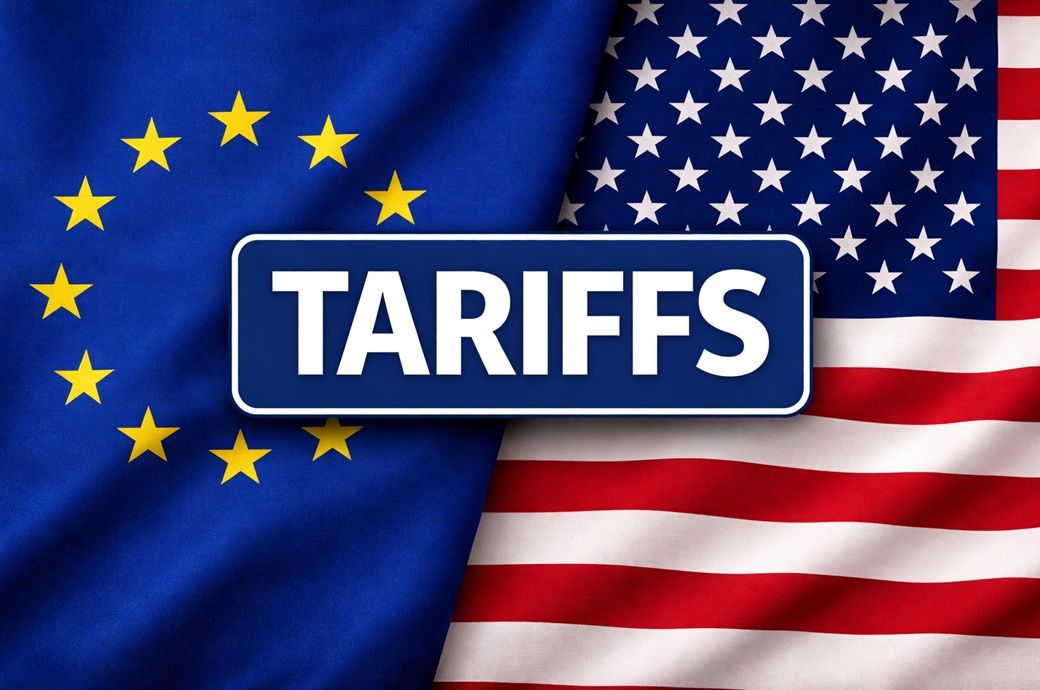
On July 27, 2025, in Turnberry, Scotland, US President Donald Trump and European Commission President Ursula von der Leyen reached a deal on tariff and trade issues, outlined in a joint statement published on August 25.
EU Parliament members have adopted their position on two proposals implementing the tariff aspects of the EU-US Turnberry trade deal.
The texts, if agreed with EU members, will eliminate most tariffs on US industrial goods and offer preferential market access for many US seafood and agricultural goods.
The members strengthened the proposed suspension clause, and introduced ‘sunrise’ and ‘sunset’ clauses.
The texts, if agreed with EU member states, will eliminate most tariffs on US industrial goods and provide preferential market access for a wide range of US seafood and agricultural goods, in line with the commitments made in summer 2025 between the EU and the United States.
The MEPs strengthened the proposed suspension clause, which would allow the tariff preferences with the US to be suspended under a number of conditions.
For instance, the Commission would be able to propose suspending all or some trade preferences if the US were to impose additional tariffs exceeding the agreed 15-per cent ceiling, or any new duties on EU goods, a release from the Parliament said.
The suspension clause could also be activated if the US undermines the objectives of the deal, discriminated against EU economic operators, threatened member states’ territorial integrity, foreign and defence policies, or engaged in economic coercion, it noted.
The MEPs have introduced a ‘sunrise clause’ that means the new tariffs would only become effective if the US respects its commitments. These conditions include the US lowering its tariffs on EU products with a steel and aluminium content below 50 per cent, to a tariff of maximum 15 per cent.
Furthermore, for EU products with a steel and aluminium content of above 50 per cent, unless the US reduces its tariffs to a maximum of 15 per cent, EU tariff preferences for US exports of steel, aluminium and their derivative products would cease to apply six months after the entry into application of the regulation.
The members also agreed on an expiry date for the main regulation on March 31, 2028. This could only be extended via a new legislative proposal, to be submitted following a thorough impact assessment of the effects of the regulation.
The European Commission would be tasked with monitoring the impact of the new rules and would be able to suspend the new tariffs temporarily, should US imports reach a level that could cause serious harm to EU industry.
Fibre2Fashion News Desk (DS)


Iran’s soccer team honors victims of elementary school airstrike

Tiger Woods arrested at crash scene on suspicion of DUI, sheriff says

Mentor calls Ryan Gosling to ‘Days of Our Lives’ set

-
 Business7 days ago
Flipkart group CFO to leave co amid IPO plans – The Times of India
-

 Fashion7 days ago
China’s textile & apparel exports surge 17% to $50 bn in Jan-Feb 2026
-
 Business1 week ago
Video: The Effects of High Oil Prices
-

 Sports1 week ago
Rating Adidas’ 2026 World Cup away shirts: Argentina, Spain, Mexico and more
-
 Fashion1 week ago
The hidden $1.62 war tax now embedded in every garment you source
-

 Sports1 week ago
American Conference Commissioner Tim Pernetti thanks Trump for Army-Navy game executive order
-
Tech1 week ago
The Corsair 4000D RS PC Case Keeps Your System Cool
-

 Tech1 week ago
‘Uncanny Valley’: Nvidia’s ‘Super Bowl of AI,’ Tesla Disappoints, and Meta’s VR Metaverse ‘Shutdown’