

Fashion
American Eagle soars as Sweeney campaign draws in shoppers


By
Reuters
Published
December 4, 2025
Shares of American Eagle Outfitters jumped nearly 15% in early trading on Wednesday after its viral Sydney Sweeney jeans campaign continued to drive in-store traffic during the key holiday season, prompting the retailer to raise its annual sales forecast.
Shares of the company are up almost 60% since September. The “Great Jeans” ad, released in July and featuring “Euphoria” actor, even garnered praise from U.S. President Donald Trump.
For American Eagle, successful campaigns with Sweeney, a collaboration with NFL player Travis Kelce’s clothing brand Tru Kolors have driven up engagement and boosted visibility, according to analysts at Jefferies.
The upbeat forecast follows the crucial five-day Thanksgiving shopping event, which saw a surge in online spending from more affluent shoppers, despite mixed results in the broader retail industry.
The company’s recent pivot to cater to these affluent buyers has helped it navigate a broader retail slowdown driven by inflation and trade tensions.
American Eagle now expects holiday quarter comparable sales to grow between 8% and 9%, compared with analysts’ estimates of a 2.2% rise, according to data compiled by LSEG.
“As a company, we’re leaning into advertising. We need to compete when we see what our competition is doing,” said American Eagle executive Jennifer Foyle.
“American Eagle will have to continue to invest in marketing spend to continue to drive share gains on top of these successes,” Barclays analysts said in a note.
The stock has risen about 25% so far this year, and trades at a 14.74 forward-price-to-earnings multiple, above peers Abercrombie & Fitch‘s 9.86 and Urban Outfitters‘ 13.63.
© Thomson Reuters 2025 All rights reserved.











The package establishes a modern framework for both sides, enabling frictionless access to a market of 460 million consumers in key sectors, delivering economic benefits to both parties.
European Commission President Ursula von der Leyen and Swiss President Guy Parmelin yesterday signed a broad package of agreements aimed at deepening and expanding EU-Switzerland ties.
By aligning standards and rules in closely integrated areas, it will provide legal certainty, simplify trade in goods like medical devices and food products, and ease cross-border supply for businesses on both sides.
By aligning standards and rules in closely integrated areas, it will provide legal certainty, simplify trade in goods like medical devices and food products, and ease cross-border supply for businesses on both sides of the border.
Additionally, it will ensure more consistent rules for individuals who live, work or study across the EU-Swiss border. Switzerland will contribute to the development of legislation in the areas covered by the package and will have the opportunity to influence these rules as they are being designed.
“By modernising and deepening our ties across key sectors, from trade and transport to health and energy—we are strengthening legal certainty, fostering innovation and creating new opportunities for our citizens and businesses,” von der Leyen said in a release from the Commission.
The package includes updates to four already existing agreements, which already give Switzerland access to the EU internal market, regarding air transport, land transport, the free movement of persons and mutual recognition of conformity assessment.
New agreements on food safety, electricity, health and Switzerland’s participation in the EU Agency for the Space Programme were signed. A new agreement introduced a permanent and fair financial contribution by Switzerland to economic and social cohesion within the EU.
Apart from a protocol on parliamentary cooperation, the package includes also a joint declaration on the establishment of a high-level dialogue on the broad bilateral package.
Fibre2Fashion News Desk (DS)

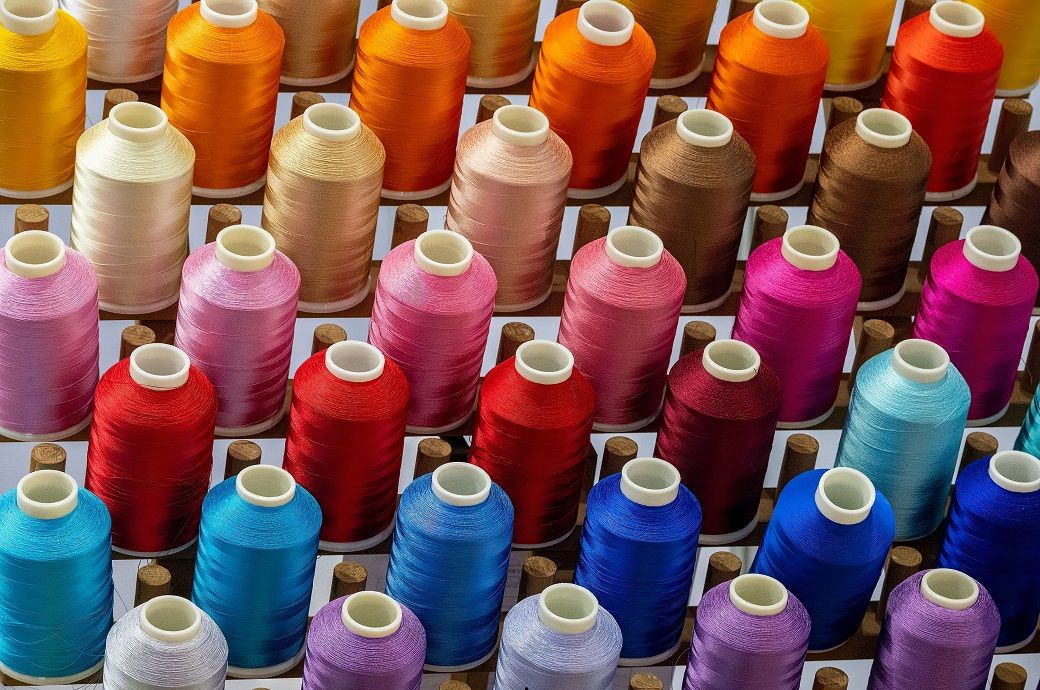
Following earlier increases in purified terephthalic acid (PTA), melt and PSF, Indian producers have now raised PFY prices. POY, FDY and PTY prices have been increased by ****;* per kg across all deniers and lustres with effect from March *, reflecting rapid cost pass-through amid heightened volatility in crude-linked value chains, according to the market sources.
In the previous weekly revision effective February **, ****, PTA was increased by ****;*.** per kg to ****;**.** per kg, while monoethylene glycol (MEG) was retained at ****;**.** per kg. Polyester melt prices were raised by ****;*.** per kg to ****;**.** per kg. Downstream PSF prices were also revised upward by ****;*.** per kg from March *.


Legendary football coach, commentator Lou Holtz dies at 89

Jake Cannavale shares his bit on Bobby Cannavale, Rose Byrne’s viral pet

Judge sets May retrial date in Miami football murder case

India Us Trade Deal: Fresh look at India-US trade deal? May be ‘rebalanced’ if circumstances change, says Piyush Goyal – The Times of India

What are Iran’s ballistic missile capabilities?

Households set for lower energy bills amid price cap shake-up

-
Business6 days ago
India Us Trade Deal: Fresh look at India-US trade deal? May be ‘rebalanced’ if circumstances change, says Piyush Goyal – The Times of India
-
Business1 week ago
Households set for lower energy bills amid price cap shake-up
-
 Politics7 days ago
What are Iran’s ballistic missile capabilities?
-

 Politics7 days ago
US arrests ex-Air Force pilot for ‘training’ Chinese military
-

 Fashion6 days ago
Policy easing drives Argentina’s garment import surge in 2025
-

 Sports1 week ago
Top 50 USMNT players of 2026, ranked by club form: USMNT Player Performance Index returns
-
 Business6 days ago
Attock Cement’s acquisition approved | The Express Tribune
-

 Sports5 days ago
LPGA legend shares her feelings about US women’s Olympic wins: ‘Gets me really emotional’