Nine in ten retailers globally are planning to raise their spending on artificial intelligence (AI) to optimise their e-commerce operations over the next 12 to 24 months, with online delivery execution a key area of focus.
That’s a key statistic from research released on 4 February 2026, which suggests retailers view AI as a key lever to drive growth and succeed in a competitive market. A total of 38% of European retailers identify speed, tracking and proactive communication around the delivery process as areas where AI can deliver the greatest impact.
The report by Retail Economics, on behalf of delivery platform Metapack, which was launched to coincide with the tech company’s annual The Delivery Conference (TDC) in London, shows retailers with a turnover of £500m or more are more likely to point to skills gaps and the complexity of integrating AI with legacy systems (54%) as a challenge to AI adoption.
Smaller retailers, with a turnover of under £100m, cite high development costs (35%) and data security or compliance concerns as a notable barrier to using AI.
Alongside the 400-strong retailer study, the Ecommerce delivery benchmark report 2026 also surveyed 8,000 consumers about their use of AI.
It found that globally, 78% of shoppers used AI tools such as ChatGPT in the past year, rising to 93% among those under the age of 35. Some 30% of adults are open to AI acting as a personal shopping agent, recommending products, checking delivery and returns options, and even making certain purchases on their behalf once preferences are set.
By 2030, 48% of shoppers expect AI to act as a helpful assistant across the shopping journey, while a further quarter of shoppers anticipate it evolving into a trusted co-shopper that automates some decisions. Retailers such as JD Sports and Etsy, in the US, have developed tech integrations and started allowing shoppers to transact directly through AI platforms, in recognition of the rising traffic volumes on these channels.
Indeed, the delivery benchmark report argued that AI-based platforms are emerging as a major retail channel, generating 50.2 million monthly shopping-intent visits in the UK, which ranks it alongside the biggest e-commerce sites.
Which AI shopper persona are you?
Retailers and brands are always keen to improve the digital customer experience (CX), and senior leaders in the industry regularly talk up the importance of placing the shopper at the heart of strategy.
For example, New Look CEO Helen Connolly said of the appointment of retail director Mark Matthews in December 2025 that he brings “a customer-first mindset”. US department store chain Bloomingdale’s hired Kirsten Miller as chief technology officer in January, and the new recruit notice posted online said she was joining a team with a “customer first, always” mentality.
If retailers adopting this approach are true to their word, they’re going to need to get to grips with what an AI-enabled customer means for their business.
The Ecommerce delivery benchmarkreport identifies four distinct AI-driven shopper personas, reflecting the various ways consumers are adopting AI when shopping.
It said there are “AI delegators” (17% of shoppers), who are affluent, time-poor shoppers, more often than not millennials, who are comfortable letting AI take the lead for product discovery, comparison and purchasing, to save time and effort.
On the flip side, there are “AI sceptics” (23%), who are cost-focused shoppers who make limited use of this new technology, prioritise low delivery prices over speed or innovation, and stick with what is familiar to them in the shopping process.
The most common types of new-age shoppers, though, are either “AI collaborators” or “AI selectors”. Each representing 30% of today’s shoppers, the former is a young, digitally savvy consumer who uses AI frequently as a trusted co-shopper while retaining final control themselves, while the latter is typically older and uses AI occasionally for information or reassurance.
The report notes that retailers looking to AI to identify speed, tracking and proactive communication around the delivery process will likely have the most success in appealing to the delegator persona.
What is the retail community saying about AI?
Retailers and companies operating in the online delivery ecosystem took to the stage on 3 February 2026 for this year’s TDC, where AI was a hot topic. They shared how it is being deployed in multiple ways to support their efforts in improving service levels and efficiency.
The Cheeky Panda’s co-founder, Chris Forbes, told a tale of Covid times when big orders for his business’s core loo roll product came in and initial excitement at the “big deals” was tempered because the company inadvertently ended up taking stock away from existing customers. He spoke about the importance of retailers ensuring “continuous delivery”, especially for organisations in the early stages of their growth journeys.
“In delivery and fulfilment, you have to ringfence your stockholding so you don’t get too excited when you get big deals – it’s all about continuous delivery.
“Nowadays, we use AI in our stock management systems to ringfence it, so we don’t actually need to over-manage it and over-analyse it on a regular basis. We’ve got controls and limits set up, so it makes it a lot easier.”
Kristian Tottermar, logistics network strategic lead at H&M, didn’t talk about AI specifically, but underlined the importance of holistic supply chain investment to ensure successful delivery.
“We don’t talk about investing purely for delivery,” he commented. “If you optimise your supply chain – [for example, by making it] more transparent or optimising the end-to-end flow – that will enable you to have better availability and delivery.”
Tobias Buxhoidt, founder and CEO of parcelLab, said: “When I think about what AI will do – yes, it will make all of our lives easier – the first thing that will happen is it will dramatically change how customer acquisition works.”
I don’t see a world where AI isn’t taking over a large share of the traditional [customer] acquisition channels we know today Tobias Buxhoidt, parcelLab
Reflecting on the growing number of people using AI to search for products or gain information about brands, as referenced in the benchmark research, he remarked: “This becomes crazily convenient for the customers. It’s not the same for all brands and markets, but this will become a major customer acquisition channel, and it’ll be undifferentiated for brands as they cannot control the acquisition anymore.”
Buxhoidt added that the focus for retailers needs to be on retention and putting services and tactics in place that keep customers coming back, “because the acquisition is going to get so damn hard”.
“I don’t see a world where AI isn’t taking over a large share of the traditional acquisition channels we know today,” he warned.
Buxhoidt argued that when it comes to retail returns management online, AI could help interactions between business and customer become more conversational. Early-stage chatbots have not delivered what consumers need, but the tech entrepreneur said AI-powered online conversational commerce has the potential to help tailor conversations to the moment rather than simply follow a pre-designated path.
Aura Hita Losa, lead on conversational AI at Swiss trainer brand On, said that if AI is used in this area, it needs to solve problems, not simply present further information and content to the customer.
“Imagine you put your founder on the phone to deliver [the customer exchange]. He or she would always have the right thing to say or to do,” she noted. “When customers reach out, they don’t want information – they want a solution, and they want you to act.”
Losa suggested retailers and brands need to use the latest technology, analytics and insights software to become better at remembering customers’ previous problems, so that when they present themselves at customer service – with a complaint or a query, for example – they can be better served.
One could argue that real-life humans can provide the necessary services to deal with these exchanges, but retailers and brands are increasingly looking to technology and AI to take on much of this workload.
Indeed, the conference had earlier kicked off with a debate about AI, human value and retail, between TV celebrity and retail creative Mary Portas and Google DeepMind product management developer Arka Dhar, hosted by Al Ko, CEO of tech company Auctane.
Portas argued that AI needs to be used to make people “more human”, suggesting this as an area where it can have a powerful impact.
Dhar said AI will likely have a strong role to play in helping frontline staff gather comprehensive product information, with AI agents providing some of the prompt questions that will help store staff become more adept at problem-solving for their customers.
He suggested there are still major hurdles to overcome in getting AI to think and act like a particular brand and in getting data management to a level, internally, that will optimise use of the technology.
Richard Lim, CEO of Retail Economics, says: “AI is reshaping retail strategy, not just the CX. Retailers clearly see the potential across conversion, delivery and CX, and consumers are increasingly comfortable with AI playing a role in how they shop. In 2026, the focus shifts from experimentation to execution, where success will be shaped by how effectively retailers can embed AI into their data, systems and everyday operations.”
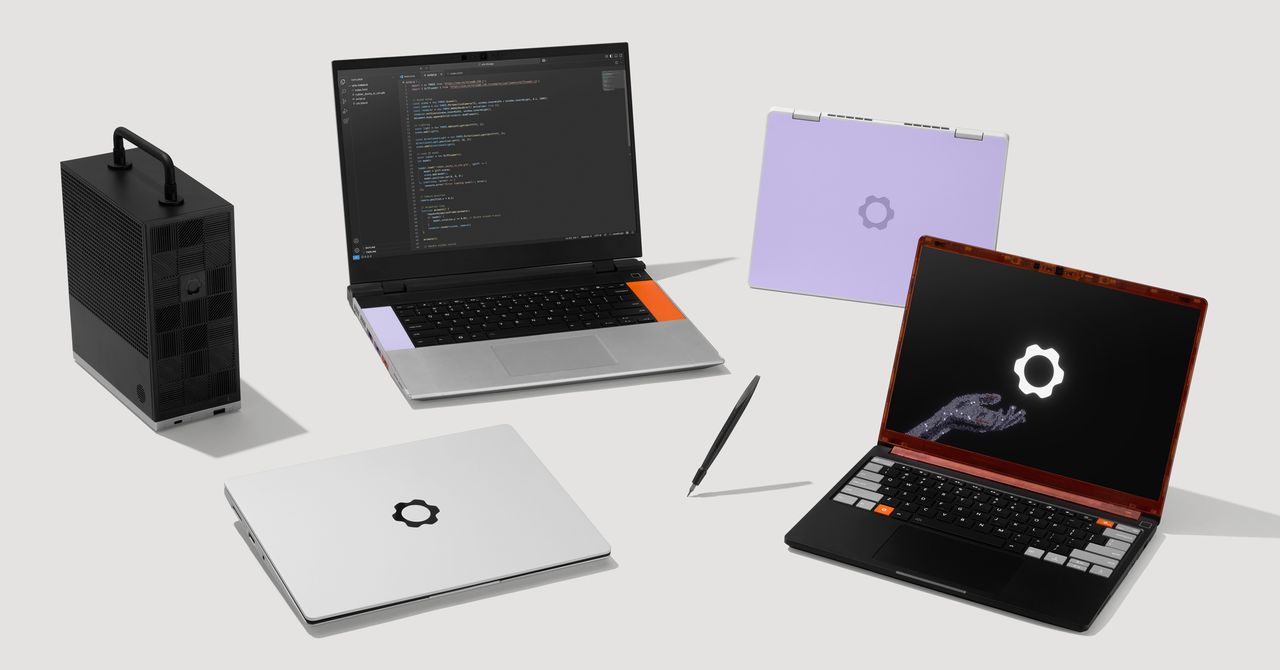
Framework, the company that makes laptops designed for optimal repairability, announced a new version of its main product, a 13-inch screen laptop. It’s called the Framework Laptop 13 Pro, and it has far better battery life, a touchscreen, a haptic touchpad, and is fitted with Intel processors.
At an event in San Francisco today, Framework CEO Nirav Patel showed off the company’s new tech, opening with a joke about making Framework AI—something the company is very much not doing. Framework’s whole thing, after all, is aiming to give users control over the physical tech they use.
“That industry is fighting for you to own nothing, and they own everything,” Patel said about the AI industry. “We’re fighting for a future where you can own everything and be free.”
Framework used the event to detail other updates coming to its 16-inch laptop. It also showed off previews of an official developer kit and a wireless keyboard for controlling your rig from the couch.
Framework 13 Pro
The Framework Laptop 13 Pro.
Courtesy of Framework
As the name implies, the 13 Pro is a step up from the company’s last version, the Framework 13. It’s also pricier, starting at $1,199 for a DIY Edition that requires assembling the computer yourself. Pre-built units start at $1,499 but can be upgraded with more features. Framework says it will start shipping the 13 Pro in June.
Framework’s signature move for its products is the ability to take the thing apart. The 13 Pro is made with that ethos in mind, so its parts can be easily swapped out, upgraded, or replaced. Four Thunderbolt 4 interfaces let you pick which ports (USB-C, HDMI, etc.) you want and then choose where to place them. Framework says it planned the laptop with cross-generation compatibility in mind, so current Framebook 13 laptop owners will be able to use new 13 Pro parts like the mainboard, display, and battery, and put them into their existing machine.
The big changes in the guts of the 13 Pro come from Framework’s shift away from using an AMD processor to Intel’s Core Ultra Series 3 processors, which Framework described in its press release as “just insanely efficient.” That efficiency, along with a bigger battery, translates to more than 20 hours of battery life while streaming 4K Netflix videos, at least that’s the claim. That’s almost 12 hours longer than the Framework 13.
OpenAI launched a new image generation AI model on Tuesday, dubbed ChatGPT Images 2.0. This model can generate more than one image from a single prompt, like an entire study booklet, as well as output text, including in non-English languages, like Chinese and Hindi. This release is available globally for ChatGPT and Codex users, with a more powerful version available for paying subscribers.
When any major AI company releases a new image model, it can revive interest and boost usage, especially if social media users adopt a meme-able trend, transforming images of themselves. Last year, Google’s launch of the Nano Banana model was a major moment for the company, especially when users started posting hyperrealistic figurines of themselves online. Earlier this year, ChatGPT Images made waves on social media as users shared AI-generated caricatures.
What’s Different?
Since the new model can tap into ChatGPT’s “reasoning” capabilities, Images 2.0 can search the internet for recent information and generate more than one image at a time. In essence, the bot can use additional steps to output more thorough generations from a single prompt. Images 2.0 also has a more recent knowledge cutoff date: December 2025.
This also means that outputs from the new model are more granular. For example, I generated an infographic with San Francisco’s weather forecast for the next day, as well as activities worth doing. The image ChatGPT generated included accurate weather details for the rainy day, along with accurate-looking drawings of the Ferry Building, Castro Theater, Painted Ladies houses, and Transamerica Pyramid.
Additionally, Images 2.0 is more customizable for users who want unique aspect ratios for image outputs. The new model can generate images, ranging from 3:1 wide to 1:3 tall, and users can adjust the image’s size as part of their prompt to the AI tool.
First Impressions
After a few hours of generating images with the new model, I was generally impressed with the text rendering capabilities, in English at least. Not that long ago, image outputs featuring text, from any of the major models, often included numerous malformed characters or words with errant extra letters. ChatGPT struggled to label images accurately two years prior, so the cleaner, more complex outputs from Images 2.0 are a sign of continued improvement. Google has also focused on improving image outputs featuring text in its recent iterations of Nano Banana.
The UK is facing a “perfect storm” in cyber security as attacks driven by hostile states, combined with advances in artificial intelligence (AI), create new risks to UK infrastructure, the head of the UK’s National Cyber Security Centre (NCSC) will warn on Tuesday.
A combination of technological change and rising geopolitical tension is creating “tumultuous uncertainty”, as well as opportunities in cyber security, he is expected to say at the NCSC’s CyberUK conference in Glasgow.
Lessons from the battlefield
Russia is taking cyber lessons learned during the war in Ukraine and is deploying “tactics and techniques honed in conflict” against western states, including the UK, Horne will tell conference attendees.
That has led to sustained “hybrid” attacks, which incorporate physical and cyber disruption, targeting the UK and Europe.
“Russia is taking the cyber lessons it has learnt in a theatre of war and is moving them beyond the battlefield,” he will say.
China’s intelligence and military agencies are capable of an “eye-watering level of sophistication” in offensive cyber operations.
The Chinese hacking group Volt Typhoon has targeted multiple operators of critical national infrastructure (CNI) in Asia and across the US, as it pre-positions for future attacks, which could rank among the most severe experienced to date, Computer Weekly has previously reported.
And Iran is “almost certainly” using cyber activity to support the repression of people in Britain who are seen as threats to the Iranian regime.
Cyber security has become “integral to conflict” and will become a new “home front”, Horne is expected to say.
Ransomware without the ransom
In the event of conflict, or near conflict, the UK would likely face cyber attacks “at scale” that would cause similar disruption to ransomware attacks, but without the possibility of recovering data by paying a ransom.
Horne will say that defending against such attacks will require every organisation to make cyber security part of their corporate mission and to “build defence in-depth” so that they can remain operational following a successful attack.
Risks from Mythos and frontier AI
Anthropic’s AI model, Mythos, has exposed widespread security vulnerabilities in legacy software that could be exploited by malicious attackers if they became known.
Horne will warn that such “frontier AI” will quickly show where the fundamentals of cyber security need to be addressed.
It will expose poor quality code shipped by software suppliers with significant vulnerabilities, organisations that are not patching their IT systems quickly or widely enough, and those that fail to replace outdated legacy computer systems.
But Horne is expected to argue that there is an opportunity for AI to be a net positive for cyber defence.
Cyber security in space
In the near future, organisations will need to expand cyber security to protect energy systems, production lines, robotics, space-based communications and autonomous AI agents.
Technology that is physically integrated into the human body, including medical devices, will also need to be protected.
Defending against cyber attacks requires a “cultural shift”, and for cyber security and resilience to be seen as a strategic investment, rather than a cost.












 Fashion6 days ago
 Sports1 week ago
 Entertainment1 week ago

 Entertainment6 days ago
 Fashion1 week ago

 Fashion1 week ago