

Entertainment
An enduring legacy

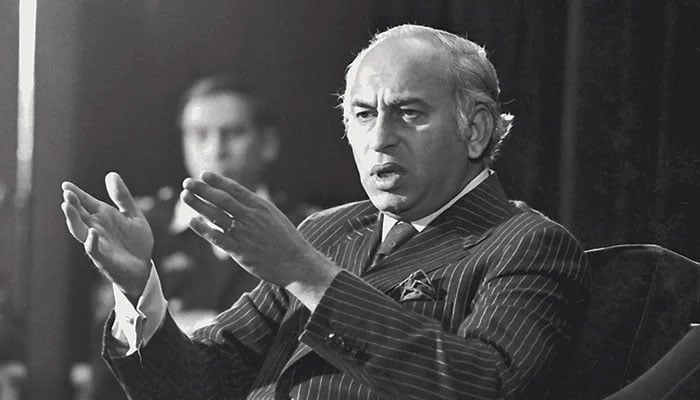
Shaheed Zulfikar Ali Bhutto defied the suffocating politics of his time, nurturing a new consciousness rooted in human rights, dignity, equality and justice. Rejecting absolutism, he sought to transform politics into public service. As we mark his death anniversary, we reflect not only on a remarkable leader but on the enduring imprint he left on Pakistan’s identity and democratic imagination.
Long after his passing, his light refuses to dim, his voice refuses to fade and his vision of an inclusive, just, united, prosperous, strong and dignified Pakistan continues to guide our great nation. I take pride that my own political journey was shaped and inspired by the ideology and ideas of Quaid-e-Awam. His conviction that power belonged to the people has been a guiding light for me through every office I have held. Today, as I preside over the Senate, I see his vision embodied in the constitution he gave us and in the institution he conceived to protect our federation.
Shaheed Bhutto’s journey to leadership was shaped early by the towering figure of Quaid-e-Azam Muhammad Ali Jinnah. At just seventeen, he wrote to the Quaid, declaring that he would one day sacrifice his life for Pakistan. And true to his word, he sacrificed his life for Pakistan exactly thirty-four years later in April 1979. Jinnah wrote back, advising him to study politics thoroughly but not neglect his education. That exchange marked the beginning of a relationship that would define Bhutto’s political philosophy. He carried Jinnah’s memory with him throughout his life.
Boasting an illustrious academic career at Berkeley and Oxford, where he completed a demanding law degree in just two years, Bhutto returned to Pakistan. He soon represented the country at the United Nations, and by 1958, at the age of 30, he became the youngest cabinet member in Pakistan’s history.
His diplomatic skills were evident early. When he met US president John F Kennedy in the White House in 1963, Kennedy remarked that if Bhutto were American, he would be in his cabinet. Bhutto’s response was characteristically sharp: “Be careful, Mr President, if I were American, I would be in your place”.
Razor-sharp wit, a formidable intellect and an unshakeable commitment to Pakistan’s sovereignty made him a towering figure on the world stage. As foreign minister, he brought balance to Pakistan’s foreign policy, forging closer ties with China and advocating for an independent course that served the nation’s interests. He supported China’s entry into the UN, a bold move that laid the foundation for the “higher than the Himalayas and deeper than the oceans” relationship that continues to benefit Pakistan today.
However, the true greatness of Shaheed Bhutto emerged like a phoenix from the very ashes of the 1971 war. Those were troubled times. Pakistan was a shattered nation. Half the country had been lost and five thousand square miles of territory was under occupation. The world had written us off. Yet within months, through sheer diplomatic acumen, Bhutto secured the release of our prisoners and the return of our land through the Simla Agreement. He had prepared meticulously, consulting opposition leaders, military commanders, and visiting fourteen Muslim countries to secure their support before entering negotiations with Indira Gandhi.
And, unquestionably, perhaps, his greatest gift to the nation and the country was the 1973 Constitution. Before Bhutto, Pakistan had never enjoyed a democratic constitution framed by the will of its people. He gave us a constitution that declared sovereignty belongs to Allah Almighty, but the people of Pakistan are its trustees. He created the Senate to ensure that every province, large or small, would have an equal voice.
Equally transformative and highly seminal were his domestic reforms. Within three months of taking office, he announced land reforms, distributing over 800,000 acres to landless peasants. He established Pakistan Steel Mills, built Port Qasim and laid the foundation for Quaid-i-Azam University. His government prioritised labour welfare and expanded educational access, making education free up to matriculation. These policies were part of a coherent vision encapsulated in his slogan Roti, Kapra aur Makan.
Years later, that commitment found its most powerful expression in the Benazir Income Support Programme, which I had the honour to launch as Prime Minister. Today, BISP is recognised globally as one of the most effective social safety nets, empowering women and lifting millions from poverty.
Shaheed Bhutto always had his fingers on the pulse of the masses. He understood the geopolitical and strategic alchemy that tied Pakistan’s destiny to the Muslim world. In February 1974, he hosted the Islamic Summit in Lahore, bringing together leaders from thirty-eight Muslim nations. King Faisal of Saudi Arabia, Anwar Sadat of Egypt, Colonel Qaddafi of Libya, and Yasser Arafat were among the distinguished guests.
Equally unwavering was his commitment to Pakistan’s defence. He had famously declared that Pakistan would “eat grass” if necessary to acquire nuclear capability. As prime minister, he initiated the nuclear programme. That programme, completed after his martyrdom, has ensured Pakistan’s security for all time.
And then darkness descended when his democratically elected government was overthrown in July 1977. What followed was a judicial process that the world recognised as a travesty and, ultimately, a ‘judicial murder’. Despite international appeals from leaders across the globe, he was sent to the gallows on April 4, 1979. His daughter Benazir’s account of their final meeting, with iron bars separating father from daughter, remains one of the most poignant passages in Pakistan’s history.
The Bhutto family paid an extraordinary price – the Quaid-e-Awam, his sons Shahnawaz and Murtaza, and his beloved daughter and the first female prime minister of the Muslim world and Pakistan Shaheed Mohtarma Benazir Bhutto, all gave their lives for the cause of the people. Today, President Asif Ali Zardari and Chairman Bilawal Bhutto Zardari carry this legacy forward with unwavering dedication.
Through my political and parliamentary journey, I have endeavoured to honour that vision. The 18th Amendment, passed during my tenure as prime minister, was a historic step towards realising Bhutto’s dream of provincial autonomy.
Shaheed Bhutto once said, “We are not merely the heirs of a party, we are the custodians of a vision”. That vision was of a Pakistan where the poor are not forgotten, where the provinces are not silenced, where democracy is not a slogan but a way of life.
As we remember him today, let us renew our commitment to that vision. His light continues to guide us. May his soul rest in eternal peace. May his vision continue to inspire generations.
The writer is the chairman of the Senate of Pakistan.
Disclaimer: The viewpoints expressed in this piece are the writer’s own and don’t necessarily reflect Geo.tv’s editorial policy.
Originally published in The News
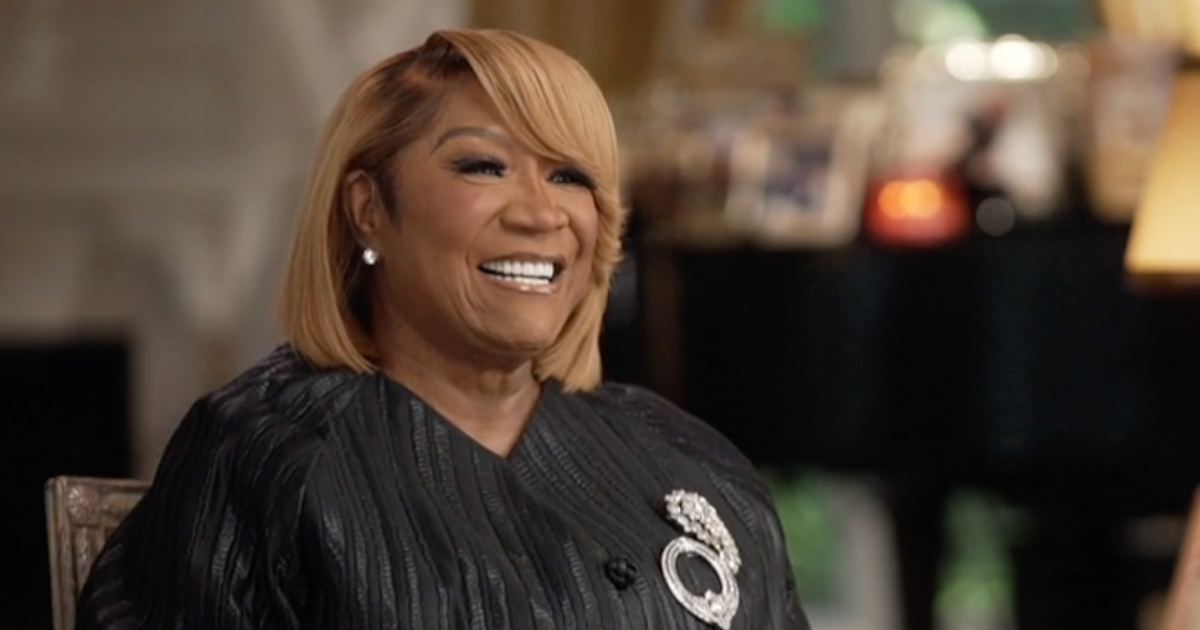
Patti LaBelle has been singing for six decades, earning hit records, Grammys and the nickname the “Godmother of Soul.” As she celebrates her 82nd birthday on Sunday, she said she’s “having fun living it down.”
“At 82, I am really living it down, not up. But having fun living it down. I play cards. We have card games on Saturday nights,” LaBelle said. “How easy is it to play cards and take other folks’ money? That’s what I do, and I love it.”
Just like her high notes, she has staying power. LaBelle is still professionally singing, something she said she has to do.
“Singing is my life,” she said, adding that her voice is “big. It’s loud. It’s soft. It can rap. It can do opera, on a good day.”
LaBelle spent her childhood in Philadelphia, a place she still calls home. Back then, she was a shy girl named Patsy Holt.
“My mother had to pay me to go outside. I was very, very, very shy. I would sing in my bedroom with the broom as a microphone. So I knew I had a voice and my mother and father loved my voice,” LaBelle said.
At age 10, she joined a church choir where a duet unlocked the magic of performing. She said she still remembers getting the chills the moment when everyone stood up and said, “Hallelujah.”
As a teen, she started singing with a group. A record label executive suggested she change her name to LaBelle, which means beautiful, but with that advice came a nasty assessment. He called her “quite ugly.”
“It gave me hurt, just total, total hurt, because I knew how much he loved my voice. And I knew, no matter what anyone said about me, I am who I am, I’m not gonna change. The only thing that changed was my nose. I had a huge nose, so I had it done,” she said. “And that’s all I’ve ever had done. My nose, because it was not pleasing to me.”
When Patti LaBelle and the Blue Belles became simply Labelle, they changed their style to what the singer described as “outrageous crazy outfits.” They turned “Lady Marmalade,” a song about a Creole prostitute, into a classic hit.
“We were singing about the revolution and sexual things before any Black girl or White girl group sang,” LaBelle said.
“When we sang [Lady Marmalade], we didn’t know what ‘voulez-vous coucher avec moi’ meant. It means, ‘Will you sleep with me tonight?’ So we got a lotta flak from the nuns and different people. And I was saying, at that time, ‘Well, a hooker has to make money too,'” she laughed.
The group split in 1977 but stayed friends. LaBelle said she was petrified when she stepped out as a solo artist for the first time. Getting therapy “helped a whole lot,” she said.
“I learned that I’m never gonna stop singing. And if it’s with a group or alone, that’s what I’m gonna do for the rest of my life,” LaBelle said.
LaBelle’s other talent is cooking. She’s written several bestselling cookbooks and has her own line of food and houseware products, Patti’s Good Life. Her hometown is filled with fans, and even visiting a Philadelphia ShopRite to hand out pancake mix caused quite a stir.
LaBelle isn’t planning to give up singing anytime soon.
“It’s never my last show. I’ll be singing until I can’t no more,” she said.
And on her 82nd birthday, maybe the real gift is that LaBelle knows exactly who she is — a mother, grandmother, and yes, a legend.
“I love it. I should be called, ‘Legend, legend, legend, legend.’ Yes. I love it,” she laughed. “I have earned it. Yes, I have.”
WEB EXCLUSIVE: Watch an extended interview with Patti LaBelle (Video)
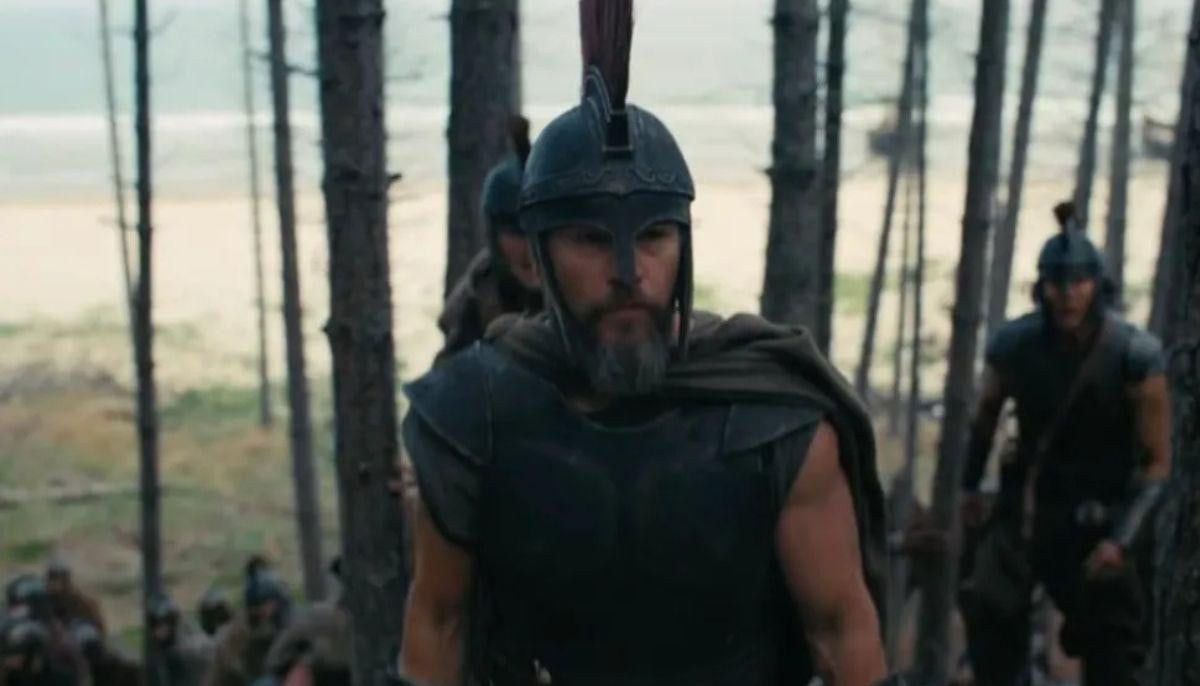
The first trailer for The Odyssey has sparked major discussion online, with the reaction becoming far more intense than many fans expected.
Director Christopher Nolan is known for highly praised films, so excitement around The Odyssey was already huge before the teaser arrived.
However, soon after the trailer was released, it became one of the most disliked videos connected to Nolan on YouTube.
A large part of the backlash came from online rumours about Elliot Page possibly appearing in the movie.
Fans began sharing theories that Page could be playing Achilles after noticing certain moments in the trailer and discussing possible casting clues online.
Although nothing has been officially confirmed, the rumours quickly led to heated arguments across social media.
The trailer also faced criticism from some viewers who felt Nolan’s version of the classic Greek story looked too modern.
Others compared it to fantasy blockbusters that have already been released in recent years.
At the same time, many fans defended the teaser and praised its cinematography, scale and cast.
The movie stars Matt Damon as Odysseus alongside Tom Holland, Zendaya, Anne Hathaway and Robert Pattinson.
Even with the backlash, the controversy has only made more people curious about the film before its July 2026 release.
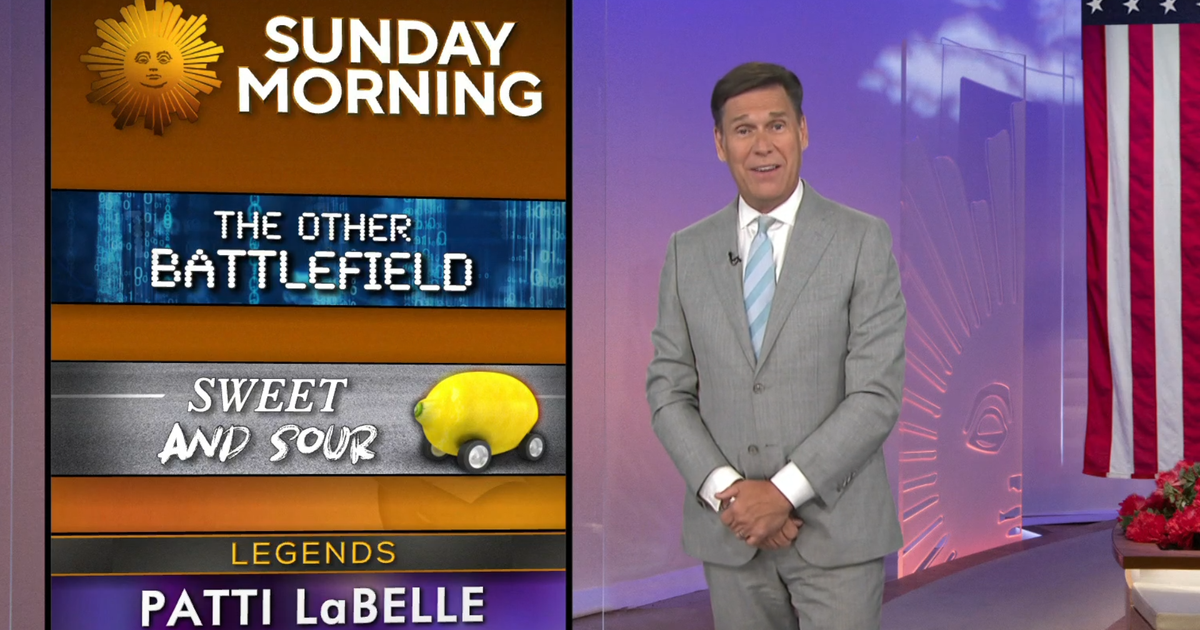
Hosted by Lee Cowan. Featured: Concours d’LeMons, Iranian propaganda, Patti LaBelle.
Source link


Patti LaBelle on being called a legend: “I have earned it”

IndyCar driver Caio Collet’s vehicle catches fire in terrifying Indy 500 wreck

Christopher Nolan’s ‘The Odyssey’ trailer sparks major backlash online

-

 Entertainment1 week ago
Where Pete Davidson, Elsie Hewitt stand after breakup: Details revealed
-

 Politics1 week ago
Rising diesel costs from Iran war strain US school budgets
-

 Tech1 week ago
Why Is Your Grill So Dumb? The Best Grills Set Temp Like an Oven
-

 Tech1 week ago
This Solar-Powered Smart Sprinkler Keeps My Lawn Watered Without Any Power Cables
-
 Fashion1 week ago
RMG trade bodies seek policy support from Bangladesh PM
-

 Fashion6 days ago
Nigeria Kwara Garment Factory, KWS Garment Production Village ink pact
-
 Fashion1 week ago
India calls for aligning standards, customs procedures with Africa
-

 Fashion7 days ago
India’s Pearl Global’s FY26 revenue crosses $521 mn milestone