

Entertainment
Andrew, Fergie unfazed by King Charles fresh blow: ‘party at Royal Lodge’

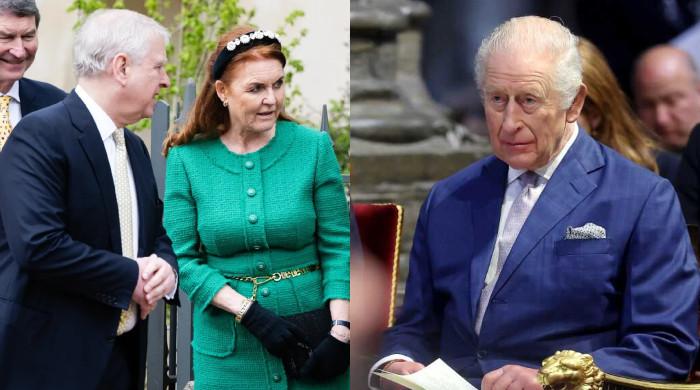
Andrew Mountbatten-Windsor and Sarah Ferguson appear ‘unfazed’ by King Charles’ stern decision as the holiday approaches.
There are high chances that the former Duke and Duchess of York won’t join the royal family at their traditional Sandringham gathering for Christmas after their downfall.
The ex-couple left with no royal perks, and also in the coming days, they will be ordered to leave the massive Royal Lodge.
But, according to a royal author, Andrew Lownie, Andrew and Fergie will not have a “terrible” Christmas as they still have plenty of ways to celebrate it.
As per Cosmopolitan, he said, “I [think] they would take advantage of this last Christmas to do all sorts of entertaining there. They’ve got friends… there are friends that go back a long way, and [have] stuck with them. Andrew still has his shooting friends.”
Andrew and Sarah might throw a ‘party’ at the massive royal house before eviction.
On the other hand, there is a chance that Beatrice and Eugenie’s parents may join their friends at their place and make the most of the special time after being in the negative headlines for too long.
Earlier, the source claimed that their daughters are in a ‘dilemma’ as they will surely get an invitation by the King for Sandringham Christmas, but the Princesses also want to be with their parents in an hour of need.
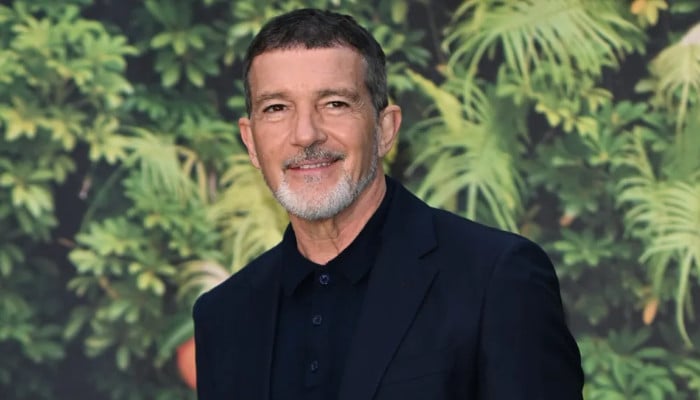
Antonio Banderas has spoken candidly about the ethnic stereotyping he faced when he first arrived in Hollywood, recalling being told bluntly that his Hispanic background limited him to villainous roles, and explaining why breaking out of that box still means so much to him.
“They said, you are here, like the blacks and the Hispanics, to play the bad guys,” the Oscar-nominated actor told The Times.
The irony of what came next is something he clearly savours.
“The problem was a few years later I had a mask, hat, sword and cape and the bad guy was Captain Love, who was blond and had blue eyes.”
That role was, of course, Zorro, the gutsy hero Banderas played in The Mask of Zorro in 1998 and The Legend of Zorro in 2005.
But it was a cat, not a swordsman, that he considers the most culturally significant step forward.
Puss in Boots, the character he first voiced in Shrek 2 in 2004, reached an audience that nothing else could quite match.
“Even more important is Puss in Boots, because it’s for young kids. They see a cat that has a Spanish, even an Andalusian accent and he’s a good guy.”
He has now voiced the character across five films, including the critically lauded Puss in Boots: The Last Wish in 2022, which earned an Oscar nomination.
However, the 65-year-old confirmed last year that he has not yet been approached for Shrek 5, due in cinemas on 30 June 2027.
“I’m not so far, and I’m not being called for that,” he told Parade.
“Puss in Boots did very well. Number two got a nomination for the Oscar, and the movie behaved beautifully at the box office. But I am totally satisfied with the five Puss in Boots that I did. I don’t know what is going to happen in the future. Maybe they [will] call me tomorrow.”
- Govt to pay OMCs Rs95.59 on petrol, Rs203.88 on diesel under PDC.
- PM blocks petrol, diesel hikes, bears Rs56bn to protect consumers
- Highlights diplomacy, says Pakistan leading talks with Iran, Gulf.
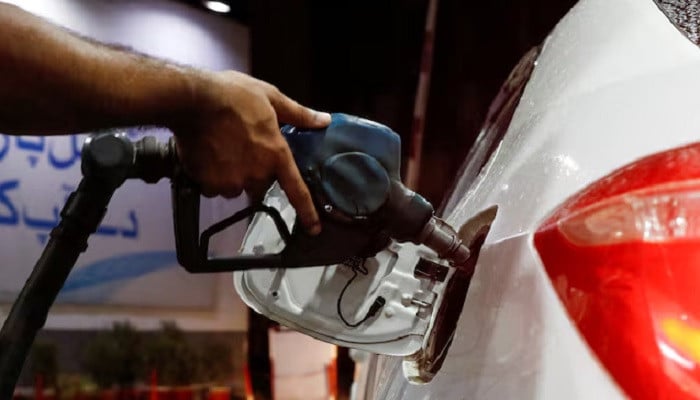
KARACHI: The federal government has increased the price of kerosene oil by Rs4.66 per litre, bringing it to Rs433.40 per litre, effective from March 28, according to a notification issued by the Petroleum Division.
Petrol and diesel prices, however, remain unchanged at Rs321.17 and Rs335.86 per litre, respectively, despite significant increases in the global oil market.
The Petroleum Division said petrol and diesel prices were held steady to shield consumers from international price shocks.
The government will pay oil marketing companies Rs95.59 per litre on petrol and Rs203.88 per litre on diesel under the Petroleum Development Cess (PDC), as per the notification.
This latest adjustment follows a March 21 revision, when kerosene prices had surged to Rs 428.74 per litre, marking a sharp increase earlier in the month.
The repeated revisions reflect ongoing pressure on domestic fuel pricing amid volatile global markets and geopolitical tensions in the Middle East.
Consumers and businesses continue to feel the ripple effects of rising fuel costs, making this latest hike in kerosene closely watched across the country.
Meanwhile, a few hours before the March 28 announcement, Prime Minister Shehbaz Sharif addressed the nation on the fuel crisis.
PM Shehbaz revealed that he had rejected a summary to raise petrol by Rs95 per litre and diesel by Rs203 per litre, keeping the prices of both fuels unchanged for now, despite global surges.
“The government will bear the additional cost, estimated at Rs56 billion, to protect consumers,” the premier said during the televised address.
He also highlighted Pakistan’s diplomatic role in the Middle East, including ongoing talks with Iran and Gulf countries, with Deputy Prime Minister and Foreign Minister Ishaq Dar leading the negotiations.
Shehbaz vociferously credited CDF Field Marshal Asim Munir and stressed Pakistan’s active diplomacy day and night to promote peace.
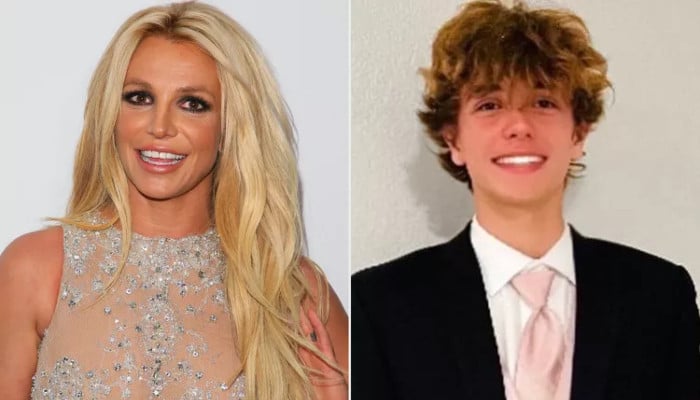
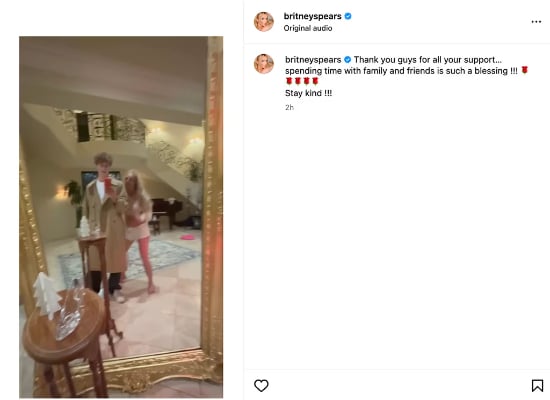
Britney Spears has broken her social media silence following her DUI arrest last month, sharing a playful video with her younger son Jayden Federline, her first post since the 4 March incident.
The 44-year-old uploaded the clip to Instagram on 27 March, showing the pair larking around together in front of a mirror, taking turns holding a red phone to snap pictures.
Britney was clearly in good spirits, tossing her hair and smiling throughout. At one point she danced playfully around Jayden before quickly catching herself.
“Naughty little sister and a mama too!” she said while leaping around him. “Composure, I’m being very composed.”
Jayden, 19, had his own moment in the video when he put on a Fedora hat and channelled his inner Michael Jackson, saying: “I wish I could be like Michael.”
Britney also changed outfits during the clip, swapping her initial all-white look, low-rise white shorts and a cropped long-sleeved top, for skinny jeans, a blazer and heels.
She captioned the video warmly: “Thank you guys for all your support… spending time with family and friends is such a blessing!!! Stay kind!!!”
The reunion comes after her rep confirmed in early March that Britney would be spending time with her sons as she worked through the aftermath of her arrest.
“Britney is going to take the right steps and comply with the law and hopefully this can be the first step in long overdue change that needs to occur in Britney’s life,” the statement said.
Her rep added that her loved ones were putting together a plan to support her wellbeing going forward.
The mother-son time carries extra meaning given how difficult their relationship has been at times.
Britney went close to three years without seeing Jayden, making the recent reconnection all the more significant to her. When he came back into her life in 2024, she was openly overwhelmed.
“I’m in shock!!! He came back and he feels older and smarter than me!!!” she wrote at the time. “He’s a man and I cry everyday of my life because of the miracle and genius he is!!!”
Jayden, who had been living in Hawaii with his father Kevin Federline, has since moved back to Los Angeles to pursue music.
He last appeared on Britney’s Instagram in early January, and the pair have spent the last two Christmases together. Britney also shares son Sean, 20, with Federline.


EU gains meet a harsh reality in India: War, rupee, energy shock

Hainan free trade port crosses $11.6 bn trade in 100 days

Antonio Banderas opens up on ethnic stereotyping in Hollywood

-
 Business1 week ago
Flipkart group CFO to leave co amid IPO plans – The Times of India
-
 Business1 week ago
Video: The Effects of High Oil Prices
-

 Fashion7 days ago
China’s textile & apparel exports surge 17% to $50 bn in Jan-Feb 2026
-

 Sports1 week ago
Rating Adidas’ 2026 World Cup away shirts: Argentina, Spain, Mexico and more
-
 Fashion1 week ago
The hidden $1.62 war tax now embedded in every garment you source
-

 Sports1 week ago
American Conference Commissioner Tim Pernetti thanks Trump for Army-Navy game executive order
-
Tech1 week ago
The Corsair 4000D RS PC Case Keeps Your System Cool
-

 Tech1 week ago
‘Uncanny Valley’: Nvidia’s ‘Super Bowl of AI,’ Tesla Disappoints, and Meta’s VR Metaverse ‘Shutdown’