

Business
Argentina’s President Milei divided his nation but won over Trump

 Ione WellsSouth America Correspondent
 BBC
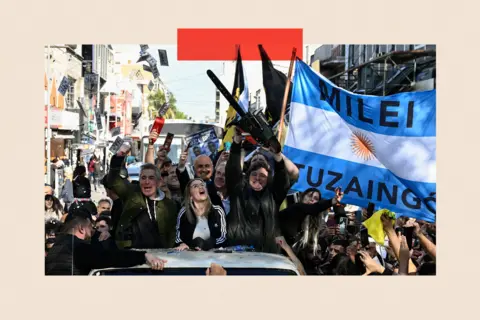
BBCBuenos Aires, September 2023. Hundreds of people crowded around to wave flags and film on their phones. The man with unruly hair and sideburns in the centre of them, clad in a black leather jacket, hoisted a roaring chainsaw above his head.
This was an election rally taking place in the San Martín area of the Argentine capital a month before the presidential election – and the metaphor was explicit.
The candidate Javier Milei believed the state was far too bloated, with annual debts that were bigger than Argentina’s entire annual economic output.
Rather than ‘trimming the fat’, as some politicians delicately put it, he said he would take a chainsaw to ministries, subsidies and the ruling political class he derided as “la casta” – the caste.
 Getty Images
Milei had form for stunts. In 2019, he dressed up in a “libertarian superhero” costume, purporting to be from Liberland – a land where no taxes are paid. In 2018, he smashed a piñata of the Central Bank on live television.
According to official data, inflation in 2023 topped 211% annually – Milei took office in December of that year. Roughly 40% of the population lived in poverty. Years of high public spending, and a reliance on printing more money and borrowing to cover deficits, had left the country in a cycle of debts and inflation.
Yet nearly two years on, the headline figures are vastly different: Argentina recorded its first fiscal surplus in 14 years and inflation, which had hit triple figures annually, has tumbled to roughly 36%.
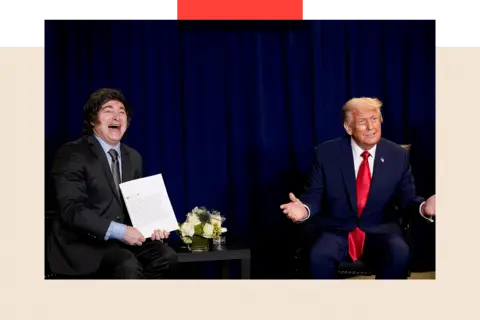
The UK Conservative party leader Kemi Badenoch called the measures Milei has taken a “template” for a future Conservative government. And in the US, President Donald Trump described Milei as “my favourite president”.
They will meet in Washington on Tuesday.
 Reuters
Foreign investors regained confidence in Argentina too. Although that recently slipped, Washington’s decision last week to swap $20bn (£15bn) in dollars for pesos, effectively propping up Argentina’s currency with International Monetary Fund (IMF) backing, is a sign Milei’s fiscal shock therapy has appeased international lenders. Trump and Milei’s meeting will hail the deal.
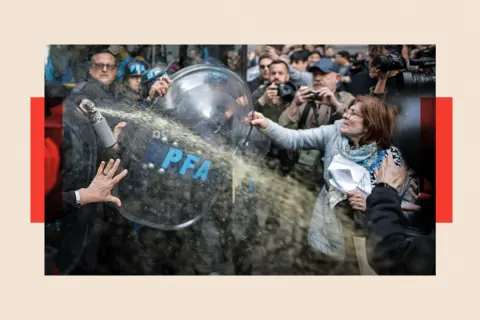
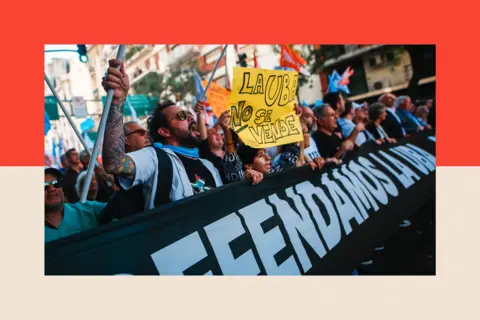
Yet for all the international praise, this is just one side of the story. On the streets there have been heated protests over Milei’s reforms, with police firing tear gas, rubber bullets and a water cannon during clashes.
“He said in his campaign that this adjustment would be paid for by ‘la casta’ – the wealthy, the politicians, the evil businessmen,” says Mercedes D’Alessandro, a left-wing economist and senate candidate.
But, she argues, the result was less money for pensioners and hospitals. “The adjustment in the end was directed at the working classes, not the caste.”
 Reuters
Milei’s critics argue that the price of his changes have been recession, job losses, weaker public services and declining household budgets. And now some economists say the country could be about to enter a recession.
Milei has created a paradox.
On paper, his chainsaw has achieved some of the macroeconomic successes he set out to do. But Milei has lost political support and that has spooked the markets, which in turn has destabilised his economic project.
With midterm elections looming on 26 October, Argentina is about to deliver its verdict: will Milei be punished for doing what he set out to do — and could losing political support completely unravel his economic gains?
Argentines feeling the cost
Around 700 miles from the capital in the Misiones province, tea farmer Ygor Sobol looks anxious. “We’re all going backwards economically,” he says. “I had to close the payroll. Now I am completely without employees.”
For three generations his family has grown yerba mate, a drink popular with Argentines, but since Milei deregulated his industry by scrapping minimum prices, he says that his crops have become worth less than the cost of producing them.
Now, Mr Sobol says he can’t afford to do basic tasks like cleaning and fertilising his plantation. And with the business making a loss, he’s deciding what his family will have to go without too.
 Shutterstock
Argentina’s multibillion dollar textile industry is also affected. Luciano Galfione, chairman of a non-profit for the sector Fundacion Pro Tejer, describes “daily” closures and job losses.
Unlike Trump’s approach of raising tariffs to promote “America First”, Milei cut tariffs and other criteria for imports.
“I have environmental controls, labour controls – we don’t pay people $80 (£60) a month, or have 16-hour work days that might be allowed in places like Bangladesh or Vietnam. This creates an unequal playing field,” Mr Galfione argues.
He believes that boosting imports has battered domestic producers. “Our sector lost more than 10,000 direct jobs. If you add indirect jobs, there are many more.”


Mr Galfione also blames rising costs of utilities, health and schools for reducing the disposable income of average people, and in turn making them less likely to buy clothes.
And yet amid it all, Milei is adamant that his measures will improve the lives of ordinary Argentines.
‘Everything was a huge mess’
In the run-up to the election Milei had said there was no alternative to big cuts.
As well as the soaring inflation, vast government subsidies had kept energy and transport prices down. Public spending was high, even before the Covid-19 pandemic. Price controls set fixed prices for certain goods. Argentina, still, owes £31bn in debt to the IMF.
“The demand for public spending was brutal,” argues Ramiro Castiñeira, an economist at the consultancy Econométrica who supports Milei.
“Society seemed willing to live with so much inflation. Or didn’t recognise that inflation was a product of so much public spending.”
 EPA – EFE/REX/Shutterstock
Inflation ate away the peso currency’s purchasing power. Many ordinary Argentines handed over disproportionate sums of pesos to illegal street traders to buy dollars, fearing their money would lose value overnight.
“Everything was a huge mess,” explains Martin Rapetti, an economics professor at the University of Buenos Aires and executive director of think tank Equilibria.
“People felt money slipping like water through their fingers.”
For many economists, drastic change (even if painful) was essential to restore credibility. And Milei promised radical change.
He went viral for ripping government ministries such as Culture and Women off a whiteboard while shouting ‘afuera!’ – ‘out!’
Among other austerity measures, he halved government ministries, cut tens of thousands of public jobs, slashed budgets including for education, health, pensions and infrastructure, and removed subsidies – spiking utility and transport prices.
His initial devaluing of the peso by 50% caused inflation to spike but then it fell as people spent less and demand fell.
 EPA/Shutterstock
‘Echoes of Thatcherism’
When I met him in April 2024 at his office, there were sculptures of him with a chainsaw on display and coasters showing Margaret Thatcher’s face. Thatcher is loathed by many people in Argentina owing to the Falklands War, but Milei told me he admired her and that she was “brilliant.”
Last month one British newspaper described Milei’s own approach as having “echoes of Thatcherism”.
Miguel Boggiano, an economist on Milei’s economic advisory board, is full of praise for Milei getting inflation down and reducing the deficit. “When you bear in mind the starting point, that’s a huge accomplishment,” he says.
 Reuters
He believes this will help alleviate poverty in the long-run and enable lower taxes, but also help people to plan their own spending more easily with inflation currently fluctuating less.
But Alan Cibils, an independent economist and former professor, warns reduced inflation is only a success if it is sustained over time which he believes will not be the case.
The outsider advantage
Javier Milei is not a career politician. Before becoming president he had two years experience as a deputy in Argentina’s Congress.
“Being so detached kind of shields him,” Prof Rapetti observes, citing a lack of “signs of empathy in public life”.
On 7 September Milei’s party lost unexpectedly badly in the Buenos Aires provincial elections. His convoy was pelted with rocks on the campaign trail. The markets panicked: foreign investors sold off pesos and bonds of Argentine government debt.
 EPA – EFE/REX/Shutterstock
Financial markets had generally supported his economic programme. But the midterm elections were upcoming and the £15bn of debt repayments are due next year.
Trump’s £15bn currency swap lifeline has provided some stability: Argentine bonds and the peso rose in value in response to the announcement. But D’Alessandro argues that though US intervention might solve a wider problem, nothing will change in “people’s real lives”.
“We’re going to continue with no investment in hospitals, education, social programmes. This money from the United States is not going to improve Argentina’s infrastructure.”
Flawed leader or model for other countries?
Some of Milei’s supporters – like Mr Boggiano – believe there is something else at play in the round criticism of the president: In this view much of it comes down to the opposition trying to “break” what Milei has done, in order to get back into power.
“Once everyone starts to believe stability is here to stay, investment will come back,” says Mr Boggiano. “I think Milei will become a model for other countries.”
Others are unsure. “There is some stability which helps things not to explode,” said Mr Cibils. “But I think that stability is also a mirage.”
Milei had also kept inflation under control by spending the country’s reserves on propping-up the peso so it didn’t crash. Meanwhile, Argentina owes $20bn of debt next year.
One former central bank economist, who wished to speak anonymously, warns Milei’s strategy of keeping inflation down could unravel if Argentina can’t pay its debts.
“If at the end of the day we have a financial crisis that partially undoes all the effort, then it’s a failure. If it ends with social unrest, any good done will be reversed,” says the economist.
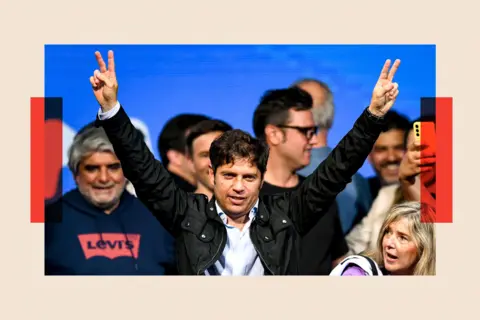
The left-wing governor of Buenos Aires, Axel Kicillof, has been touted as a future presidential candidate, long ahead of the elections in 2027. He has spoken in favour of the welfare state. Some investors are calculating whether this could mean a return to the days of big spending.
 Getty Images
As to the question of whether Milei has succeeded, the answer largely depends how you define success – and who it is for.
Many workers see shuttered factories, rocketing bills, and a vanishing safety net.
Meanwhile, some investors see a success story of fiscal discipline, tamed inflation, an ally in Washington and simply a “normalisation”.
But even as leaders abroad watch Milei’s experiment with fascination, politics may explain why few are unlikely to copy it.
If normal people lose faith in what he is doing, markets will also lose confidence that his programme is sustainable – and that could wipe out even the ‘macro’ successes.
“He has no political expertise, and I think you need it,” Prof Rapetti argues.
Still, he believes it is too early to judge: “We are in the middle of his term… The story hasn’t finished.”
Top picture credit: WPA Pool/Getty Images, Bloomberg via Getty Images

BBC InDepth is the home on the website and app for the best analysis, with fresh perspectives that challenge assumptions and deep reporting on the biggest issues of the day. And we showcase thought-provoking content from across BBC Sounds and iPlayer too. You can sign up for notifications that will alert you when a BBC InDepth story is published – find out how to sign up here.
Business
Us India Oil Waiver: ‘Releases the pressure on other refineries’: US says India’s Russian oil waiver is a short-term step to stabilise global prices – The Times of India
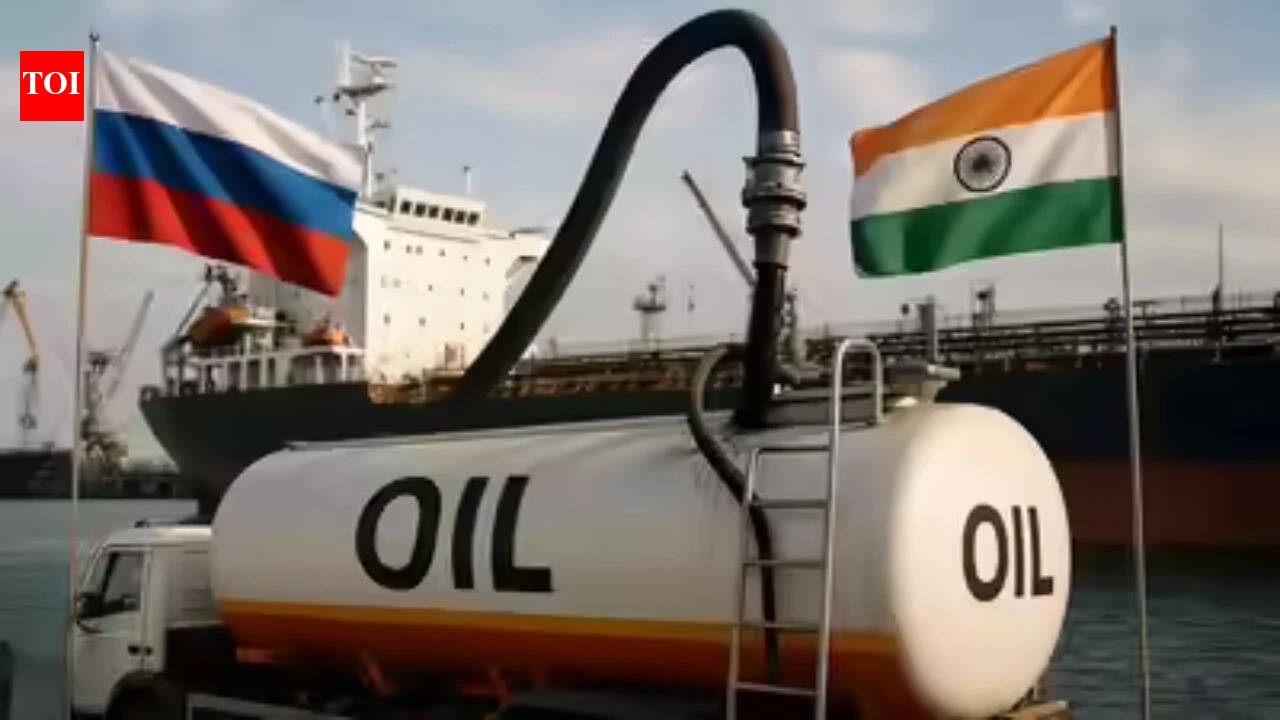
The United States has said its decision to grant India a temporary waiver to purchase certain Russian oil supplies is a short-term move aimed at stabilising global crude prices amid supply disruptions linked to tensions in the Middle East.US energy secretary Chris Wright said the measure is intended to quickly bring oil stored in floating reserves into the global market and ease immediate supply constraints.
Speaking to ABC News Live, Wright said large volumes of Russian crude are currently stored in tankers around southern Asia and that Washington had encouraged India to buy these cargoes.“We need to get oil on the market in the short term. In the long term, supplies are abundant. There’s no worry there,” Wright said, adding that the temporary step was necessary as oil prices were rising due to constraints in shipments passing through the Strait of Hormuz.“As oil gets bid up a little bit because of those constraints coming out of the Straits of Hormuz, we’re taking a short-term action to say all this floating Russian oil storage that’s around southern Asia,” he said.Wright said the US had asked India to absorb those cargoes. “We’ve reached out to our friends in India and said, ‘Buy that oil. Bring it into your refineries.’ That pulls stored oil immediately into Indian refineries and releases the pressure on other refineries around the world,” he added.He stressed that the waiver does not represent a shift in Washington’s stance toward Moscow. “This is no change in policy towards Russia. This is a very brief change in policy just to keep oil prices down a little bit better than we could otherwise,” Wright said.Earlier in the day, US treasury secretary Scott Bessent announced a 30-day waiver allowing Indian refiners to purchase Russian oil cargoes stranded at sea.“To enable oil to keep flowing into the global market, the treasury department is issuing a temporary 30-day waiver to allow Indian refiners to purchase Russian oil,” Bessent said in a post on X.
Indian refiners step up purchases
Following the waiver, Indian refiners have begun purchasing large volumes of Russian oil floating in Asian waters, reported news agency PTI, citing sources.The companies have snapped up around 20 million barrels of crude, mostly from non-sanctioned entities, though they are seeking legal clarity on whether the exemption also allows purchases from sanctioned firms.The US Treasury’s Office of Foreign Assets Control has issued a licence permitting the delivery and offloading of Russian crude loaded on vessels before March 5, 2026, with transactions allowed until April 4, 2026.The move comes as the widening West Asia conflict disrupts energy shipments through the Strait of Hormuz, through which nearly 40–50 per cent of India’s crude imports typically pass.India, which holds reserves covering roughly 25 days of crude demand, has turned to Russian cargoes at sea to ensure domestic fuel supplies remain stable. Indian refiners had already been importing about one million barrels of Russian oil per day in recent months.Industry estimates cited by PTI suggest around 15 million barrels of Russian crude are currently floating in the Arabian Sea and the Bay of Bengal, while additional cargoes are waiting near Singapore and other routes that could reach Indian ports within weeks.Analysts say the waiver provides short-term relief for India’s energy security, though competition from other buyers, particularly China, may limit the volume of additional Russian oil available.
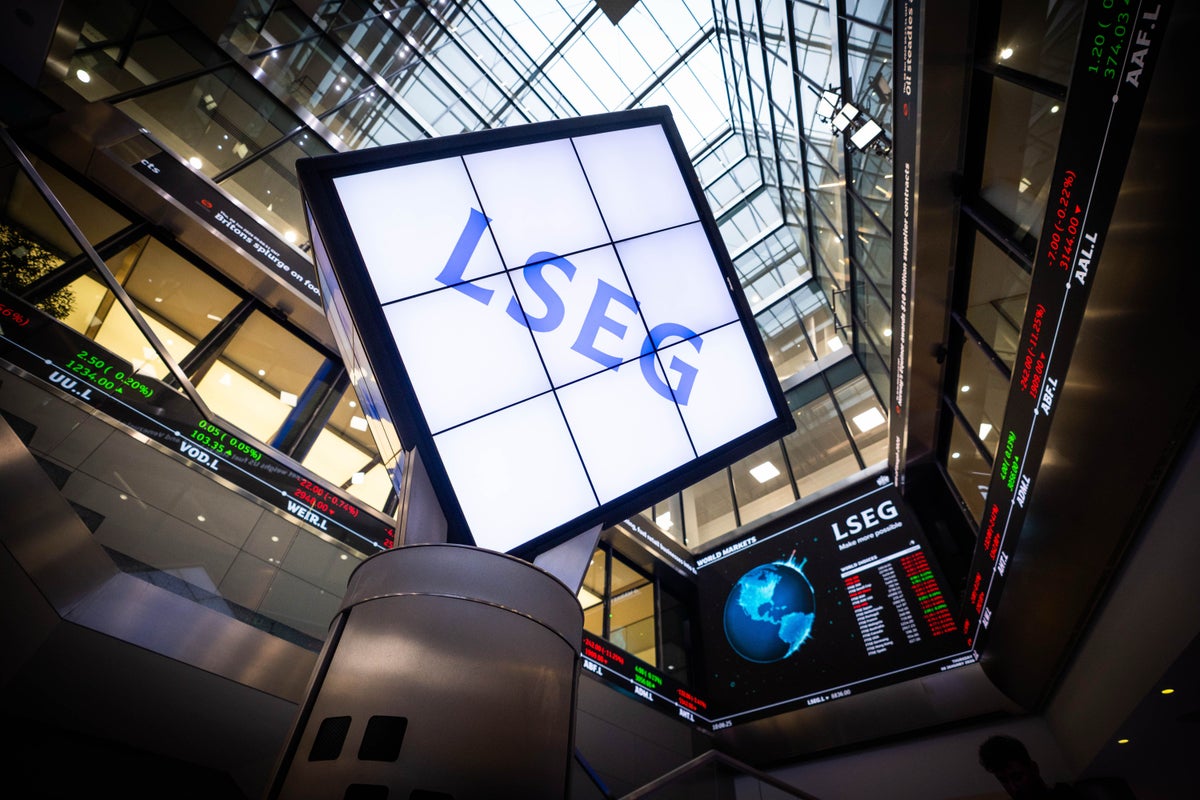
Global stock markets have continued to take a hammering as oil prices rocketed in their biggest weekly gain for six years, with no sign of a swift resolution to the conflict in the Middle East.
London’s FTSE 100 Index slumped 1.6% lower at one stage before closing about 130 points, or 1.2%, lower at 10,284.75 on Friday.
Declines were compounded by heavy falls on Wall Street, with the S&P 500 and Dow Jones indexes down about 1.1% after European markets had closed.
Gloomy jobs data in the US were adding to market woes, and there were similar declines across Europe as the Dax in Germany and France’s Cac 40 were both 1.5% down at one stage, before paring back some of the losses to close 0.9% and 0.7% lower, respectively.
By Friday evening, benchmark Brent crude prices shot up by as much as another 10% to 94 US dollars a barrel, reaching levels not seen for three years, after Kuwait reportedly joined Qatar and said it was beginning to halt energy production.
The sharp gains since the US-Israel war with Iran began on Saturday mean oil prices have risen by more than 25% so far this week – the biggest weekly gains since early 2020 at the height of the Covid-19 pandemic.
Comments from US President Donald Trump that there would be no end to the conflict until an “unconditional surrender” of the Iranian regime has further dashed hopes of a de-escalation.
Kathleen Brooks, research director at XTB, said: “There is not much to stop (oil) from hitting 100 dollars per barrel in the near term.
“Until the oil price stabilises it’s hard to see how stock markets and bond prices can recover.”
She cautioned over further stock market falls next week.
“If the war continues to escalate over the weekend, we think that markets will continue to sell off, especially after the rapid increase in oil prices today,” she said.
UK Government borrowing costs have also risen sharply this week due to inflation fears.
The yields on 10-year government bonds, also known as gilts, have jumped from 4.27% at the start of the week to 4.62% on Friday, with fears that soaring fuel and energy bills will put paid to further interest rate cuts.
“The rapid repricing of monetary policy expectations and the UK’s history of high energy prices means that UK gilts are particularly vulnerable to this energy price spike,” Ms Brooks said.
Business
As West Asia conflict rages on, India’s pharma exports stare at Rs 5K crore potential losses – The Times of India

Hyderabad: India’s pharmaceutical sector is staring at potential losses of Rs 2,500– Rs 5,000 crore if March exports to the Gulf Cooperation Council (GCC) and the wider West Asia and North Africa (WANA) are completely disrupted by the ongoing West Asia conflict, which is intensifying pressure on freight, shipping routes, and delivery schedules, according to the Pharmaceuticals Export Promotion Council of India (Pharmexcil). GCC countries currently account for 5.58% of India’s total exports, with pharma a growing component of that trade. As per recent industry data, Indian pharmaceutical exports to the WANA region rose from $1,320.44 million in FY 2020-21 to $1,749.68 million in FY 2024-25. Countries such as the UAE, Saudi Arabia, Oman, Kuwait, and Yemen rely heavily on India for cost-effective medicines, even as momentum grew in emerging markets such as Jordan, Kuwait, and Libya, with increasing demand for vaccines, surgical products, and AYUSH formulations. However, this growth is now at risk due to ongoing challenges in the global freight market. Pharmexcil Chairman Namit Joshi said tensions in West Asia affected critical maritime and air cargo corridors. Key routes such as the Red Sea, Strait of Hormuz, and Gulf shipping corridors are facing heightened risks of rerouting or delays, threatening delivery schedules. This is a concern, especially for temperature-sensitive products that can be damaged by prolonged transit or cold-chain disruptions. According to Pharmexcil, the conflict already put considerable strain on the global freight market, with freight charges for both imports and exports doubling in some cases. “The doubling of freight charges for both imports and exports, accompanied by surcharges of $4,000–$8,000 per shipment, put substantial pressure on Indian pharmaceutical companies,” Joshi said. Another concern is escalating costs across the pharmaceutical supply chain, with major cost drivers including crude oil price fluctuations, rising logistics costs for APIs and finished formulations, and shipping delays that will affect inventory cycles, he said. Pharmexcil said it is monitoring developments and engaging logistics and trade stakeholders for damage control. It recommended closer coordination with govt authorities for possible freight relief measures, diversification of shipping routes and alternative logistics options, and continued dialogue with international regulators to maintain timely availability of medicines in key markets.

Us India Oil Waiver: ‘Releases the pressure on other refineries’: US says India’s Russian oil waiver is a short-term step to stabilise global prices – The Times of India
Stock markets tumble as oil prices surge in biggest weekly gain since 2020

WWE NXT star Kelani Jordan taking advice of MMA vet ahead of underground match vs Lola Vice

Attock Cement’s acquisition approved | The Express Tribune

Policy easing drives Argentina’s garment import surge in 2025

India Us Trade Deal: Fresh look at India-US trade deal? May be ‘rebalanced’ if circumstances change, says Piyush Goyal – The Times of India

-
Business1 week ago
Attock Cement’s acquisition approved | The Express Tribune
-
 Fashion1 week ago
Policy easing drives Argentina’s garment import surge in 2025
-
Business1 week ago
India Us Trade Deal: Fresh look at India-US trade deal? May be ‘rebalanced’ if circumstances change, says Piyush Goyal – The Times of India
-

 Politics1 week ago
What are Iran’s ballistic missile capabilities?
-

 Politics1 week ago
US arrests ex-Air Force pilot for ‘training’ Chinese military
-

 Sports1 week ago
LPGA legend shares her feelings about US women’s Olympic wins: ‘Gets me really emotional’
-
 Business1 week ago
Greggs to reveal trading amid pressure from cost of living and weight loss drugs
-

 Sports1 week ago
Sri Lanka’s Shanaka says constant criticism has affected players’ mental health