

Tech
Artemis II: Everything We Know as Its Crew Approaches the Far Side of the Moon


On day six of its mission, Artemis II is closing in on the far side of the moon. Meanwhile, the historic journey has not been without fascinating and curious stories, from the images and videos that its four crew members have shared with the world to the inevitable unforeseen events—including a tricky toilet situation.
A few hours before the crew begins its lunar flyby, here’s how things are going on Artemis II.
When Will They Reach the Far Side of the Moon?
While Artemis II won’t actually land on the moon (that won’t happen until Artemis IV), that does not make this mission any less compelling. Once the Artemis II astronauts finish flying over the dark side of the moon, they will have the historic distinction of being the humans who have traveled the farthest from Earth.
They will also test all the systems needed for future lunar missions, validating life support, navigation, spacesuits, communications, and other human operations in deep space.
But when are they supposed to reach this far-off point? First, the Orion capsule reached what is known as the moon’s “sphere of influence” on Sunday night. This is the point where the moon’s gravitational force is stronger than the force of the Earth.
At present, Orion is circling the moon. Once the capsule is on the dark side of the moon, approximately 7,000 kilometers from the surface, communications with Earth will be interrupted. For six hours, they will be able to view the far side of the moon, something no human being has ever seen with their own eyes—not even the astronauts of the Apollo program, as this region of the moon was always too dark or difficult for them to reach.
That six-hour flyby of the dark side of the moon is expected to begin Monday, April 6, at 2:45 pm EDT and 7:45 pm London time.
After that, the capsule will use the moon’s gravity to propel itself back to Earth. Splashdown, when the astronauts reach Earth, is scheduled for April 10 in the Pacific Ocean, not far from the coast of California, the tenth day of the mission.
Remember that you can follow the live broadcast of the Artemis II mission from NASA’s official channels.
What Has Happened so Far?
Since its successful launch on April 1 from Kennedy Space Center, the Artemis II crew has shared several spectacular photos, such as the featured image in this post, which shows mission specialist Christina Koch looking down at Earth through one of Orion’s main cabin windows.
This incredible photo of a Earth, taken on April 2, went viral on social media, referencing the famous “Blue Marble” image captured by the Apollo 17 astronauts in 1972.
View of Earth taken by astronaut Reid Wiseman from the window of the Orion spacecraft after completing the translunar injection maneuver on April 2, 2026.Photograph: Reid Wiseman/NASA/Getty Images













Shopping for a Dyson vacuum is an experience. There are many models to navigate and serious price tags on most of them. As someone who tests vacuums for a living, I have to admit that a Dyson blows most other vacuums away. There are a few cheaper models I’ll still grab (check out my full guide to cordless and robot vacuums for more recommendations), but if you’re dreaming of a Dyson, this weekend is a great time to buy.
Several Dyson models I love are on sale for the long weekend. This weekend’s sale includes Dyson’s newest robot vacuum and the PencilVac that I can’t stop using, and my overall favorites like the V15 Detect and Gen5Detect, and more models our team has loved using. Read on to find out every on-sale Dyson I’d buy this weekend.
Best Dyson Vacuums on Sale for Memorial Day
The Best Dyson for the Price
If you’re looking for the best features for the best price, I already recommend the Dyson V15 Detect when it’s not on sale, making this an even better time to buy. You’ll get both a Fluffy Optic cleaner head and a Digital Motorbar cleaner head to use for hard floors, carpet, or rugs, trigger control, and details about the particles you suck up while you vacuum. It’s lightweight and easy to use anywhere in the house, and the hour-long battery life should be plenty for a whole-home clean.
A More Powerful Dyson
Dyson’s more powerful stick vacuum is the Gen5Detect, which is a great option if you have pets since it has a faster motor with more suction power than the V15 Detect to suck up more pet hair (it’s our top vacuum for pet hair for a reason) and has a HEPA filter to keep allergens contained inside of the vacuum instead of being released back into the air. It also comes with a true power button, so you don’t have to hold onto the trigger button the entire time to use it. Similar to the V15 Detect, it comes with both a Digital Motorbar cleaner head and a Fluffy Optic cleaner head to use on carpet and hard floors, respectively. You’ll also get two more attachments, plus a built-in dusting and crevice tool (it’s nice not to have to wonder where this attachment is!) It’s an expensive vacuum, but well worth the investment when it’s on sale.
If You Only Have Hard Floors
I shouldn’t like the PencilVac so much, but I find myself reaching for it often, and I think it’s plenty worth its abilities when it’s on sale. Part of what makes it so easy to grab compared to my other stick vacuums is how easy it is to store and keep charged with the freestanding charging base, letting it stand wherever I like in my home as long as there’s an outlet nearby. The PencilVac has two versions, the Fluffy and Fluffycones, with the latter having a design that has fluffy cone-shaped rollers to best collect debris. It is limited to only hard floors and has a short battery life, but I love how maneuverable and lightweight this vacuum is. It’s usually a high price tag for its abilities, and even on sale, it’s not what I would call cheap, but it’s a great, quick daily vacuum.
Dyson’s Latest Robot Vac
Dyson’s newest robot vacuum, the Spot+Scrub Ai, is its first that doubles as both a vacuum and a mop. It has a large base station that reminds me of Dyson’s vacuums, since the dry debris canister is clear and rounded like the ones you’d see attached to a Dyson stick vacuum or one of its upright models. It does a good job mopping and vacuuming, and can learn multiple floors, and the navigation has improved since the older Dyson 306 Vis Nav. Still, it’s not perfect navigation, since the camera sits below the top of the vacuum and doesn’t always see low-profile furniture that it’ll bump into. If you don’t have a ton of low furniture (or tons of IKEA pieces, as I do), this vacuum could be just perfect for you.
A Stick Vac and Mop

Dyson
V15s Detect Submarine
If you want a vacuum that doubles as a mop, look no further than this variation of the V15 Detect that’s also on sale for the holiday weekend. The V15s Detect Submarine comes with the Submarine wet roller head that transforms it from a regular Dyson vacuum (that still comes with both the Fluffy optic cleaner head and Digital motorbar cleaner head for you to use on hard floors and carpet) into a wet roller mop. You can’t buy a regular V15 Detect and add this attachment on; this V15s is made to work with this Submarine head. You’ll fill the small reservoir on the roller head with water and can start mopping away, but you will have to rinse the mop head afterwards by hand, which is a little gross.
A Handheld-Only Dyson
-
Photograph: Brenda Stolyar
-
-Reviewer-Photo-SOURCE-Brenda-Stolyar.jpg)

If you’re not looking to spend a ton but want a Dyson that’s super portable and great for stairs, cars, and even boats, the Dyson Car+Boat is made for that. It’s in the name, after all. This handheld-only vacuum packs solid power and has a great battery life for a handheld vacuum. It uses a trigger-style control like the V15 Detect, which I actually find ideal for cleaning compact spaces like stairs and cars so that you’re not fumbling to switch it off as you move around the car or to the next set of stairs. It’s an affordable way to get into the Dyson ecosystem, especially since it’s on sale.
Power up with unlimited access to WIRED. Get best-in-class reporting and exclusive subscriber content that’s too important to ignore. Subscribe Today.
Photograph: Michael Calore
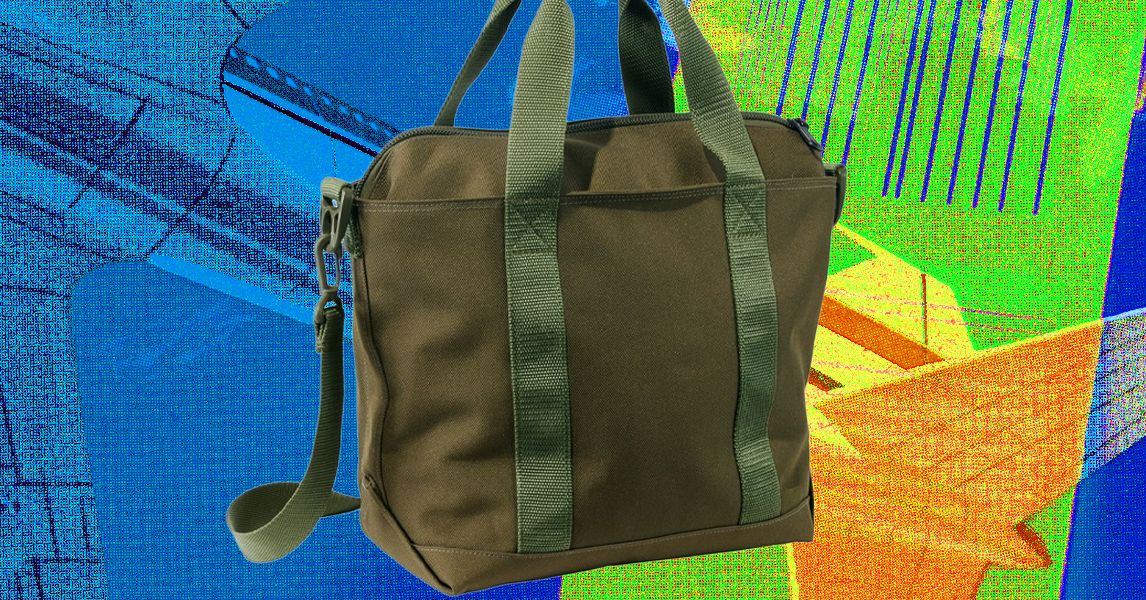
The walls of the bag are tough enough, made from 1,200-denier polyester, which is heavy-duty and water-resistant, not to mention so rugged that it’s nearly indestructible. I’ve checked it as luggage on a dozen or so flights, and it doesn’t show any scuffs or tears. The zipper at the top isn’t sealed, but it’s heavier than it needs to be and works just fine in the rain. What truly sets the bag apart, though, is its lining. The whole interior of the tote is coated with a thin layer of thermoplastic, further increasing its imperviousness to moisture.

Photograph: Michael Calore

Photograph: Michael Calore
Now, of course, the purpose of this kind of lining is to keep the contents dry when you use the bag in a wet environment, like on a canoe trip, on a rainy bike ride, or on a duck hunt in the Maine wilderness. And surely, I have used the bag in a canoe and on many a rainy bike ride (I’ve never been on a duck hunt), and the goods inside have indeed always remained intact. I even trust the bag enough to carry electronics and musical equipment to the office or studio on drizzly mornings. But for me, the utility the bag provides is more so the opposite: it’s an excellent place to cleanly transport items that are, themselves, muddy, wet, or slimy.
For example, I’ve taken the bag car camping several times. Once, I used it to pack my tent, ground cloth, boots, and rain shell. On the last day of the trip, it poured outside, and upon it being time to head home, my rain jacket and tent were soaked, the ground cloth was dotted with wet pine needles and flecks of bark, and my boots had a thick layer of Mendocino, California, muck in the tread. I crammed all of those items in the Hunter’s Tote, zipped it up, and tossed it into the back seat of my rental car. The interior lining kept the mess inside, saving the rental car’s tuck-and-roll upholstery. Back home, I emptied the tote, flipped it inside out, and blasted out all the forest flooring with a hose.
There are two heavy plastic tabs on the edges of the tote, one at each end of the zipper. This is where the shoulder strap clips in. I’ve never really used the strap (honestly, it just gets in the way), but those tabs are great for hanging the tote to dry after rinsing it out.
The Hunter’s Tote comes in three sizes. I have the largest, the XL, which has a capacity of 53 liters. (That’s huge for a tote bag.) I prefer the larger size because when you set the reinforced bottom on a flat surface and prop the mouth of the bag open, you have a generous flat bottom inside of 10 by 19 inches. All that room really makes the bag more versatile, so my recommendation is to go large.
Also, just know there are no frills here: no exterior pockets, no padding, no laptop sleeve. Just a rugged carrier that’s ready for your dirtiest work. Whether you’re carrying twelvers of La Croix or bagging Buffleheads, it’s indispensable.
Power up with unlimited access to WIRED. Get best-in-class reporting and exclusive subscriber content that’s too important to ignore. Subscribe Today.
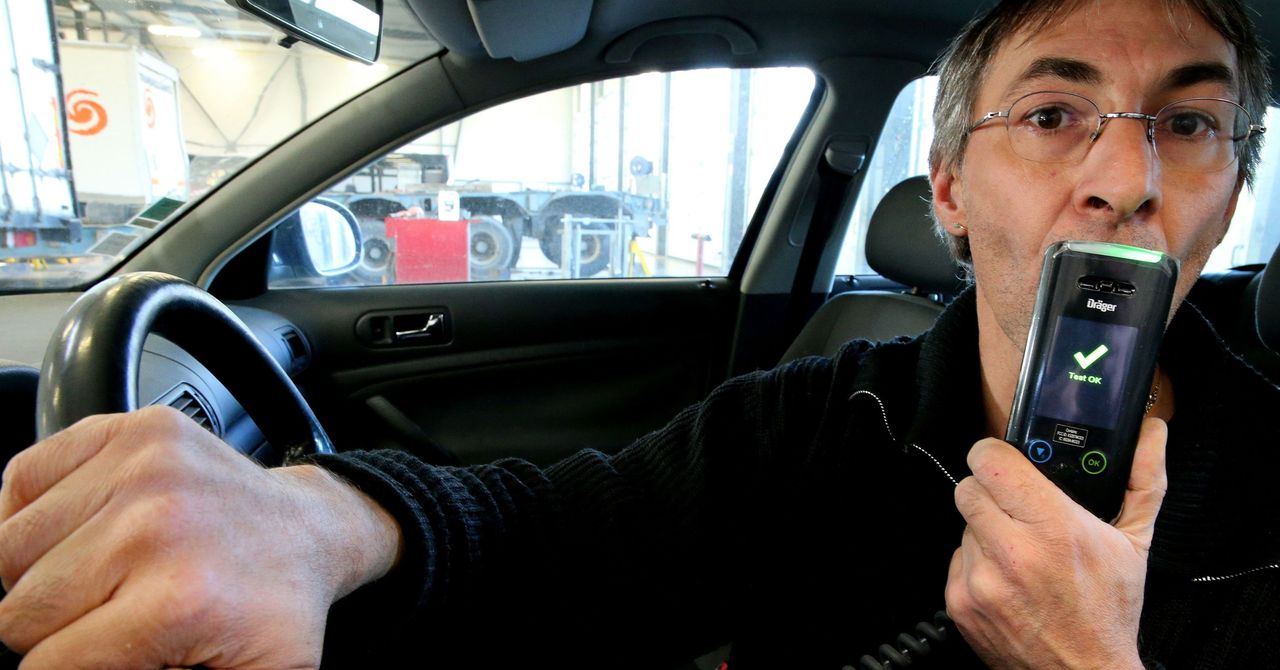
As of July 1, all vehicles sold within the European Union must include a standard, preinstalled interface that allows a breathalyzer lock to be added to the ignition system. This measure is part of a larger strategy promoted by the EU to reduce drunk-driving-related deaths and injuries by at least 50 percent by 2030.
The requirement falls under the Vision Zero program, launched by European authorities more than five years ago, which aims to eliminate alcohol-related traffic fatalities entirely—or get as close to zero as possible—by 2050. The measure also aligns with the timetable established in the EU’s General Safety Regulation, which sets specific deadlines for manufacturers to incorporate various safety features into vehicle designs, starting at the factory.
The regulation that will become mandatory in July obliges automakers to provide an electrical connection and reserve a space inside the vehicle to allow the installation of an “alcolock” device. This device must comply with European standard EN 50436 for Alcohol Ignition Interlocks and have a certificate issued by an authorized accrediting entity.
The operation of an alcolock is simple. Before starting the vehicle, the driver must blow into the device, which measures the level of alcohol present in the breath. If the result exceeds the legal limit, the system, which connected to the vehicle’s ignition or starting mechanism, automatically blocks the ignition cycle and prevents the car from starting.
This type of technology already operates in several European countries, mainly as part of programs aimed at repeat offenders of alcohol-related offenses or in certain sectors of professional transport. Official figures estimate that its implementation can reduce fatal accidents associated with alcohol consumption by up to 65 percent.
Since 2018, the European Union’s road safety program has incorporated different technologies to reinforce safe driving. As of 2024, new vehicles integrate an intelligent speed assistant, a system that detects the permitted speed limit using cameras or GPS and alerts the driver when they are exceeded the limit.
In addition, there is the emergency lane keeping assistant, capable of correcting the trajectory when the vehicle deviates without prior signaling. Also noteworthy is the event data recorder, popularly known as the “black box,” which stores key information during the seconds prior to an accident to facilitate law enforcement and traffic safety agency investigations.
Recently, a requirement was added to incorporate the adaptive brake light, a mechanism that, in the event of sudden braking, automatically and intensely activates the rear lights to warn other drivers of the need to slow down and avoid a collision.
The obligation to install an interface for an on-board breathalyzer is the final step in this set of safety measures. As of the first day of July, no car will be allowed to leave a dealership within the EU without full compliance with all these requirements.
This story was originally published by WIRED en Español and has been translated from Spanish.


Selena Gomez’s new adult film role leaves fans curious about Benny Blanco’s reaction

White House locked down after shooting involving Secret Service, suspect killed

Who is Elon Musk’s ex Ashley St Clair? Inside her reported eviction battle

-

 Entertainment1 week ago
Where Pete Davidson, Elsie Hewitt stand after breakup: Details revealed
-

 Entertainment1 week ago
Emilia Clarke recalls near-death incident while filming ‘Game of Thrones’
-

 Politics1 week ago
Rising diesel costs from Iran war strain US school budgets
-

 Politics1 week ago
UK’s Starmer faces survival battle as potential rivals circle
-

 Entertainment1 week ago
Drake drops highly anticipated "Iceman" album, plus two surprise albums
-

 Tech1 week ago
Greg Brockman Officially Takes Control of OpenAI’s Products in Latest Shakeup
-

 Tech7 days ago
Why Is Your Grill So Dumb? The Best Grills Set Temp Like an Oven
-
 Business1 week ago
UK borrowing costs rise and pound falls as leadership drama continues