

Business
As Donald Trump Hikes H-1B Visa Fee, Internet Digs Out Bill Gates’ 2024 Video Praising Indian Techies

Last Updated:
An old video of the Microsoft founder praising Indian techies’ contribution to his company presented a stark contrast to the US President Donald Trump’s decision.

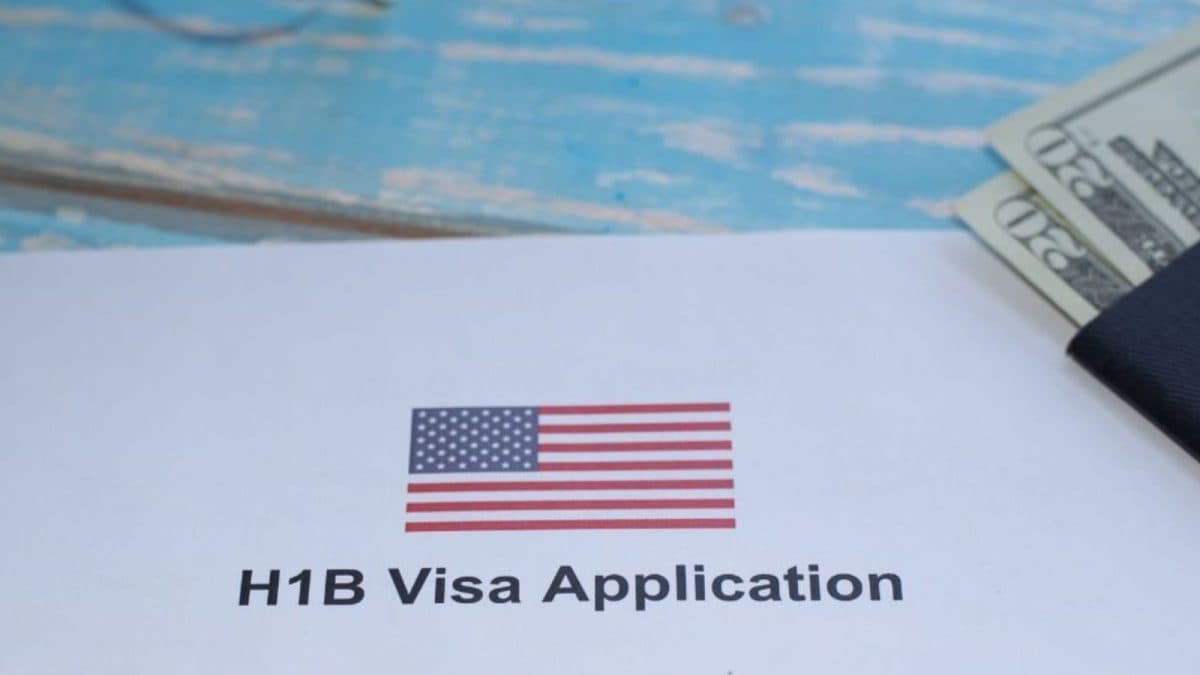
US companies must pay $100,000 (Rs 88 lakh) per H-1B application. (Representative Image)
Amidst US President Donald Trump’s controversial crackdown on the H-1B visa, an old clip of Microsoft founder Bill Gates praising his Indian employees is gaining attention. In the video, Gates showers a group of Indian techies with glowing praise and appreciates their efforts in raising his company to new heights.
Microsoft head’s words and encouragement to Indian techies working in the US were widely appreciated on the Indian internet. He presented an alternative approach to Trump’s much-criticised ways after he announced a massive hike in H-1B visa fees to $100,000 (approximately, Rs 88,61,500).
Trump’s move originated from his nationalistic ideals and the “MAGA” (Make America Great Again) vision to provide Americans with more job opportunities by discouraging U.S.-based companies from hiring foreign nationals, regardless of their capabilities.
Bill Gates’ Old Video Praising 15 IIT Grads
The old video of Gates acknowledging the efforts of his Indian employees is from the speech the tech giant delivered at the Indian Institute of Technology (IIT) in Delhi in February 2024. During his speech, Gates recalled the early days of Microsoft, when the company was looking to boost its staff and eyeing world-class engineering talent. A senior colleague then came up with an unconventional idea: hire 15 IIT graduates from India, who would put their heart and soul into work if provided an opportunity.
“In a sense, my first connection with India came because of the IITs,” Gates says in the clip. “One of the great people who worked for me said that he would go over to India and hire about 15 people who had been students at IIT and that would strengthen Microsoft’s engineering capabilities.”
“At the time, we had only a few hundred people, but even so, it was so hard to find amazing engineers. I thought that was a good idea. At the time, the Indian press said it was a terrible thing because all these great people (engineers) were leaving their country. The US press said it was a terrible thing (with) all these people coming to another country. But I think now, over 25 years later, we can say that was a phenomenal thing.”
Bill Gates’ Speech Amid Immigration Debates On H-1B
In the revisited portion of his speech, Gates emphasised the criticism that came Microsoft’s way from US-based news platforms, who decried his team’s decision to hire skilled Indian engineers over American graduates. But the Microsoft founder is now glad he went ahead with the idea and calls it a turning point for his company.
Gates’ approach comes in stark contrast with that of Trump and the existing American regime, posing a major hurdle now for US-based companies in hiring India’s graduates and future working professionals. The move spread widespread disappointment among India’s tech students, who were hoping to fulfil their dream of securing a high-paying job in the US.

A team of writers at News18.com bring you stories on what’s creating the buzz on the Internet while exploring science, cricket, tech, gender, Bollywood, and culture.
A team of writers at News18.com bring you stories on what’s creating the buzz on the Internet while exploring science, cricket, tech, gender, Bollywood, and culture.
Delhi, India, India
September 25, 2025, 10:32 IST
Read More







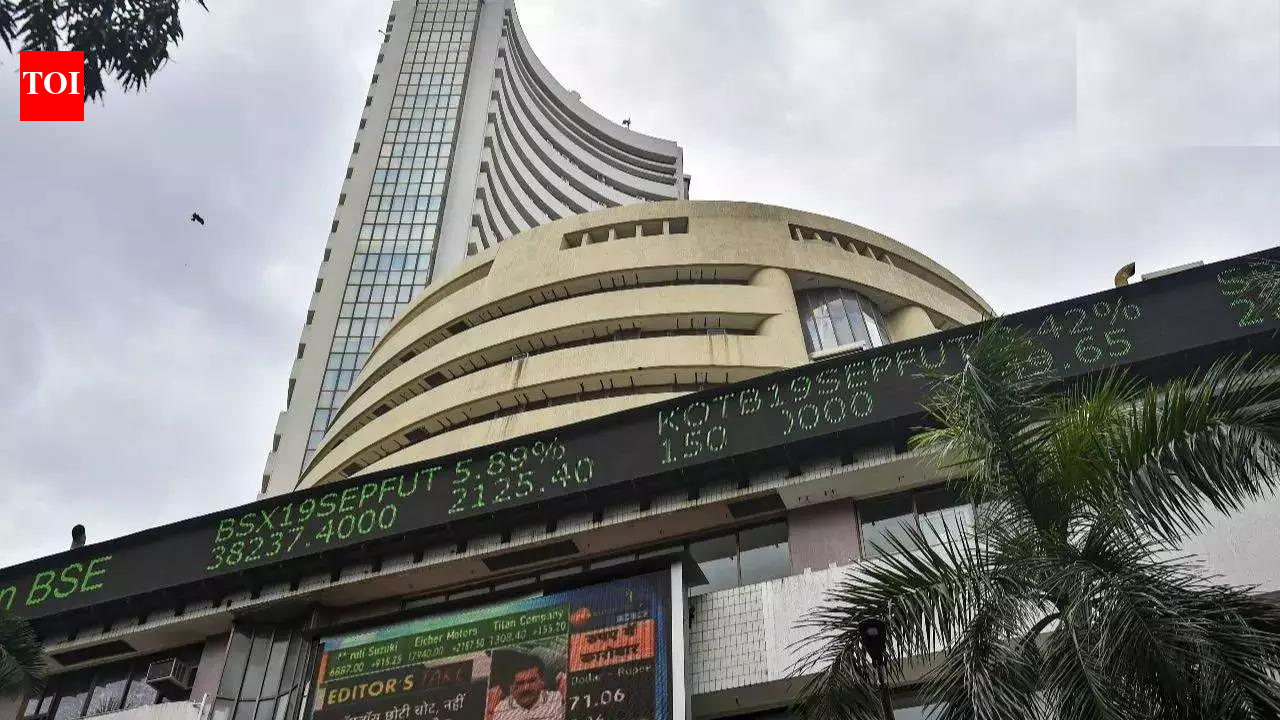
The combined market valuation of six of India’s top-10 most valued companies rose by Rs 74,111.57 crore last week, with Reliance Industries emerging as the biggest gainer. The rally came during a volatile trading week in which the BSE Sensex advanced 177.36 points, or 0.23%.According to news agency ANI, Reliance Industries added Rs 24,696.89 crore to its valuation, taking its total market capitalisation to Rs 18,33,117.70 crore.Tata Consultancy Services saw its valuation jump by Rs 19,338.68 crore to Rs 8,38,401.33 crore, while ICICI Bank added Rs 14,515.93 crore to reach a market capitalisation of Rs 9,06,901.32 crore.The valuation of Life Insurance Corporation of India climbed Rs 9,076.37 crore to Rs 5,14,443.69 crore.Meanwhile, Bajaj Finance gained Rs 3,797.83 crore, taking its valuation to Rs 5,70,515.57 crore, while Larsen & Toubro added Rs 2,685.87 crore to Rs 5,40,228.21 crore.
Airtel, HUL among laggards
On the losing side, Bharti Airtel witnessed the sharpest erosion in market value, losing Rs 20,229.67 crore to settle at Rs 11,40,295.49 crore.The market valuation of Hindustan Unilever declined by Rs 16,212.18 crore to Rs 5,17,380 crore, while State Bank of India lost Rs 12,784.4 crore in valuation to Rs 8,76,077.92 crore.HDFC Bank also saw its market capitalisation dip by Rs 2,094.35 crore to Rs 11,79,974.90 crore.Reliance Industries retained its position as India’s most valued company, followed by HDFC Bank, Bharti Airtel, ICICI Bank, State Bank of India, TCS, Bajaj Finance, Larsen & Toubro, Hindustan Unilever and LIC.
Markets end volatile week with modest gains
Ajit Mishra, SVP, research at Religare Broking Ltd, said markets ended the week with marginal gains amid a “highly volatile and range-bound trading environment”.“Benchmark indices witnessed sharp intraday swings throughout the week, driven by persistent rupee weakness, mixed global cues, sectoral rotation, and continued uncertainty around inflation and interest rates,” he said, as quoted by ANI.Benchmark indices recovered on Friday, with the Sensex closing 231.99 points higher at 75,415.35 and the NSE Nifty rising 64.60 points to settle at 23,719.30.Analysts cited optimism surrounding possible progress in US-Iran peace negotiations and easing Middle East tensions as factors supporting market sentiment.Vinod Nair, head of research at Geojit Investments, was quoted by news agency PTI as saying that domestic markets traded with a “mild positive bias” due to buying at lower levels and constructive global cues.“Globally, the AI investment theme remained the primary driver, while domestically, financial stocks led the gains,” he said.Brent crude prices climbed 2.3% to $104.7 per barrel, while foreign institutional investors (FIIs) sold equities worth Rs 1,891.21 crore in the previous session.

Six supermarket brand eggs cost £1 in 2022. How much are they now, why have they gone up, and is anyone profiteering?
Source link

LAHORE:
Imagine a country sitting at the crossroads of South Asia and Central Asia, with a population of 250 million, abundant natural resources, and a GDP exceeding $450 billion, yet struggling to convince even its own businesspeople to invest at home.
That is Pakistan’s continued uncomfortable reality in 2026, and the way things are going, the business community believes that even after elevating higher, in the past one year due to perfect diplomacy, the government needs to take strict action against those civil servants and state officials, who still try to slow the pace of overseas and local investment as well as development work, which has jeopardised the growth of the country.
“Foreign direct investment (FDI) in Pakistan fell 31% during the first 10 months of financial year 2025-26, with total inflows coming in at $1.409 billion against $2.035 billion during the same period a year earlier,” said Mian Shafqat Ali, Founder of the Pakistan Industrial and Traders Association Front. He raised alarm over what he calls a deepening investment crisis, warning that both local and foreign investment has dipped to one of its lowest levels in recent memory.
He added that the root cause of this decline is not a lack of opportunity, but a system that actively discourages investors at every step. “The real obstacle in the way of investment is the layers upon layers of bureaucratic hurdles. Without removing these barriers, the dream of increasing investment cannot be realised.”
He noted that investors, both domestic and foreign, are deeply sensitive to the environment they operate in, and Pakistan’s current legal and regulatory framework, unpredictable energy policies, fluctuating exchange rates, and ad hoc government decisions have created an atmosphere of uncertainty that keeps capital away.
The business community by and large thinks that once the US-Israel-Iran conflict is settled fully, Pakistan can have better opportunities; however they simultaneously say that to grab those opportunities, “we need to settle our systems, which are dominated by anti-investment and anti-business culture”.
There are systems, which welcome and protect overseas as well as local investment; those societies belong to the first world or second world; “unfortunately here in Pakistan we are still unable to manage the smooth flow of Chinese investments, whom we call ‘iron brothers’,” said Bilal Hanif, a Lahore-based businessman.
“We keep building new institutions and launching new investment windows, but nothing changes on the ground because the real problem is structural. A foreign investor does not just look at your pitch; he looks at your court system, your tax regime, and whether rules will be the same two years from now. On all these counts, we are falling short,” he said.
Pakistan has averaged barely $2 billion in annual FDI over the past 26 years; a figure that expert bodies like the Pakistan Business Council say should be at least $12 billion per year, or roughly 3% of GDP, to meet basic development benchmarks. Meanwhile, regional competitors such as India, Vietnam, Indonesia, and even smaller economies like Bangladesh have consistently attracted far greater inflows, benefiting from predictable regulations, stronger investor protection, and long-term policy continuity.
Mian Shafqat Ali was clear that the failure does not rest with any single institution. He said the problem is not the fault of the Special Investment Facilitation Council (SIFC) or any other body, but rather the deeply entrenched systems that make doing business in Pakistan unnecessarily complicated.
“Until policymakers are willing to make difficult structural and political decisions, investment will remain weak, no matter how many new institutions are created,” he warned.
What investors consistently ask for is not complicated; it is political stability, simple regulations, and confidence that policies of today will not be reversed tomorrow. Pakistan, unfortunately, has struggled to offer any of these in a reliable manner. Frequent political disruptions, leadership changes, and policy discontinuity have created uncertainty that discourages long-term capital, and the capital does not avoid Pakistan because of a lack of opportunity, it avoids uncertainty.
“Government should move beyond announcements and focus on real structural reforms, overhauling the regulatory framework, simplifying business registration processes, ensuring energy availability at competitive rates and most importantly, providing a stable and consistent policy environment as without fixing the foundation, everything else is meaningless,” Ali added.


Queen Elizabeth II heartbreaking final message for Prince Philip emerges

Proposed US-Iran deal involves opening strait during ceasefire extension: report

A Fundamental Principle of Aeronautical Engineering Has Been Overturned

-

 Entertainment1 week ago
Where Pete Davidson, Elsie Hewitt stand after breakup: Details revealed
-

 Politics1 week ago
Rising diesel costs from Iran war strain US school budgets
-

 Entertainment1 week ago
Drake drops highly anticipated "Iceman" album, plus two surprise albums
-
 Business1 week ago
UK borrowing costs rise and pound falls as leadership drama continues
-

 Tech1 week ago
Greg Brockman Officially Takes Control of OpenAI’s Products in Latest Shakeup
-

 Tech7 days ago
Why Is Your Grill So Dumb? The Best Grills Set Temp Like an Oven
-

 Tech7 days ago
This Solar-Powered Smart Sprinkler Keeps My Lawn Watered Without Any Power Cables
-
 Fashion1 week ago
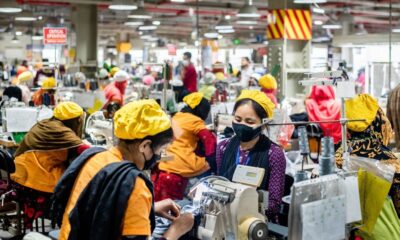
RMG trade bodies seek policy support from Bangladesh PM