

Business
As tech stocks soar, executives use exchange funds to diversify wealth without selling


Yuichiro Chino | Moment | Getty Images
For executives and founders who have gotten rich off one stock, sometimes it is possible to have too much of a good thing.
While the tech stock boom has meant a windfall for employees at high-flying companies, it’s risky to have too much of your net worth tied up in one stock. Some advisors ascribe to a 10% rule of thumb — meaning no one stock or asset should make up more than 10% of a portfolio.
“It represents both the biggest risk and biggest opportunity for that client,” said Rob Romano, head of capital markets investor solutions at Merrill.
Founders and long-time employees who want to diversify their portfolios can face steep capital gains taxes when they sell long-held stock in order to reinvest. Instead, they can contribute their shares to an exchange fund (not to be confused with ETFs).
Exchange funds, also known as swap funds, pool shares from multiple investors, who receive a partnership interest or share of the fund. After a designated lock-up period — usually seven years — investors can redeem their shares for a diversified basket of stocks equal to their interest in the fund.
While exchange funds became mainstream in the ’70s, they’ve gained more popularity of late as the stock market puts up strong returns, boosted in particular by the rise of artificial intelligence.
Eric Freedman, chief investment officer of Northern Trust’s wealth management business, said the many publicly held tech companies are ramping up their equity compensation to compete with hot AI startups for talent.
Exchange funds generally hold 80% of their assets in stocks and aim to mirror benchmark indexes like the S&P 500 or Russell 3000. The remaining 20% is required by the Internal Revenue Service to be held in non-security assets, with real estate being the most popular option.
Steve Edwards, senior investment strategist for Morgan Stanley’s wealth division, said he is seeing clients increasingly use exchange funds as a wealth transfer strategy.
“What exchange funds are helping us to do is to narrow the range of outcomes because a single stock will have a very wide range of outcomes,” he said. “Imagine you’re 70 years old, and you have a stock that’s been amazing, but then it becomes a dumpster fire and, essentially, you are not be able to pass to your heirs the legacy that you were hoping to.”
Still, getting clients to hedge their bets is often a hard proposition, Edwards said.
“People remember the blessing the stock has been to them and their family, and they’re extrapolating forward that the blessing will continue,” he said. “What we found in our research and our work is that stocks that have outperformed actually tend to underperform more in the future.”
Clients usually contribute only a portion of their shares to an exchange fund to take some chips off the table, he said.
Exchange funds only accept accredited investors worth more than $1 million or with more than $200,000 in earned income in the past two calendar years.
And, the lock-up period comes with fine print: If an investor redeems before seven years, they lose the tax benefit and may incur steep fees. Instead of receiving a diversified basket of stocks, the investor typically gets back their original shares — up to the value of their interest in the fund.
Scott Welch, chief investment officer at multi-family office Certuity, said he advises against exchange funds because of the lock-up period. There are more flexible ways to de-risk, such as collars, variable prepaid forwards, or tax-loss harvesting with long and short positions, he said. If liquidity is the client’s primary goal, borrowing against the stock is another solid option.




Business
Day 3: Clean Max Enviro Energy IPO Vs Shree Ram Twistex IPO; Know GMP, Subscription And Reviews

Last Updated:
Clean Max Enviro Energy and Shree Ram Twistex IPOs are open for public subscription till 5 pm today; here’s which one looks better.




Clean Max Enviro Energy IPO Vs Shree Ram Twistex IPO.
Two mainboard IPOs — Clean Max Enviro Energy Solutions and Shree Ram Twistex — have been closed today, February 25. The IPOs offer investors a choice between a renewable energy infrastructure play and a textile manufacturing bet. Here’s a comparison based on subscription data, grey market premium (GMP), valuations and broker views.
Subscription Status (Day 3)
On Day 3, Clean Max Enviro Energy IPO was subscribed 0.99 times. QIB demand stood at 2.99x, NII at 0.57x and retail at 0.07x, indicating subdued interest from investors.
Shree Ram Twistex IPO saw overall subscription of 43.66 times. Retail demand was at 76.63x, while QIB participation was 3.94x and NII stood at 220.30x.
Price Band And Issue Size
Clean Max Enviro Energy IPO is a Rs 3,100-crore issue comprising Rs 1,200 crore fresh issue and Rs 1,900 crore offer for sale. The price band is Rs 1,000-Rs 1,053 per share and minimum retail investment is Rs 14,742 for one lot of 14 shares.
Shree Ram Twistex IPO is a much smaller Rs 110.24-crore fresh issue priced at Rs 95-Rs 104 per share. Retail investors need Rs 14,976 to apply for one lot of 144 shares.
Grey Market Premium (GMP)
Clean Max Enviro’s GMP stood at (-)Rs 3, implying an estimated listing price of Rs 1,050, suggesting negative listing.
Shree Ram Twistex GMP was Rs 16.5, indicating an estimated listing price of Rs 120.5, or about 15.87% potential upside.
Both companies will be listed on BSE and NSE on March 2.
Business Positioning
Clean Max is India’s largest commercial and industrial (C&I) renewable energy service provider with roughly 8% market share. Analysts note the segment has a potential market size of about Rs 3 lakh crore as corporates — which consume nearly half of India’s electricity — increasingly shift toward green energy.
Shree Ram Twistex operates in the textile sector as a cotton yarn manufacturer serving B2B markets. Industry estimates suggest India’s textile sector could grow from about $174 billion to $350 billion by 2030, driven by exports, sustainability trends and policy support.
Analysts’ Views
SBI Securities highlighted Clean Max’s capital-efficient model and relatively low leverage, but noted the IPO is valued at EV/EBITDA of about 21.7x (FY25) and 16.3x (annualised 1HFY26).
Aditya Birla Capital said, “At the upper price-band, the issue is valued at 16x EV/Ebitda, which according to us, is expensive,” though it assigned a ‘Subscribe for long-term’ rating citing industry growth visibility.
For Shree Ram Twistex, Swastika Investmart said valuation at around 29-30x P/E already factors in most future growth and advised investors seeking listing gains to avoid the issue. Master Capital Services noted investors may consider it as a long-term opportunity given sector growth prospects.
Use Of Proceeds
Clean Max will use Rs 1,125 crore from fresh proceeds to repay debt, with the remainder for general corporate purposes.
Shree Ram Twistex will deploy proceeds for business expansion and operational requirements as it is entirely a fresh issue.
Which IPO Looks Better?
For listing gains, Shree Ram Twistex currently shows stronger grey market sentiment and investor traction. Clean Max, on the other hand, has stronger QIB participation but muted GMP, suggesting institutional conviction but limited short-term listing pop expectations.
For long-term investors, both issues are being viewed positively but with valuation caution. Clean Max offers exposure to the fast-growing renewable C&I power segment, while Shree Ram Twistex provides a play on India’s expanding textile exports and domestic demand.
Disclaimer:Disclaimer: The views and investment tips shared in this article are for general information purposes only. Readers are advised to consult a certified financial advisor before making any investment decisions.
 Click here to add News18 as your preferred news source on Google.
Follow News18 on Google. Join the fun, play games on News18. Stay updated with all the latest business news, including market trends, stock updates, tax, IPO, banking finance, real estate, savings and investments. To Get in-depth analysis, expert opinions, and real-time updates. Also Download the News18 App to stay updated.
February 25, 2026, 11:52 IST
Read More
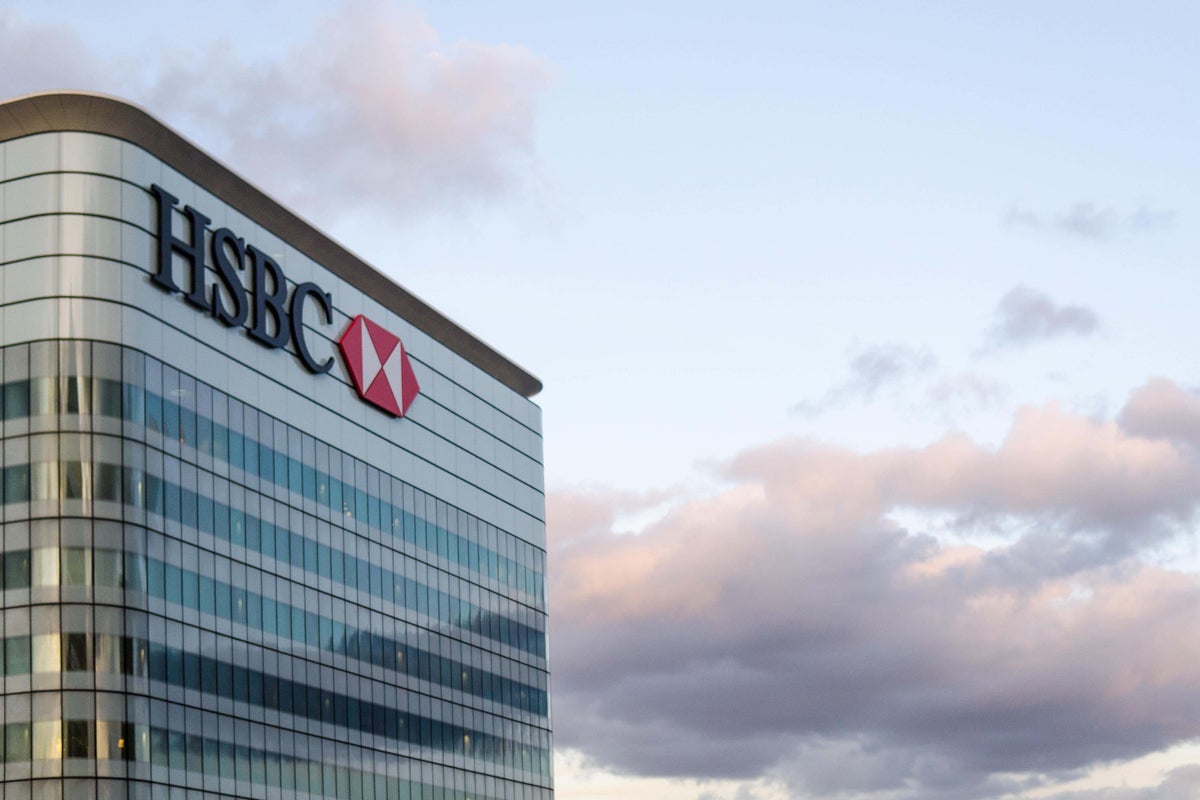
HSBC has revealed it stripped out 1.2 billion dollars (£890 million) worth of costs last year after cutting back its senior management team, as it hiked bonuses for staff by 10%.
The global banking giant has been embarking on a sprawling simplification programme that has involved big changes to its structure, in a bid to become more “agile”.
It previously set a target to make 1.5 billion dollars (£1.1 billion) in annual cost reductions by the end of 2026, under the leadership of chief executive Georges Elhedery.
But on Wednesday, the bank revealed that it is expecting to achieve this by the end of June – six months ahead of schedule.
It follows some 1.2 billion dollars (£890 million) worth of cost savings being found during 2025 alone.
Mr Elhedery, who stepped into the top job in 2024, said that a large amount of the savings had come from the “deduplication” of jobs within the group, particularly among more senior positions.
He said this resulted in a net 15% reduction of managing director positions, which has not had any impact on the group’s revenues.
Meanwhile, HSBC revealed that it handed out bonuses worth 3.9 billion dollars (£2.9 billion) to its eligible staff during the year – a 10% increase compared with 2024.
The bank said it ensured its “highest performers had the strongest variable pay outcomes compared to the prior year”.
Mr Elhedery took home a pay packet of £6.6 million in 2025, made up of his salary and benefits, plus an annual bonus and long-term incentive award of about £4.8 million.
HSBC’s pay committee said it intends to grant the chief executive the maximum long-term incentive award worth 600% of his salary, which amounts to £9 million, for 2026-28.
The value will be subject to the bank’s performance over the next three years, and delivered in instalments.
HSBC said it was striving to create a “high-performance culture” where staff are better rewarded for work that boosts the performance of the bank.
Nevertheless, it reported lower earnings for 2025, with its pre-tax profit down about 7% year-on-year to 29.9 billion dollars (£22.1 billion).
This took into account the impact of losses related to its stake in the Chinese Bank of Communications, and restructuring costs from its simplification programme.
Shares in HSBC were up by about 6% in early trading on Wednesday.

Changes announced in the Budget mean all energy bills will see some kind of reduction, but it will vary.
Source link


Ailias Lets You Commission Your Own Personal Talking Man in a Box
Day 3: Clean Max Enviro Energy IPO Vs Shree Ram Twistex IPO; Know GMP, Subscription And Reviews

Asia Pacific logistics slows in Feb as post-holiday demand hits rates

-

 Entertainment1 week ago
Queen Camilla reveals her sister’s connection to Princess Diana
-

 Tech1 week ago
Rakuten Mobile proposal selected for Jaxa space strategy | Computer Weekly
-

 Politics1 week ago
Ramadan moon sighted in Saudi Arabia, other Gulf countries
-

 Entertainment1 week ago
Robert Duvall, known for his roles in "The Godfather" and "Apocalypse Now," dies at 95
-
 Business1 week ago
Tax Saving FD: This Simple Investment Can Help You Earn And Save More
-

 Politics1 week ago
Tarique Rahman Takes Oath as Bangladesh’s Prime Minister Following Decisive BNP Triumph
-

 Tech1 week ago
Businesses may be caught by government proposals to restrict VPN use | Computer Weekly
-
 Fashion1 week ago
Australia’s GDP projected to grow 2.1% in 2026: IMF