

Fashion
Asia-Pacific growth outlook softens for 2026-27: ADB


Regional inflation is projected to rise to 3.6 per cent in 2026 and 3.4 per cent in 2027.
Economic growth in developing Asia and the Pacific is projected to slow to 5.1 per cent in 2026-27 from 5.4 per cent, amid Middle East conflict and trade uncertainty.
Inflation may rise to 3.6 per cent in 2026. Prolonged conflict remains a key risk.
China’s growth will ease, while India stays resilient.
Pacific economies face sharper slowdown, though domestic demand and AI-led sectors offer support.
The projections are based on assumptions finalised on March 10, under exceptionally high uncertainty, and reflect an early stabilisation scenario for the Middle East conflict. However, subsequent developments indicate a higher likelihood of prolonged disruptions.
Despite these challenges, the region enters this challenging and uncertain global environment from a position of strength, with robust domestic demand, steady labour markets, and higher public infrastructure spending underpinning resilience, ADB said in its Asian Development Outlook (ADO) April 2026 released today.
“A prolonged conflict in the Middle East is the single biggest risk to the region’s outlook, as it could lead to persistently high energy and food prices and tighter financial conditions,” said ADB chief economist Albert Park. “With renewed trade policy uncertainty posing additional risks, it is essential that governments implement sound macroeconomic policies to sustain growth and contain inflation, with targeted support measures to protect vulnerable households.”
ADO April 2026 includes a section that assesses the impact of the conflict on economies in the region under alternative scenarios. A prolonged and escalated conflict in the Middle East could affect economic activity via several channels, including heightened price pressures, shipping disruptions, and financial volatility.
Most economies in developing Asia and the Pacific will see their growth outlook worsen this year and in 2027, despite resilient private consumption and solid demand for artificial intelligence-related goods. China’s growth is projected to decline to 4.6 per cent this year and 4.5 per cent next year, from 5 per cent last year, with continued property market weakness and slower export expansion expected to weigh on activity.
In India, growth is forecast to ease to 6.9 per cent this year from 7.6 per cent last year, before rising to 7.3 per cent next year, underpinned by resilient domestic consumption. Economies in the Pacific are expected to experience the sharpest slowdown, from 4.2 per cent growth in 2025 to 3.4 per cent in 2026 and 3.2 per cent in 2027.
Oil prices are projected to stay elevated in the near term but would gradually stabilise if geopolitical tensions eased.
Fibre2Fashion News Desk (SG)








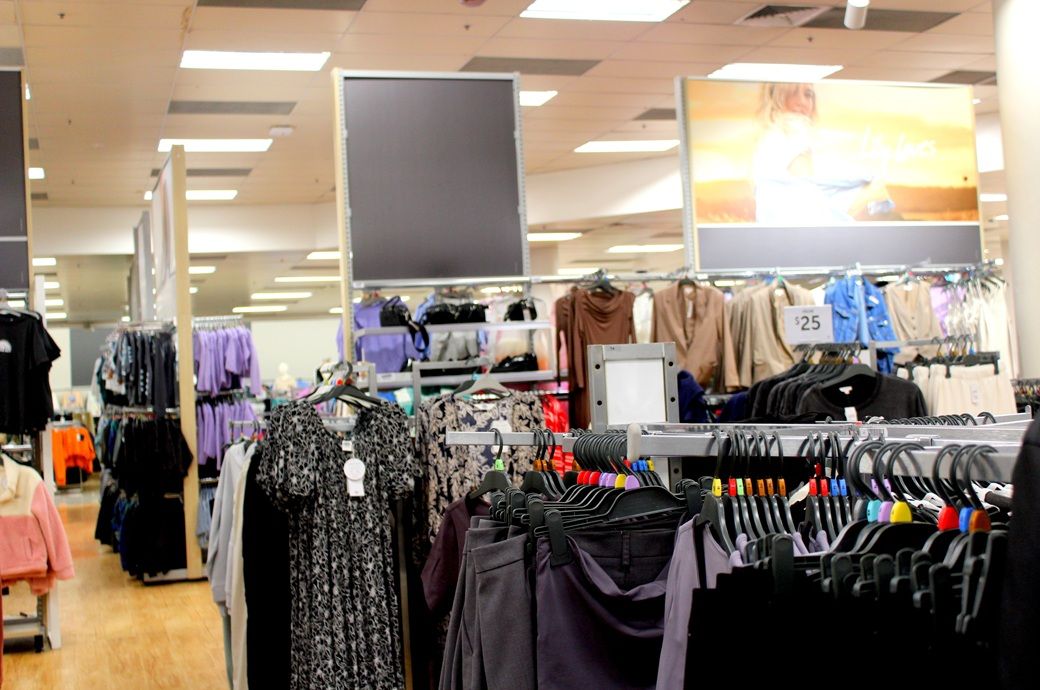
The March survey showed business confidence dropped 29 points to -29 index points, marking one of the steepest monthly declines on record, with similar falls previously seen only during the Global Financial Crisis and the onset of COVID-19, NAB said in a press release.
Despite the sharp fall in sentiment, business conditions eased only marginally, slipping by 1 point to 6 index points, indicating that economic activity has yet to fully reflect the impact of the external shock.
Australian business confidence plunged in March, falling 29 points to -29, while business conditions remained relatively stable, according to NAB.
Despite strong capacity utilisation, forward orders and capital expenditure weakened, signalling rising uncertainty.
Cost pressures intensified, with purchase costs doubling.
While some regions saw improved conditions, confidence declined nationwide.
The divergence suggests that while businesses are increasingly cautious about the outlook, operational momentum has remained intact so far. Capacity utilisation edged up to 83.1 per cent, staying well above its long-run average, with most industries continuing to operate at elevated levels.
However, forward-looking indicators signalled emerging weakness. Forward orders fell into negative territory, erasing gains made earlier in 2026, while capital expenditure also declined, reflecting rising uncertainty among businesses.
The impact of the geopolitical situation was more pronounced on costs, with purchase cost growth doubling to 3 per cent on a quarterly basis. Product price growth also increased, while labour cost growth remained steady.
Sector-wise, the decline in conditions was broad-based, with transport and utilities. Regionally, conditions improved in some areas such as Western Australia and South Australia, but confidence fell across all regions, highlighting widespread concern.
NAB noted that while the economy entered this period with solid momentum, the sharp deterioration in confidence underscores growing risks to the outlook as geopolitical tensions continue to weigh on business sentiment and future activity.
Fibre2Fashion News Desk (SG)
The company said the agreement marks a key milestone in its transformation journey, reflecting continued support from capital partners.
Saks Global has secured $500 million in exit financing under a restructuring support agreement as it progresses through Chapter 11, targeting emergence by summer.
The company is advancing its reorganisation plan, strengthening brand partnerships and inventory flows, with over 650 brands resuming shipments.
Improved inventory has boosted customer engagement, while it aims for double-digit EBITDA margins.
“Achieving this important milestone underscores the progress we are making on our transformation and reflects our capital partners’ confidence in our go-forward vision,” said Geoffroy van Raemdonck, CEO at Saks Global.
Saks Global is currently engaging with stakeholders on a formal Plan of Reorganisation, expected to be filed in the coming weeks. The retailer aims to emerge from Chapter 11 by summer with a strengthened financial structure, targeting double-digit adjusted EBITDA margins and long-term sustainable growth, the company said in a press release.
The company plans to leverage an integrated retail model, combining optimised physical stores in key luxury markets with distinct e-commerce platforms and remote selling capabilities. It also intends to enhance its curated product offering through stronger brand partnerships and deeper customer insights.
Operationally, Saks Global reported progress since filing for bankruptcy protection. Over 650 brand partners have resumed shipments, unlocking $1.5 billion in retail receipts and covering more than 90 per cent of expected inventory for the first quarter of fiscal 2026. March inventory receipts rose 18 per cent year on year (YoY).
Improved inventory flow has translated into stronger customer engagement, with spend per store visit increasing 6 per cent and online conversion rising 11 per cent. The company also noted gains in full-price selling across its banners, including Saks Fifth Avenue, Neiman Marcus and Bergdorf Goodman.
“As we advance the restructuring process, our focus remains on strengthening brand relationships and delivering personalised luxury experiences,” added van Raemdonck, highlighting confidence in completing the restructuring with sufficient liquidity and positioning the business for future growth.
Fibre2Fashion News Desk (SG)
Following talks between his CDU party and its coalition partners, Chancellor Friedrich Merz said his government has decided to cut the tax on petrol and diesel by around 17 euro cents ($0.19) for two months.
Germany yesterday announced a €1.6-billion ($1.9-billion) fuel price relief package for households and businesses struggling with the energy shock triggered by the Middle East conflict.
Chancellor Friedrich Merz said his government has decided to cut the tax on petrol and diesel by around $0.19 for two months.
The funds for the relief measures would be financed by higher taxes on tobacco.
The announcement followed another surge in oil prices after the US-Iran peace talks collapsed and US President Donald Trump’s decision to blockade the Strait of Hormuz.
The war “is the root cause of the problems we face in our own country”, said Merz, stressing that Berlin is doing all it could to try to end the conflict.
“This will very quickly improve the situation for drivers and businesses in the country, and above all for those who, mainly for professional reasons, spend a great deal of time on the road,” he told a news conference in Berlin.
The funds for the relief measures would be financed by higher taxes on tobacco, a finance ministry spokesman was cited as saying by global newswires.
Employers can also pay staff tax-free bonuses of up to €1,000 ($1,170) to mitigate the impacts of inflation, which has already started rising in Germany, the government announced.
“At the same time, we cannot offset every single outcome on the market with government funds… The state cannot absorb all uncertainties, not all risks, not all disruptions in global politics,” Merz cautioned.
He said the war’s effects are likely to last long. “The German economy will face a significant burden over an extended period,” he added.
Fibre2Fashion News Desk (DS)


Australian business confidence plunges in March amid uncertainty: NAB

Transfer rumors, news: Bayern eye move for Newcastle’s Gordon

India-US trade deal back in focus: Indian delegation to visit Washington next week for talks – The Times of India

-

 Fashion1 week ago
India’s exports face reset as EU links trade to carbon metrics: EY
-

 Entertainment1 week ago
Queen Elizabeth II emotional message for Archie, Lilibet sparks speculation
-

 Entertainment1 week ago
Lamar Odom shocking response to Khloé Kardashian account of his overdose
-

 Tech7 days ago
As the Strait of Hormuz Reopens, Global Shipping Will Take Months to Recover
-

 Tech7 days ago
Azure customers up in arms over ‘full’ UK South region | Computer Weekly
-

 Fashion1 week ago
CII submits 20-pt agenda to Indian govt to back firms hit by Iran war
-

 Tech6 days ago
This AI Button Wearable From Ex-Apple Engineers Looks Like an iPod Shuffle
-

 Tech1 week ago
A Single Strike Won’t Shut Off the Gulf’s Desalination System