

Fashion
Energy shock, uncertainty slow growth in East Asia Pacific: World Bank

Regional growth is projected to slow to 4.2 per cent this year from 5 per cent in 2025 as the energy shock triggered by the Middle East conflict compounds the adverse impact of elevated trade barriers, global policy uncertainty and domestic economic difficulties, the World Bank said in a press release.
The East Asia and Pacific region’s growth is slowing in 2026 due to external shocks, a World Bank Group report said.
Regional growth is projected to slow to 4.2 per cent in 2026 from 5 per cent in 2025.
Growth in China is projected to decelerate from 5 per cent in 2025 to 4.2 per cent in 2026 and 4.3 per cent in 2027.
Prolonged conflict may further raise economic distress and reduce regional growth.
Growth in China is projected to decelerate from 5 per cent in 2025 to 4.2 per cent in 2026 and 4.3 per cent in 2027 as weak domestic demand and property sector challenges persist, and the global slowdown dampens export growth.
Growth in the rest of the region will slow to 4.1 per cent in 2026 and is projected to rebound to 5 per cent in 2027 as geopolitical tensions ease and uncertainty diminishes, a World Bank release said citing the document.
“Growth in East Asia and Pacific continues to outperform much of the world, even in uncertain times,” said Carlos Felipe Jaramillo, World Bank’s vice president for the region.
“Yet, sustaining growth levels requires countries to confront structural challenges and seize the opportunity of the digital age to increase productivity and create more jobs,” he added.
The impact of the Middle East conflict depends on each country’s reliance on energy imports, existing vulnerabilities, and economic policy flexibility.
Prolonged and intensified conflict may further increase economic distress and reduce regional growth. A sustained 50-per cent increase in fuel prices could lead to a 3-4-per cent loss in income for households in the region.
Targeted support—for both the poor and the vulnerable and the small and medium enterprises—can help those most in need without fiscal strain, the release added.
The bank identifies surging artificial intelligence (AI)-related exports and investment as a bright spot in 2025, especially in Malaysia, Thailand and Viet Nam.
AI could also lead to higher productivity growth, but adoption in EAP remains limited because of gaps in connectivity and skills. Only 13-17 per cent of multinational subsidiaries in China and Thailand currently use AI, which is one third of the proportion in industrial countries.
Fibre2Fashion News Desk (DS)












The strategy brings together funding, education, skills, space, partnerships and global access into a connected system designed to nurture creative excellence, strengthen commercial resilience and drive long-term growth, the BFC said in a press release.
The BFC has launched ‘BFC 2030: Access, Creativity, Growth,’ shifting from promotion to industry support.
The strategy integrates funding, education, and global access, while introducing initiatives to nurture talent, build skills, and expand partnerships.
It aims to strengthen resilience, support designers, and sustain the UK fashion industry’s long-term economic and cultural impact.
BFC will modernise its membership structure, refresh its prizes and programmes, and expand scholarships to strengthen support for British craft, innovation, and manufacturing, while creating clearer routes from education into the fashion industry.
To enable long-term growth, it will deliver four core initiatives: BFC Fashion Assembly, which reconnects designers with schools and communities to champion arts education and inspire future talent; BFC Fashion House, providing shared studio spaces and resources across the UK; BFC Mini MBA, equipping emerging leaders with expertise in business, technology, and sustainability; and BFC International, focused on growing global partnerships, increasing fundraising, and boosting trade and export opportunities for UK designers.
Delivered through a structured three-year growth plan and a fourth year focused on measurement and scale, the strategy positions the BFC not simply as a promoter of fashion, but as a steward of a national creative asset, convening partners, unlocking investment and enabling designers to build resilient, future-facing businesses and support long-term industry growth.
“Fashion is not ornamental. It is strategic. What we wear speaks before we do. It shapes identity, expresses culture and signals what we stand for. The industry contributes £67.5 billion (~$89.8 billion) in gross value added annually to the UK economy, supporting jobs, exports, tourism and soft power. Yet the creative engine that drives this impact is under critical strain and if left unchecked, we risk weakening both the nation’s cultural influence and economic resilience,” said Laura Weir, chief executive, British Fashion Council.
“This strategy sets out how we will act, unlocking smarter funding pathways, building stronger partnerships and supporting designers to create resilient, future-facing businesses. The British Fashion Council cannot deliver this alone. But we can convene, catalyse and lead, working collectively to ensure that Britain’s fashion creativity endures and thrives for generations to come,” added Weir.
Fibre2Fashion News Desk (RR)
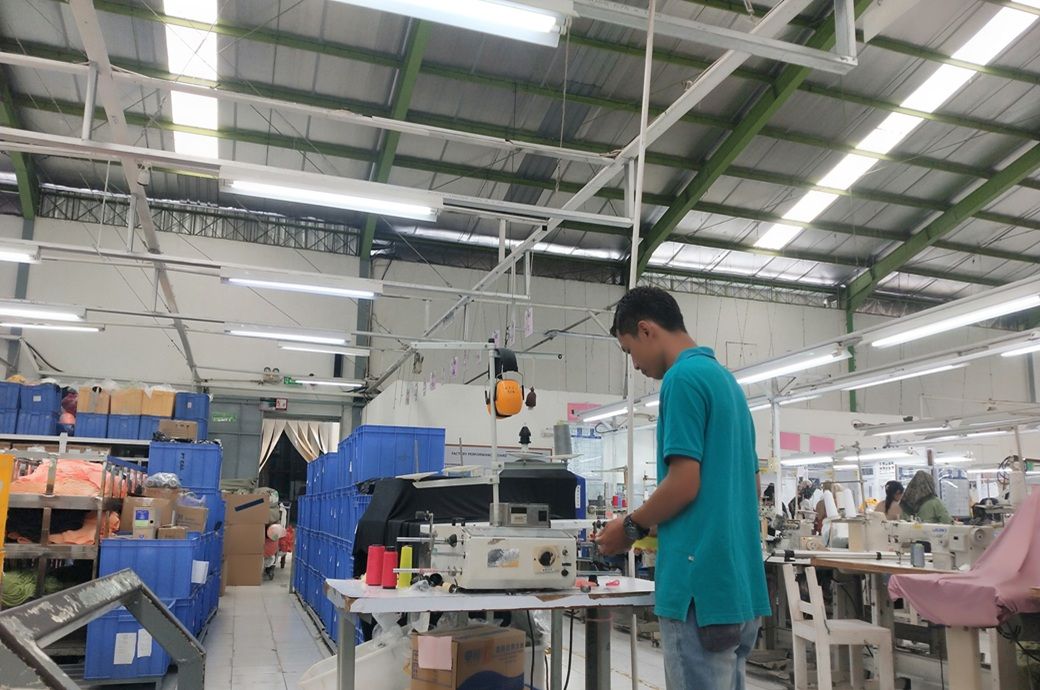
International Labour Organisation (ILO) in its report ‘Employment Impact Assessment on Nepal’s LDC Graduation’ published last month, warned that up to 132,000 jobs could be lost across sectors over the next five years in a worst-case scenario, particularly if mitigation measures are not implemented.
The impact is likely to be uneven, with manufacturing bearing the brunt and the textile and garment sector emerging as the most vulnerable. The report estimates that around 67,000 men and 65,000 women could lose employment, with women disproportionately affected due to their concentration in labour-intensive industries.
Nepal’s LDC graduation in 2026 may disrupt employment, with up to 132,000 jobs at risk, according to the ILO.
Manufacturing, especially garments, will be most affected, with women disproportionately impacted.
Industry leaders cite policy gaps and weak infrastructure as key constraints.
Calls for reforms, including the Green Garment Village, are growing.
The ILO emphasised that generating new manufacturing employment while recovering lost jobs will be a key challenge for the government. Strengthening competitiveness and preparing for post-LDC trade conditions will be critical to sustaining growth.
Speaking at a recent industry event, Garment Association Nepal (GAN) President Pashupati Dev Pandey noted that policy bottlenecks and limited institutional support are constraining a sector that is otherwise gaining global recognition, said Nepalese media reports.
Pandey highlighted the urgent need for infrastructure development and financial backing, pointing to the long-pending ‘Green Garment Village’ as a crucial step towards building a sustainable manufacturing ecosystem. Delays in its implementation, he cautioned, could weaken Nepal’s position in increasingly sustainability-driven global supply chains.
The ‘Green Garment Village’ is a sustainable model to shift textile (especially garment) production to rural areas with eco-friendly practices.
Amid these challenges, the government’s move to mandate the use of domestically produced garments in public offices has been welcomed by the industry as a supportive measure, providing a stable demand base. However, industry leaders continue to call for coordinated policy action and deeper engagement to ensure the long-term viability of Nepal’s garment sector in a post-LDC environment.
Fibre2Fashion News Desk (SG)

The survey, conducted in January covering more than 500 senior executives from leading corporations worldwide, shows that companies are committed to international investment despite mounting uncertainty.
Eighty-eight per cent of respondents in the Kearney 2026 FDI Confidence Index survey said they plan to raise FDI over the next three years, signalling sustained confidence in long-term global opportunities.
Technological and innovation capabilities rank as the key factor influencing where firms choose to invest.
Asia has the largest share of markets on the index for the first time in more than a decade.
The recent escalation of conflict in the Middle East adds a layer of uncertainty to the global investment environment, with the potential to disrupt, delay or redirect FDI flows depending on how risks evolve, it observed.
Technological and innovation capabilities rank as the most important factor influencing where companies choose to invest, surpassing traditional considerations like regulatory efficiency and domestic economic performance.
Investors cite technological innovation as the strongest or tied strongest reason to invest in 10 of the 25 markets on the index, underscoring the growing importance of innovation ecosystems in attracting global capital, a release from the management consulting firm said citing the study.
The United States maintains its position as the world’s most attractive destination for FDI for the 14th consecutive year. Investors continue to cite the country’s technological leadership and economic resilience as key reasons for investing.
However, despite that, investor sentiment has softened, with net optimism about the US market’s three-year economic outlook falling by 17 points compared with last year.
Canada holds the second position for the fourth year in a row and continues to close the gap with the United States. Investors point to Canada’s natural resource base, stable economic fundamentals and growing technology capabilities as key strengths.
Asia shows particularly strong momentum in this year’s rankings. Japan rises to third place, supported by investor confidence in its innovation ecosystem and targeted investment incentives. China climbs to fourth, reflecting the scale of its domestic market and its continued progress in technology development.
More broadly, Asia claims the largest share of markets on the index for the first time in more than a decade. The shift underscores a growing investor focus on markets that combine technological capability, economic growth potential, and geopolitical relevance.
So-called ‘middle power’ economies are also gaining prominence in this year’s results. Singapore posts one of the most notable improvements in the rankings, while South Korea also climbs in the index, reflecting strong investor interest in its technological innovation and advanced industrial capabilities. These markets are viewed as strategic investment hubs, offering growing roles in global supply chains.
China, the United Arab Emirates (UAE) and Saudi Arabia rank as the top three markets on the emerging markets index for the third consecutive year, while Thailand and Malaysia post some of the largest gains in the rankings amid ongoing supply chain diversification.
Several emerging markets—including China, the UAE, Brazil, Mexico, Thailand, Malaysia and India—also appear on the global rankings, highlighting the growing overlap between global and emerging investment destinations.
Investor sentiment toward emerging markets has improved modestly year on year, with investors expressing the strongest optimism about the economic outlook for markets like the United Arab Emirates and Thailand.
The results suggest that more companies are looking beyond traditional investment hubs as they expand supply chains and pursue growth opportunities across a broader set of emerging markets.
Executives remain alert to rising global risks even as investment intentions are strong. Geopolitical tensions rank as the most likely development over the next year (36 per cent), followed by commodity price increases and political instability in developed markets (30 per cent).
At the same time, industrial policy is playing a central role in shaping investment decisions. According to the survey, 84 per cent of investors say industrial policy is extremely or very important in determining where they invest, and 57 per cent believe it has a positive impact on their company’s business performance.
However, nearly nine in 10 investors report at least moderate business risk from competing national industrial policies, underscoring the complexity created by overlapping policy frameworks.
Investors view infrastructure development and tax incentives as the most effective industrial policy tools, with roughly four-fifths saying infrastructure investment is effective in achieving economic and security goals, while enthusiasm for tariffs and export controls is significantly lower.
Fibre2Fashion News Desk (DS)


Transfer rumors, news: Bayern, Barça eye move for Milan’s Leão

British Fashion Council 2030 to strengthen UK fashion industry

‘Bridgerton’ star Phoebe Dynevor breaks silence on comeback

-

 Fashion7 days ago
India’s exports face reset as EU links trade to carbon metrics: EY
-

 Entertainment6 days ago
Queen Elizabeth II emotional message for Archie, Lilibet sparks speculation
-

 Tech6 days ago
As the Strait of Hormuz Reopens, Global Shipping Will Take Months to Recover
-

 Tech6 days ago
Azure customers up in arms over ‘full’ UK South region | Computer Weekly
-

 Entertainment7 days ago
Lamar Odom shocking response to Khloé Kardashian account of his overdose
-

 Sports1 week ago
With Messi goal, Inter Miami open new stadium with dream moment
-

 Tech5 days ago
This AI Button Wearable From Ex-Apple Engineers Looks Like an iPod Shuffle
-

 Fashion6 days ago
CII submits 20-pt agenda to Indian govt to back firms hit by Iran war