

Business
Aurangzeb says new investors entering Pakistan despite some firms exiting | The Express Tribune

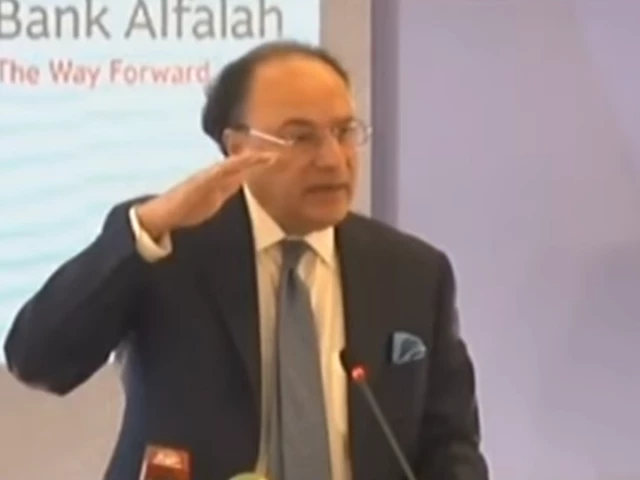
Finance minister cites 20 foreign investors in 18 months, remittances expected to top $41bn
Finance Minister Muhammad Aurangzeb speaking at the Pakistan Policy Dialogue in Islamabad Photo: Screengrab
ISLAMABAD:
Pakistan’s Finance Minister Muhammad Aurangzeb on Wednesday said that while some companies had exited Pakistan due to high taxes and energy costs, new local and foreign investors were also entering the market, showing continued confidence in the economy.
“There are firms which are also leaving that is true… if the taxation is high or the energy cost is high or its financing cost is always moving in the right direction those have been real issues,” Aurangzeb said while addressing the Pakistan Policy Dialogue in Islamabad.
He said Pakistan had attracted 20 new foreign investors over the past 18 months, including Google, Aramco, Wafi Energy and Turkish Petroleum. He described high taxes and energy prices as a “real problem for businesses” but said the government had launched reforms to ease the burden and restore economic stability.
Aurangzeb said the government and private sector both needed to adapt their approaches. Referring to companies leaving the country, he said some business models were no longer viable. “But those firms which have been able to look at business models… because it takes two to tango, what the government has to do, and what the private sector has to do, and if you have wedged into their business models for the last 50 years it’s not going to work in the New World Order,” he said.
Read: Government approves Rs24bn in grants as defence, FBR get fresh funds
He said structural reforms were underway across the country, including the ongoing transformation of the Federal Board of Revenue. “Compliance and enforcement are essential to ensure implementation of tax laws,” he added.
Remittances to cross $41bn
The finance minister said Pakistan’s remittances were expected to cross $41 billion this year, up from $38 billion in the previous fiscal year, providing crucial support to foreign exchange inflows. He said reforms in tax administration and the energy sector were key parts of the government’s stabilisation agenda.
Aurangzeb said local investors had participated in the privatisation process of Pakistan International Airlines, while 24 state-owned enterprises had been transferred to the Privatisation Commission. Inefficiencies in public sector entities were costing the country nearly Rs1 trillion annually, he said.
He said Utility Stores, the Public Works Department and the Pakistan Agricultural Storage and Services Corporation had been shut down due to corruption linked to subsidy schemes.
Warning against a continued rise in import duties, Aurangzeb said such measures were harmful to the economy and needed to be rationalised to lower the cost of doing business.
Debt servicing remained the government’s largest expenditure, he said, but savings of Rs850 billion had been made last year on interest payments, with further savings expected in the current fiscal year.
Read more: Exports dip 20% despite high inflows
Aurangzeb said the government planned to launch Panda Bonds within the next two weeks to diversify external financing sources. He also cited a survey showing that 73% of investors were willing to invest in Pakistan.
On the external sector, he said the trade deficit had widened, but the current account remained within government targets. He added that large-scale manufacturing showed positive performance in the first quarter of the current fiscal year.
The finance minister said private sector credit had risen to Rs1.1 trillion, while 135,000 new investors had entered the Pakistan Stock Exchange, with market investment up 41% over the past 18 months.
Aurangzeb said Pakistan now had the world’s third-largest freelance workforce, adding that it was the government’s responsibility to provide systems and platforms to support young people.
Looking ahead, he said controlling population growth was essential if Pakistan was to achieve its goal of becoming a $3 trillion economy by 2047, warning that annual population growth of 2.55% was incompatible with sustainable development.






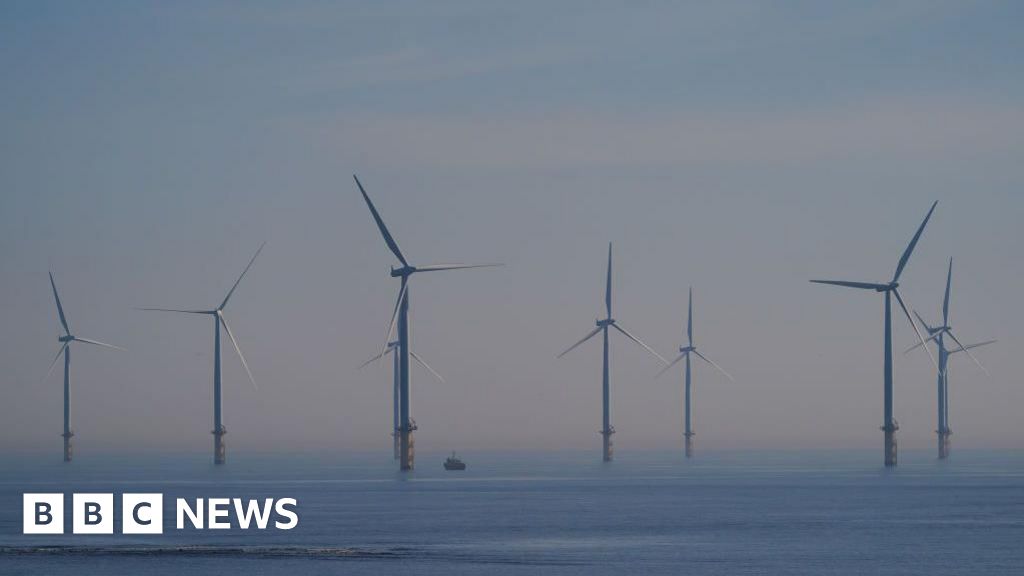
The UK has awarded contracts to build a record supply of offshore wind projects as part of its efforts to grow the country’s clean electricity sources.
The projects span England, Scotland and Wales, including what could be the world’s largest offshore wind farm off the coast of Scotland in the North Sea.
But some analysts warn that despite the record haul of offshore wind, the government will still struggle to meet its 2030 “clean power” target.
The government argues that wind projects are cheaper than new gas power stations and will “bring down bills for good”, but the Conservatives have previously accused climate targets of raising energy costs.
The largest successful project is Berwick Bank in the North Sea, which is the largest planned offshore wind farm worldwide.
Other projects to be awarded contracts include the Dogger Bank South wind farm off the coast of Yorkshire and the Norfolk Vanguard project off the coast of East Anglia – while Awel Y Mor was the first successful Welsh project to in more than a decade.
The government wants at least 95% of Great Britain’s electricity to come from “clean” sources by 2030, partly to reduce emissions of planet-warming gases from fossil fuels. These clean sources include renewables – such as solar and wind – and nuclear energy.
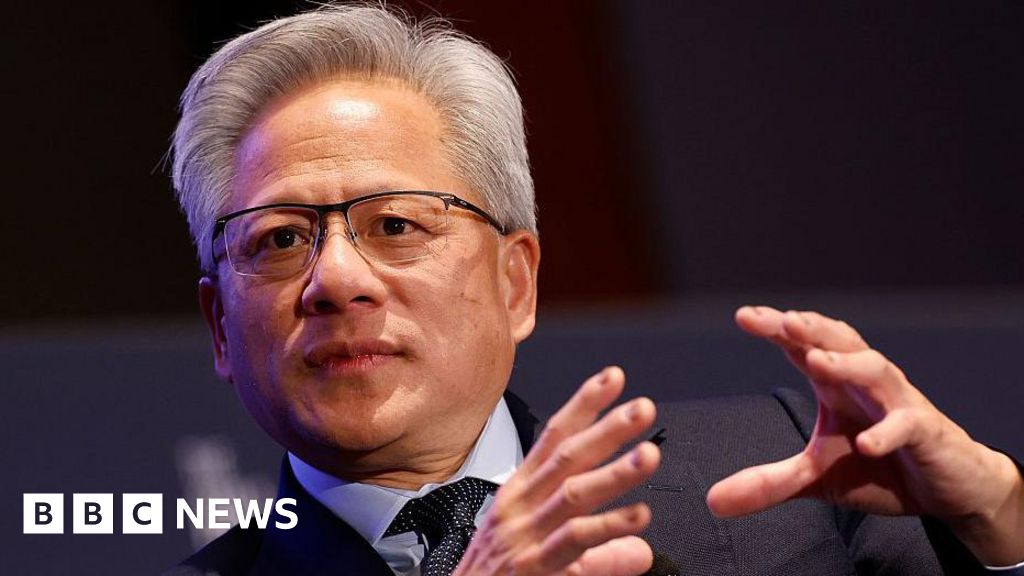
The US government has given chip giant Nvidia the green light to sell its advanced artificial intelligence (AI) processors in China, the Department of Commerce said on Tuesday.
The H200, Nvidia’s second-most-advanced semiconductor, had been restricted by Washington over concerns that it would give China’s technology industry and military an edge over the US.
The Commerce Department said the chips can be shipped to China granted that there is sufficient supply of the processors in the US.
President Donald Trump said last month that he would allow the chip sales to “approved customers” in China and collect a 25% fee.
The BBC has contacted Nvidia for comment.
The Commerce Department’s Bureau of Industry and Security said its revised export policy applies to Nvidia’s H200 chips, as well as less advanced processors.
The H200 chip is a generation behind Nvidia’s Blackwell processor, which is considered to be the world’s most advanced AI semiconductor and remains blocked from sale in China.
Nvidia has been caught in a geopolitical tug-of-war between the US and China – two sides of a global AI race.
Trump reversed the chip-selling restriction last July, but demanded that Nvidia pay a cut of its earnings from China to the US government.
Beijing then reportedly ordered its tech companies to boycott Nvidia’s China-bound chips and prioritise semiconductors made domestically. That move was designed to bolster China’s tech industry, though experts have consistently said that the country’s chips still lag behind the US.
Throughout 2025, Nvidia CEO Jensen Huang continually lobbied Washington to allow the sale of the firm’s high-powered chips to China, arguing that global market excess is essential for America’s competitiveness.
Some officials in the US, however, have expressed concerns that the chips would benefit Beijing’s military and hurt America’s progress in AI development.

Emer MoreauBusiness reporter
 Getty Images
The government has set out its vision for major rail improvements across the north of England, which it says will transform the region and boost the UK economy, more than a decade after such a project was first proposed.
The multibillion pound scheme, known as Northern Powerhouse Rail (NPR), aims to deliver faster journeys and more frequent trains across the North through a combination of upgraded and new lines, and improvements to stations.
An initial £1.1bn has been earmarked for design and preparation. Construction is not expected to start until after 2030.
It will be delivered in phases, starting with upgrades to lines between Leeds, York, Bradford and Sheffield, the government said.
The second phase will be the building of a new route between Liverpool and Manchester, and the third will improve connections between Manchester and cities in Yorkshire, according to the outline of the plan.
The government said the “transformation” of travel in the North would shorten commutes and encourage investment across the region, adding up to £40bn to the British economy.
Prime Minister Sir Keir Starmer said the cycle of “paying lip service to the potential of the North” had to end.
“This government is rolling up its sleeves to deliver real, lasting change,” he said.
Successive governments have promised to unlock the North’s economic potential with investment in infrastructure.
The Northern Powerhouse project was first proposed by former Conservative Chancellor George Osborne in 2014, while Boris Johnson was later elected on a “levelling up” agenda.
However, promised rail investments were scaled back.
The government plans to make NPR the focus of a wider Northern Growth Strategy, which will be published in spring.
The first phase of NPR will also see improvements to railway stations in Leeds, Sheffield and York, the government said.
The plans include pushing ahead with a much-anticipated new station at Bradford, which proponents say would allow young jobseekers from the city to access opportunities across a much wider area.
A new station is also expected at Rotherham Gateway.
Additionally, the Department for Transport (DfT) said that the business case to re-open the Leamside line in the North East would be pursued.
The government has not announced a firm budget or committed specific funds beyond 2029, apart from the £1.1bn to develop the plans.
Instead, a cap of £45bn has been set on central funding. The government said this could be topped up by contributions from local government.
“For too long, the North has been held back by underinvestment and years of dither and delay,” Transport Secretary Heidi Alexander said.
“This new era of investment will not just speed up journeys, it will mean new jobs and homes for people, making a real difference to millions of lives.”
The DfT said lessons had been learned from attempts over the last decade to build the HS2 network, which is severely over budget, behind schedule and has been scaled back dramatically from its original concept.
It was originally supposed to be a Y-shaped line from London and splitting at Birmingham towards Manchester and Leeds.
It will now terminate at Birmingham, and is expected to cost at least £80bn.
The government also said that following NPR’s completion it intended to build a new rail link between Birmingham and Manchester, but it is unclear whether it would be a high-speed line.
The government is aiming to avoid a repeat of the HS2 cost over-runs by producing a detailed plan over a three-year period. That also allows it to delay allocating further funding while the public finances are under pressure.
The Conservatives accused the government of “watering down” Northern Powerhouse Rail, saying ministers had “put back any plans to actually deliver it and rewritten timetables on the fly”.
Shadow rail minister Jerome Mayhew said: “Labour lurch from review to review, deadline to deadline, with no grip on costs, no clarity on scope and no courage to make decisions.
“Northern Powerhouse Rail could have been transformational, empowering regional growth and regeneration. Under Labour it risks becoming a permanent mirage that is endlessly redesigned, downgraded and never delivered.”
The chief executive of the large engineering and construction firm, Arup, Jerome Frost, said the new investment would “help unlock the region’s vast economic potential”.
Henri Murison, chief executive of the Northern Powerhouse Partnership, an organisation set up to support the coordinated economic development of the north of England, said the plan provided a “clear route to higher productivity growth”.
He continued: “Northern Powerhouse Rail will enable a single labour market more like that of London and the South East so a young person in Bradford could aspire to work in Sheffield or Manchester, or a business there attract talent from further afield than they can today.”

UK secures record supply of offshore wind but price rises

Our favorite bowl game moments: Mascots, mayhem and more

Grammy-nominated musician John Forté found dead in his home

-
 Entertainment1 week ago
Minnesota Governor Tim Walz to drop out of 2026 race, official confirmation expected soon
-

 Entertainment7 days ago
Does new US food pyramid put too much steak on your plate?
-

 Politics6 days ago
UK says provided assistance in US-led tanker seizure
-

 Entertainment6 days ago
Why did Nick Reiner’s lawyer Alan Jackson withdraw from case?
-
 Business6 days ago
Trump moves to ban home purchases by institutional investors
-
 Business1 week ago
Aldi’s Christmas sales rise to £1.65bn
-

 Fashion1 week ago
Jacquemus hires new COO from Parisian label Lemaire
-

 Sports6 days ago
PGA of America CEO steps down after one year to take care of mother and mother-in-law