

Politics
Australian soldier arrested for alleged war crimes in Afghanistan

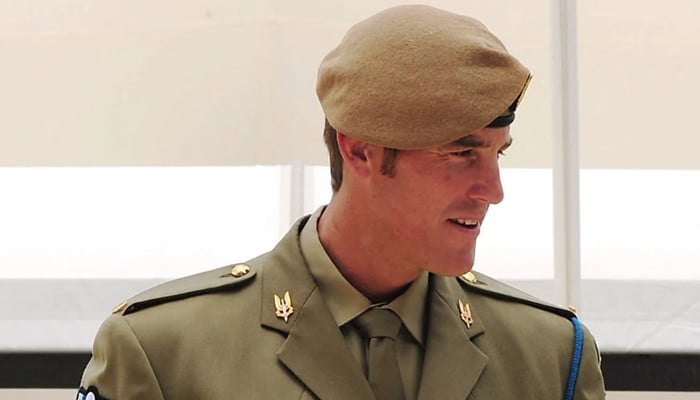
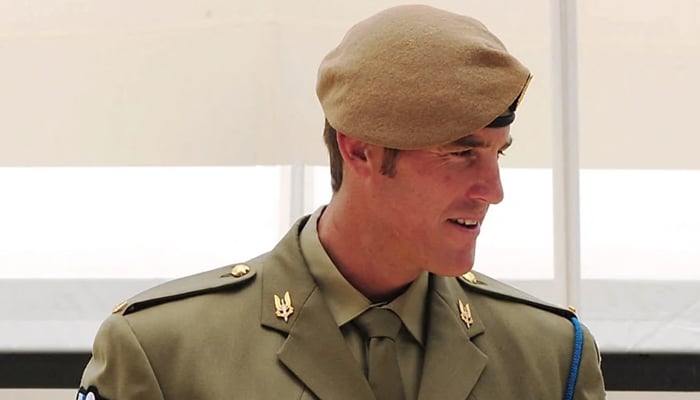
- Afghan victims were not taking part in hostilities, says officer.
- “Victims shot by accused or by subordinates acting on his orders.”
- Smith to be charged with five counts of war crime — murder.
One of Australia’s most decorated soldiers was arrested on Tuesday for allegedly murdering unarmed prisoners while serving in Afghanistan, police and local media said following a sweeping war crimes probe.
The Australian Federal Police said they arrested a 47-year-old former Australian soldier, who was widely named in local media as Victoria Cross recipient Ben Roberts-Smith.
Federal police commissioner Krissy Barrett said the soldier had been linked to a string of murders while serving in Afghanistan between 2009 and 2012.
“The victims were not taking part in hostilities at the time of their alleged murder in Afghanistan,” she told reporters.
“It will be alleged the victims were shot by the accused, or shot by subordinate members acting on the orders of the accused.”
He would be charged with five counts of “war crime — murder”, she said.
A former member of the Special Air Service Regiment, Roberts-Smith was once lauded as Australia’s most distinguished living war hero.
But his reputation took a major hit in 2018, when a series of newspaper reports first linked him to the murder of unarmed Afghan prisoners by Australian troops.
Those reports would eventually trigger an ongoing police investigation into alleged war crimes carried out by Australian soldiers.
Roberts-Smith has maintained his innocence throughout, launching a multi-million-dollar legal suit against the newspapers that first reported on the allegations.
War crime allegations
Roberts-Smith won the Victoria Cross — Australia’s highest military honour — for “conspicuous gallantry” in Afghanistan while on the hunt for a senior Taliban commander.
He met Queen Elizabeth II and his image was hung in the hallowed halls of the Australian War Memorial in Canberra.
But after painstaking reporting, The Age and The Sydney Morning Herald alleged his public persona masked a pattern of criminal and immoral behaviour.
The papers alleged Roberts-Smith had kicked an unarmed Afghan civilian off a cliff and ordered subordinates to shoot him.
He was also said to have taken part in the machine-gunning of a man with a prosthetic leg, later using the limb as a drinking vessel with comrades.
Australia deployed 39,000 troops to Afghanistan over two decades as part of US and Nato-led operations against the Taliban and other militant groups.
As Australian veterans returned home, their actions have come into sharp legal focus.
A 2020 military investigation found special forces personnel “unlawfully killed” 39 Afghan civilians and prisoners, revealing allegations of summary executions, body count competitions and torture by Australian forces.
Under growing pressure, the government appointed a special investigator to probe whether current and former soldiers should face criminal charges.


Tensions in the Middle East have disrupted the delivery of imported goods from Dubai, leading to an increase in prices of computers, laptops and related spare parts in local markets.
Supply delays have pushed up costs for consumers, while repair work has also become more expensive, affecting citizens relying on electronic devices.
Traders cited shipment disruptions as a key factor behind the rising prices.
Politics
Israeli journalist admits reporting rescue of US airman as Trump threatens jail over ‘leak’
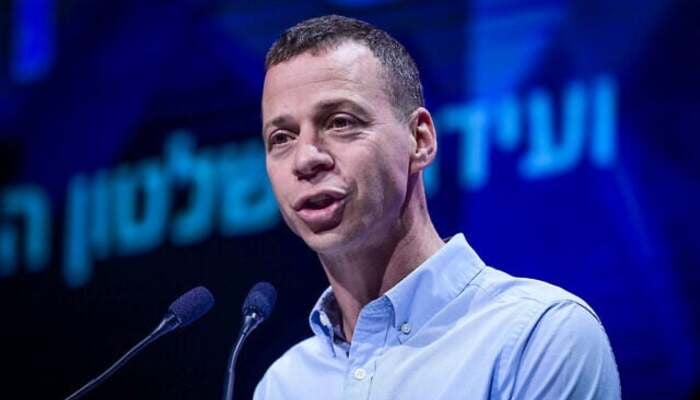
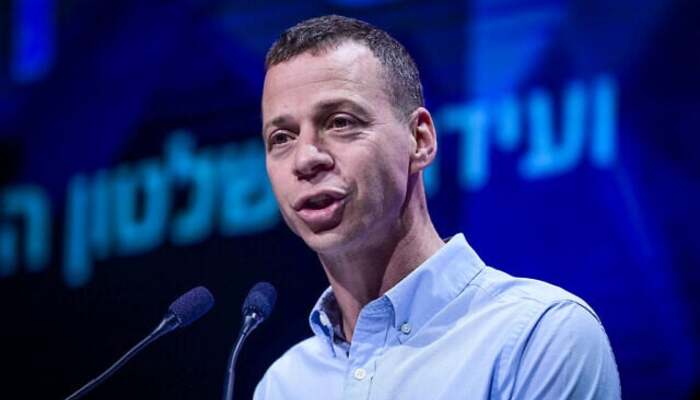
Israeli journalist Amit Segal has admitted he was the first to report that a US airman in Iran had been rescued, in a rare public confession that comes as US President Donald Trump threatens to force the reporter behind the disclosure to reveal their source or face jail.
According to Newsweek, Segal confirmed that he broke the story based on information from his sources, but said he would not reveal who provided it.
“I will safeguard my sources at all costs,” Segal said, highlighting the pressure journalists can face when reporting on sensitive military developments.
The report emerged in the aftermath of a high-stakes US military operation after an F-15E Strike Eagle was shot down over southwestern Iran on April 3. One of the two officers onboard was rescued soon after the crash, while efforts to recover the second continued for two days, fuelling concern in military and diplomatic circles.
Against that backdrop, Trump on Monday sharply escalated his criticism of the press, saying he would demand that the journalist who first reported the rescue identify how they obtained the information.
Trump said the disclosure had endangered the ongoing mission to recover the second airman, although that officer was later also rescued safely.
“We didn’t talk about the first one for an hour. Then somebody leaked something, which, we will hopefully find that leaker. We’re looking very hard to find that leaker,” Trump told a White House press conference.
“We’re going to go to the media company that released it, and we’re going to say, ‘National security, give it up or go to jail'”.
It was not immediately clear which specific media outlet or reporter Trump was referring to. Multiple news organisations, including The New York Times, CBS News and Axios, reported within a short span that one of the two airmen had been recovered by US rescue forces after the fighter jet was brought down over Iran on Friday.
The White House did not immediately respond when asked which journalist Trump was threatening.
Trump’s remarks marked a significant intensification of his administration’s attacks on the media.
In recent weeks, he has privately complained to aides that coverage of the US-Israeli war on Iran has been overly negative, while he and his allies have also publicly criticised several news organisations over their reporting on the conflict.
The pressure on broadcasters has also grown. Last month, Federal Communications Commission Chairman Brendan Carr wrote on X that broadcasters airing “fake news” had an opportunity to “correct course before their licence renewals come up”.
His post was accompanied by a screenshot of a Truth Social post by Trump, in which the president claimed that “Lowlife ‘Papers’ and Media actually want us to lose the War.”
The war in the Middle East will lead to higher inflation and slower global growth, the head of the International Monetary Fund (IMF) told Reuters on Monday, ahead of a forecast for the world economy planned by the global lender for next week.
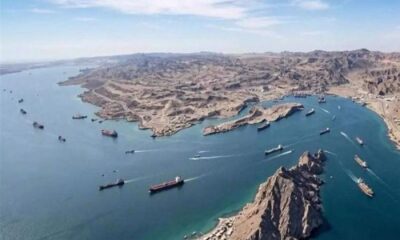
The war has triggered the worst-ever disruption in global energy supply, with millions of barrels of oil production shuttered due to Iran’s effective blockage of the Strait of Hormuz, crucial for shipping one-fifth of the world’s oil and gas.
Even if the conflict is swiftly resolved, the IMF is set to reduce its forecast for economic growth and bump up its outlook for inflation, Kristalina Georgieva, managing director of the IMF, said.
The war is expected to dominate discussions among finance officials from around the world at next week’s spring meetings of the IMF and World Bank in Washington.
The Fund is expected to release a range of scenarios in its upcoming World Economic Outlook due on April 14.
It signalled a possible downgrade in a March 30 blog post, citing the asymmetric shock of the war and tighter financial conditions. Without the war, Georgieva said the IMF had expected a small upgrade in its projection for global growth of 3.3% in 2026 and 3.2% in 2027 as economies continue to recover from the pandemic.
“Instead, all roads now lead to higher prices and slower growth,” said Georgieva, who will preview the spring meetings in a speech on Thursday. World Bank President Ajay Banga will present his view at an Atlantic Council event on Tuesday.
“We are in a world of elevated uncertainty,” the IMF chief said, citing geopolitical tensions, technological advancements, climate shocks and demographic shifts. “All of this means that after we recover from this shock, we need to keep our eyes open for the next one.”
The war has shrunk global oil supply by 13%, Georgieva said, with the impact rippling through oil and gas shipments and into related supply chains such as helium and fertilisers.
Even a rapid end to hostilities and a fairly rapid recovery will result in a “relatively small” downward revision of the growth forecast and an upward revision of its inflation forecast, she said. If the war is protracted, the effect on inflation and growth will be greater.
Poor countries will be hit harder
Poor, vulnerable countries with no energy reserves will be hardest hit, Georgieva added, noting that many countries had little to no fiscal space to help their populations weather the price increases caused by the war, which in turn also increased the prospects of social unrest.
Georgieva said some countries had already asked for funding help, but did not name them. She said the IMF could augment some existing lending programs to meet countries’ needs. Eighty-five percent of the IMF’s members are energy importers.
Broad energy subsidies were not the answer, she said, urging policymakers to avoid government payments that could further inflame inflationary pressures.
The impact has been asymmetric, hitting energy-importing countries hardest, but even energy exporters such as Qatar are feeling the effect from Iranian strikes against their production facilities.
Qatar expects it will take three to five years to restore 17% of its natural gas production because of the damage, Georgieva said, while the International Energy Agency has reported 72 energy facilities have been damaged in the war, one-third of which have suffered significant damage.
“Even if the war is to stop today, there would be a lingering negative impact to the rest of the world,” she said.
Food security a concern
After the US and Israel attacked on February 28, Iran effectively closed the Strait of Hormuz, sending the price of crude oil and liquefied natural gas sharply higher.
The international Brent crude benchmark settled near $110 on Monday, with cash benchmarks sourced to the Middle East at a substantial premium to that price.
The heads of the IMF, IEA and World Bank said last week they would form a coordinated effort to assess the energy and economic effects of the war.
Georgieva said the IMF was also engaging with the United Nations’ World Food Programme and Food and Agriculture Organisation on food security.
The World Food Programme said in mid-March that millions of people will face acute hunger if the war continues into June. Georgieva said the IMF did not see a food crisis yet, but that could happen if the delivery of fertilisers were impaired.


Middle East tensions hit Dubai imports, drive up computer prices

BKMEA urges Bangladesh govt to change amended labour law

Duchess Sophie health suffers after learning secrets amid Edward-Andrew bond

-
Uncategorized1 week ago
[CinePlex360] Please moderate: “Further tariff
-
Uncategorized5 days ago
[CinePlex360] Please moderate: “Trump signals p
-

 Tech4 days ago
Our Favorite iPad Is $50 Off
-

 Entertainment4 days ago
Joe Jonas shares candid glimpse into parenthood with Sophie Turner
-
 Fashion6 days ago
China’s Anta Sports posts record $11.62 bn revenue in 2025
-
 Business6 days ago
UPI transactions hit record Rs 29.53 lakh crore in March; volumes cross 22.6 billion – The Times of India
-
 Politics1 week ago
Trump considers asking Arab allies to help to pay for Iran war
-
 Politics4 days ago
Iran can sustain Strait of Hormuz closure for years, will cut US military logistics: Official