

Business
Automakers largely sit out 2026 Super Bowl advertising amid industry uncertainty


Volkswagen is one of three automakers expected to advertise during the Super Bowl in 2026.
Courtesy VW
DETROIT — Automakers are largely sitting on the advertising sidelines during this year’s Super Bowl amid uncertainty in the U.S. automotive industry involving sales, tariffs and regulations.
Carmakers — historically major buyers of ads during the big game — have been inconsistent with advertising during the Super Bowl in recent years, with only a handful putting out spots each year.
“It’s definitely been on the decline,” said Sean Muller, CEO of ad data company iSpot. “Autos are tightening their belts, and they’re probably pulling back on their budgets, and certainly that’s reflected. I think the Super Bowl is a good barometer for all of this.”
Automakers accounted for 40% of Super Bowl ad minutes in 2012, but dropped all the way to 7% by 2025, according to iSpot. Only three automakers are expected to air ads, totaling roughly two minutes, during this year’s game.
Tim Mahoney, a longtime automotive marketing executive, said it’s a balancing act when it comes to Super Bowl advertising. He said a company has to have the right product, ad campaign, and, of course, capital to stand out and get a return on its investment.
“Super Bowl is just a massive platform, but it has gotten so expensive,” Mahoney, who worked for GM, VW, Subaru and Porsche, told CNBC. “There are sometimes interesting ways to navigate around it. … Adjacencies can be smart.”
During Mahoney’s tenure, Subaru became the presenting sponsor of Animal Planet’s Puppy Bowl and GM’s Chevrolet brand “blacked out” TV screens just ahead of the Super Bowl for an ad for its in-vehicle Wi-Fi in 2015.
Outside of the Super Bowl, automakers have increased sports advertising and embraced more streaming and regional advertising over national reach, according to iSpot.
“They’re not cutting back in live sports,” Muller said, citing iSpot data that automakers now represent roughly 60% of spend on live sports.
Autos out
Automotive executives who spoke to CNBC about not advertising during this year’s Super Bowl said they were deterred due to the cost — $8 million on average for a 30-second ad — and felt their ad dollars would be better spent elsewhere.
“We are going to really spread our efforts, so money and creativity, over a year,” said Stellantis Chief Marketing Officer Olivier Francois, who is well known for past Super Bowl ads. “There’s no need for a peak or something in February.”
Stellantis, which is in the midst of a company turnaround plan, will focus this year on the 250th anniversary of the U.S. as its major marketing push in addition to more business-oriented spending and a provocative social media campaign for Jeep featuring a singing fish it launched this week.
Nissan Motor, which last advertised during the Super Bowl in 2022, is also experimenting this year with parallel advertising.
The Japan-based automaker on Friday released a comedic, high-energy “Big Game” social media ad promoting a chips-and-dip holder for its Nissan Rogue SUV. The “Nissan Dip Seat” ad stars chef and “The Bear” actor Matty Matheson promoting the fictional product. It also promotes a sweepstakes to win one of the vehicles.
“One of the key things for us is that we wanted to kind of find a way that was more social in nature. It’s been a part of what our overall strategy has been this year,” Nissan U.S. CMO Allyson Witherspoon told CNBC.
Witherspoon declined to discuss the cost of the spot, but confirmed it was less than it would have spent to air a traditional Super Bowl ad.
Others, such as Honda Motor, will look to the Olympics as their major ad spending. Honda is sponsoring U.S. Olympic and Paralympic teams for the Winter Games in Milan this year as well as at the 2028 Summer Games in Los Angeles.
“Super Bowl is one moment in time. The Olympics has so many verticals you can dip into and tell these stories,” said Ed Beadle, who leads marketing for American Honda Motor.
The opening ceremony for the Winter Olympics took place on Friday in Milan. It also kicks off a month that Comcast’s NBCUniversal — which will be airing the Olympics, Super Bowl and NBA All-Star weekend — has coined “Legendary February.”
2026 ads
GM remains a wild card for this year’s game, as the only automaker to not prerelease its ad. The Detroit automaker is using the Super Bowl to launch its Cadillac F1 team, including revealing the look of its first livery car to a national audience.
The automaker last month showed a design prototype of the vehicle in Detroit, including at the city’s auto show, but it has not released any information about the commercial.
Toyota, the NFL’s official automotive partner, is expected to air two 30-second ads focused on family connections.
One called “Superhero Belt” shows a grandson and a grandfather switching roles over the years and telling each other to secure their seatbelts. The other features athletes including NFL wide receiver Puka Nacua meeting their younger selves.
Volkswagen’s ad resurrects the automaker’s well-known 1990s campaign for a new generation of customers, as part of a marketing drive called “The Great Invitation: Drivers Wanted.”
The new campaign, including a 30-second Super Bowl spot, features many of the automaker’s vehicles being driven around to House of Pain’s 1992 hit “Jump Around.”
— CNBC’s Lillian Rizzo contributed to this report.
Disclosure: CNBC parent Versant is carrying NBC Sports-produced Olympic coverage on its networks, including USA Network and CNBC.








Business
Noida International Airport inauguration: Delhi-NCR gets new airport – all you need to know – The Times of India
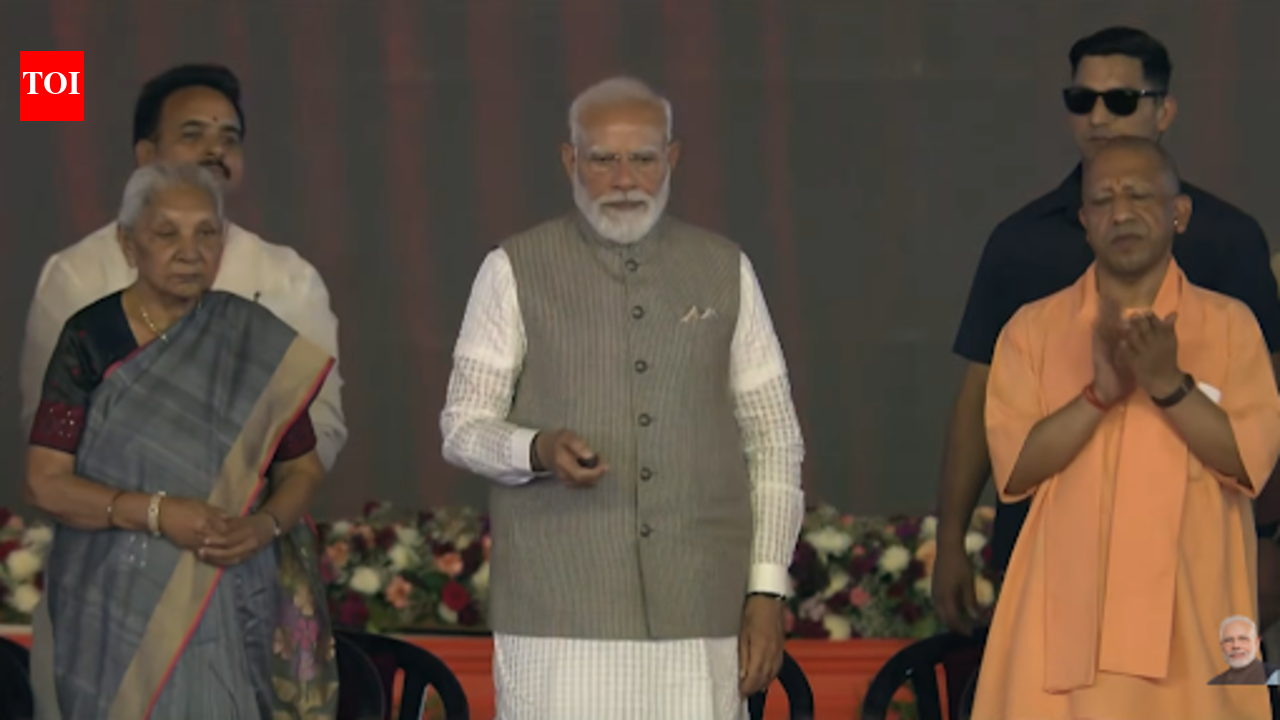
NEW DELHI: Prime Minister Narendra Modi on Saturday inaugurated Phase I of the Noida International Airport at Jewar in Uttar Pradesh, marking a significant milestone in India’s expanding aviation infrastructure.PM Modi was accompanied by Uttar Pradesh chief minister Yogi Adityanath and Governor Anandiben Patel.
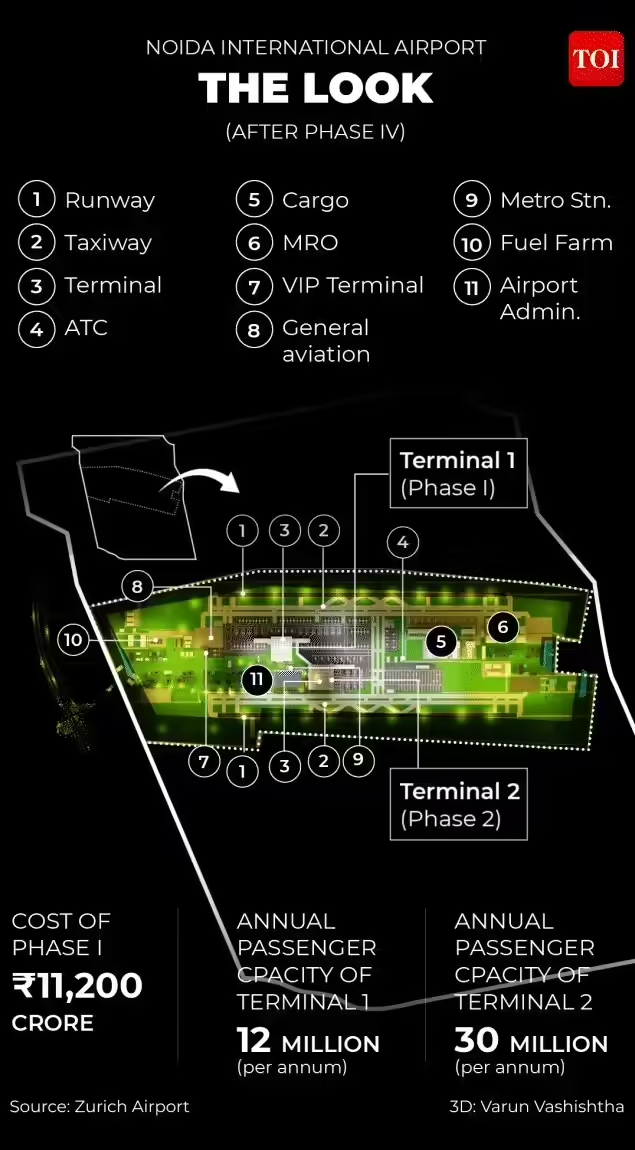
Developed at an investment of around Rs 11,200 crore under a Public–Private Partnership (PPP) model, the project is expected to enhance both regional and international connectivity for the National Capital Region (NCR).The airport is being positioned as a key addition to India’s aviation network, aimed at easing pressure on existing infrastructure while supporting the country’s ambition of becoming a global aviation hub.
Second international gateway for Delhi NCR
Noida International Airport has been developed as the second international gateway for Delhi NCR, complementing the existing Indira Gandhi International Airport, which currently handles the majority of the region’s air traffic.
.
With rising passenger demand and capacity constraints at IGI Airport, the new facility is expected to play a crucial role in distributing traffic more efficiently.Together, the two airports will function as an integrated aviation system, helping reduce congestion, improve connectivity, and enhance the region’s standing among leading global aviation hubs.
Phase I capacity and future expansion plans
Phase I of the airport is designed to handle 12 million passengers per annum (MPPA), providing immediate relief to the region’s growing air travel demand.The project has been planned with scalability in mind, with provisions to expand capacity to 70 million passengers annually in subsequent phases. This long-term vision reflects the government’s strategy to future-proof infrastructure and accommodate sustained growth in air travel.
Modern infrastructure and all-weather operations
The airport features a 3,900-metre runway capable of handling wide-body aircraft, making it suitable for both domestic and international long-haul operations.
.
Equipped with advanced navigation systems such as the Instrument Landing System (ILS) and modern airfield lighting, the facility is designed to support efficient, all-weather, round-the-clock operations. These features ensure operational reliability even under challenging weather conditions.
Cargo hub and logistics ecosystem
In addition to passenger services, the airport includes a comprehensive cargo ecosystem aimed at strengthening logistics and trade.The Multi-Modal Cargo Hub comprises an Integrated Cargo Terminal and dedicated logistics zones, with an initial handling capacity of over 2.5 lakh metric tonnes annually. This capacity is expected to expand significantly to around 18 lakh metric tonnes in the future, positioning the airport as a major cargo and logistics centre in North India.
Dedicated MRO facility to enhance efficiency
A key component of the airport’s infrastructure is a 40-acre Maintenance, Repair and Overhaul (MRO) facility.This dedicated facility is expected to improve operational efficiency by enabling airlines to service and maintain aircraft locally, reducing turnaround times and operational costs. It also strengthens India’s capabilities in aviation maintenance services.
Sustainability and future-ready design
Noida International Airport has been designed as a sustainable and future-ready infrastructure project, with a focus on achieving net-zero emissions.The project incorporates energy-efficient systems and environmentally responsible practices, aligning with India’s broader climate goals. The airport’s development reflects a growing emphasis on green infrastructure in large-scale projects.
Architecture inspired by Indian heritage
Blending modern infrastructure with cultural aesthetics, the airport’s architectural design draws inspiration from traditional Indian elements such as ghats and havelis.This approach aims to create a distinctive identity for the airport while offering passengers a sense of place rooted in Indian heritage.
Strategic location and multi-modal connectivity
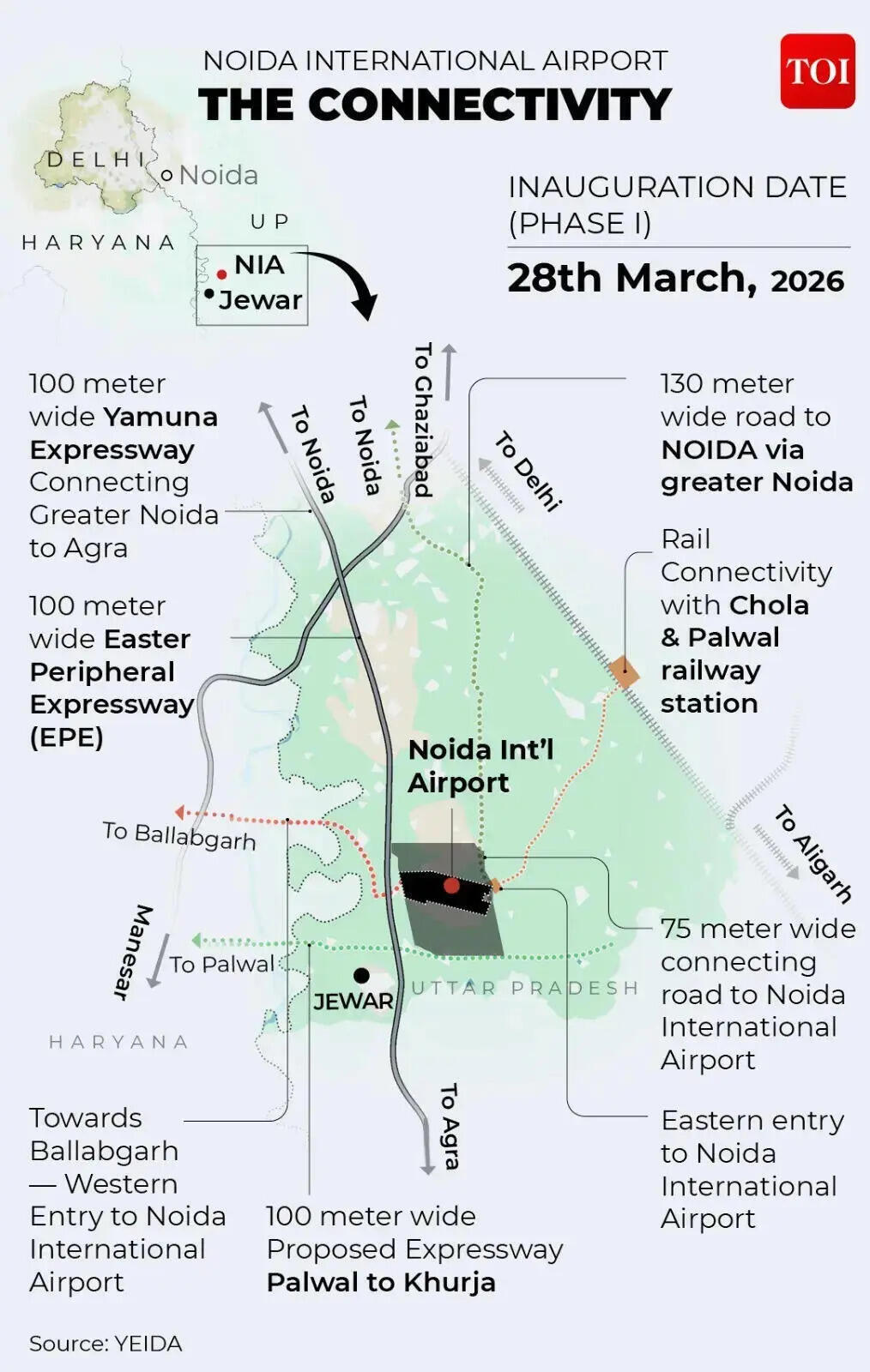
Strategically located along the Yamuna Expressway in Gautam Buddha Nagar district, the airport is planned as a multi-modal transport hub.It will feature seamless integration with road, rail, metro and regional transit systems, ensuring smooth connectivity for passengers and cargo. This connectivity is expected to significantly improve accessibility for travellers across Delhi NCR and neighbouring regions.
Boost to India’s aviation ambitions
The inauguration of Phase I of Noida International Airport is being seen as a major step in strengthening India’s aviation ecosystem.By expanding capacity, improving connectivity, and integrating modern infrastructure with sustainability, the project is expected to play a key role in positioning Delhi NCR as a major global aviation hub while supporting economic growth and regional development
Business
Iran permits 2 Pakistani cargo ships to pass through Strait of Hormuz | The Express Tribune
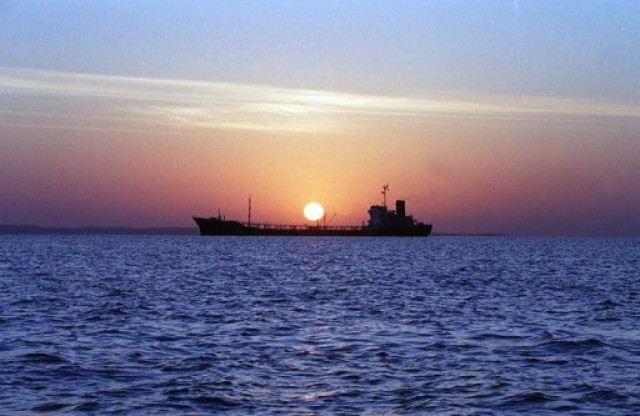
Iran has permitted two Pakistani cargo ships to transit through the Strait of Hormuz, sources in the Ministry of Maritime Affairs confirmed on Saturday.
The vessels, Multan and P-Akili, which were previously held after Iranian forces took control of the strait — a key global oil supply route — have now crossed and are en route to Karachi. They are expected to dock at Karachi port on March 31, a source familiar with the matter said.
Multan is a general cargo ship, while P-Akili is carrying over 80 million litres of crude oil. Sources added that Iranian authorities not only allowed the vessels to pass but also provided an escort until they cleared the strait’s flashpoint line.
Read: Global poll says Iran war leaves US increasingly isolated internationally
This move comes amid ongoing mediation efforts by Islamabad, in coordination with Turkiye and Egypt, to curb the escalating conflict in the Middle East.
It is the second time Tehran has permitted a Pakistani ship to pass through the Strait of Hormuz since the conflict began on February 28. Previously, a Pakistani oil tanker transited the strait on March 16.
The Middle East region remains on high alert following the joint US-Israel offensive on Iran that began on February 28, which has resulted in over 1,900 deaths, including then-Supreme Leader Ali Khamenei.
Tehran has retaliated with drone and missile strikes targeting Israel, Jordan, Iraq, and Gulf countries hosting US military assets, causing casualties, infrastructure damage, and disruption to global markets and aviation.

Butter, chocolate, coffee and milk have all seen prices rocket. Tracing back through the story of one particular supermarket staple begins to explain why
Source link


Transfer rumors, news: Salah eyes Roma after Liverpool exit

NHL playoff watch: Guide to all 15 games on Showdown Saturday

I Tested Garmin Watches for a Decade While Hiking, Biking, and Climbing. Here’s What You Should Buy

-
 Business1 week ago
Flipkart group CFO to leave co amid IPO plans – The Times of India
-

 Fashion1 week ago
China’s textile & apparel exports surge 17% to $50 bn in Jan-Feb 2026
-
 Business1 week ago
Video: The Effects of High Oil Prices
-

 Sports1 week ago
Rating Adidas’ 2026 World Cup away shirts: Argentina, Spain, Mexico and more
-

 Sports1 week ago
American Conference Commissioner Tim Pernetti thanks Trump for Army-Navy game executive order
-
Tech1 week ago
The Corsair 4000D RS PC Case Keeps Your System Cool
-

 Tech1 week ago
‘Uncanny Valley’: Nvidia’s ‘Super Bowl of AI,’ Tesla Disappoints, and Meta’s VR Metaverse ‘Shutdown’
-

 Tech1 week ago
Gamers Hate Nvidia’s DLSS 5. Developers Aren’t Crazy About It, Either