

Politics
Bangladesh begins exhuming mass grave from 2024 uprising

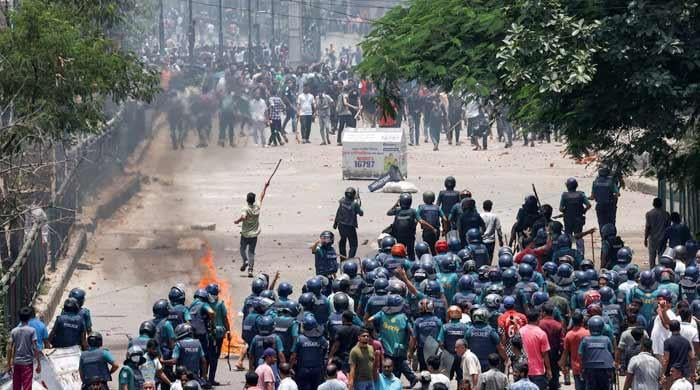
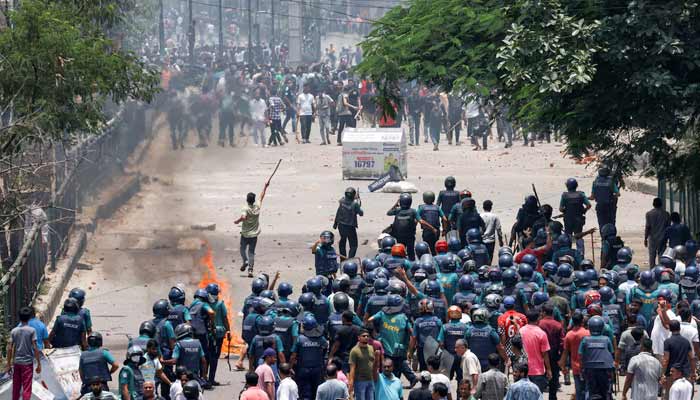
- UN says up to 1,400 people were killed in crackdowns.
- CID says mass grave held roughly 114 bodies.
- Exhumed bodies to be given post-mortem examinations.
Bangladeshi police began exhuming on Sunday a mass grave believed to contain around 114 unidentified victims of a mass uprising that toppled autocratic former prime minister Sheikh Hasina last year.
The UN-supported effort is being advised by Argentine forensic anthropologist Luis Fondebrider, who has led recovery and identification missions at mass graves worldwide for decades.
The bodies were buried at the Rayer bazar Graveyard in Dhaka by the volunteer group Anjuman Mufidul Islam, which said it handled 80 unclaimed bodies in July and another 34 in August 2024 — all people reported to have been killed during weeks of deadly protests.
The United Nations says up to 1,400 people were killed in crackdowns as Hasina attempted to cling to power — deaths that formed part of her conviction last month for crimes against humanity.
Criminal Investigation Department (CID) chief Md Sibgat Ullah said investigators believed the mass grave held roughly 114 bodies, but the exact number would only be known once exhumations were complete.
“We can only confirm once we dig the graves and exhume the bodies,” Ullah told reporters.
‘Searched for him’
Among those hoping for answers is Mohammed Nabil, who is searching for the remains of his brother Sohel Rana, 28, who vanished in July 2024.
“We searched for him everywhere,” Nabil told AFP.
He said his family first suspected Rana’s death after seeing a Facebook video, then recognised his clothing — blue T-shirt and black trousers — in a photograph taken by burial volunteers.
Exhumed bodies will be given post-mortem examinations and DNA testing. The process is expected to take several weeks to complete.
“It’s been more than a year, so it won’t be possible to extract DNA from the soft tissues,” senior police officer Abu Taleb told AFP. “Working with bones would be more time-consuming.”
Forensic experts from four Dhaka medical colleges are part of the team, with Fondebrider brought in to offer support as part of an agreement with the UN rights body the OHCHR.
“The process is complex and unique,” Fondebrider told reporters. “We will guarantee that international standards will be followed.”
Fondebrider previously headed the Argentine Forensic Anthropology Team, founded in 1984 to investigate the tens of thousands who disappeared during Argentina’s former military dictatorship.
Authorities say the exhumed bodies will be reburied in accordance with religious rites and their families’ wishes.
Hasina, convicted in absentia last month and sentenced to death, remains in self-imposed exile in India.
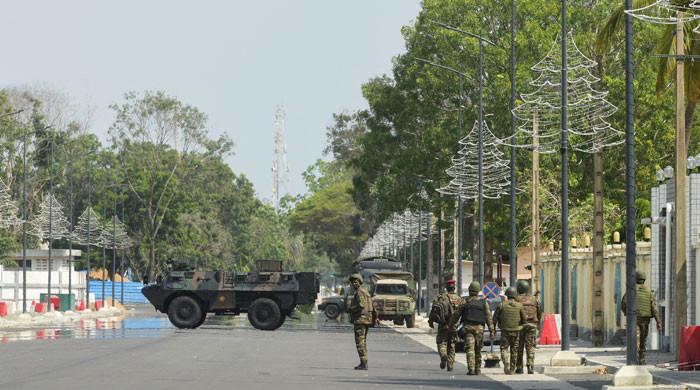
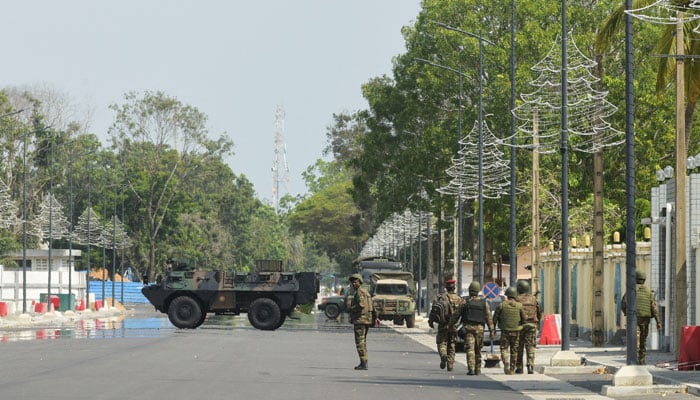
- President Talon says situation under control.
- A group of soldiers earlier claimed to have seized power.
- Coup attempt comes ahead of presidential elections.
COTONOU: Benin President Patrice Talon said on Sunday that the West African nation’s government and armed forces had thwarted a coup attempt by a group of soldiers and vowed to punish them.
Talon’s announcement on Sunday evening came about 12 hours after gunfire first rang out in several neighbourhoods of Cotonou, the country’s biggest city and commercial hub, and soldiers went on state television to say they had removed Talon from power.
Forces loyal to Talon “stood firm, recaptured our positions, and cleared the last pockets of resistance held by the mutineers,” Talon said in his own televised statement.
“This commitment and mobilisation enabled us to defeat these adventurers and to prevent the worst for our country… This treachery will not go unpunished.”
Talon said his thoughts were with victims of the coup attempt as well as with a number of people held by the fleeing mutineers, without giving details. Reuters was unable to verify if there were casualties or hostages.
The unrest was the latest threat to democratic rule in the region, where militaries have in recent years seized power in Benin’s neighbours Niger and Burkina Faso, as well as in Mali, Guinea and, only last month, Guinea-Bissau.
But it was an unexpected development in Benin, where the last successful coup took place in 1972.
A government spokesperson, Wilfried Leandre Houngbedji, said that 14 people had been arrested in connection with the coup attempt as of Sunday afternoon, without providing details.
At the request of Talon’s government, Nigeria sent air force fighter jets to take over Benin’s airspace to help dislodge the coup plotters from the state television network and a military camp, a statement from Nigerian President Bola Tinubu’s office said.
Nigeria has also sent ground troops, the statement said.
West Africa’s regional bloc ECOWAS and the African Union condemned the coup attempt.
In a subsequent statement, ECOWAS said it had ordered the immediate deployment of elements of its standby force to Benin, including troops from Nigeria, Sierra Leone, Ivory Coast and Ghana.
Gunfire and explosions rettle biggest city
At least eight soldiers, several holding weapons, had appeared on state television on Sunday morning to announce that a military committee led by Colonel Tigri Pascal was dissolving national institutions, suspending the constitution and closing air, land and maritime borders.
“The army solemnly commits to give the Beninese people the hope of a truly new era, where fraternity, justice and work prevail,” the soldiers’ statement said.
The soldiers mentioned the deteriorating security situation in northern Benin “coupled with the disregard and neglect of our fallen brothers-in-arms.”
Talon has been credited with reviving the economy since taking office in 2016, but the country has also seen an increase in attacks by jihadist militants that have wreaked havoc in Mali and Burkina Faso.
Foreign Minister Olushegun Adjadi Bakari told Reuters that the soldiers had only managed to briefly take control of the state TV network.
Gunfire could be heard early Sunday in several neighbourhoods of Cotonou as residents were trying to make their way to church.
The French embassy said gunfire had been reported near Talon’s residence in Cotonou and urged citizens to stay at home.
By early afternoon, police were deployed at major intersections in the city centre.
Narcisse, a furniture salesman in Cotonou who gave only his first name for safety reasons, said he first heard gunshots at 8 a.m. (0700 GMT) and soon saw police officers speeding past.
“I got scared and brought my sofas inside and closed. It’s a bit calmer now, which is why I reopened,” he said.
More gunfire and explosions were heard in Cotonou early Sunday evening, witnesses said, but the sounds had stopped before Talon’s statement was broadcast.
Election on the horizon
Benin is preparing for a presidential election in April that is expected to mark the end of Talon’s tenure.
Last month, Benin adopted a new constitution creating a Senate and extending the presidential mandate from five to seven years, in what critics said was a power grab by the ruling coalition, which has nominated Finance Minister Romuald Wadagni to be its candidate.
The opposition Democrats party, founded by Talon’s predecessor Thomas Boni Yayi, saw its proposed candidate rejected because of what a court ruled was insufficient backing from lawmakers.
The deteriorating security situation in the north was likely a factor behind the soldiers’ actions, said Nina Wilen, director for the Africa Programme at the Egmont Institute for International Relations in Belgium.
Benin has been the hardest hit among coastal West African states by jihadist groups that have made major gains in the central Sahel, she said, a fact underscored by major attacks in January and April that killed dozens of soldiers.
Nevertheless, she said Sunday’s coup attempt was a surprise given Benin’s relative stability following a spate of coups and coup attempts in the first decades after independence from France in 1960.
“No coups in 50 years? That’s a major feat for a country in West Africa,” she said.
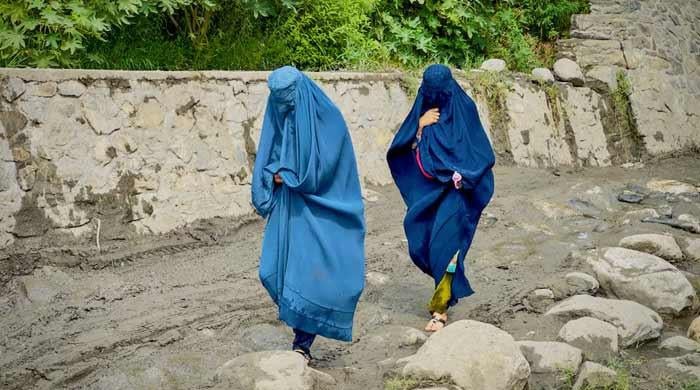
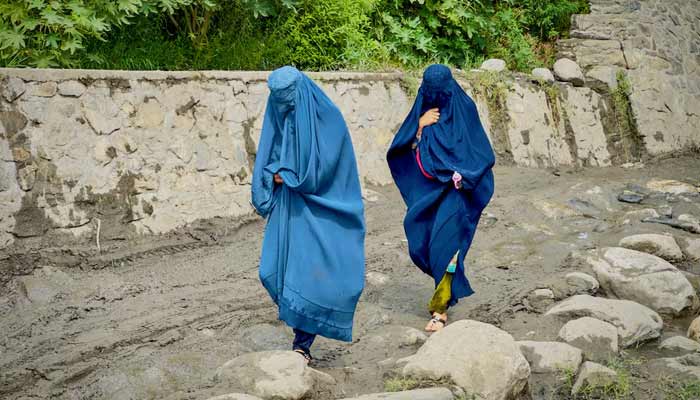
The United Nations called on the Taliban authorities on Sunday to lift its ban on Afghan women working in its offices, saying the restriction puts “life-saving services” at risk.
Since the Taliban regained power in 2021, Afghan women have been barred from doing most jobs, visiting parks and beauty salons, and attending school beyond the age of 12.
In September, the Taliban authorities began prohibiting women staff members from entering UN offices.
“We call for the ban on Afghan women staff and contractors from entering United Nations premises to be reversed, and for their safe access to offices and the field,” Susan Ferguson, the special representative of the UN’s women’s agency in Afghanistan, said in a statement.
“The longer these restrictions remain in place, the greater the risk to these life-saving services,” Ferguson said, adding that they violated the UN’s principles of human rights and equality.
The statement did not say how many staff were affected, but UN sources indicated that several hundred women were facing the ban.
Staff have been working remotely for the past three months, notably providing assistance to the victims of deadly earthquakes and to Afghan migrants deported from neighbouring Pakistan and Iran, Ferguson said.
Describing their work as “indispensable”, she said: “Only through their presence can we reach women and girls safely and provide culturally appropriate assistance.”
The Taliban authorities did not immediately respond to an AFP request for comment.
In September, the UN’s refugee agency suspended cash aid to returned Afghan migrants, citing the impossibility of interviewing and collecting information on more than 50% of returnees who were women.
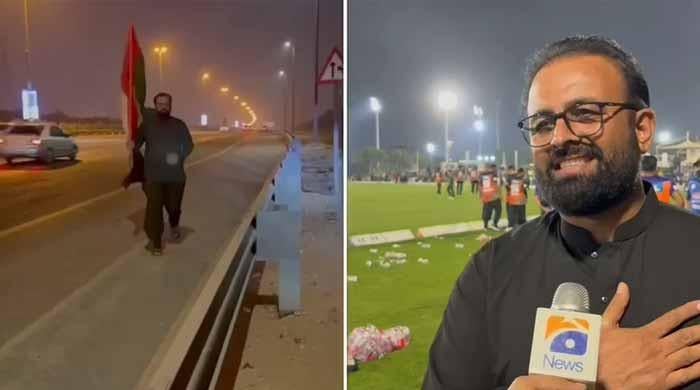
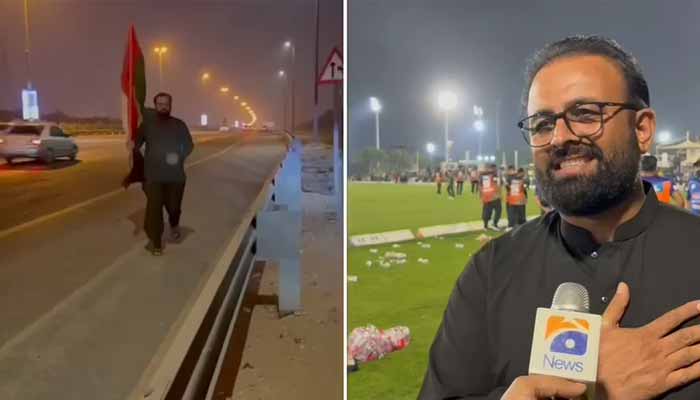
DUBAI: A Pakistani expatriate, Tahir Ameen, has drawn widespread praise on social media after risking his life to pick up a fallen United Arab Emirates flag from Sheikh Mohammed bin Zayed Road, one of Dubai’s busiest highways.
Witnesses said Tahir Ameen stopped amid fast-moving traffic, where vehicles were travelling at speeds of up to 140 kilometres per hour, to retrieve the flag. He was later seen handling the flag with respect before moving to safety.
The incident went viral on social media, with many Emirati users praising his actions as a gesture of respect and loyalty towards the country.
Speaking to Geo News, Tahir Ameen said he came to Dubai 18 years ago and started his career as a cleaner before working his way up to a managerial position.
“Dubai has given me a lot, and as Pakistanis living here, it is our responsibility to respect this country and its flag,” he said.

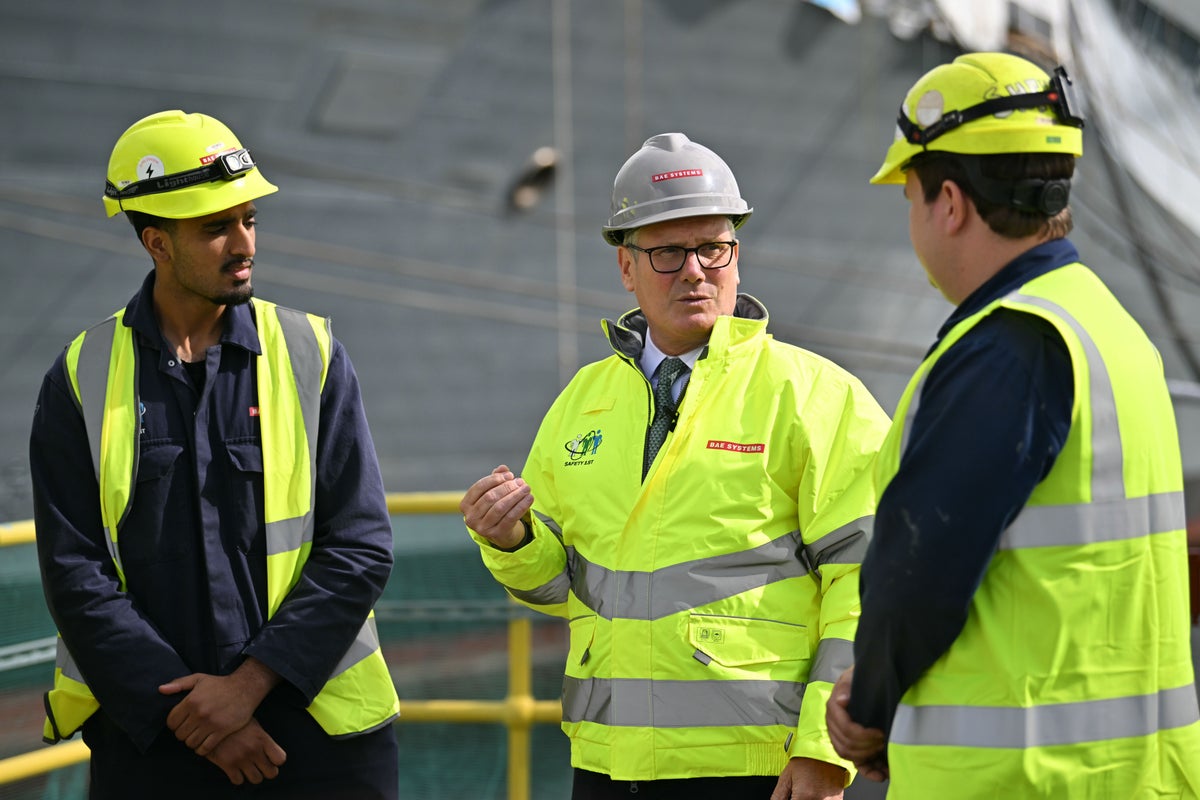
Ministers promise 50,000 new apprenticeships in bid to tackle youth unemployment
College Football Playoff bracket is set: Miami gets final spot over Notre Dame

Daniel Kaluuya shares plans for Spider-Punk amid studio shakeup

-

 Tech1 week ago
Get Your Steps In From Your Home Office With This Walking Pad—On Sale This Week
-

 Sports7 days ago
India Triumphs Over South Africa in First ODI Thanks to Kohli’s Heroics – SUCH TV
-

 Entertainment7 days ago
Sadie Sink talks about the future of Max in ‘Stranger Things’
-

 Fashion7 days ago
Results are in: US Black Friday store visits down, e-visits up, apparel shines
-

 Politics7 days ago
Elon Musk reveals partner’s half-Indian roots, son’s middle name ‘Sekhar’
-

 Tech7 days ago
Prague’s City Center Sparkles, Buzzes, and Burns at the Signal Festival
-

 Sports7 days ago
Broncos secure thrilling OT victory over Commanders behind clutch performances
-

 Sports7 days ago
F1 set for final-race showdown as Verstappen exploits McLaren blunder | The Express Tribune