

Politics
Bangladesh begins exhuming mass grave from 2024 uprising

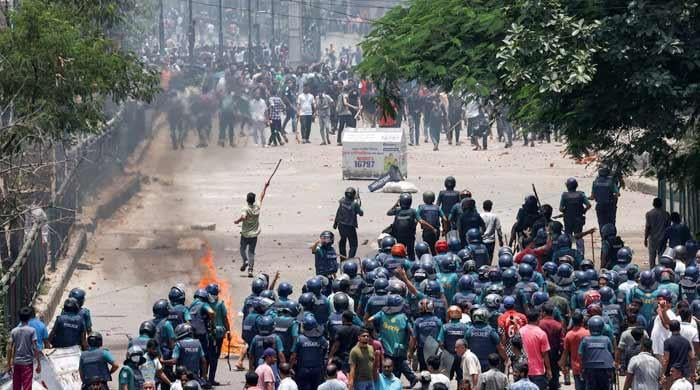
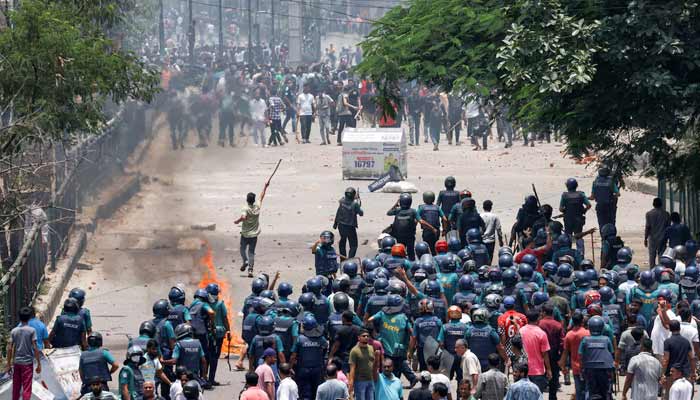
- UN says up to 1,400 people were killed in crackdowns.
- CID says mass grave held roughly 114 bodies.
- Exhumed bodies to be given post-mortem examinations.
Bangladeshi police began exhuming on Sunday a mass grave believed to contain around 114 unidentified victims of a mass uprising that toppled autocratic former prime minister Sheikh Hasina last year.
The UN-supported effort is being advised by Argentine forensic anthropologist Luis Fondebrider, who has led recovery and identification missions at mass graves worldwide for decades.
The bodies were buried at the Rayer bazar Graveyard in Dhaka by the volunteer group Anjuman Mufidul Islam, which said it handled 80 unclaimed bodies in July and another 34 in August 2024 — all people reported to have been killed during weeks of deadly protests.
The United Nations says up to 1,400 people were killed in crackdowns as Hasina attempted to cling to power — deaths that formed part of her conviction last month for crimes against humanity.
Criminal Investigation Department (CID) chief Md Sibgat Ullah said investigators believed the mass grave held roughly 114 bodies, but the exact number would only be known once exhumations were complete.
“We can only confirm once we dig the graves and exhume the bodies,” Ullah told reporters.
‘Searched for him’
Among those hoping for answers is Mohammed Nabil, who is searching for the remains of his brother Sohel Rana, 28, who vanished in July 2024.
“We searched for him everywhere,” Nabil told AFP.
He said his family first suspected Rana’s death after seeing a Facebook video, then recognised his clothing — blue T-shirt and black trousers — in a photograph taken by burial volunteers.
Exhumed bodies will be given post-mortem examinations and DNA testing. The process is expected to take several weeks to complete.
“It’s been more than a year, so it won’t be possible to extract DNA from the soft tissues,” senior police officer Abu Taleb told AFP. “Working with bones would be more time-consuming.”
Forensic experts from four Dhaka medical colleges are part of the team, with Fondebrider brought in to offer support as part of an agreement with the UN rights body the OHCHR.
“The process is complex and unique,” Fondebrider told reporters. “We will guarantee that international standards will be followed.”
Fondebrider previously headed the Argentine Forensic Anthropology Team, founded in 1984 to investigate the tens of thousands who disappeared during Argentina’s former military dictatorship.
Authorities say the exhumed bodies will be reburied in accordance with religious rites and their families’ wishes.
Hasina, convicted in absentia last month and sentenced to death, remains in self-imposed exile in India.
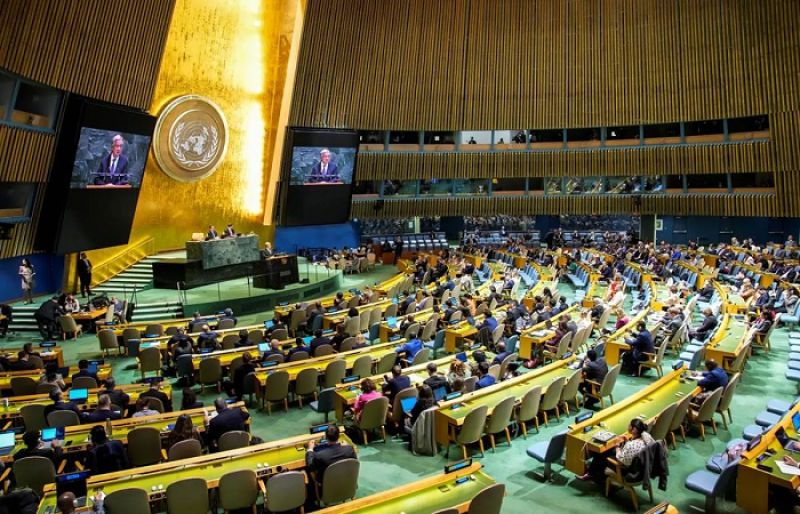
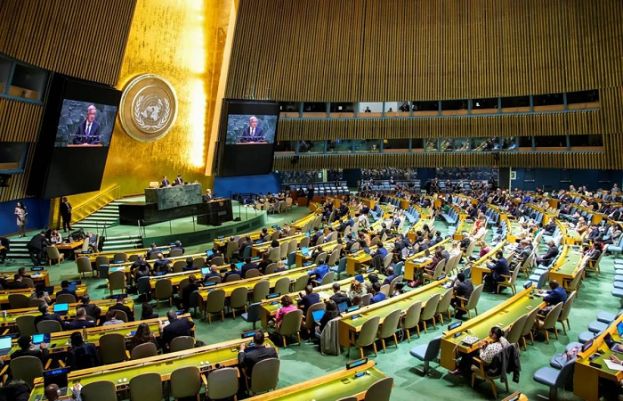
Signatories of the landmark nuclear non-proliferation treaty began a meeting Monday at the United Nations as fears of a renewed arms race escalate, with atomic powers again at loggerheads over safeguards.
In 2022, during the last review of the treaty considered the cornerstone of non-proliferation, UN Secretary-General Antonio Guterres warned humanity was “one misunderstanding, one miscalculation away from nuclear annihilation.”
On Monday he warned “the drivers” of nuclear weapons proliferation were accelerating.
“For too long, the treaty has been eroding. Commitments remain unfulfilled. Trust and credibility are wearing thin. The drivers of proliferation are accelerating. We need to breathe life into the treaty once more,” Guterres said in opening remarks.
With global geopolitical friction only heightened since the last meeting, it was unclear what the gathering at UN headquarters could achieve.
France’s Foreign Minister Jean-Noel Barrot told signatories that “never has the risk of nuclear proliferation been so high, and the threat posed by Iran’s and North Korea’s programs is intolerable for each and every state party to this treaty.”
Tempering expectations, Do Hung Viet, Vietnam’s UN ambassador and president of the conference, said “we should not expect this conference to resolve the underlying strategic tensions of our time.”
“But a balanced outcome that reaffirms core commitments and set out practical steps forward would strengthen the integrity of the NPT,” he said.
“The success or failure of this conference will have implications way beyond these halls,” Viet added. “The prospects of a new nuclear arms race are looming over us.”
The nuclear non-proliferation treaty (NPT), signed by almost all countries on the planet — with notable exceptions including Israel, India and Pakistan — aims to prevent the spread of nuclear weapons, promote complete disarmament, and encourage cooperation on civilian nuclear projects.
The nine nuclear-armed states — Russia, the United States, France, the United Kingdom, China, India, Pakistan, Israel and North Korea — possessed 12,241 nuclear warheads in January 2025, the Stockholm International Peace Research Institute (SIPRI) reported.
The US and Russia hold nearly 90 percent of nuclear weapons globally and have carried out major programs to modernize them in recent years, according to SIPRI.
China has also rapidly increased its nuclear stockpile, SIPRI said, with the G7 raising the alarm Friday over Moscow and Beijing boosting their nuclear capabilities.
US President Donald Trump has indicated his intention to conduct new nuclear tests, accusing others of doing so clandestinely.
In March, French President Emmanuel Macron announced a dramatic shift in nuclear deterrence, notably an increase in the atomic arsenal, currently numbering 290 warheads.
International Atomic Energy Agency chief Rafael Grossi, just returned from 40th anniversary events at Chernobyl to mark the nuclear disaster there, said “there is a growing perception that perhaps having nuclear weapons could be good for national security.”
“Nothing is further from the truth,” he said.
– ‘Affront’ to NPT –
“It is obvious that trust is eroding, both inside and outside the NPT,” Seth Shelden of the International Campaign to Abolish Nuclear Weapons, a Nobel Peace Prize laureate, told AFP.
He questioned the likely outcome of the four-week summit.
Decisions on the NPT require agreement by consensus, with the previous two conferences failing to adopt final political declarations.
In 2015, the deadlock was largely due to opposition by Israel’s arch-ally Washington to creation of a nuclear-weapon-free zone in the Middle East.
A 2022 impasse was due mainly to Russian opposition to references to Ukraine’s nuclear power plant at Zaporizhzhia, occupied by Moscow.
This year’s summit could hit any number of stumbling blocks.
The ongoing war in Ukraine, Iran’s nuclear program and the war there, proliferation fears and Pyongyang’s developing arsenal could all be deal-breakers.
The United States along with its allies Britain, the UAE and Australia spoke out at Iran’s appointment as a conference vice president.
Washington’s meeting envoy said conferring a leadership role on Tehran was an “affront” to countries that take the NPT “seriously.”
Artificial intelligence could be a prominent issue as some countries call for all sides to keep human control over nuclear weapons.
- US says nuclear issues must be dealt with from the outset.
- Trump unhappy with delaying deal on Iran nuclear programme.
- Iran demands blockade be lifted before any negotiations begin.
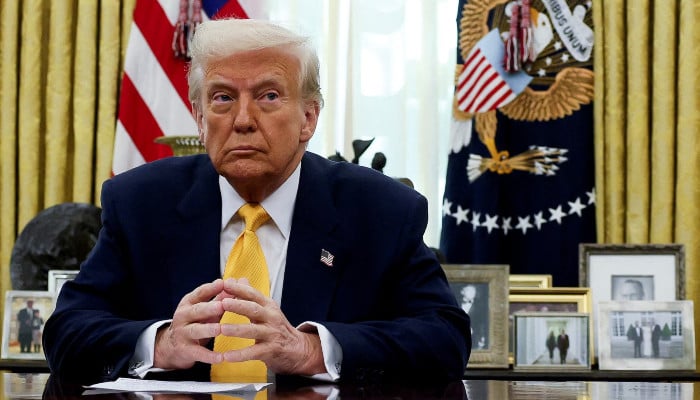
US President Donald Trump is unhappy with the latest Iranian proposal on resolving the two-month war, a US official said, dampening hopes for a resolution to the conflict that has disrupted energy supplies, fuelled inflation, and killed thousands.
Iran’s latest proposal would set aside discussion of Iran’s nuclear programme until the war is ended and disputes over shipping from the Gulf are resolved.
That is unlikely to satisfy the US, which says nuclear issues must be dealt with from the outset, and Trump was unhappy with Iran’s proposal for that reason, a US official briefed on the president’s Monday meeting with his advisers said, speaking on condition of anonymity.
White House spokeswoman Olivia Wales said the US “will not negotiate through the press” and has “been clear about our red lines” as the Trump administration looks to end the war against Iran it began in February alongside Israel.
A previous agreement in 2015 between Iran and multiple other countries including the US sharply curtailed Iran’s nuclear programme, which it has long maintained is for peaceful, civilian purposes. But that deal fell apart when Trump unilaterally withdrew from it in his first term in office.
Hopes of reviving peace efforts have receded since the US president scrapped a visit planned for last weekend by his special envoy Steve Witkoff and son-in-law Jared Kushner to Islamabad, where Iranian Foreign Minister Abbas Araqchi shuttled in and out twice during the weekend.
Araqchi also visited Oman and on Monday went to Russia, where he met President Vladimir Putin and received words of support from a longstanding ally.
Oil prices rise again
With the warring sides still seemingly far apart, oil prices resumed their upward march, extending gains in early Asia trade on Tuesday.
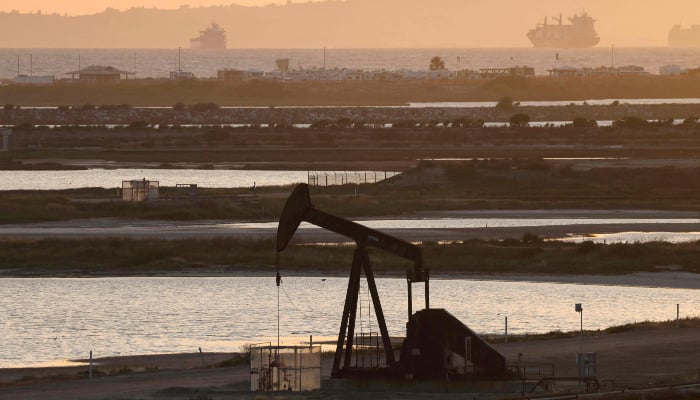
“For oil traders, it’s not the rhetoric that matters any more, but the actual physical flow of crude oil through the Strait of Hormuz, and right now, that flow remains constrained,” Fawad Razaqzada, market analyst at City Index and FOREX.com, said in a note.
At least six tankers loaded with Iranian oil have been forced back to Iran by the US blockade in recent days, ship-tracking data showed, underscoring the war’s impact on traffic.
Iran’s foreign ministry condemned US seizures of Iran-linked tankers as “outright legalisation of piracy and armed robbery on the high seas”, in a social media post.
Between 125 and 140 ships usually crossed in and out of the strait daily before the war, but only seven have done so in the past day, according to Kpler ship-tracking data and satellite analysis from SynMax, and none of them were carrying oil bound for the global market.
With his approval ratings falling, Trump faces domestic pressure to end a war for which he has given the US public shifting rationales.
Araqchi told reporters in Russia that Trump had requested negotiations because the US has not achieved any of its objectives.
Senior Iranian officials, speaking on condition of anonymity, told Reuters the proposal carried by Araqchi to Islamabad over the weekend envisioned talks in stages, with the nuclear issue to be set aside at the start.
A first step would require ending the US-Israeli war on Iran and providing guarantees that the US cannot start it up again. Then negotiators would resolve the US Navy’s blockade of Iran’s trade by sea and the fate of the Strait of Hormuz, which Iran aims to reopen under its control.
Only then would talks look at other issues, including the longstanding dispute over Iran’s nuclear programme, with Iran still seeking some kind of US acknowledgement of its right to enrich uranium.
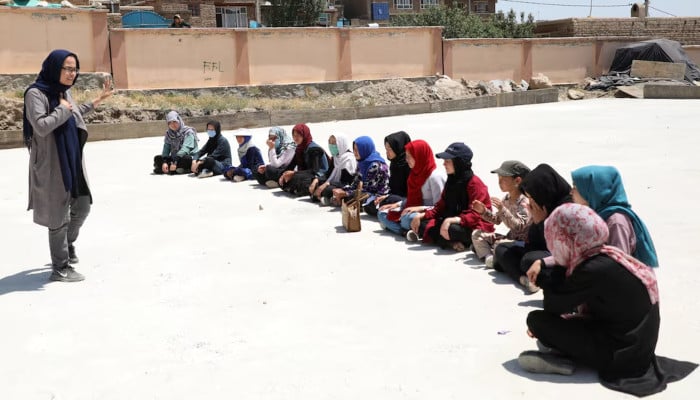
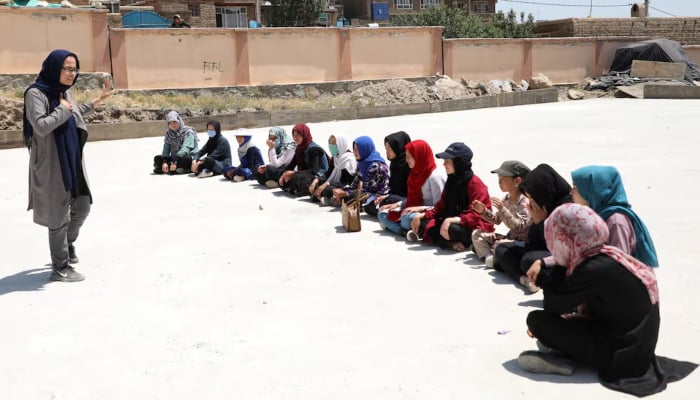
Afghanistan is at risk of losing more than 25,000 female teachers and health workers by 2030 if the Taliban-led country’s restrictions on girls’ education and women’s employment are not lifted, according to a new Unicef report released on Monday.
The Taliban has banned women from most public sector jobs and limited girls to receiving an education only until the age of 12.
These restrictions, according to the report, have already affected at least 1 million girls — a figure that is expected to double by 2030 if nothing changes. Unicef called on the Taliban to lift the ban that it imposed after returning to political power in 2021.
Unicef’s “The Cost of Inaction on Girls’ Education and Women’s Labour Force Participation in Afghanistan” report found a rapid decline in qualified women entering the teaching and healthcare sectors.
Up to 20,000 female teachers and 5,400 health workers could be lost by 2030, according to the report, which estimated that this figure is about 25% of Afghanistan’s 2021 workforce. As many as 9,600 health workers could be lost by 2035, it added.
“Afghanistan cannot afford to lose future teachers, nurses, doctors, midwives, and social workers, who sustain essential services,” Unicef Executive Director Catherine Russell said. “This will be the reality if girls continue to be excluded from education.”
Female healthcare workers are required to attend to female patients, and female teachers are preferred for girls in gender-disaggregated schools whenever possible, the report noted.
The growing decrease could have at least a AFN 5.3 billion ($84 million) annual economic impact on Afghanistan’s economy, according to Unicef, which added that this is the equivalent of about 0.5% of the country’s gross domestic product.
Afghanistan’s de facto authorities should safeguard skills training and allow women to participate in the labor market, Unicef said.


Match officials announced for HBL PSL 11 qualifier – SUCH TV

BP profits more than double as oil trading booms amid Iran war

‘Dances With Wolves’ star Nathan Chasing Horse gets life imprisonment for sexual assault verdict

-

 Sports1 week ago
NCAA men’s gymnastics championship: All-time winners list
-

 Sports1 week ago
WWE WrestleMania 42 Night 2: Live match results and analysis
-

 Fashion1 week ago
UK’s Sosandar returns to profitability amid robust FY26 performance
-

 Politics7 days ago
UK’s Starmer seeks to deflect blame over Mandelson appointment
-
 Business1 week ago
No fuel shortage: Govt assures 100% domestic LPG, PNG, CNG supply amid Hormuz energy crunch – The Times of India
-

 Entertainment1 week ago
Lee Anderson, Zarah Sultana kicked out of UK Parliament for calling PM ‘liar’
-
 Business7 days ago
Us-India Trade Talks: US–India trade deal: Where do talks stand & what to expect – explained – The Times of India
-

 Sports1 week ago
Quetta Gladiators opt to bowl after winning toss against Peshawar Zalmi in PSL 11 clash