Connect with us

Business

Bank Of Baroda Reports Q2 Net Profit Of Rs 4,809 Crore, Improved Asset Quality

Published

on

Bank Of Baroda Reports Q2 Net Profit Of Rs 4,809 Crore, Improved Asset Quality
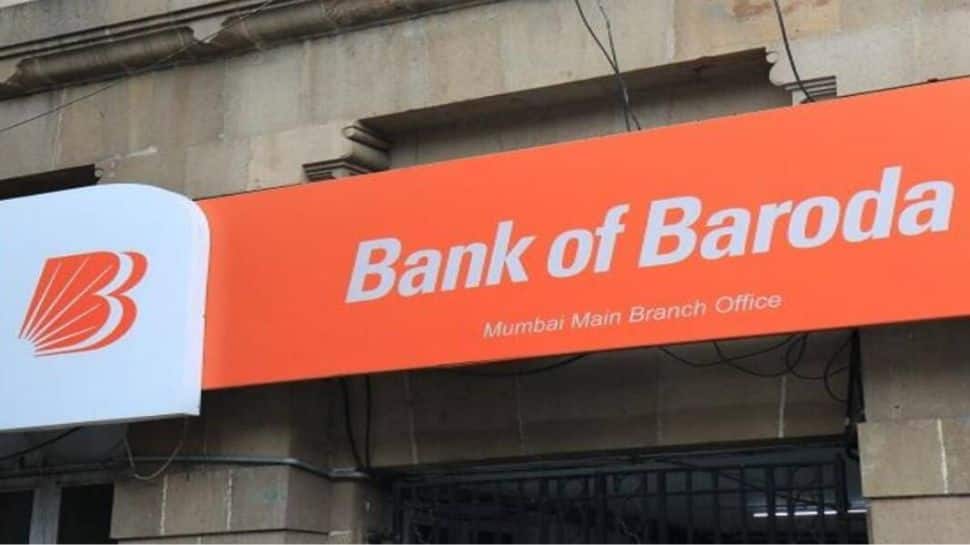

New Delhi: State-owned Bank of Baroda reported a mixed performance in Q2FY26, with an 8 per cent YoY decline in the net profit to Rs 4,809 crore, despite revenue growth and improved asset quality. 

The net profit dipped 8.2 per cent YoY from Rs 5,238 in Q2 FY25, while it inched up 5.9 per cent on a quarterly basis. The H1FY26 net profit stood at Rs 9,351 crore, the bank said, adding that the operating profit for the quarter was Rs 7,576 crore, while for the half year it was Rs 15,812 crore.

Meanwhile, during the quarter, net interest income rose to Rs 11,954 crore for the quarter, a 4.5 per cent rise quarter-on-quarter and reached Rs 23,388 crore for the first half of FY26. Operating expenses reached Rs 7,893 crore for the quarter, up 7.7 per cent YoY. Asset quality improved as gross non-performing assets decreased by 34 basis points YoY to 2.16 per cent.

Add Zee News as a Preferred Source


Bank’s Net NPA also reduced by 3 bps YoY and stood at 0.57 per cent in Q2FY26. “Global Net Interest Margin (NIM) for Q2FY26 improves by 5 bps sequentially and stood at 2.96 per cent, while it was at 2.93 per cent for H1FY26,” the statement said.

Domestic Net Interest Margin (NIM) stood at 3.10 per cent for the quarter, with an improvement of 4 bps QoQ. Bank’s organic retail advances grew by 17.6 per cent, driven by strong growth across segments such as mortgage loans (19.8 per cent), auto loans (17.7 per cent), home loans (16.5 per cent), education loans (14 per cent), and personal loans (18.6 per cent).

On a year-to-date basis and a monthly basis, the stock has gained 15.27 per cent and 7.11 per cent, respectively.


Source link

Continue Reading
Click to comment

Leave a Reply

Your email address will not be published. Required fields are marked *

Business

Nike tops earnings estimates but shares fall as China sales plunge, tariffs hit profits

Published

on

Nike tops earnings estimates but shares fall as China sales plunge, tariffs hit profits


A shopper carries Nike bags in San Francisco, California, US, on Wednesday, Dec. 17, 2025.

David Paul Morris | Bloomberg | Getty Images

Nike on Thursday posted quarterly earnings and revenue that topped Wall Street’s estimates, as strength in North America helped to offset a plunge in China sales.

The company’s stock slid more than 6% in extended trading Thursday, as investors digested the weakness in China and the sustained hit Nike is taking from higher tariffs.

Here’s what Nike reported for its second fiscal quarter of 2026, according to consensus estimates from LSEG:

  • Earnings per share: 53 cents vs. 38 cents expected
  • Revenue: $12.43 billion vs. $12.22 billion expected

The athletic apparel retailer said sales in North America rose 9% to $5.63 billion. But revenue in its Greater China market dropped 17% to $1.42 billion.

The sneaker company is just over a year into CEO Elliott Hill’s turnaround strategy, focusing on regaining its growth and market share, clearing out old inventory and investing in wholesale relationships.

“Fiscal year ’26 continues to be a year of taking action to rightsize our classics business, return Nike digital to a premium experience, diversify our product portfolio, deepen our consumer connection, strengthen our partner relationships and realign our teams and leadership,” Hill said on a call with analysts. “And I say we’re in the middle inning of our comeback.”

“We’re nowhere near our potential,” he added.

Hill said Nike’s improvements in its China market are “not happening at the level or the pace we need to drive wider change,” though he said the country remains one of the company’s most powerful long-term opportunities.

Nike expects fiscal third quarter revenues to fall by a low single digit percentage, with modest growth in North America. It also anticipates gross margins will drop 1.75 to 2.25 percentage points – including a 3.15 percentage point hit from tariffs.

The company said wholesale revenues climbed 8% to $7.5 billion during the quarter. But direct sales — which were a focus for Nike in the years before Hill took over and moved away from the strategy — fell 8% to $4.6 billion.

Nike has also been feeling the impact of tariff increases. It said Thursday that its gross margin decreased by 3 percentage points and inventories dropped 3% primarily due to higher tariffs.

The sneaker company has been reporting weakness in its Converse brand, too. In its first fiscal quarter, Nike said Converse sales dropped 27% – on Thursday, it reported a 30% drop in revenues for the sneaker brand.

Despite the weakness in some parts of Nike’s business, the company highlighted some areas of strength and new initiatives ahead. CFO Matt Friend said on the call that Nike.com posted its best Black Friday ever this year, partially driven by its Air Jordan “Black Cat” launch.

Nike also plans to launch a new footwear platform in January called Nike Mind, which aims to help athletes prepare for performance and competition, Hill said on the call.

Nike has been making larger internal changes under Hill.

Earlier this month, Nike underwent leadership changes to “remove layers,” according to Hill. Under its “Win Now” strategy, the company announced that Chief Commercial Officer Craig Williams would leave the sneaker giant.

Hill called the shakeup a move “about growth and offense.”

“Collectively, these changes amount to us eliminating layers and better positioning Nike to continue to have an impact the way only Nike can,” Hill said in a statement at the time.

Nike shares have dropped more than 13% this year as of Thursday’s close.


Source link

Continue Reading

Business

SHANTI shields N-plants from safety oversight: Experts – The Times of India

Published

on

SHANTI shields N-plants from safety oversight: Experts – The Times of India


NEW DELHI: The new nuclear energy bill, which was passed in Rajya Sabha by voice vote after a four-hour discussion while rejecting many amendments moved by opposition to send it to a parliamentary panel for scrutiny, marks a decisive shift in India’s nuclear governance, embedding safety oversight in law across the lifecycle of an atomic plant, unlike the existing framework that relied largely on executive discretion and post-accident accountability.Sustainable Harnessing of Nuclear Energy for Transforming India (SHANTI) Bill will allow private participation in India’s tightly controlled civil nuclear sector as the country seeks to meet its clean energy goals by 2047. As opposition raised safety and liability concerns, officials said it establishes a statutory safety regime that ensures continuous compliance rather than reliance on one-time permissions. It seeks to provide for a “pragmatic civil liability regime for nuclear damage and confer statutory status to Atomic Energy Regulatory Board (AERB)”.Officials said unlike the previous law – in which nuclear safety oversight was shaped largely by broad executive authority and administrative rules – SHANTI fundamentally recasts the framework by shifting to a “statutory, lifecycle-based regulatory regime”. Govt manages radiation risks and radioactive waste, but does not mandate separate safety authorisations or legally bind safety obligations to each phase of a nuclear plant’s life. AERB’s stage-wise consent process for construction, commissioning and operation existed only as an administrative practice. Civil Liability for Nuclear Damage (CLND) Act, 2010 further reinforced a post-accident approach by focusing on compensation and insurance rather than prevention.“These laws (Atomic Energy Act and CLND Act) treated safety primarily as a post-damage responsibility, rather than a proactive governance requirement,” said an official. SHANTI separates “permission to operate” from “permission to operate safely”, requiring both a licence and an independent safety authorisation. Any activity involving radiation exposure risk – including construction, operation, transport, storage, decommissioning, or waste management – will now require explicit safety approval.It also consolidates regulation, enforcement, civil liability and dispute resolution within a single statute, reducing legal complexity and compliance uncertainty. “It grants a clear statutory authority to AERB to inspect facilities, investigate incidents, issue binding directions, and suspend or cancel operations that do not meet safety standards. Regulatory action is no longer dependent on executive discretion. Accident prevention is significantly enhanced by legally recognising serious risk situations as nuclear incidents, even without actual damage,” said the official. Core functions such as fuel enrichment, spent-fuel reprocessing, and heavy water production will remain exclusively under Centre’s control.Anujesh Dwivedi, partner at Deloitte India, said continuing with the existing legal framework would make it difficult for nuclear energy to replace thermal power in the long run. “Over decades, India added only about 8GW of nuclear capacity. Scaling this up to 100GW by 2047- and potentially 300GW or more by 2070 – required major reforms, which these regulations seek to address,” he said.Meanwhile, PM Modi said passing of the bill marks a “transformational moment for our technology landscape”.


Source link

Continue Reading

Business

American Airlines no longer lets basic economy flyers earn miles

Published

on

American Airlines no longer lets basic economy flyers earn miles


American Airlines

Grant Baldwin | Getty Images

American Airlines customers flying on basic economy fares will no longer earn frequent flyer miles or points toward elite status, the carrier said this week.

“We routinely evaluate our fare products to remain competitive in the marketplace. Customers who purchase a Basic Economy ticket on December 17, 2025 and beyond will not earn AAdvantage miles or Loyalty Points towards AAdvantage status,” it said. “Basic Economy customers will continue to receive one free personal item and one free carry-on bag, free snacks, soft drinks and in-flight entertainment.”

Elite loyalty members will still be eligible for first-class upgrades on domestic flights if they’re on basic economy tickets, an American spokeswoman told CNBC.

Basic economy tickets are airlines’ cheapest but most restrictive fares, rolled out across the industry over the past decade. Generally, they do not allow customers to change their tickets without fees or pick their seats in advance.

The move comes as airlines across the board have been chasing customers who are willing to spend more to fly. American has fallen behind large rivals Delta Air Lines and United Airlines in the post-Covid luxury travel boom.

Read more CNBC airline news

American’s change, posted earlier by X user JonNYC, follows a similar policy by competitor Delta Air Lines, which said travelers on its Delta Main Basic, or basic economy tickets, wouldn’t receive Delta SkyMiles.

United Airlines does allow its MileagePlus loyalty program members to earn miles on basic economy tickets, but it has a different limitation: Basic economy customers on most flights aren’t allowed to bring a carry-on bag.

American had the same restriction after it launched basic economy fares but backpedaled in 2018.

Southwest Airlines this year launched its first no-frills basic fares that stipulate those customers will board last and get a seat assignment at check-in and earn miles at a lower rate than more expensive fares.


Source link

Continue Reading

Trending