

Business
Bank of England hold interest rates at 4% amid inflation concerns – live

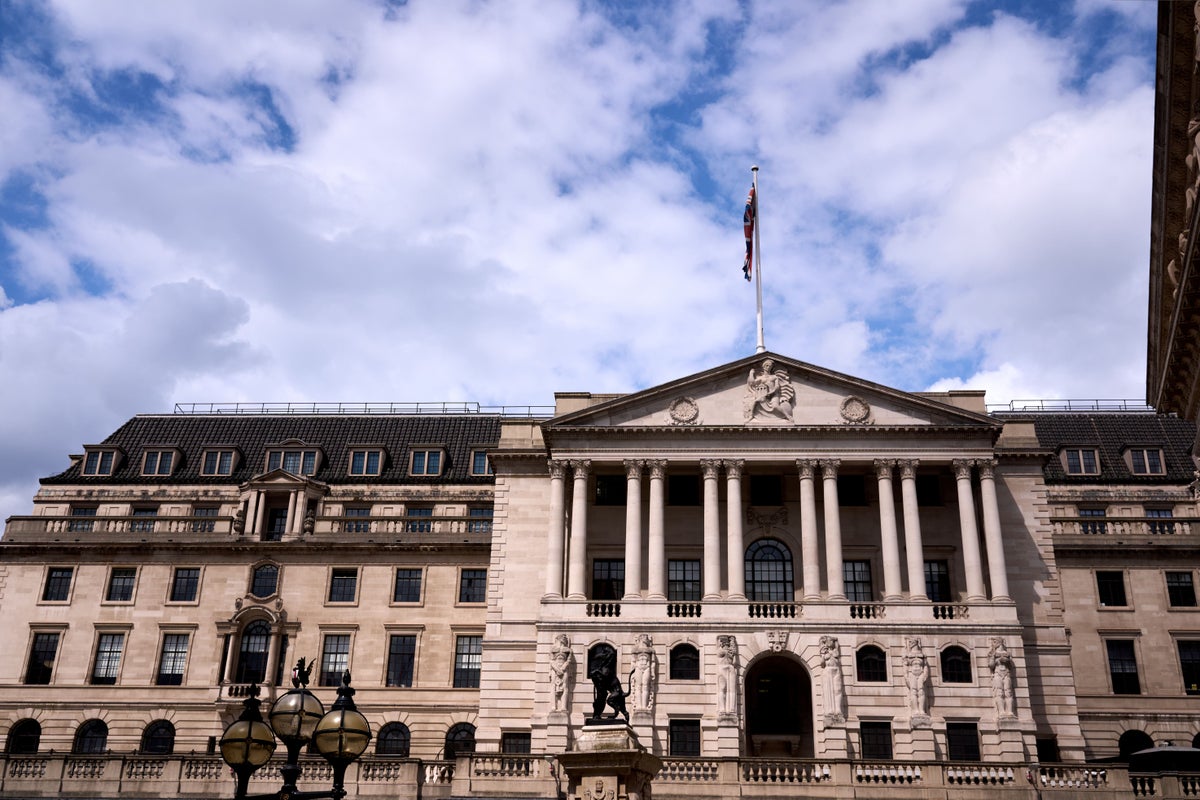
Bank of England to announce interest rates decision
Just a few minutes to go and then we’ll hear the latest.
Typically, what follows is a bit more discourse on wider economic policy, questions to some of the MPC members on their voting stance and some other aspects of the announcement.
We’ll bring you the consumer-focused element of that, plus reaction from lenders, industry experts and what it all means for you going forward.
Karl Matchett18 September 2025 11:56
Interest rates: From 0 to 5.25% – and back again?
Here’s the interest rates chart over the last 3.5 years from the Bank of England. Remember a time we were at 0.1%?!
Nobody really expects that to happen again any time soon, even if inflation stabilises and rates drop to a more neutral level.
But, also, we’re down some distance from the 2023/24 highs of 5.25 per cent, which caused real shocks for mortgage repayments and loans on variable rates.
Five cuts have happened since then, three this year.
A fourth today would be an extraordinary surprise – but perhaps, we could still see one in December.
Karl Matchett18 September 2025 11:50
Will interest rates go down today?
We’re approaching time for the Bank of England’s interest rates vote announcement and reaction to that, so let’s have a quick check in on what to expect.
Here’s what’s happening and what it will mean for you:
Karl Matchett18 September 2025 11:40
LISA reform on the agenda
Continuing with the data around ISAs, today’s figures show 87,250 people used their Lifetime ISA (LISA) to buy their first home in 2024-25 – that’s up 53.7% from the previous tax year, say money managers Nutmeg.
However, the rate of penalties for early withdrawal also increased across LISAs.
Claire Exley, head of financial advice and guidance at Nutmeg, says that should open debate once more to ensure savers aren’t punished due to increased housing costs and frozen thresholds.
“The Treasury received over £100 million from early LISA withdrawal penalties for the first time, a 35% increase from the previous tax year and the second year in a row it has risen.
“Whether it is rising house prices which have put properties beyond the LISA house price cap or a change in life circumstances that means people need the money in their LISA, more savers are handing over their savings to pay the exit penalty.
“While some friction to withdrawals helps consumers remain focused on goals, there should be a mechanism which ensures the Government gets back any bonus paid to LISA savers but does not excessively harm those who can no longer use a LISA or whose life circumstances change.
“While some are debating the future of the LISA, this data shows that it remains a well-loved and powerful tool for younger savers to accumulate wealth and get on the property ladder.”
Karl Matchett18 September 2025 11:20
Cash ISAs continue to rise – expert advises investing instead
An ongoing theme this: cash ISAs are in use more than ever, but so much money is in them that people could be investing instead to generate far better returns for the long term.
Around 5m people have between £10k and £20k in their cash ISA – it’s recommended for most people that having four months’ costs in a savings account is an ideal buffer. Beyond that, consider investing to help your reach your goals.
A total of around £360bn is thought to now be in cash ISAs.
Claire Trott, head of advice at St. James’s Place, said:
“Today’s HMRC figures are the latest indication that the UK population is over-saved and under-invested. While a cash buffer is important – and no doubt brings comfort to savers, promising safe, guaranteed returns – individuals who chose a cash ISA over a stocks and shares ISA could be missing out on hundreds of thousands of pounds over the long term.
“For individuals saving for long-term goals the cash ISA approach can be risky. As shown by our analysis, inflation can quickly and substantially erode the real value of cash savings.
“Ultimately, those wanting to reap the rewards of their finances over the long term need to be invested in the market. While short term fluctuations and market volatility may deter risk averse savers, history shows that staying invested over time has consistently offered far greater potential for growth, and protected wealth against inflation.
“For those nervous about investing without guidance, speaking to a financial adviser can be a great way to get started, and can provide confidence you’re making the best decisions over the long term.”
Karl Matchett18 September 2025 11:00
Holdings interest rates means repayments, mortgage rates and other costs might not go any higher – but it also means those already struggling with cost of living expenses and rampant inflation will get no relief.
That becomes a real consumer concern as winter and Christmas come closer, says Tamsin Powell, consumer finance expert at Creditspring.
“Although markets are predicting the Bank of England will hold rates, many households will continue to feel the strain of tight budgets. With unemployment at 4.7% and living costs remaining high, day-to-day budgets are under pressure, and borrowing – whether for loans or mortgages – is still expensive.
“Winter is just around the corner, and for many, Christmas will bring additional financial strain. Rising heating bills, combined with the 2% increase in the energy price cap from the 1st of October, mean millions of households will have less money to cover essentials and unexpected costs.
“While stable rates may prevent extra repayment pressure, they don’t provide relief for those already stretched.”
Karl Matchett18 September 2025 10:45
BoE may adjust QT programme
One of the questions the BoE will answer today, aside from interest rates, is on the matter of quantitive tightening programme.
In simple terms, this is the rate at which it’s selling bonds bought during periods when the government needed additional money, such as during the Covid pandemic.
However, selling at the rate it has been has contributed to lowering bond prices, which in turn pushes up bond yields – which for the government means “borrowing costs”.
In other words, the government has to pay back more money when the Bank is selling bonds at such a rate.
Therefore we may get an update on that today.
Karl Matchett18 September 2025 10:31
How much a young person in the UK needs to save in order to retire comfortably
The analysis was conducted by investment and insurance company Shepherds Friendly, using average UK household spending rates, common debt, and a recommended six-month emergency fund.
The investigation also factored in 25 years of rising costs at 2.88 per cent annual inflation and a 5 per cent annual return on savings or investments, to reveal exactly how much would be needed today to enjoy 25 years of financial freedom in retirement.
Karl Matchett18 September 2025 10:00
FTSE 100 rises ahead of Bank of England interest rate vote
With the BoE expected to hold rates at 4% today, UK stocks have risen in early morning trading.
The FTSE 100 is up 0.23 per cent so far, though remains down for the week after a subdued couple of days.
Pest control firm RELX is the leader, up 2.75 per cent, while retailer Next is down 5.7 per cent after its profit release this morning, citing slowing or no growth to come.
Next remains up more than 19 per cent this year, however.
Karl Matchett18 September 2025 09:40
Next delivers profit boost, but cautions over ‘anaemic’ UK economic growth
Next has notched up a surge in half-year profits, but warned UK sales will be weighed on by “anaemic” economic growth and a faltering jobs market as the Government’s tax hike takes its toll.
The fashion and homewares group reported a 13.8% rise in underlying pre-tax profits to £515 million for the six months to the end of July as total full-price sales lifted 10.9%.
But it cautioned that UK sales growth will pull back sharply.
Chief executive Lord Simon Wolfson said: “The medium to long-term outlook for the UK economy does not look favourable.
“To be clear, we do not believe the UK economy is approaching a cliff edge.
“At best we expect anaemic growth.”
Karl Matchett18 September 2025 09:20
Business
Govt orders faster city gas project clearances, hikes commercial LPG allocation to ease supply stress – The Times of India
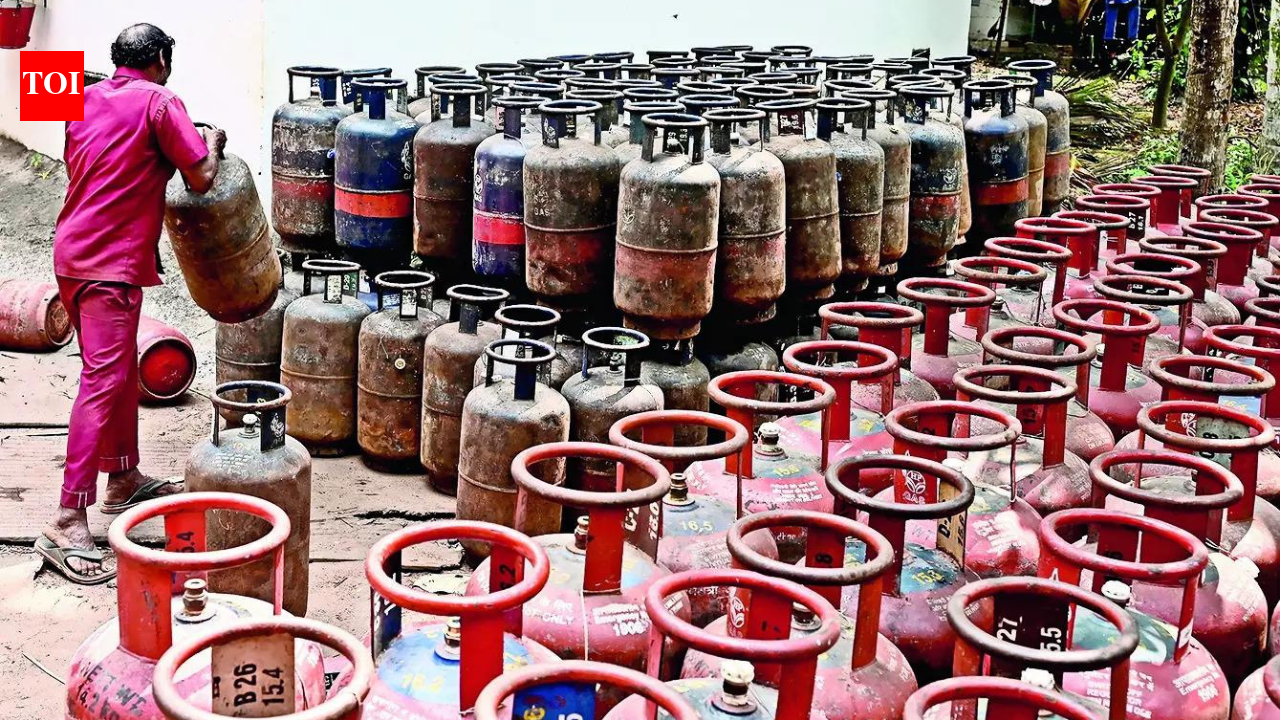
The government has stepped up efforts to streamline gas distribution and ease supply pressures, directing faster processing of city gas projects while increasing allocations of commercial LPG to key sectors amid a challenging geopolitical environment.The Petroleum and Explosives Safety Organisation (PESO) has instructed its offices to dispose of City Gas Distribution (CGD) applications within 10 days, aiming to accelerate the rollout of piped natural gas (PNG), an official statement said.Commercial LPG consumers in major cities and urban areas have also been advised to shift to PNG as part of a broader strategy to reduce dependence on liquefied petroleum gas. Domestic LPG supply remains stable, with no reported dry-outs at distributorships and normal delivery patterns across the country, the statement said, adding that most deliveries are being carried out through the Delivery Authentication Code (DAC) while panic bookings have subsided, PTI reported.On the commercial LPG front, the government has progressively increased allocations. After restoring 20 per cent supply earlier, an additional 10 per cent allocation linked to PNG expansion reforms was announced on March 18. A further 20 per cent allocation was cleared on March 21, taking total commercial LPG supply to 50 per cent.The latest increase prioritises sectors such as restaurants, dhabas, hotels, industrial canteens, food processing units, dairy operations, community kitchens and subsidised food outlets run by state governments and local bodies. Provision has also been made for 5 kg cylinders for migrant workers.Around 20 states and Union Territories have implemented the revised allocation guidelines, while public sector oil marketing companies are supplying commercial LPG in the remaining regions. In the past eight days, about 15,440 tonnes of LPG have been lifted by commercial entities.Educational institutions and hospitals continue to receive priority, accounting for nearly half of the total commercial LPG allocation. Despite global uncertainties affecting supply, the government indicated that domestic availability remains under control while efforts continue to transition urban consumers towards PNG.
Business
Sky‑high losses: Iran war drives airlines to biggest crash since Covid – $50bn gone – The Times of India
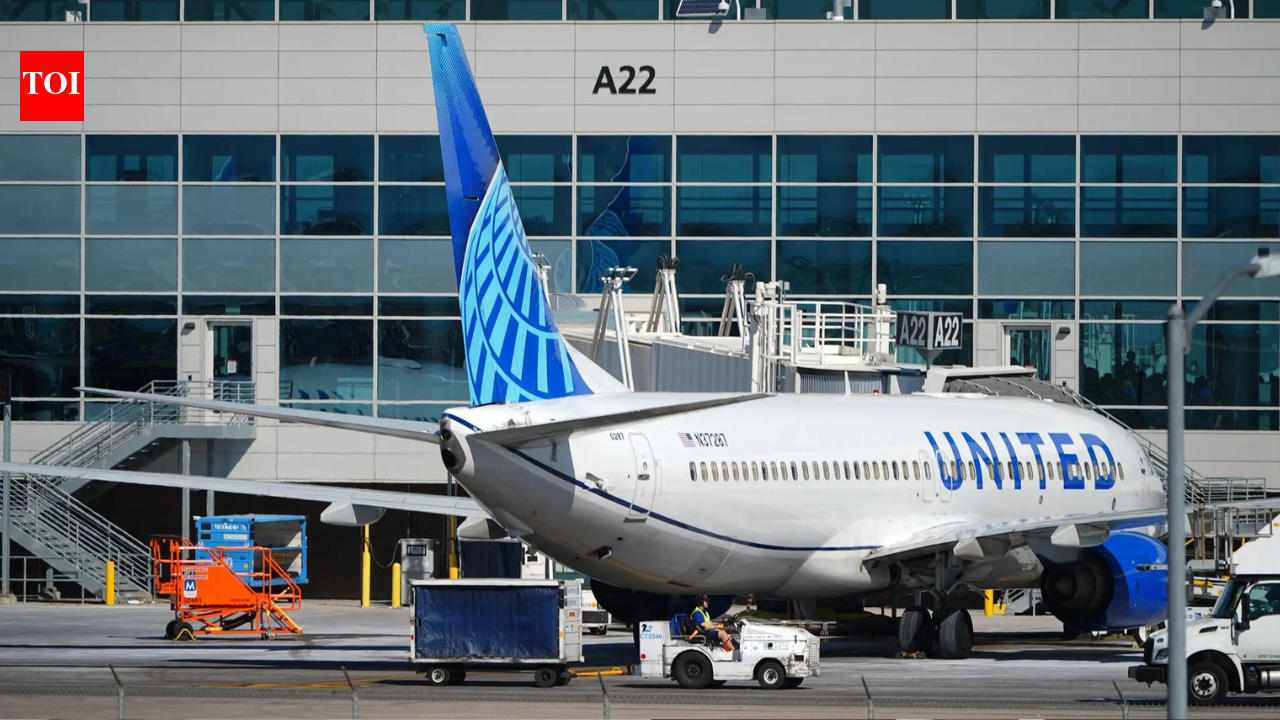
Global airlines have suffered their worst financial shock since the COVID‑19 pandemic as the ongoing war involving US Israel and Iran has disrupted industry operations, wiping more than $50 billion off the market value of the world’s largest carriers amid rising fears of fuel shortages.The conflict, now entering its fourth week, has grounded flights, disrupted key Gulf hub airports and driven jet fuel prices sharply higher, compounding pressure on an industry that was rebounding strongly following pandemic‑related losses.According to Financial Times calculations, the 20 largest publicly listed airlines have collectively lost about $53 billion in market capitalisation since the war began. In response, airline executives have warned of a potential rise in ticket prices as carriers seek to protect shrinking profit margins.Jet fuel, which accounts for roughly a third of operating costs for airlines, has doubled in price since the United States and Israel launched attacks on Iran at the end of February. Many carriers had hedged against fuel price swings, but the rapid rise is expected to force airlines to pass on costs to passengers.“Fuel spiked quite heavily after the Ukraine invasion in 2022 as well, but this has gone further north,” easyJet chief executive Kenton Jarvis told FT, describing the current crisis as the most significant upheaval since the pandemic closed global skies in 2020.Executives also point to broader structural challenges, including the risk that sustained high fares may dampen demand. Carsten Spohr, CEO of Lufthansa, said higher ticket prices were unavoidable but expressed concern that they could weaken long‑term demand. “Our average profit is about €10 per passenger, there’s no way you can absorb the additional cost,” he said.In addition to passenger traffic pressures, airlines are preparing contingency plans for possible jet fuel shortages. Air France‑KLM CEO Ben Smith said the carrier is drawing up measures to cope with potential supply squeezes, including scaling back services on some Asian routes.The crisis has hit Middle Eastern carriers particularly hard. Carriers such as Emirates, Etihad and Qatar Airways have had to sharply reduce schedules due to airspace closures and a collapse in regional tourism, industry officials say. Despite the severity of the current disruption, Willie Walsh, head of the International Air Transport Association (IATA), noted that it still falls short of the pandemic’s impact but is reminiscent of the downturn in transatlantic demand after the 9/11 attacks, according to FT.
Poll
What should airlines prioritize during the current crisis?
The conflict’s ripple effects are also visible in cargo operations, as freight traffic shifts from disrupted shipping routes to air cargo, straining airport facilities. At Geneva airport, for example, freight re‑routing has led to overflow onto services bound for Paris.Industry observers remain hopeful that airline valuations and demand will rebound once the conflict abates. “The share price has moved against all airlines since the start of the conflict,” Jarvis said, adding that short sellers would likely close positions quickly if a ceasefire is announced.
Business
Watch: Cargo ship Pyxis Pioneer, carrying LPG from US, arrives at Mangalore Port – The Times of India
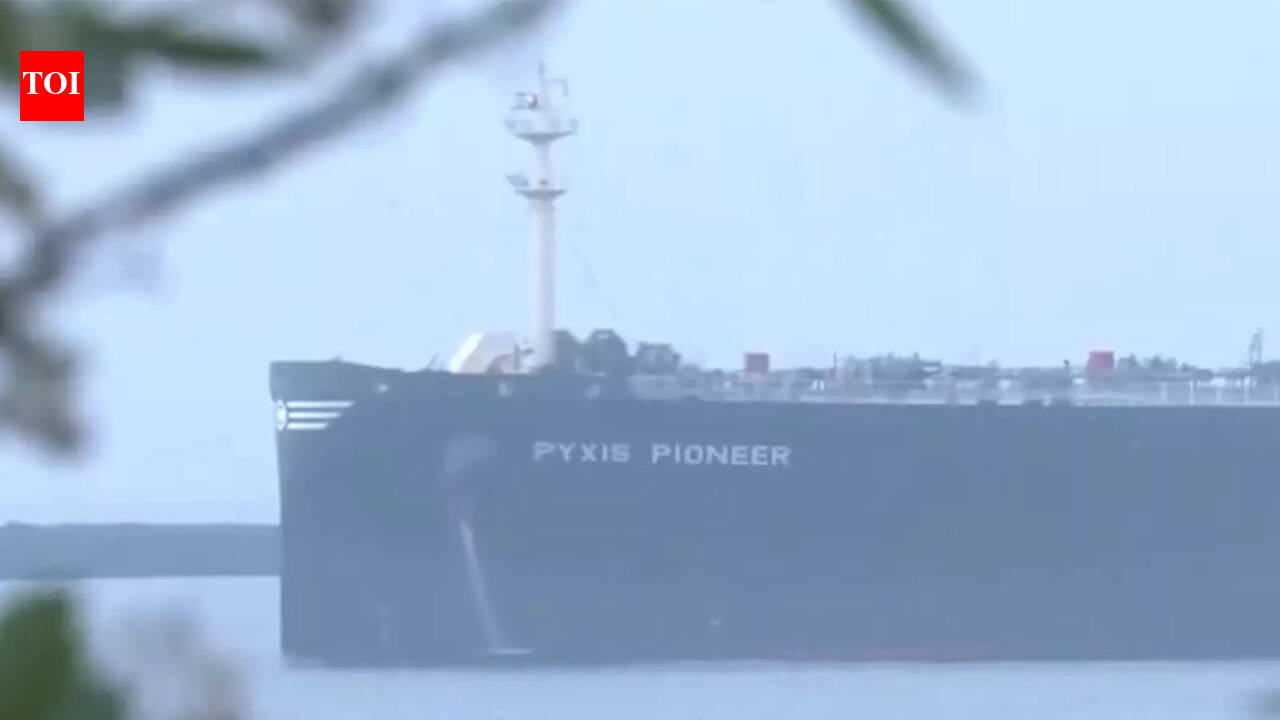
NEW DELHI: The Pyxis Pioneer, a Singapore-flagged cargo vessel carrying liquefied petroleum gas (LPG) from Texas in the United States, docked at New Mangalore Port in Karnataka’s Mangaluru on Sunday.Click here for live updates on Middle East crisis The tanker, built in 2019, arrived a day after the Aqua Titan, which is transporting 1.1 lakh tonnes of Urals crude, reached the port. The Aqua Titan had initially set sail from Primorsk in Russia for Rizhao Port in China before diverting to India.On Friday, the Shipping Ministry said that New Mangalore Port has waived cargo-related charges for crude oil and LPG between March 14 and 31 amid the ongoing Middle East conflict.Also Read | Watch: Missile strike rocks Israel’s ‘Little India’ as Iran attack injures over 40; videos show chaos Earlier this week, three Indian-flagged vessels — Shivalik, Nanda Devi, and Jag Laadki — docked at Gujarat’s Mundra Port carrying LPG. While Shivalik arrived on Monday, Nanda Devi and Jag Laadki reached on Tuesday and Wednesday, respectively.On February 28, the United States and Israel launched coordinated strikes on Iran, triggering the current conflict. In response, Iran has carried out retaliatory attacks on Israeli territory and on Gulf states hosting U.S. military bases. Tehran has also effectively disrupted traffic through the Strait of Hormuz — a critical global chokepoint through which around 20% of the world’s oil supply passes — raising concerns over energy security and global markets.Also Read | Under the sea: How Iran’s invisible fleet of ‘midget submarines’ is turning Strait of Hormuz into danger zone‘All Indian ships and sailors safe’ At Friday’s interministerial briefing on Friday, shipping ministry special secretary Rajesh Kumar Sinha said all 22 Indian ships and 611 sailors in the Persian Gulf are safe amid the ongoing conflict.“There has been no report of any maritime incident in the last 24 hours. All our 22 ships and 611 Indian sailors in the Persian Gulf region are safe, and we are continuously monitoring them… There is no congestion in any port… New Mangalore Port has issued a circular for waiver of all cargo-related charges for crude and LPG from March 14 to 31,” Sinha told reporters.Also Read | Iran invasion next? Pentagon plans for deployment of US troops on ground – reportMeanwhile, the petroleum ministry noted panic booking of LPG cylinders has eased significantly, with 55 lakh bookings reported on Thursday.“There is no panic booking now. Only 55 lakh LPG bookings were reported yesterday. There is adequate stock available, and no outlets are running dry,” joint secretary Sujata Sharma said at the briefing.However, she acknowledged that concerns persist.

Govt orders faster city gas project clearances, hikes commercial LPG allocation to ease supply stress – The Times of India

Transfer rumors, news: Liverpool eye Gordon to replace Gakpo

Prince William ‘finalises’ one crucial detail for coronation ceremony

Tips and Advice for Buying Used or Refurbished Electronics

UAE savings strategies 2026 explained: Best apps, tools, budget rules and smart money hacks to beat rising cost of living in emirates – The Times of India

Iran threatens US-linked oil facilities after Kharg Island bombed

-
 Tech1 week ago
Tips and Advice for Buying Used or Refurbished Electronics
-
Business1 week ago
UAE savings strategies 2026 explained: Best apps, tools, budget rules and smart money hacks to beat rising cost of living in emirates – The Times of India
-
 Politics1 week ago
Iran threatens US-linked oil facilities after Kharg Island bombed
-
 Entertainment7 days ago
Strategic oil stocks to be released ‘immediately’ in Asia and Oceania: IEA
-

 Entertainment1 week ago
Iran at war
-

 Entertainment1 week ago
Meet one of the last true paparazzi
-

 Sports1 week ago
College Basketball Invitational abruptly cancels 2026 tournament
-

 Sports1 week ago
Japan suffers shocking collapse to Venezuela in World Baseball Classic