

Business
Bank Tricks 90-Year-Old Into Buying Insurance Policy That Will Mature In 2124, Deducts Rs 4 Lakh


Last Updated:
Over time, Rs 2 lakh was deducted annually from the eldery man’s account, taking the total premium paid to Rs 4 lakh, a substantial portion of his life savings




The policy was then issued with the daughter listed as the “life assured”, while the premiums continued to be paid from Iyer’s account. (AI Image)
Blindly trusting a bank employee or an insurance agent can sometimes come at a heavy cost. A recent incident involving a 90-year-old customer raised serious questions about alleged mis-selling, ethical conduct, and the protection of senior citizens in financial services, after a life insurance policy with a maturity year of 2124 was reportedly sold in his name. Following outrage on social media, the bank has now assured the family that the money will be returned.
Venkatachalam V Iyer, 90, a long-time customer of Canara Bank’s Nagpur branch, was allegedly persuaded by the branch manager to purchase a life insurance policy with an annual premium of Rs 2 lakh. The policy was finalised last February, and the first premium was debited directly from his savings account. The matter came to light when he later received an alert about the next premium payment and informed his family, who then began examining the documents.
According to Saketh R, who identified Iyer as his wife’s grandfather and shared the case publicly on social media, the elderly man had been banking with the same branch for decades and trusted the manager deeply. He alleged that this trust was misused and that Iyer, due to his age and limited financial awareness, agreed to the policy without fully understanding what he was signing up for.
The family claims the manager described the policy as “very important” and “urgent”, creating pressure to sign. Over time, Rs 2 lakh was deducted annually from Iyer’s account, taking the total premium paid to Rs 4 lakh, a substantial portion of his life savings.
The most shocking detail, according to the family, was that the policy was set to mature in 2124, nearly a century later, effectively offering benefits the elderly man would never live to see. The structure of the policy has also raised questions. Since issuing insurance directly in the name of a 90-year-old would not typically be possible, the manager had allegedly earlier advised Iyer to open a joint account with his daughter. The policy was then issued with the daughter listed as the “life assured”, while the premiums continued to be paid from Iyer’s account.
Saketh further alleged that documents were filled out by bank staff and signatures obtained from Iyer despite his frail condition, claiming he was “too old to even write”. He suggested the arrangement may have been structured to bypass age restrictions, possibly to meet sales targets, with little regard for the elderly customer’s financial well-being.
The case triggered strong reactions online, with many users pointing out that the maximum entry age for such insurance plans is typically around 80. Several called it a clear instance of mis-selling and advised the family to escalate the matter to regulators, including the RBI and IRDAI, if not resolved.
After the post went viral, senior bank officials, including the regional head and branch manager, visited Iyer and assured the family that the issue would be resolved promptly and the money refunded within a week.
In its public response on social media, Canara Bank apologised for the inconvenience and said the matter would be forwarded to the concerned team, while also requesting that personal details not be shared on public platforms. However, the response did not directly address the allegations of mis-selling or explain how an age-inappropriate policy was approved, leaving larger concerns about oversight, accountability, and safeguards for senior citizens unanswered.
 Click here to add News18 as your preferred news source on Google.
Nagpur, India, India
February 09, 2026, 19:39 IST
Read More

Motorists are facing higher fuel prices ahead of Easter break due to the conflict in the Middle East, the RAC says.
Source link
Business
E-cheques coming soon? RBI unveils Payments Vision 2028, plans wider oversight of digital players – The Times of India
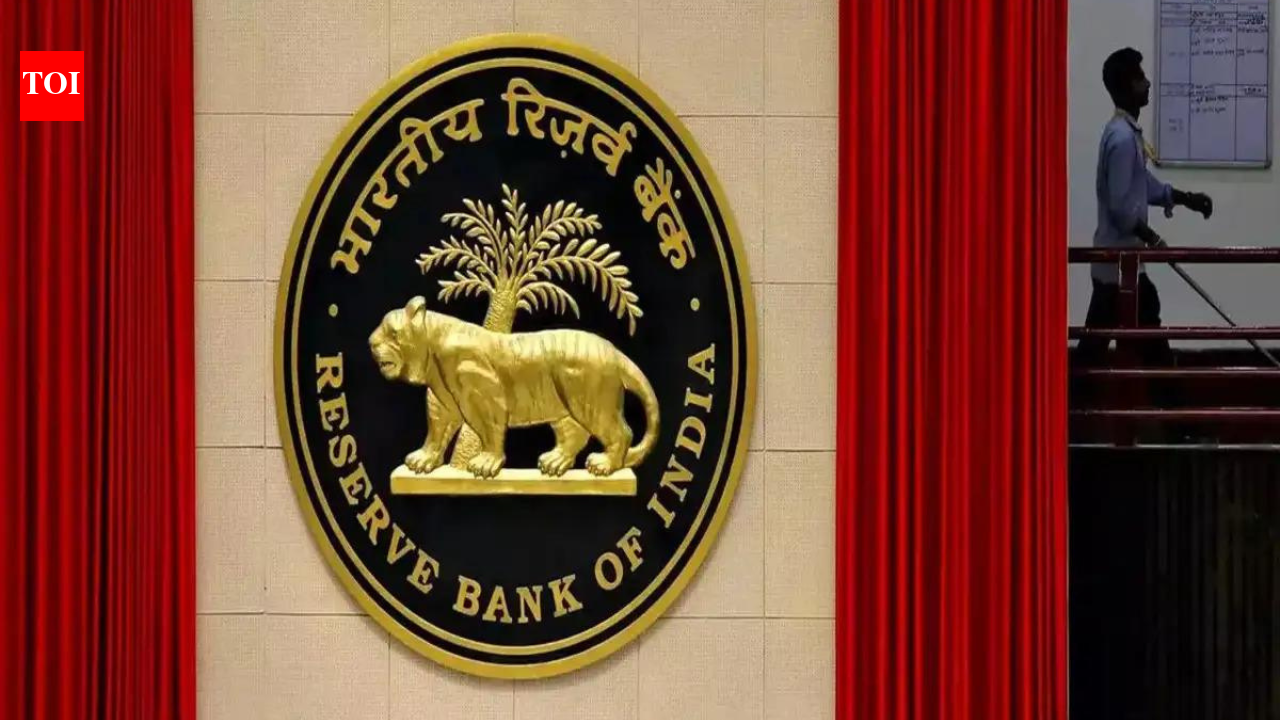
The Reserve Bank of India (RBI) on Friday unveiled its ‘Payments Vision 2028’ document, outlining a roadmap that includes exploring electronic cheques, expanding regulatory oversight to digital platforms, and strengthening safeguards in the fast-growing payments ecosystem, PTI reported.The central bank said it will examine the introduction of e-cheques to combine the advantages of paper instruments with the speed and reliability of digital payments. “To leverage the unique benefits of paper-based instruments and the speed and reliability of electronic payments, and cater to new business use cases, the introduction of electronic cheques in India shall be explored,” the RBI said.Alongside, the RBI is considering widening the regulatory ambit to include entities such as e-commerce marketplaces and centralised platforms that play a growing role in facilitating digital transactions.“In addition, e-commerce marketplaces and centralized platforms have been assuming significant responsibilities that could have implications on the orderly functioning of the payments ecosystem. These aspects shall be examined in detail and, if required, the scope of direct regulations shall be extended to cover such entities,” the document said.The vision document also proposes allowing users to enable or disable transactions across digital payment modes, similar to controls available for card transactions.To address fraud risks, the RBI is exploring a “shared responsibility framework” under which both the issuing bank and the beneficiary bank would share liability in cases of unauthorised digital transactions.The central bank also plans to review cheque design and security features, introduce a Domestic Legal Entity Identifier (DLEI) framework for better transaction traceability, and bring in a Cyber Key Risk Indicators (KRI) framework for non-bank payment system operators.Other initiatives include exploring white-label solutions in the Aadhaar Enabled Payment System (AePS), developing interoperability in the Trade Receivables e-Discounting System (TReDS), and introducing a ‘Payments Switching Service’ to ease customer migration across platforms.The RBI said it will also review the cross-border payments ecosystem to improve efficiency and streamline authorisation processes, alongside publishing periodic reports on global and domestic payment trends.Additionally, the central bank aims to enhance access to payment data and reimagine the card payments ecosystem by promoting secure tokenisation, improved transparency in pricing, and greater choice for users and merchants.

Hyderabad: Pharma player Hetero on Friday said it has rolled out exports of its generic semaglutide injection portfolio as part of a multi-year plan to widen access to treatments for type 2 diabetes and obesity in more than 75 countries.The Hyderabad-based pharmaceutical company said initial rollouts are under way in Africa, Asia and the Middle East, with additional launches planned in other markets subject to regulatory approvals.The injectable therapies will be sold under the brand names Truglyx, Rolmodl and Moto G. Semaglutide belongs to the GLP-1 class of medicines, which are used in diabetes care and weight management.Hetero said the export launch is part of its broader strategy to improve access to advanced cardio-metabolic therapies, particularly in emerging markets.The company said the products will be offered in multi-dose disposable pen devices designed in line with innovator formats and will be available in several strengths, including 0.25 mg, 0.5 mg, 1 mg, 2 mg, 1.7 mg and 2.4 mg, allowing dosing flexibility for both diabetes and obesity treatment.Hetero said it is also awaiting approval from India’s Central Drugs Standard Control Organisation (CDSCO) after completing clinical trials in type 2 diabetes and obesity and plans an India launch after regulatory clearance.Hetero managing director Dr Vamsi Krishna Bandi said the company aims to provide high-quality, affordable generic semaglutide through a single global product platform backed by its manufacturing and development capabilities.He said Hetero would use its commercial networks across Asia, the Middle East, Africa and Latin America to support supply and access. The Hyderabad-headquartered Hetero operates in more than 145 countries and employs over 30,000 people.


FIFA clears Fulham’s Diop, Ajax’s Bounida to play for Morocco

Iranian Hackers Breached Kash Patel’s Email—but Not the FBI’s

Tiger Woods involved in rollover crash in Florida less than 2 weeks before Masters: reports

-
 Business7 days ago
Flipkart group CFO to leave co amid IPO plans – The Times of India
-

 Fashion7 days ago
China’s textile & apparel exports surge 17% to $50 bn in Jan-Feb 2026
-
 Business1 week ago
Video: The Effects of High Oil Prices
-

 Sports1 week ago
Rating Adidas’ 2026 World Cup away shirts: Argentina, Spain, Mexico and more
-

 Fashion1 week ago
The hidden $1.62 war tax now embedded in every garment you source
-

 Sports7 days ago
American Conference Commissioner Tim Pernetti thanks Trump for Army-Navy game executive order
-
Tech1 week ago
The Corsair 4000D RS PC Case Keeps Your System Cool
-

 Tech1 week ago
‘Uncanny Valley’: Nvidia’s ‘Super Bowl of AI,’ Tesla Disappoints, and Meta’s VR Metaverse ‘Shutdown’