

Fashion
Barmag to showcase sustainable yarn innovations at ITMA Asia+CITME

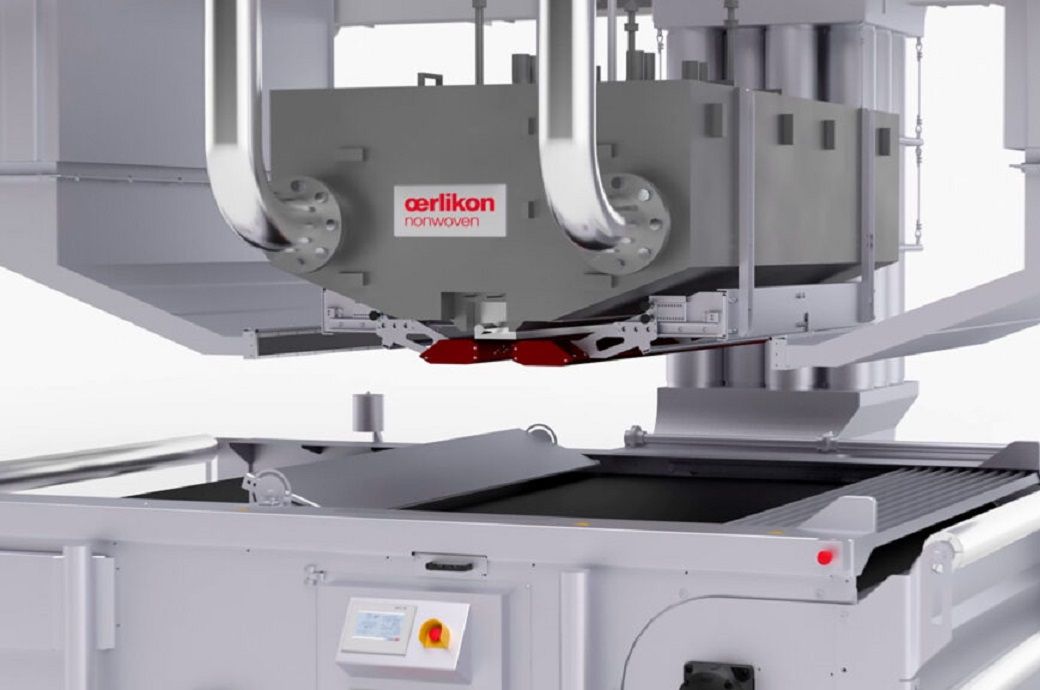
With its product brands Oerlikon Barmag, Oerlikon Neumag and Oerlikon Nonwoven, Barmag is presenting itself at this year’s ITMA Asia + CITME with innovations in yarn production that are above all one thing: productive and sustainable. From 28 to 31 October this year, the Swiss-based Oerlikon Group company will be showcasing its technologies for the future of yarn production in Singapore in Hall 4, booth C 204.
Barmag with its brands Oerlikon Barmag, Oerlikon Neumag and Oerlikon Nonwoven, will showcase sustainable yarn innovations at ITMA Asia + CITME in Singapore (October 28–31).
Highlights include atmos.io smart factory OS, WINGS FDY FLEX for recycled polyester, eFK EvoSmart texturing with 25 per cent energy savings, EvoSteam staple fibre tech, BCF yarn advances, and hycuTEC.
The increasingly complex world of textiles demands individual solutions that can be flexibly adapted to constantly changing market conditions. Barmag supports its customers with appropriate plant concepts and complete solution packages. Artificial intelligence has become an integral part of this world.
Bringing atmos.io to the networked factory
atmos.io is the operating system for intelligent yarn production. Every machine – whether a pilot plant or large-scale production with hundreds of positions – comes with the digital core. This makes atmos.io the basis for the smart factory. In the integrated app store, yarn manufacturers can put together exactly what they really need. atmos.io provides data-based decision-making criteria – objectively, efficiently and with a focus on quality. It digitizes the entire material flow: every bobbin carries its own data, from the melt to the warehouse. This allows yarn manufacturers to intervene in production at any time – quickly, precisely and profitably. The advantages: less waste, higher yarn quality, less effort for shop floor employees. The system integrates seamlessly into existing production and IT infrastructures. atmos.io relies on an intelligent data infrastructure that meets the highest standards of cyber security while providing consistent, trustworthy data for secure and efficient process control.
The future of filament spinning
Flexibility is the core competence of WINGS FDY FLEX, the latest winding concept for the FDY process. With an enormously wide production window, WINGS FDY FLEX is the perfect solution for short-term product changes and a wide range of yarn products. It can even process recycled polyester. This makes the FDY process with WINGS FLEX future-proof and sustainable.
What does the future hold for the POY process? Yarn manufacturers can also find out at the Barmag booth. The Barmag experts will be presenting the next generation of POY production to selected visitors – and will also be offering a captivating insight into the future of textiles.
eFK EvoSmart – innovation meets efficiency in yarn texturing
With the new eFK EvoSmart texturing machine, Barmag presents a machine concept based on the globally proven manual eFK that meets the highest quality requirements and sets new standards in operational efficiency. With a focus on energy-efficient yarn production, the eFK EvoSmart offers technological features that sustainably reduce both energy consumption and operating costs – with-out compromising on quality and process reliability. By combining energy-optimized process control with innovative components such as EvoHeater and Smart Godets, the eFK EvoSmart achieves a significant reduction in specific energy consumption – with potential savings of 25% per kilogram of yarn. The simple replacement of the heater inserts eliminates the need for time-consuming mechanical and chemical heater cleaning inside the machine. The system consisting of EvoHeater and adapted suction not only saves energy but also doubles the maintenance intervals. This reduces the maintenance requirements of the eFK EvoSmart by 50%. Shorter and less frequent downtimes increase productivity and ensure higher plant availability. Whether in weaving, knitting or finishing, consistent performance ensures smooth processes and the best results.
Concentrated innovative strength for staple fiber production
Oerlikon Neumag is setting new standards in the production of synthetic staple fibers with several technological innovations. At the heart of these innovations is the state-of-the-art EvoSteam process, which not only offers significant energy savings but also raises fiber quality to a new level. The ad-vantages over conventional processes are clear: more efficient, more sustainable and more powerful.
The EvoSteam concept is complemented by EvoDuct and EvE-2, two further pioneering developments for staple fiber spinning. EvoDuct optimizes the air flow distribution in the air supply. The result: lower pressure drop, less energy consumption and a more uniform air flow, which has a positive effect on fiber quality and fiber uniformity. EvE-2 revolutionizes monomer and hot air extraction. The newly designed extraction nozzles minimize air turbulence and improve the uniformity of the air supply. The external monomer extraction facilitates maintenance work and significantly increases spinning performance.
Another highlight: the automated spin pack wiping robot, already used in filament spinning by Oerlikon Barmag, now also cleans the spinning packages in the staple fiber process. The advantages are the same: consistent, excellent wiping quality, extended cleaning intervals, reduced personnel costs, savings in consumables, environmentally friendly and healthy, controlled silicone spray consumption and synchronization of cleaning cycles with can change and splice management.
New standards in BCF yarn production
With the new BICO BCF technology, Oerlikon Neumag is launching a completely new type of yarn that takes carpet performance to a new level: higher pile strength, improved recovery properties and approx. 20% less face fiber consumption – without compromising the brand’s renowned high quality. The result: lighter carpets with the familiar high-quality characteristics of Oerlikon Neumag yarns.
Also new to the portfolio: FiberGuard BCF – an intelligent system consisting of sensors and software that measures the yarn tension between twisting and winding in real time. The software reacts automatically to deviations and adjusts the process independently. This means less waste, higher efficiency and greater sustainability. And best of all, FiberGuard is compatible with all current BCF machines, or can be retrofitted.
Highly efficient nonwovens technologies
At the heart of this is Oerlikon Nonwoven’s patented hycuTEC unit – a real revolution for the filtration industry. Using osmosis-treated water, the system enables a high electrostatic charge to be applied to polypropylene meltblown nonwovens – with an impressive efficiency of 99.99%.
The brand also impresses in the Spunbond sector with high-performance production lines. Its potential is particularly evident in water filtration, for example through the implementation of a BiCo process utilizing polyester and co-polyester polymers.
Note: The headline, insights, and image of this press release may have been refined by the Fibre2Fashion staff; the rest of the content remains unchanged.
Fibre2Fashion News Desk (HU)











The announcement was made during a summit in Brussels, where leaders from both sides emphasised the need to deepen transatlantic trade amid global economic uncertainty and shifting geopolitical dynamics.
Canada and the EU have agreed to modernise the Comprehensive Economic and Trade Agreement (CETA) following a summit in Brussels.
It aims to reduce trade barriers, support SMEs while expanding co-operation in digital services and cross-border data flows.
Leaders including Ursula von der Leyen said it will strengthen economic resilience, diversify trade partnerships and secure supply chains.
The initiative seeks to update the 2017 free trade deal by reducing remaining non-tariff barriers, improving regulatory co-ordination and creating clearer investment dispute mechanisms, particularly to support small and medium-sized enterprises.
Canadian Prime Minister Mark Carney has set a target of doubling Canada’s non-US trade within the next decade, positioning Europe as a key partner in achieving that goal. According to Canada’s Trade Minister Maninder Sidhu, the effort aligns with the country’s broader strategy to diversify trade beyond its largest partner, the United States, which currently accounts for nearly 70 per cent of Canadian exports and leaves the country vulnerable to shifts in American trade policy.
The agreement also launches talks on a digital trade framework covering data flows, cybersecurity, artificial intelligence regulation and digital services.
Maros Sefcovic, the EU’s Commissioner for Trade and Economic Security, said the initiative reflects the growing importance of digital commerce, noting that more than 40 per cent of EU-Canada services trade is already delivered digitally.
European Commission President Ursula von der Leyen highlighted that the partnership would support sustainable development, innovation and secure supply chains, particularly in areas such as rare minerals, clean energy and advanced technologies.
The modernisation effort underscores both partners’ commitment to strengthening economic resilience, promoting sustainable trade practices and deepening cooperation in the digital era.
Fibre2Fashion News Desk (CG)
Imports of knitted apparel and clothing accessories (Chapter **) were valued at $***.*** million in January ****, slightly lower than $***.*** million a year earlier. The imports of non-knitted apparel and clothing accessories (Chapter **) totalled $***.*** million, down *.** per cent from $***.*** million in January ****.
South Korea typically exports fabrics and textile materials while importing readymade garments. During January ****, exports of man-made filaments, strips and similar materials (Chapter **) were valued at $***.*** million, down *.** per cent from $***.*** million a year earlier. Exports of knitted or crocheted fabrics (Chapter **) reached $***.*** million, easing *.** per cent from $***.*** million.

The additional week in the fourth quarter of fiscal 2025, compared to the fourth quarter of fiscal 2024, contributed approximately $37.0 million in consolidated net sales. On a comparable week basis, net sales grew 3.4 per cent. On a reported basis including the extra week in fiscal 2025, the US retail, international, and US wholesale segments grew 9.4 per cent, 10.2 per cent, and 3.4 per cent, respectively. US retail comparable net sales increased 4.7 per cent. Changes in foreign currency exchange rates used for translation in the fourth quarter of fiscal 2025, as compared to the fourth quarter of fiscal 2024, had a favourable effect on consolidated net sales of approximately $3.0 million, or 0.3 per cent.
Carter’s reported Q4 fiscal 2025 sales of $925.5 million, up 7.6 per cent, boosted by a $37 million extra week; on a comparable basis, sales rose 3.4 per cent.
Growth spanned US retail, international, and wholesale segments.
Operating income edged up to $84.7 million, though margin dipped to 9.2 per cent.
Full-year sales increased 1.9 per cent to $2.9 billion.
Operating income increased $1.5 million, or 1.8 per cent, to $84.7 million, compared to $83.2 million in the fourth quarter of fiscal 2024. Operating margin decreased 50 basis points to 9.2 per cent, reflecting incremental tariff costs, investments in product mix and make, and higher performance-based compensation provisions, partially offset by higher pricing, lower corporate expenses, and an asset impairment charge in the prior year period.
“Carter’s delivered improved fourth quarter results with each of our business segments posting sales growth over last year. We see momentum building behind our products and demand creation initiatives, which have driven an improvement in the rate of traffic, new customer acquisition, higher realised pricing, and increased penetration of the best portions of our product assortments. All of this gives us confidence that our strategies are gaining traction,” said Douglas C Palladini, chief executive officer & president.
“2025 was a year of meaningful progress in stabilising our business while responding to significant new tariffs. We took actions to right-size our cost structure and we launched several important initiatives to improve the productivity of our merchandise assortments and store fleet. We also strengthened our balance sheet and liquidity with the successful refinancing of our long-term debt and a new asset-based revolving credit facility in place,” Palladini added.
Consolidated net sales increased $54.3 million, or 1.9 per cent, to $2.90 billion, compared to $2.84 billion in fiscal 2024, reflecting growth in our US retail and international segments that were partially offset by a decline in the US wholesale segment. The additional week in fiscal 2025, compared to fiscal 2024, contributed approximately $37.0 million in consolidated net sales. On a comparable week basis, net sales grew 0.6 per cent. On a reported basis including the extra week in fiscal 2025, the company’s US retail and international segments grew 3.5 per cent, and 6.3 per cent, respectively, while US wholesale net sales declined 2.0 per cent. US retail comparable net sales increased 1.4 per cent. Changes in foreign currency exchange rates used for translation in fiscal 2025, as compared to fiscal 2024, had an unfavourable effect on consolidated net sales of approximately $6.7 million, or 0.2 per cent, the company said in a press release.
“While we are encouraged by our progress, much work remains. Excluding the recent tariff developments, for 2026 we are planning growth in net sales as we build on the momentum of our product and demand creation strategies. We are also planning growth in operating income. We will remain focused and disciplined in our investments and overall spending and expect solid contributions from productivity initiatives. We believe the recent news regarding tariffs will be net positive for Carter’s, but it will take some time to fully understand the implications for our business and the broader marketplace. Our talented and dedicated teams and I are committed to returning Carter’s to long-term sustainable, profitable growth over time,” Palladini concluded.
Fibre2Fashion News Desk (RR)


D.C. United 1-2 Miami (Mar 7, 2026) Game Analysis – ESPN

70% of adults without a licence say learning to drive is unaffordable

I Test Many Coffee Machines for a Living. This One Gets to Stay

LPGA legend shares her feelings about US women’s Olympic wins: ‘Gets me really emotional’

India Us Trade Deal: Fresh look at India-US trade deal? May be ‘rebalanced’ if circumstances change, says Piyush Goyal – The Times of India

South Korea’s Misto Holdings completes planned leadership transition

-
 Sports1 week ago
LPGA legend shares her feelings about US women’s Olympic wins: ‘Gets me really emotional’
-
Business1 week ago
India Us Trade Deal: Fresh look at India-US trade deal? May be ‘rebalanced’ if circumstances change, says Piyush Goyal – The Times of India
-
 Fashion1 week ago
South Korea’s Misto Holdings completes planned leadership transition
-

 Entertainment1 week ago
Pakistan’s semi-final qualification scenario after England defeat New Zealand
-

 Entertainment1 week ago
Bobby J. Brown, “The Wire” and “Law & Order: SUV” actor, dies of smoke inhalation after reported fire
-
 Business1 week ago
CNBC To Merge TV And Digital News Operations, Nearly A Dozen Jobs To Be Cut: Report
-
 Fashion1 week ago
Texwin Spinning showcasing premium cotton yarn range at VIATT 2026
-
 Business1 week ago
Greggs to reveal trading amid pressure from cost of living and weight loss drugs