

Fashion
Ba&sh’s Hélène D’Auriac: “We’re all striving to create an It bag”


Published
November 7, 2025
Ba&sh spotlighted its handbag range on bus shelters, at Paris Métro exits, and in magazines in September to mark the launch of its Youyou model. It’s a category that’s booming in French premium fashion, strengthening year after year. Having worked at Louis Vuitton, Marc Jacobs and, more recently, Chloé, Hélène D’Auriac now oversees the expanding accessories range for the brand founded by Barbara Boccara and Sharon Krief in 2003. For FashionNetwork.com, she analyses this market and outlines her approach to continuing to grow these offerings.
FashionNetwork.com: In September, you launched the Youyou bag, with a highly visible campaign fronted by Abby Champion, notably on the façade of Galeries Lafayette.
Hélène D’Auriac: The Youyou resonated immediately. It was a surprise, because we were positioning the bag slightly higher than our core range, which is around 395 euros. This one is a 450-euro bag. Over the last two years, we’ve had two major, successful launches.
FNW: In other words?
HDA: Last year, the June Tote took off right from the start. We were managing restocking every week, with around twenty restocks to keep up with demand. Then, this year with the Youyou, it was a pleasant surprise to be able to enter this price bracket. But it also responds to the crisis of confidence the luxury industry is experiencing. Consumers are looking for good value for money, while prices have climbed in some houses that have become a little disconnected from the consumer. They have a keen eye and understand sourcing and materials… This enabled us to capture an audience, because I think we’re starting to gain recognition in the leather goods sector for our expertise. This amplified our success.
FNW: You’re very familiar with the high-end segment. Before joining Ba&sh seven years ago, you worked in luxury houses. What was the challenge of moving to a premium ready-to-wear brand?
HDA: I’m a specialist in luxury accessories. When Ba&sh recruited me, L Catterton was a shareholder. So there was already a luxury culture, but they hadn’t really developed or amplified this category yet. In the course of my career, I’ve seen a few hit-bags come and go. At Ba&sh, we really had to bring in luxury know-how, new sourcing, different methods and designers. This meant instilling an accessories culture within a house that was culturally very ready-to-wear.

FNW: What difference did it make to integrate these skills?
HDA: It enabled us to work on a premium offer, developed in Europe with Italian leathers, and to incorporate responsible standards such as the Leather Working Group label. Barbara and Sharon gave me a great deal of freedom in this new creative territory for them. It was a strong vote of confidence, as the timelines, methods, and sourcing are completely different. I delved into the house’s DNA to understand its signatures, codes, materials, craftsmanship, and effortless spirit, in order to identify everything that makes up Ba&sh’s identity and to apply it particularly to this new category of bags.
They already had products that were starting to emerge, but the aim was to really develop the leather goods category. I think one of the reasons for our success is that we’ve done it authentically, offering a distinctly luxe range with a very competitive price–quality proposition. We’re in the affordable luxury segment, and our aim was to deliver very good quality at one-fifth or even one-tenth of competitors’ prices. The category took off immediately. Since my arrival seven years ago, we’ve seen double-digit growth in this category every year.
FNW: With the strong momentum from the last two years’ launches, is there a recipe for creating a successful bag?
HDA: That’s the question we all ask ourselves. How do you create a hit-bag? I think the first step is to work on the design, aiming for something fairly timeless. The second point is to remain consistent in your message by aligning the proposition with marketing, merchandising and digital, and then to stay the course rather than call everything into question as soon as there’s a fluctuation in sales. We’re seeing this in luxury, with a major return to icons.

FNW: And then how do you leverage it? How do you extend the success to different products?
HDA: Once we have a bestseller, the first thing is to keep expanding the choice of materials and signature details. Leather goods are growing very strongly, and we’re seeing strong progress across all accessories, especially jewellery. We’ve applied the same emphasis on know-how, using recycled silver and truly original design, which has generated extremely strong growth. But to come back to the bag, the question after the hit-bag is how to turn it into an icon.
“Brands that have succeeded in turning their leather goods into icons have an advantage when it comes to withstanding crises.”
FNW: What’s the difference?
HDA: It’s not necessarily a question of volumes. In our industry, a bag that lasts more than a year is already a hit-bag. For luxury brands, the great icons are bags that have been around for 20, 30, sometimes 40 years. In accessible luxury, timelines are a little shorter. So I’d say a bag becomes iconic when it’s been on the market for three to five years. But we want to achieve the same feat as some premium brands from the 80s and 90s, which have had icons for over 20 years. I think this is also important, because brands that have succeeded in turning their leather goods into icons have had an extra advantage in withstanding successive crises in the sector.
FNW: For the past month, you’ve been promoting a new version of the June Tote. It’s not really a new bag…
HDA: It’s the same shape but in a smaller format. This increases the visibility of the model, and in this spirit we’re working on other formats. We’re making progress on material and colour variations, as well as more image-driven elements such as embroidery, stones or fringes, which reflect the brand’s DNA, with proposals due out in January. What’s interesting is that in a small format, the clientele is generally younger, and with the work on details, we’re speaking to more sophisticated customers. These different versions allow us to build a common thread around the model.

FNW: In concrete terms, how many bags do you currently have? And are they all intended to be active on the market at the same time?
HDA: We are careful not to dilute our messaging so as not to lose momentum on the key product. We have three main product families, which come in different formats, details, and colours. We have the June Tote, launched a year ago. The Youyou, launched in September, will appeal to our ready-to-wear customers. We have the Swing, which is a satchel with fringes and is fairly seasonal but corresponds to our aesthetic. And then we have a fourth family of purely seasonal products that last for six months and respond precisely to seasonal trends, catering to our very fashionable and often quite young clientele. But the majority of sales are generated by our first two propositions. This can be explained by the fact that for consumers there’s a strong notion of investment in the purchase of a bag, and they turn to the most iconic models. The very good surprise is that we have two models that are performing very strongly at the same time.
A new phase in consumption
FNW: But you’re not the only ones performing well in this category. How do you explain this dynamic?
HDA: For our part, the category accounts for 11% of sales and we’re aiming to reach 15% within three years. We’re really on a springboard, and I think it’s a strength to have a high level of creativity with beautiful materials and finishes. I also think we’re benefiting from the rise of “new luxury” brands, which offer a very high-end range with an excellent retail experience but the price positioning of the historic luxury brands. We’re entering a new phase where consumers will be looking for very high quality, but will be paying close attention to price. We have opted for European production and possess the retail expertise our customers expect; they now look to accessible luxury brands for creativity that was previously the preserve of luxury.

FNW: You spoke of a common thread that brings models to life for consumers. How do you go about this?
HDA: For accessories, there are a number of major moments. We’ve just come through back-to-school, with all the September issues that focus on accessories. It’s a time to launch new products, as we did with the Youyou. The second major moment, which is the annual sales peak, comes in December. We can double our sales compared with other months. So we’re going to have different strategies: newness at the start of the season, and a focus on bestsellers in December, with the launch of new colours and materials. This involves activations, such as a pop-up at Galeries Lafayette this month; we work with influencers who love the brand, and we’re launching an image campaign that I think will be quite striking at the end of the year. These different approaches enable us to appeal to different profiles. And we’ve found, for example, that 40% of June Tote customers are new, and that 25% are under 35. This also enables us to reach a younger clientele.
FNW: On the strength of this growth, are you planning any launches for 2026?
HDA: We’re trying to slow down a bit. But we have lots of ideas and projects. We see potential around the brand’s identity, for example with an evening offering, but also with textile totes at a more accessible price point. But we really need to come up with a differentiated offer. We also see that our jewellery know-how can be leveraged in a sandal range or, again, for evening. Ba&sh is also in the process of becoming a genuine lifestyle brand, exploring an innovative approach to well-being. Here, we’re working with our ready-to-wear teams to provide complete silhouettes for yoga retreats, for example. We’re also doing this with a Coachella-themed offer, with clutches for going to festivals. It’s exciting because we’re working across several new territories in parallel.
This article is an automatic translation.
Click here to read the original article.
Copyright © 2025 FashionNetwork.com All rights reserved.





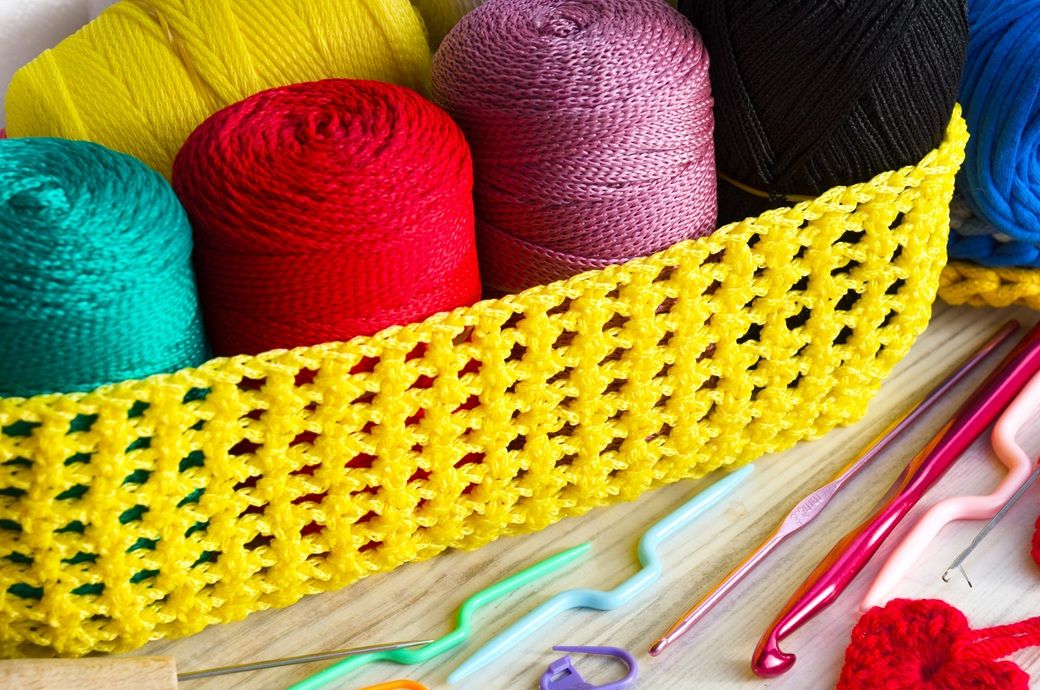
PTA prices recorded notable declines across key Asian benchmarks, tracking crude oil weakness rooted in evolving geopolitical signals. The correction was broad-based, spanning China, Southeast Asia, and South Korea, while India**;s CIF price held steady reflecting the lag in import contract structures and limited spot availability in the domestic market on the day.
The *** per cent Polyester Yarn market witnessed a slightly negative trend during the assessed period, with mild price corrections observed across both yarn grades in the Asia Free on Board (FOB) China market. Prices for **s (*** per cent polyester yarn) declined from around $*.***/kg to nearly $*.***/kg, registering a decrease of approximately *.** per cent.
The pivot is urgent because the old model is under pressure. April **** looked strong: Ready-Made Garment (RMG) exports rose **.** per cent year on year to $*.** billion. But the ten-month picture is weaker. From July-April FY****–**, apparel exports stood at $**.** billion, down *.** per cent. Knitwear fell *.** per cent to $**.** billion; woven fell *.** per cent to $**.** billion. The rebound is real, but so is the drag underneath.
AWARE is the sharpest EU-facing signal: blockchain-backed product data for Digital Product Passport (DPP) readiness. Open Supply Hub adds the factory-identity layer, pushing production information into an open platform. GIZ brings the longer reform spine, from May **** to February ****, covering energy efficiency, circularity, chemical management, renewable-energy skills and textile-waste transparency.
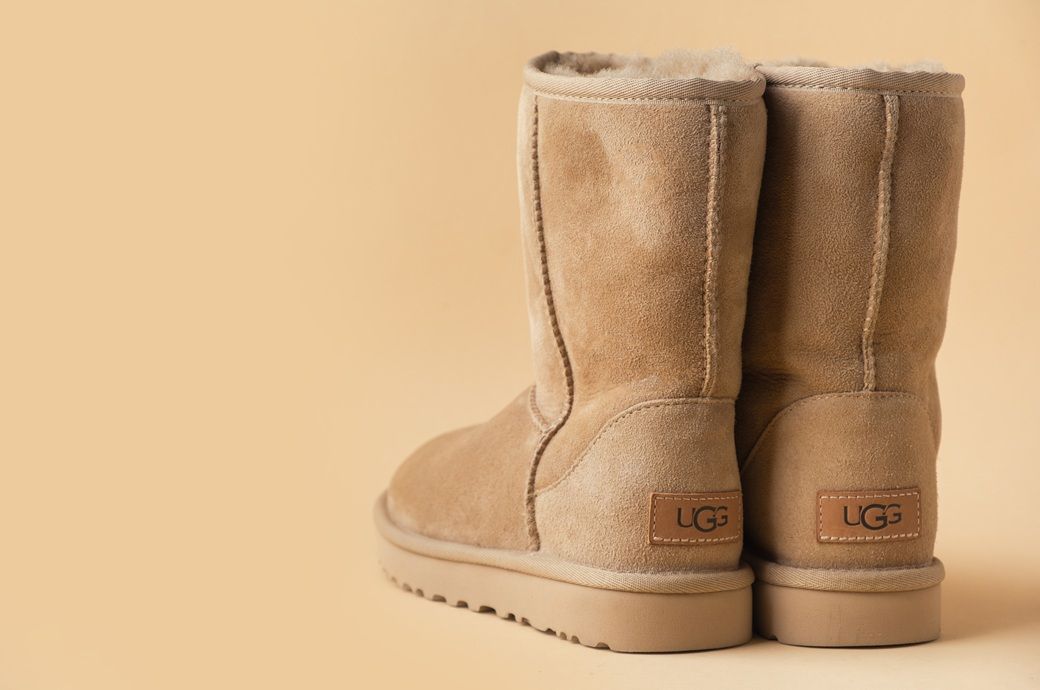
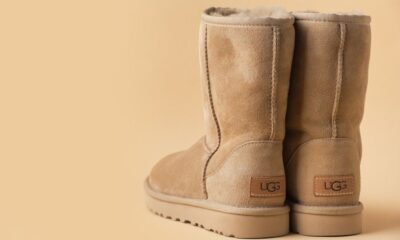
Kenneth Straka, Senior Product Development Manager at Deckers Outdoor Corporation, said that Deckers places strong emphasis on sustainability, noting that founder John Luke often reminded the team that the French word for sustainability is durability. This idea aligned with discussions at the Global Fashion Summit, where the theme centred on “Building Resilient Futures” in the sustainable and circular economy.
Durability has helped UGG become one of the most sought-after boot brands and a key sales driver for Deckers, alongside its sportswear brand Hoka. “One of the things we think about in terms of circularity is making products that last a long time and remain with consumers throughout their lives. We want products that consumers can wear for ** or ** years,” Straka said in an interview with Fibre*Fashion on the sidelines of the Global Fashion Summit in Copenhagen.


Polyester yarn prices ease as PTA weakens on limited demand

The border as lifeline

Bangladesh apparel reset: Compliance edge or energy trap?

-

 Entertainment5 days ago
Conan O’Brien hat tricks as Oscar host
-

 Tech1 week ago
Could Contact-Tracing Apps Help With the Hantavirus? Not Really
-

 Tech1 week ago
I Tried the Best Captioning Smart Glasses, and Only One Leads the Pack
-

 Fashion5 days ago
Italy’s Zegna Group’s Q1 growth boosted by strong organic performance
-

 Sports1 week ago
Bobby Cox, legendary Atlanta Braves manager who led 1995 World Series champions, dead at 84
-

 Entertainment1 week ago
Martin Short: Facing tragedy with joy
-

 Entertainment1 week ago
Tom Brady gets back at Kevin Hart during Netflix roast
-

 Entertainment1 week ago
Martha Stewart: How to make an omelet