

Business
Bharat Coking Coal IPO To List Tomorrow: GMP Indicates Over 50% Bumper Gains


Last Updated:
Bharat Coking Coal IPO, a Coal India subsidiary, lists on BSE and NSE January 19, 2026, with a strong GMP.



Bharat Coking Coal IPO: Listing Price Prediction. Shares to be listed tomorrow, January 19, 2026.
Bharat Coking Coal IPO Listing Price Prediction, GMP: The allotment of the Bharat Coking Coal IPO was concluded on January 14, 2026. Now, investors are eyeing the listing of the shares on the Bombay Stock Exchange (BSE) and National Stock Exchange (NSE), which is likely to take place on Monday, January 19, 2026.
The investors who have been allotted the unlisted shares of the Bharat Coking Coal IPO might be checking the grey market premium regularly.
The IPO was open for public subscription between January 9 and January 13. It received a massive overall subscription of 143.85 times subscription. Its retail category received 49.37x subscription, its non-institutional investor (NII) category received 240.49 times subscription, and its qualified institutional buyer (QIB) portion got 310.81 times bidding.
Bharat Coking Coal IPO Listing Date
The shares of Bharat Coking Coal Ltd (BCCL), a subsidiary of Coal India Ltd (CIL), will be listed on both the BSE and the NSE on January 19, Monday.
Bharat Coking Coal IPO Listing Price Prediction, GMP Today
According to market observers, unlisted shares of Bharat Coking Coal Ltd are currently trading at Rs 35.4 apiece in the grey market, which is a 53.91 per cent premium over the IPO price of Rs 23. It indicates a strong listing gains for investors. Its listing will take place on Monday, January 19.
The GMP is based on market sentiments and keeps changing. ‘Grey market premium’ indicates investors’ readiness to pay more than the issue price.
Bharat Coking Coal IPO Allotment Status
The Bharat Coking Coal IPO allotment has already been finalised.
The allotment status can be checked online by following these steps:
Via Official Registrar
1) Visit registrar Kfin Technologies’ portal – https://ipostatus.kfintech.com/.
2) Under ‘Select Company’, select ‘Bharat Coking Coal Limited’ from the drop-box.
3) Enter your application number, demat account, or permanent account number (PAN).
5) Then, click on the ‘Submit’ button.
Your share application status will appear on your screen.
Via the BSE
1) Go to the official BSE website via the URL — https://www.bseindia.com/investors/appli_check.aspx.
2) Under ‘Issue Type’, select ‘Equity’.
3) Under ‘Issue Name’, select ‘Bharat Coking Coal Limited’ in the drop box.
4) Enter your application number, or the Permanent Account Number (PAN). Those who want to check their allotment status via PAN can select the ‘Permanent Account Number’ option.
5) Then, click on the ‘I am not a robot’ to verify yourself and hit the ‘Search’ option.
Your share application status will appear on your screen.
Via NSE’s Website
The allotment status can also be checked on the NSE’s website at https://www.nseindia.com/invest/check-trades-bids-verify-ipo-bids.
Bharat Coking Coal IPO: More Details
According to the red herring prospectus (RHP), the maiden public issue is entirely an offer for sale (OFS) of 46.57 crore equity shares by Coal India.
The listing of BCCL is part of the government’s broader divestment push in the coal sector, aimed at unlocking value in Coal India’s subsidiaries and enhancing transparency through market discipline.
In its prospectus, the company stated that the IPO will help achieve the benefits of listing.
BCCL will make its stock market debut on January 16. The company said that half of the issue size has been reserved for qualified institutional buyers, 35 per cent for retail investors and the remaining 15 per cent for non-institutional investors.
Last year, Central Mine Planning and Design Institute Ltd (CMPDIL), another wholly-owned arm of Coal India, had also filed its draft papers with Sebi for an IPO via the OFS route.
While BCCL is a coal-producing entity, CMPDIL serves as Coal India’s technical and planning arm.
Bharat Coking Coal was the largest coking coal producer in India in fiscal 2025, according to a Crisil report. It produces various grades of coking coal, non-coking coal and washed coals for applications primarily in the steel and power industries.
The company was incorporated in 1972 to mine and supply coking coal concentrated in mines located at Jharia, Jharkhand and Raniganj, West Bengal coalfields.
The public sector firm has expanded operations significantly over the years, with coal production increasing from 30.51 million tonnes in fiscal 2022 to 40.50 million tonnes in fiscal 2025, which is an increase of 33 per cent. Its coal production stood at 15.75 million tonnes in the six months ended September 30, 2025, as compared to 19.09 million tonnes in the year-ago period.
The company operates a network of 34 operational mines, including 4 underground mines, 26 opencast mines, and 4 mixed mines as of September 30, 2025.
On the financial front, Bharat Coking Coal’s revenues from operations stood at Rs 13,802 crore and profit of Rs 1,204 crore in FY25.
BCCL’s issue comes against the backdrop of a blockbuster year for the primary market.
In 2025, companies raised a record nearly Rs 1.76 lakh crore through IPOs, buoyed by strong domestic liquidity, resilient investor sentiment and a supportive macroeconomic environment. This surpassed the Rs 1.6 lakh crore mobilised by 90 firms in 2024 and the Rs 49,436 crore raised by 57 companies in 2023.
Disclaimer: The views and investment tips by experts in this News18.com report are their own and not those of the website or its management. Users are advised to check with certified experts before taking any investment decisions.
 Click here to add News18 as your preferred news source on Google.
January 18, 2026, 09:31 IST
Read More

EW DELHI: The Directorate General of Civil Aviation (DGCA) has slapped IndiGo with the steepest fine ever for an Indian carrier – Rs 22.2 crore – for its massive flight disruptions last month.Additionally, the airline has to submit a bank guarantee of Rs 50 crore whose release is tied to implementing, among other things, the more humane flight duty norms for pilots aimed to enhancing flight safety. The regulator has warned senior airline officials, including the CEO & COO. The senior VP of operation control centre has to be removed from his position.
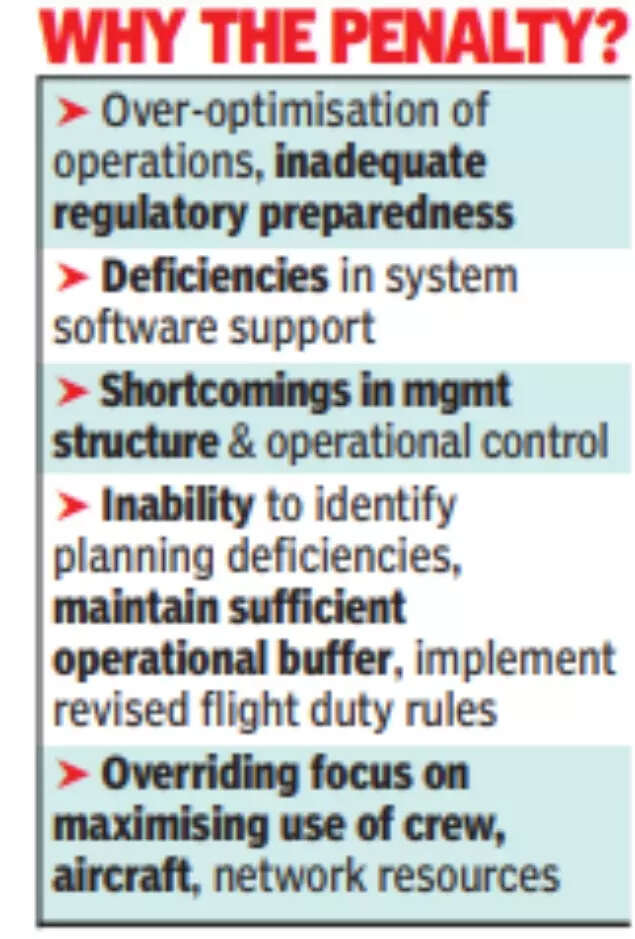
The senior VP of operation control centre has to be removed from his position and not given any accountable position in the future. The aviation ministry has ordered “an internal inquiry to identify and implement systemic improvements within DGCA”.The regulator late on Saturday night released key findings of the report by its four-member panel that probed IndiGo schedule collapse last month. The airline’s unpreparedness and consequent inability to implement DGCA’s new flight duty time limitation (FDTL) for pilots has cost it dear. Each day’s exemption given for its Airbus A320 family pilots to ensure the airline was able to start resuming flights staring the second week of Dec is costing it Rs 30 lakh. This works out to Rs 20.4 crore for 68 days between Dec 5, 2025, & Feb 10, 2026.The airline has been fined one-time Rs 30 lakh each on six more counts, which add up the fine to Rs 22.2 crore. The six failures include failure to comply with new FDTL rules, rest periods, “inadequate buffer margins in roster planning… failure to strike balance between commercial imperatives and crew members’ ability to work effectively and failure of accountable management to ensure overall functioning, financing, and conduct of operations to DGCA standards.“Between Dec 3 and 5, 2,507 IndiGo flights were cancelled and 1,852 were delayed that left over 3 lakh passengers stranded at airports across the airline’s network. Flights had resumed gradually over the next week or so.What caused the crisis:“Over-optimisation of operations, inadequate regulatory preparedness along with deficiencies in system software support and shortcomings in management structure & operational control on the IndiGo”, have been identified as the “primary causes for the disruption” by the DGCA probe panel. “The airline’s management failed to adequately identify planning deficiencies, maintain sufficient operational buffer, and effectively implement the revised FDTL provisions,” the report says.Action against IndiGo:Apart from fines, the airline’s CEO has been cautioned “for inadequate overall oversight of flight ops and crisis management.” Accountable manager & COO, Isidre Porqueras, has been warned for “failure to assess impact of winter schedule 2025 and revised FDTL leading to widespread disruptions.” Senior VP (ops control centre) has been asked to be relieved from the post and not be given any accountable position in future. Warnings have been issued to flight ops and crew resource planning “for operational, supervisory, manpower planning and roster management lapses.”Way ahead:DGCA has asked IndiGo to take appropriate action against any other personnel identified through its inquiry and submit a compliance report regarding the same. Sources say IndiGo has been made aware of the lapses of its senior officials, especially COO, and now the airline is expected to take action against them. “The findings underscore the need for operational planning, and effective management oversight to ensure sustainable operations and passenger safety & convenience,” report says.IndiGo statement:Confirming receipt of DGCA ruling, airline said it is “committed to taking full cognisance of the orders and will, in a thoughtful and timely manner, take appropriate measures… an in-depth review of the robustness and resilience of the internal processes at IndiGo (is) underway to ensure that the airline emerges stronger out of these events in its otherwise pristine record of 19 plus years of operations”.
MUMBAI: The Sir Ratan Tata Trust (SRTT) cancelled its Saturday board meeting, which was expected to consider the induction of chairman Noel Tata’s son, Neville Tata, as a trustee. In contrast, board meetings of Sir Dorabji Tata Trust (SDTT) and Tata Education and Development Trust (TEDT) proceeded as scheduled.The cancellation suggests that Neville’s appointment may have been pushed back to give trustees more time for discussions – since appointing a trustee requires unanimous approval. No new date for the SRTT meeting has been notified. An email query to Tata Trusts on the cancellation of the board meeting received no response. Sir Ratan Tata Trust (SRTT), Sir Dorabji Tata Trust (SDTT), and Tata Education and Development Trust (TEDT) have several trustees in common. Except for Jehangir HC Jehangir and Jimmy Tata, the other SRTT trustees — Noel, Venu Srinivasan, Vijay Singh and Darius Khambata — also serve on SDTT’s board and participated in its meeting on Saturday, people familiar with the matter said. Jimmy, Noel’s older half-brother, usually does not attend SRTT meetings.Saturday’s development comes amid unresolved issues from the last round of inductions in Nov 2025 when the inductions of Neville and former Titan MD Bhaskar Bhat were approved by SDTT but failed to secure approval at SRTT. SDTT, together with SRTT, controls India’s largest conglomerate, the Tata Group.At the Nov 11, 2025 SDTT meeting, Khambata proposed Neville’s appointment, while Noel proposed Bhat, as TOI reported in its Nov 12 edition. Neither name was on the formal board agenda. All trustees of SDTT approved the appointments (Srinivasan did not attend the meeting as his term had expired). Later, at SRTT’s meeting on the same day, both proposals were put off for consideration at a later date.Srinivasan, who participated in the SRTT meeting, reportedly expressed reservations, stating that these proposals were not on the agenda and that such matters should not be raised under “any other items for discussion.” While items not listed on the agenda can be introduced with the chairman’s permission, Srinivasan suggested they be considered at the next board meeting, according to a person familiar with the discussion.This time, Neville’s appointment was formally listed on the SRTT agenda but the meeting was cancelled. Bhat’s name did not appear on Saturday’s agenda. Neville participated at the SDTT meeting on Saturday, marking his first formal role at the flagship foundation.

Survey shows 84% respondents call for job creation, human development over large infrastructure initiatives
LAHORE:
Pakistan closed 2025 with signs of economic stabilisation, but the public remains divided on whether the recovery has translated into broad-based prosperity, according to a nationwide survey conducted by the Institute of Cost and Management Accountants of Pakistan (ICMA).
The survey, which captures the views of citizens, professionals, students and business stakeholders, presents a mixed but cautiously hopeful picture for 2026, with governance, jobs and long-term reforms emerging as decisive factors for sustained growth.
The survey indicates that 54.3% of respondents acknowledged an improvement in the economy during 2025, pointing to easing inflation, higher remittances and a relatively more stable external position. These developments helped pull the country out of an immediate crisis phase. However, the recovery was uneven, as 45.7% described the year as turbulent, marked by highs and lows. Weak performance in agriculture and persistent fiscal pressures limited the benefits of stabilisation for a large segment of the population. Only 10.3% reported that 2025 turned out much better than expected, while 12.1% believed the economy showed steady performance, underscoring that consistent and inclusive growth remains elusive.
Looking ahead, public sentiment for 2026 reflects cautious optimism rather than strong confidence. The survey shows that 56.9% of respondents expect the economy to improve, while 43.1% believe it will remain stable. Within this group, 29.3% described the outlook as promising and 25% expect economic growth, largely driven by hopes of recovery in industry, exports and domestic demand. Yet only 2.6% view the economy as strong, highlighting that deep-rooted structural weaknesses, low investment levels and productivity challenges continue to weigh on long-term prospects.
The survey also reveals that economic performance alone is n`ot the public’s biggest concern for 2026. Political instability tops the list of anxieties, cited by 33.6% of respondents, reflecting fears that policy uncertainty and leadership conflicts could derail fragile gains. Youth unemployment follows closely at 29.3%, signalling the urgency of translating macroeconomic stability into job creation for a rapidly growing workforce. High inflation, though easing, still worries 26.7% of respondents, while extreme weather and climate-related risks were considered a relatively distant concern by 10.3%.
Respondents sent a strong message on what Pakistan must stop doing to secure sustainable progress. According to the survey, 31% called for ending the repetition of failed policies and short-term fixes that have historically failed to deliver lasting growth. Political conflict was identified by 28.4% as a major obstacle that creates uncertainty and weakens investor confidence. Another 26.7% emphasised reducing reliance on foreign loans, urging a shift towards self-reliance through higher domestic revenues and stronger exports. Neglect of public services such as health and education was also flagged as an issue that must be addressed to improve social and economic outcomes.
In terms of priorities for 2026, the public overwhelmingly placed people before physical projects. A striking 84% of respondents stressed that job creation and human development should take precedence over large infrastructure initiatives. Within this, 45.7% demanded urgent action on employment generation, while 37.9% highlighted education and skills development as critical to tackling youth unemployment and building a competitive workforce. Infrastructure and healthcare were still considered important, but respondents viewed them as secondary to creating widespread opportunity and improving human capital.
On the external front, the survey highlights a pragmatic approach to international partnerships. China emerged as the most important partner for 2026, cited by 44.8% of respondents for its role in investment, infrastructure development and China-Pakistan Economic Corridor (CPEC)-related projects. Neighbouring countries followed at 26.7%, reflecting the importance of regional peace and trade. Gulf countries were identified by 18.1% for their contribution through jobs and remittances, while 10.3% pointed to the United States for technology and education links. Overall, respondents emphasised that foreign relations should be driven by tangible economic benefits rather than symbolic alliances.
The survey also reflects a growing sense of individual responsibility in shaping economic outcomes. More than half of respondents, 56.9%, said they plan to learn new digital skills in 2026 to adapt to a technology-driven economy. Another 25% expressed intentions to start a business or project, highlighting entrepreneurial ambition, while mentoring and volunteering were seen as secondary priorities.
According to ICMA, the findings underline a clear public mandate: governance reform, job creation and efficient public services matter more to citizens than headline projects. With 62.9% calling for efficient delivery of public services, the message for policymakers is that 2026 will be judged not just by economic indicators, but by whether stability translates into better daily lives for ordinary Pakistanis.


US’ Carter’s Q4 FY25 growth signals improving momentum in retail
Bharat Coking Coal IPO To List Tomorrow: GMP Indicates Over 50% Bumper Gains

Sources: Packers bringing back Matt LaFleur on multiyear deal

-

 Tech5 days ago
New Proposed Legislation Would Let Self-Driving Cars Operate in New York State
-

 Sports1 week ago
Clock is ticking for Frank at Spurs, with dwindling evidence he deserves extra time
-
Sports1 week ago
Commanders go young, promote David Blough to be offensive coordinator
-

 Entertainment5 days ago
X (formerly Twitter) recovers after brief global outage affects thousands
-

 Fashion1 week ago
South India cotton yarn gains but market unease over US tariff fears
-

 Fashion1 week ago
China’s central bank conducts $157-bn outright reverse repo operation
-
 Business1 week ago
SoftBank reduces Ola Electric stake to 13.5% from 15.6% – The Times of India
-

 Sports1 week ago
US figure skating power couple makes history with record breaking seventh national championship