

Sports
Biggest upcoming tests for the five undefeated men’s basketball teams

The ranks of the unbeaten shrunk from six to five this past weekend — with arguably the least likely loser suffering its first defeat of the campaign.
Michigan, which was beating teams by an average of more than 30 points entering last week, played with fire on the road at Penn State with a two-point win on Tuesday then gave up 54 second-half points to Wisconsin on Saturday en route to a 91-88 loss.
Now just five unbeatens remain: Arizona, Iowa State, Vanderbilt, Nebraska and Miami (Ohio).
Which will be the next to lose? Which will be the last remaining unbeaten? Which teams have staying power?
Let’s take a look at how each got here and the biggest upcoming tests.
Editor’s note: This is an updated version of a story that first published on Dec. 29, 2025.


Record: 16-0
Jan. 5 AP Top 25 ranking: 1
How they got here: Behind an exceptional debut from freshman Koa Peat (30 points), Arizona opened the season with a win over reigning champion Florida in Las Vegas and has racked up more quality wins since then. The Wildcats hold victories over UConn, Alabama, UCLA, Auburn and San Diego State, with only one of those coming on their home floor in Tucson. Their defeat of UConn in Storrs was one of the most impressive wins we’ll see from any team this season. And they cruised to blowout wins over Utah, Kansas State and TCU to start Big 12 play.
Why they’re unbeaten: Coach Tommy Lloyd has a tougher, more physical team than usual that could deliver the program its first Final Four since 2001. The roster is extremely well-balanced. Peat was sensational early, but his classmate Brayden Burries has been the offensive focal point of late. Jaden Bradley looks like one of the best point guards in the country as a senior, and the center duo of Motiejus Krivas and Tobe Awaka has few peers. Arizona is incredibly dominant inside but shoots better than 37% from 3. The Wildcats are also ranked in the top five nationally in defensive efficiency.
Biggest upcoming test: Jan. 26 at BYU
Arizona’s Big 12 schedule is backloaded; the Wildcats won’t face Kansas, Texas Tech, Houston, Baylor or Iowa State until February. A Jan. 17 trip to UCF could be tricky, but Arizona should win that one, too. So we’ll circle the Wildcats’ trip to Provo for a date with potential No. 1 NBA draft pick AJ Dybantsa and coach Kevin Young’s top-10 Cougars.

Record: 16-0
Jan. 5 AP Top 25 ranking: 3
How they got here: After losing scorers Keshon Gilbert and Curtis Jones from last season’s roster, there were questions about whether coach TJ Otzelberger could keep the momentum rolling for another campaign. But it was Iowa State’s trip to Las Vegas that opened eyes. The Cyclones beat St. John’s in their Players Era Festival opener, then blew out Creighton and Syracuse. And if there were any remaining doubts, those were answered with a stunning 81-58 win over then-No. 1 Purdue — in West Lafayette. They backed that up with a victory over rival Iowa less than a week later then opened Big 12 play with a trio of double-digit wins over West Virginia, Baylor and Oklahoma State.
Why they’re unbeaten: As is typically the case with an Otzelberger-coached team, the key revolves around the defensive end. Iowa State is again one of the country’s elite defenses, forcing turnovers at a higher rate than all but two teams. Tamin Lipsey is known as a top-notch defender, but freshman Killyan Toure has provided another high-level on-ball defensive player. Joshua Jefferson has taken the next step in his development and become an All-American-caliber player, and Milan Momcilovic has been the best shooter in the country so far this season. As a team, Iowa State shoots nearly 41% from 3, ranking No. 3 nationally.
Biggest upcoming test: Jan. 13 at Kansas
Despite Kansas’ recent struggles, a trip to Allen Fieldhouse always poses problems for visiting teams — especially with Darryn Peterson back and seemingly healthy enough to play 30-plus minutes. Iowa State’s Big 12 schedule is also backloaded, with a six-game stretch in February and March including matchups against Kansas, Houston, BYU, Texas Tech and Arizona.

Record: 16-0
Jan. 5 AP Top 25 ranking: 11
How they got here: Vanderbilt’s win over Alabama last Wednesday was its biggest victory of the season, even if it has since lost some luster following the Tide’s home loss to Texas. But the Commodores have also dominated a slew of very solid opponents with a 12-point win over UCF, a 15-point win over VCU, a 25-point win over Saint Mary’s, a 19-point win over SMU, an overtime road win at Memphis and a 31-point blowout of Wake Forest in Winston-Salem. Vandy ranks in the top 10 across nearly every metric, both from a résumé and efficiency standpoint.
Why they’re unbeaten: Coach Mark Byington has an experienced, explosive unit. The Commodores are one of only six teams to rank in the top 12 in both offensive and defensive rating at KenPom, and both ends of the court are headlined by the backcourt of Tyler Tanner and Duke Miles. Tanner is arguably the most underrated point guard in the country, while Miles has rediscovered his high-level scoring ability from two seasons ago at High Point. Both are also exceptionally disruptive defensively, ranking in the top 25 nationally in steals rate. Tyler Nickel has already made 8 3-pointers in a game twice this season. And Devin McGlockton is the ultimate glue guy.
Biggest upcoming test: Saturday vs. Florida
Vandy and Florida look like the best teams in the SEC, and this weekend will be the only time the two face off. The backcourt battle will be key, given the way Tanner and Miles have been playing. Boogie Fland had his best game as a Gator over the weekend, but he and Xaivian Lee haven’t quite found consistency. The key to this matchup is likely whether Vandy can match Florida’s size up front.

Record: 16-0
Jan. 5 AP Top 25 ranking: 10
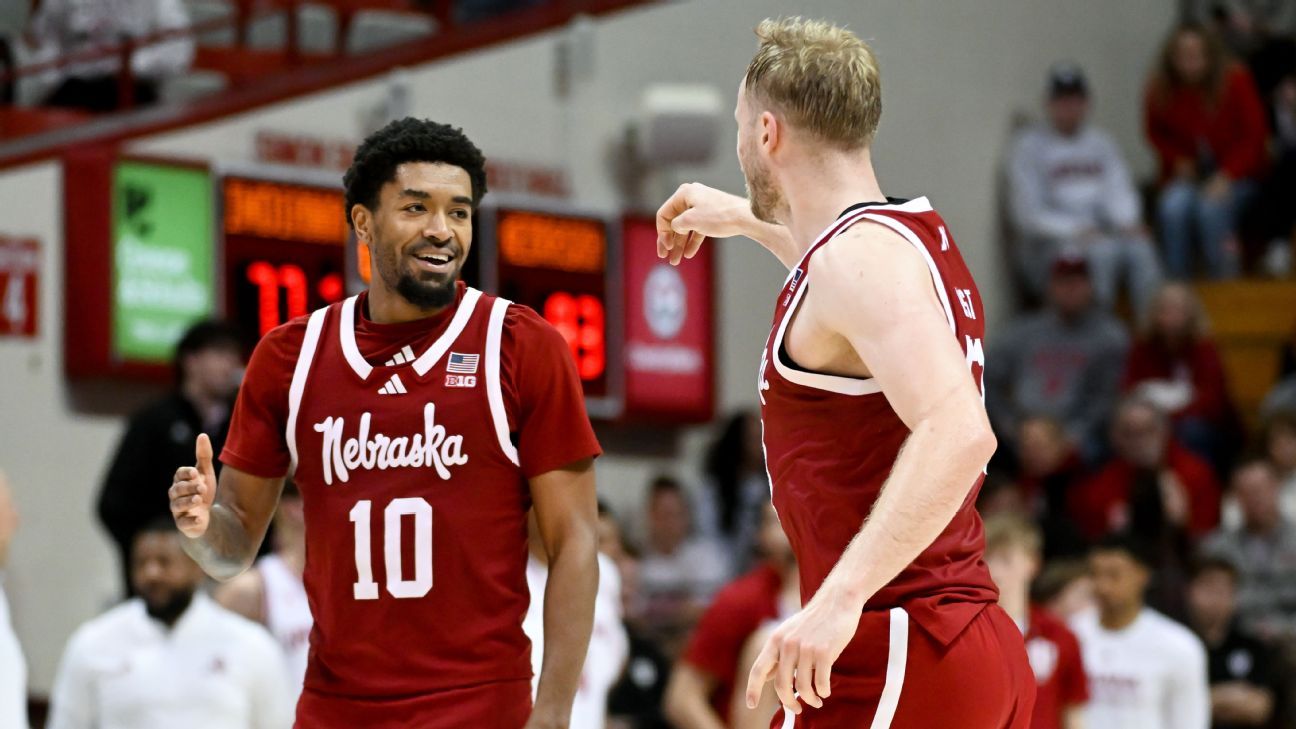
How they got here: Nebraska actually holds the nation’s longest active winning streak, dating to last season’s four-game run to win the College Basketball Crown. The Cornhuskers had some early notable wins over Oklahoma, New Mexico and Kansas State on neutral courts but really began to make waves when they ran off a 21-point win over Creighton, a 30-point win over Wisconsin and a road win at Illinois in a one-week span. They then erased remaining doubts by beating Michigan State at home before going on the road to beat Ohio State and Indiana.
Why they’re unbeaten: The Cornhuskers take care of the ball, make 3s and are experienced — it’s a recipe that works. Even back in his days at the helm of Iowa State, Fred Hoiberg typically had one of the more prolific 3-point shooting teams in the country. That has been taken to a new level this season, with Nebraska attempting more than 50% of its shots from beyond the arc. Four players are making at least one 3 per game; three are shooting 38% or better from 3. The return of all-conference forward Rienk Mast, who sat out last season because of a knee injury, has been huge. And Pryce Sandfort is enjoying a breakout season after transferring from Iowa last spring.
Biggest upcoming test: Jan. 27 at Michigan
Nebraska was able to navigate a difficult three-game stretch to open 2026, which should provide some optimism it will be able to manage its next four games before the showdown in Ann Arbor. The Cornhuskers will have trouble with Michigan’s size, but their ability to generate open shots — particularly from the perimeter — should keep the contest close.

Record: 17-0
Jan. 5 AP Top 25 ranking: Unranked (30th in votes)
How they got here: It helps that the RedHawks have the No. 364 strength of schedule (out of 365 teams) in the country, according to average opponent NET rank. Of their first 13 wins, 12 came against teams ranked in the 200s or 300s at KenPom. But winning at Wright State by seven is a legitimately solid victory — then they came out in MAC play with notable win after notable win. They won at Bowling Green, beat preseason favorite Akron at home and nabbed another victory at perennial contender Toledo. It’s also worth noting that coach Travis Steele’s team has been handling most of its opponents with relative ease, ranking in the top 45 nationally in scoring margin.
Why they’re unbeaten: Even considering the caliber of opposition, Miami has been performing on the offensive end at an extremely high level. The RedHawks have scored at least 1.13 points per possession in all but one game this season and rank No. 6 in the country in offensive rating, according to CBB Analytics. They’re averaging nearly 93 points, rank first nationally in field goal percentage and are top five in 3-point percentage. Steele has them humming at that end of the court — nine different players have already scored at least 15 points in a game this season, with six making double-digit 3s total this season.
Biggest upcoming test: Jan. 20 at Kent State
Arguably the two toughest tests of Miami’s MAC season are out of the way — at Bowling Green and vs. Akron — and the RedHawks are projected to be favored in every game the rest of the season. But road trips in league play are always challenging, and the conference is filled with potential losses. One of those is Kent State, which has lost only one home game this season. The Golden Flashes have a veteran coach in Rob Senderoff, they’re experienced and they play fast.
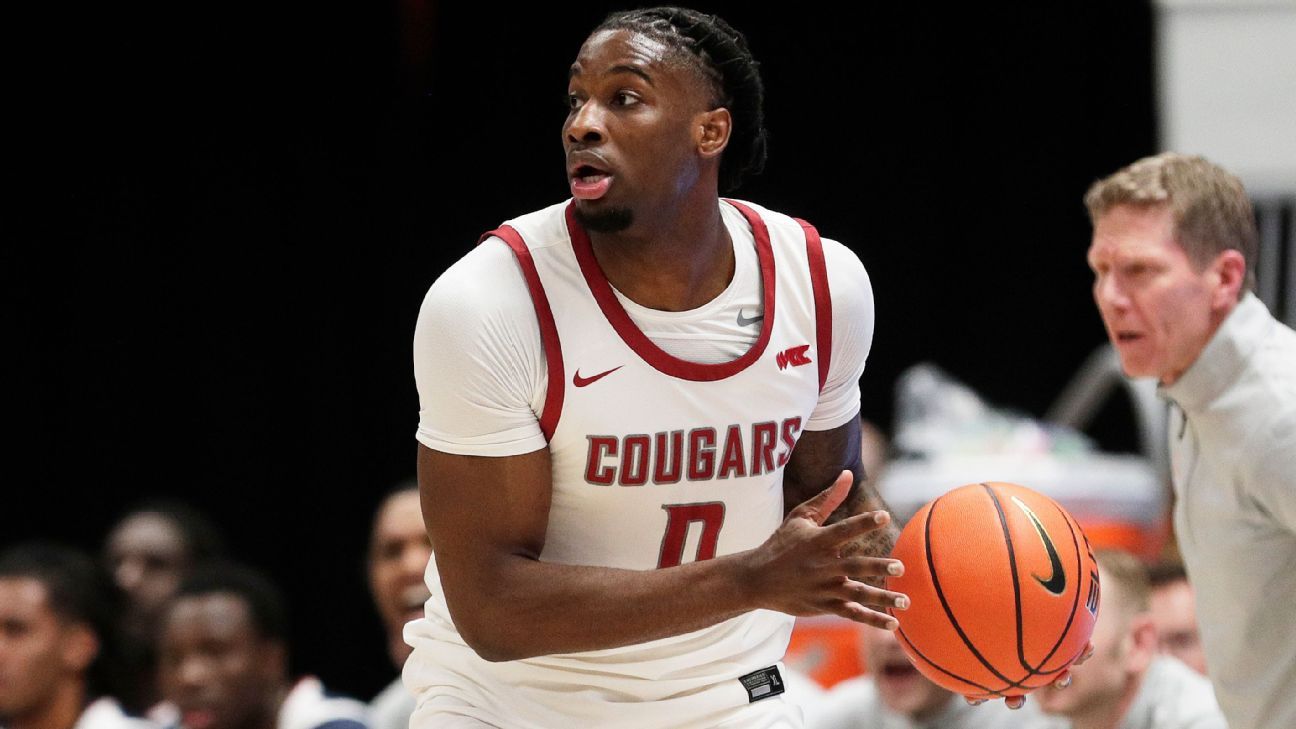
PULLMAN, Wash. — Washington State forward Emmanuel Ugbo, who is currently under a court order resulting from allegations of stalking and harassment, has been suspended for the remainder of the season.
Coach David Riley told reporters this week that Ugbo, who has neither played nor practiced for the Cougars since he was suspended on Jan. 28, will sit out the rest of the way.
“As an institution,” Riley told reporters, “we believe that’s the best course of action.”
Ugbo was accused by a Washington State women’s volleyball player of stalking and harassment after she ended their relationship. Last week, a Whitman County judge granted the woman a full protection order against Ugbo.
Ugbo’s suspension began with Washington State’s home game on Jan. 31, shortly after the woman filed for a temporary protection order. Ugbo averaged 6.7 points and 3.5 rebounds in 18 minutes this season. He previously played for Boise State.
Sports
Anthony Richardson free to seek trade after injury setbacks amid Colts’ shift to Daniel Jones
NEWYou can now listen to Fox News articles!
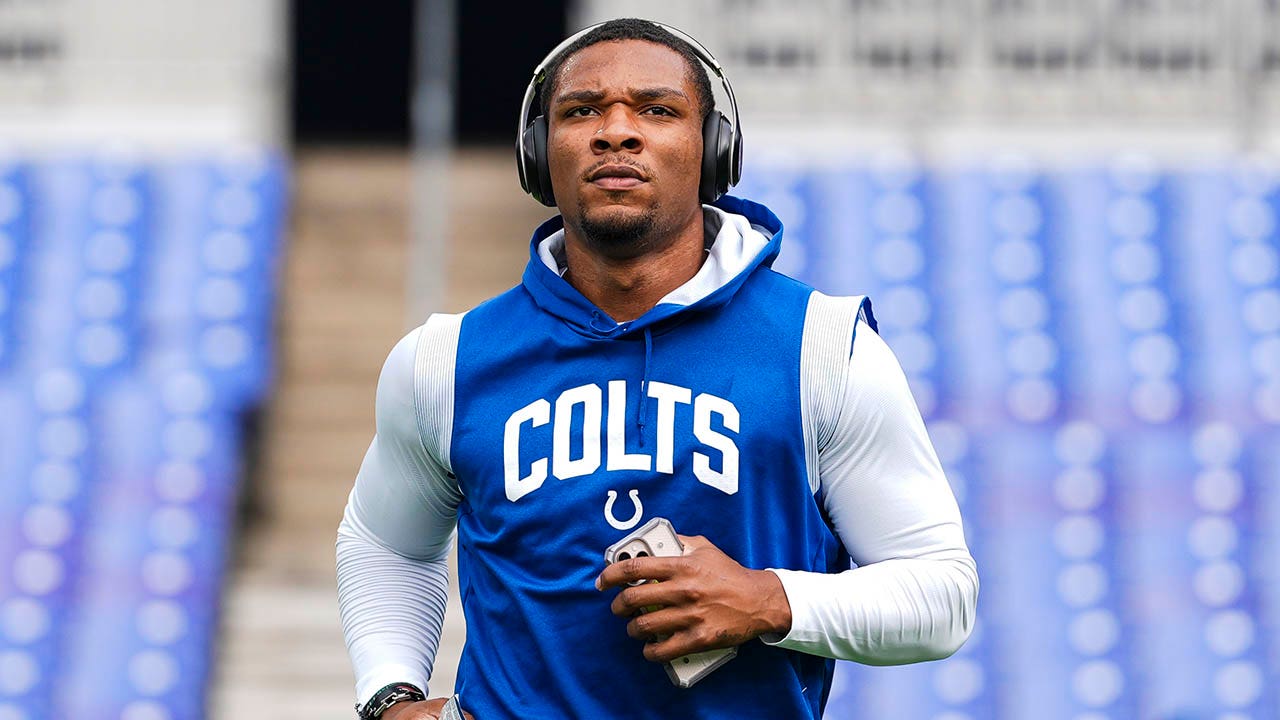
Anthony Richardson Sr.’s future in Indianapolis faces more uncertainty than ever.
The Indianapolis Colts granted Anthony Richardson, the team that used the fourth overall pick in the 2023 NFL Draft on the quarterback, permission to explore a trade. His agent, Deiric Jackson, confirmed the latest development in the 23-year-old’s tumultuous career to ESPN on Thursday.
Veteran quarterback Daniel Jones beat out Richardson in a preseason competition for the starting job. Jones made the most of another opportunity as an NFL starter, helping the Colts win eight of their first 10 games of the 2025 regular season.
CLICK HERE FOR MORE SPORTS COVERAGE ON FOXNEWS.COM
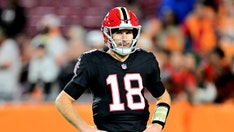
Indianapolis Colts quarterback Anthony Richardson heads off the field after an NFL football game against the Denver Broncos on Sunday, Dec. 15, 2024 in Denver, Colorado. (AP Photo/David Zalubowski)
However, his season was ultimately derailed by an Achilles injury. The setback came two years after he tore an ACL with the New York Giants. The Colts appear ready to move forward with Jones, clouding Richardson’s future in Indianapolis.
Jones is set to become a free agent in March, meaning the Colts must either use the franchise tag or sign him to a new deal. Richardson has started just 15 games in three seasons with the Colts, his tenure largely shaped by injuries.
A shoulder surgery limited Richardson to four games during his rookie campaign, while a series of setbacks cost him four games in 2024.

Indianapolis Colts quarterback Anthony Richardson (5) looks for an open receiver during the game against the Houston Texans at NRG Stadium. (Troy Taormina/Imagn Images)
Richardson suffered what was described as a “freak pregame incident” during warmups last season, landing him on injured reserve after attempting just two passes in two games in 2025. He has thrown 11 touchdowns against 13 interceptions in his NFL career.
Colts general manager Chris Ballard said Tuesday that the vision problems stemming from Richardson’s orbital fracture last October are “trending in the right direction.” He added that Richardson has been “cleared to play.”
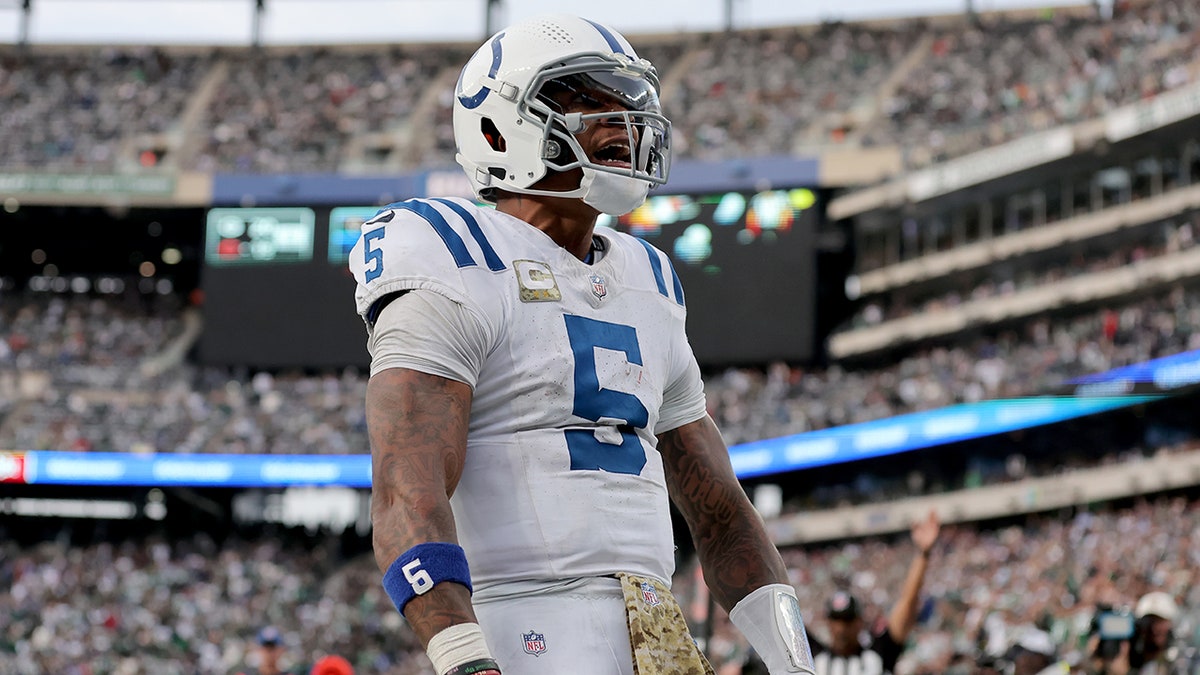
Indianapolis Colts quarterback Anthony Richardson (5) celebrates his touchdown against the New York Jets during the fourth quarter at MetLife Stadium in East Rutherford, New Jersey. (Brad Penner/Imagn Images)
Riley Leonard, a sixth-round pick in the 2025 NFL Draft, is expected to return to the Colts next season.
CLICK HERE TO GET THE FOX NEWS APP
When asked about Richardson’s standing with the Colts moving ahead, Ballard replied, “I still believe in Anthony.”
Follow Fox News Digital’s sports coverage on X, and subscribe to the Fox News Sports Huddle newsletter.
Related Article
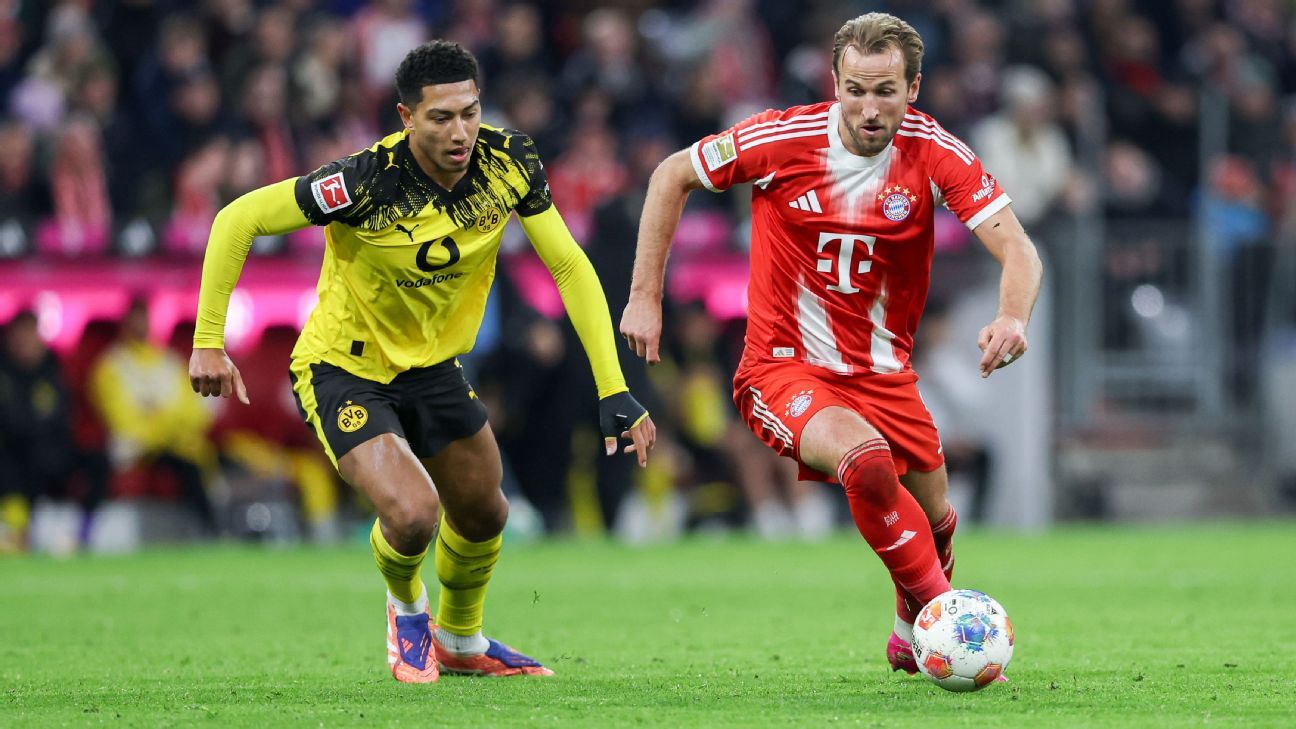
The German word of the week in the Bundesliga ahead of Saturday’s showdown (live at 12:30 p.m. ET, on ESPN+) is not the marketing invention der Klassiker but rather die Aufholjagd (literally, “the hunt to pursue”).
There are in all honesty, very few, even here in the bustling Ruhrpott this week, who believe Borussia Dortmund are likely to make up nine points on leaders Bayern Munich. With the goal difference equation stacked in favor of the Rekordmeister, that is the challenge facing BVB with only 11 games left. But a head-to-head Gipfeltreffen (summit meeting) offers a chance for a new perspective.
Dortmund have spent much of this season under Niko Kovac defying stereotypes: showing a more stable face, grinding out wins, pressing better, reemerging as clearly the second-best team in the Bundesrepublik.
– Why Stuttgart, Celtic’s Europa League opponents, are worth watching
– Meet Noahkai Banks, the outside pick to make USMNT’s World Cup squad
– Harry Kane scores 500th goal: Explaining stats behind red-hot form
But on Wednesday night in Bergamo, the old problems came back to haunt die Schwarz-Gelben, and the team collectively had to Lehrgeld zahlen (literally pay up as a result of being taught a painful lesson) after being eliminated by Atalanta in their knockout round playoff tie in the UEFA Champions League.
Whether Dortmund can translate those lessons — among them, don’t start a big match so passively and Gregor Kobel, don’t give the ball to the opposition with extra time looming — into something successful against a team of Bayern’s sheer quality, is another matter.
Bayern are almost certain to break the Bundesliga’s single-season goal-scoring record (they have 85 goals and need 17 more, a mere bagatelle surely?) Harry Kane requires 14 between now and mid-May to surpass Robert Lewandowski‘s 2020-21 benchmark of 41 league goals. The Englishman has registered a Doppelpack (double) in each of his past three league matches and if he stays fit, you would not bet against him becoming the most goal-rich winner of the Torjägerkanone award ever.
With Michael Olise scoring freely and more importantly, assisting others, and Luis Díaz posing significant problems for opposing sides, Bayern win most games by overwhelming and obliterating. Nobody does it better.
There is, however, a slight glass-jaw quality defensively, which has been evident since January, with only one Bundesliga clean sheet so far this calendar year.
Augsburg for example, have gone to the Allianz Arena and beaten them, Hoffenheim caused them bother even while down to 10 men, and last week Eintracht Frankfurt scored a couple of late goals that Bayern fans, anticipating an easy win, will have seen as nervig (irritating).
At the time of writing, it is unclear who will stand between the posts for the Rekordmeister. Manuel Neuer has been working all week in a bid to get back into the side after sustaining a calf muscle injury at the Weserstadion nearly two weeks ago.
However, Bayern have faith in 22-year-old understudy Jonas Urbig, who looks ever more like the future custodian. Urbig stumbled in the Augsburg game, but his performances have ranged mostly from good to excellent.
If there are any doubts about Neuer’s fitness, it would seem foolish — given the eight-point difference at the top and crunch Champions League matches ahead — to take a chance. Alphonso Davies is out for the foreseeable future with a muscle fiber injury, but with Konrad Laimer available again, Vincent Kompany has plenty of squad depth in the fullback positions with Josip Stanisic and Hiroki Ito.
It almost seems unfair to Dortmund, given the colossal task that they face on Saturday, that right wing back Julian Ryerson is suspended. The Norwegian, once viewed as an honest journeyman, has transformed himself into one of the most valuable players in Kovac’s squad.
Diligent in normal play, Ryerson’s deliveries from open or set play situations can be devilish and he recently crafted all four goals in the same game against Mainz. Yan Couto, more adventurous going forward but less secure defensively, must fulfill that role against Bayern.
At least Nico Schlotterbeck will return to anchor the Dreierkette (back three) in front of Kobel, whose 11 clean sheets top the Bundesliga goalkeeping charts. BVB will require energy and guile in abundance from Marcel Sabitzer and Felix Nmecha in midfield against the formidable duo of Joshua Kimmich and Aleksandar Pavlovic.
Saturday is due to be another day of Verkehrschaos in Dortmund and there have been a few recently. This one is due to industrial action by the trade union, Verdi, knocking out the Stadtbahn (city train/tram service) and bus lines. Fans have been urged to walk the 40 minutes from the Stadtzentrum (city center) to the Signal Iduna Park.
Thereafter, there’s a very real danger that in 90 minutes, Dortmund’s season could effectively disappear in a puff of smoke. Already out of the Champions League and the DFB-Pokal, defeat in the Klassiker would make an Aufholjagd unthinkable.


Bobby J. Brown, “The Wire” and “Law & Order: SUV” actor, dies of smoke inhalation after reported fire

Bangladesh commerce minister seeks Chinese investment in jute sector

Washington State’s Emmanuel Ugbo suspended for rest of season

-
 Tech1 week ago
A $10K Bounty Awaits Anyone Who Can Hack Ring Cameras to Stop Sharing Data With Amazon
-
 Business7 days ago
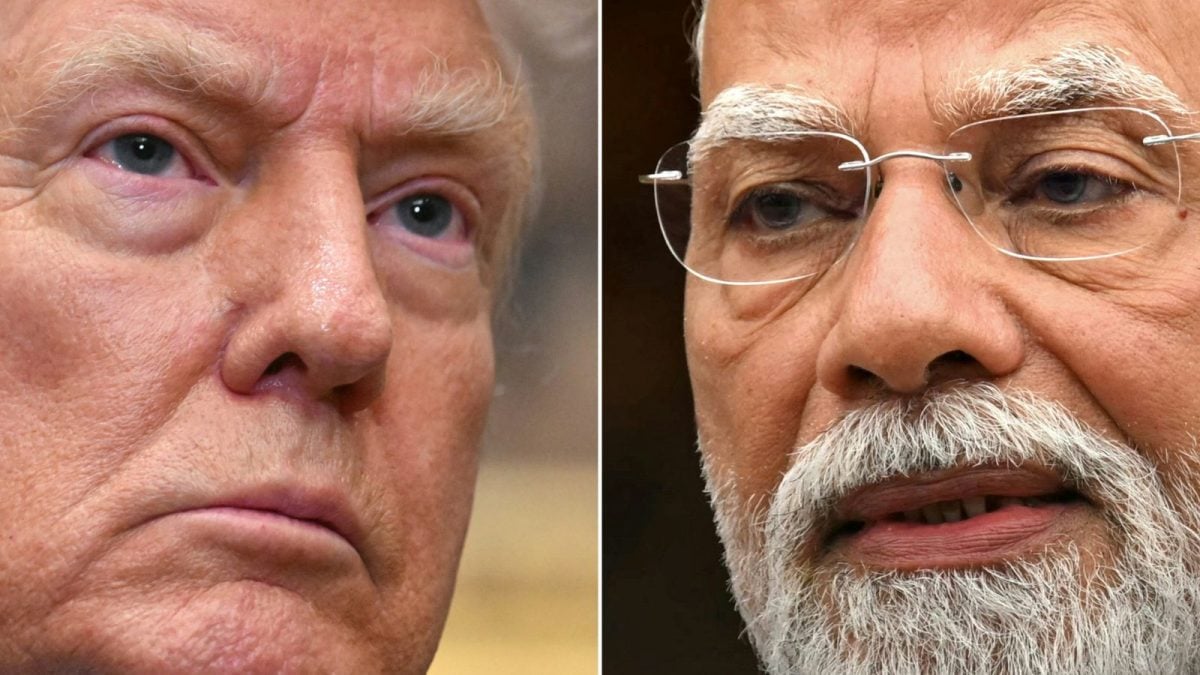
US Top Court Blocks Trump’s Tariff Orders: Does It Mean Zero Duties For Indian Goods?
-

 Fashion7 days ago
ICE cotton ticks higher on crude oil rally
-

 Tech1 week ago
Donald Trump Jr.’s Private DC Club Has Mysterious Ties to an Ex-Cop With a Controversial Past
-

 Entertainment7 days ago
The White Lotus” creator Mike White reflects on his time on “Survivor
-
 Business6 days ago
Eye-popping rise in one year: Betting on just gold and silver for long-term wealth creation? Think again! – The Times of India
-

 Fashion1 week ago
India’s $28 bn reset: How 5 trade deals will reprice its T&A exports
-
 Sports7 days ago
Brett Favre blasts NFL for no longer appealing to ‘true’ fans: ‘There’s been a slight shift’