

Politics
Bill and Hillary Clinton refuse to testify in House Epstein probe

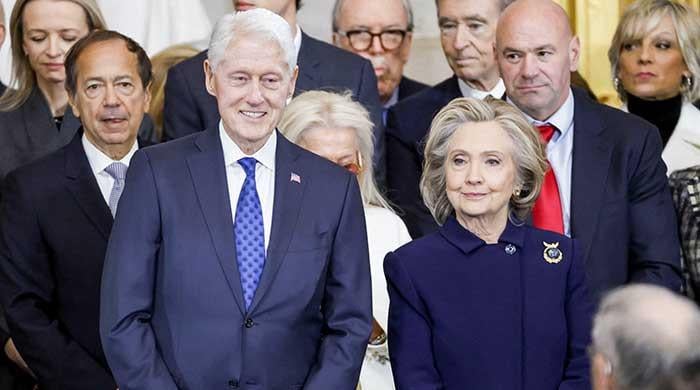

- House panel moves to hold ex-president Bill Clinton in contempt.
- James Comer cites Epstein White House visits, Clinton flights.
- Clintons call subpoenas partisan, accuse probe of political motives.
Bill and Hillary Clinton on Tuesday refused to testify in a Republican-led congressional investigation of the late convicted sex offender Jeffrey Epstein, saying it was a partisan exercise.
“Every person has to decide when they have seen or had enough and are ready to fight for this country, its principles and its people, no matter the consequences,” the Clintons wrote in a letter to Republican Representative James Comer, who chairs the House of Representatives Oversight Committee. “For us, now is that time.”
Comer said the committee will meet next week to hold former Democratic President Bill Clinton in contempt. That could potentially lead to criminal charges.
A committee spokesperson said the panel will also begin contempt proceedings against Hillary Clinton, the 2016 Democratic presidential nominee, if she does not appear before the panel on Wednesday.

The Clintons said they had tried to provide what “little information” they had to help with the investigation and accused Comer of shifting focus away from the Trump administration’s actions. Epstein died in jail in 2019, during President Donald Trump’s first term in office, while awaiting trial on federal sex-trafficking charges. His death was ruled a suicide.
“If the Government didn’t do all it could to investigate and prosecute these crimes, for whatever reason, that should be the focus of your work… There is no evidence that you are doing so,” the Clintons wrote.
“There is no plausible explanation for what you are doing other than partisan politics,” they said.
Epstein White House visits and flights
Comer said “most Americans” want Bill Clinton to answer questions about his ties to Epstein. The Kentucky Republican said Epstein visited the White House 17 times while Clinton was in office and that the former president had flown on Epstein’s plane some 27 times.

Clinton has expressed regret about the relationship and has said he knew nothing about Epstein’s criminal activity. No evidence has surfaced that Clinton was involved in sex trafficking.
“No one’s accusing Bill Clinton of any wrongdoing,” Comer said. “We just have questions.”
The US Justice Department has been releasing files tied to criminal probes of Epstein, who was once friends with Trump and the Clintons, in compliance with a transparency law passed by Congress.
A separate letter sent to the committee on Monday by the Clintons’ attorneys said the subpoenas for their testimony were invalid, unenforceable and “nothing more than a ploy to attempt to embarrass political rivals, as President Trump has directed.”
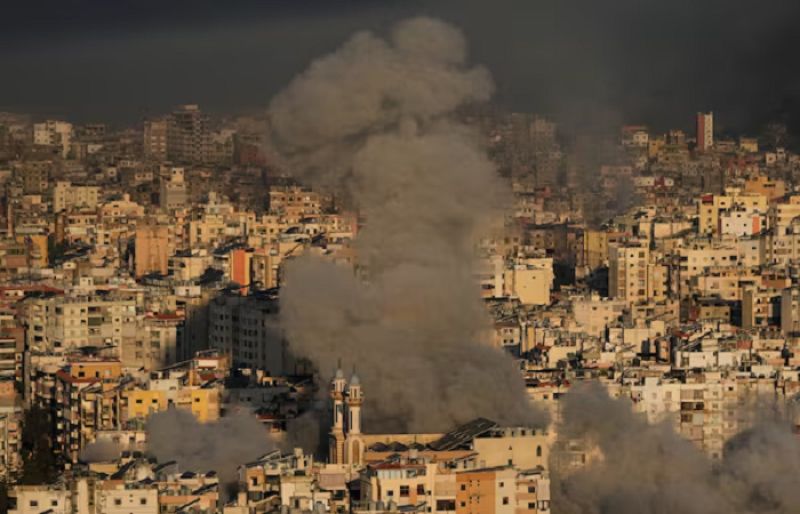

Israel carried out an airstrike on a headquarters belonging to Al-Jamaa Al-Islamiya, an ally of Hezbollah and Hamas, in the southern Lebanese city of Sidon, according to Lebanese state media.
Reports said the strike targeted the group’s office in the coastal city on Tuesday.
Rescue teams and emergency responders rushed to the site following the air raid.
Escalating Regional Tensions
The attack comes amid heightened tensions across the Middle East following expanding military confrontations in the region.
Israel has previously accused Hezbollah and allied groups of coordinating activities with Hamas.
Sidon, one of Lebanon’s major coastal cities, had largely avoided heavy bombardment during the last Israel-Hezbollah conflict.
Background
A November 2024 ceasefire had sought to end the previous war between Israel and Hezbollah.
However, the latest strike indicates renewed tensions and the possibility of further escalation in southern Lebanon.
Authorities have not yet released detailed casualty figures from the attack.
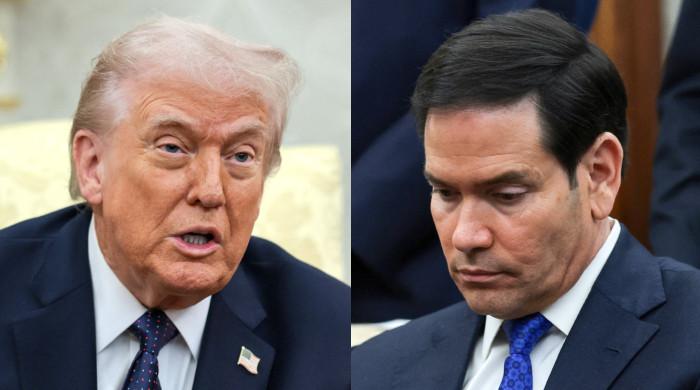
- Trump claims Iran was about to strike first, contradicting Rubio.
- Conservatives criticise US involvement in Iran war.
- White House in damage control over conflicting war rationales.
WASHINGTON: President Donald Trump said on Tuesday he ordered US forces to join Israel’s attack on Iran because he believed Iran was about to strike first, contradicting the rationale offered a day earlier by his secretary of state for how the war began.
Secretary of State Marco Rubio told reporters on Monday that the US launched the attack because of fears that Iran would retaliate in response to planned Israeli action against Tehran.
“We knew that there was going to be an Israeli action; we knew that that would precipitate an attack against American forces, and we knew that if we didn’t preemptively go after them before they launched those attacks, we would suffer higher casualties,” Rubio said.
Trump rejected suggestions that Israel pushed the US into the conflict, as his administration gave varying accounts and faced criticism from some supporters and Democrats who accused him of launching a “war of choice.”
“I might have forced their (Israel’s) hand,” Trump told reporters in the Oval Office as he met with German Chancellor Friedrich Merz. “We were having negotiations with these lunatics, and it was my opinion that they were going to attack first. If we didn’t do it, they were going to attack first. I felt strongly about that.”
Iran has said the US assault was unprovoked.
Several prominent conservative commentators ratcheted up their criticism of the Iran attacks, arguing Rubio’s comments indicated that Israel, not the Trump administration, was calling the shots.
“So he’s flat out telling us that we’re in a war with Iran because Israel forced our hand,” conservative podcaster Matt Walsh wrote of Rubio to his 4 million followers on X. “This is basically the worst possible thing he could have said.”
Megyn Kelly, a conservative podcaster, told her audience that she had doubts about Trump’s decision to strike Iran.
“Our government’s job is not to look out for Iran or for Israel. It’s to look out for us. And this feels very much to me like it is clearly Israel’s war,” Kelly said in remarks aired prior to Rubio’s comments.
The criticism from Trump’s right flank comes as his Republican Party is fighting to hold on to control of the US Congress in the November midterm elections.
Damage control
The debate over the run-up to the war has forced the White House into damage control.
Trump on Tuesday took questions from reporters in a public setting for the first time since the US-Israeli air war began three days earlier. He previously discussed the attacks in two videos, one-on-one interviews with select journalists and brief remarks on Monday at the White House.
The president said he believed Iran was on the brink of launching attacks, presenting no evidence to support his view, after US negotiations with Iran last Thursday in Geneva. Iran had described those talks as positive, with more planned in the days ahead.
“It’s something that had to be done,” said Trump, who did not make a detailed case for war against Iran before it began.
Rubio, pressed on Tuesday about his prior comment during a visit to Capitol Hill, told reporters: “The bottom line is this: The president determined we were not going to get hit first. It’s that simple, guys.”
Two senior Trump administration officials held a conference call on Tuesday with reporters to describe events leading up to military operations, in particular the Geneva talks with Iranian officials held by US envoys Steve Witkoff and Jared Kushner and mediated by Oman.
The two officials said Witkoff and Kushner repeatedly pressed Iran to give up uranium enrichment. Instead, Iran presented a plan that would allow the Iranians to enrich uranium at higher percentages at the Tehran Research Reactor in northern Iran, they said.
The US envoys felt the Iranians were engaging in delay tactics, according to the officials.
“They were unwilling to give up the building blocks of what they needed to preserve in order to get to a (nuclear) bomb,” one official said.
Iran denies seeking a nuclear weapon.
The envoys reported back to Trump, telling him it might have been possible to get a nuclear agreement similar to the one that former President Barack Obama’s team and world powers negotiated with Iran in 2015 but that it would take months.
Trump ordered US forces into action the next day, and the strikes began on Saturday.
- Study visas blocked for Afghanistan, Cameroon, Myanmar, Sudan.
- Britain will also halt work visas for Afghans.
- UK says legal asylum claims rose 470% between 2021 and 2025.
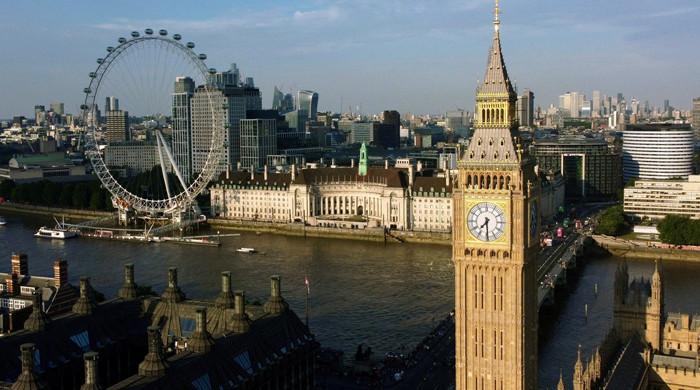
Britain said on Tuesday it would block study visas for nationals from four countries and halt work visas for Afghans, using what it called an “emergency brake” to curb rising asylum claims from people entering through legal routes.
Immigration remains one of Britain’s most politically sensitive issues, and Prime Minister Keir Starmer’s government has sought to show it is tightening the system as the populist Reform UK party gains ground in opinion polls.
The interior ministry, which is set to block study visas for nationals from Afghanistan, Cameroon, Myanmar and Sudan, said asylum applications by students from these countries had jumped more than fivefold between 2021 and 2025.
It also said claims by Afghans on work visas were now outstripping the number of visas issued.
“Britain will always provide refuge to people fleeing war and persecution, but our visa system must not be abused,” interior minister Shabana Mahmood said in a statement.
“That is why I am taking the unprecedented decision to refuse visas for those nationals seeking to exploit our generosity.”
Asylum claims trebling since 2021
According to the government, asylum claims made after entering on legal visas have more than trebled since 2021 and accounted for 39% of the 100,000 people who applied last year.
It said that nearly 16,000 nationals from the four listed countries were currently being supported at public expense, including more than 6,000 in hotels, adding to pressure over the cost of asylum accommodation, which it put at 4 billion pounds ($5.34 billion) a year.
The changes would take effect on March 26, the government said, adding that it intended to create new capped “safe and legal routes” once the asylum system stabilises.
Britain has granted sanctuary to more than 37,000 Afghans through resettlement schemes since 2021 and issued about 190,000 humanitarian visas last year.
It said it had secured cooperation from Angola, Namibia and the Democratic Republic of Congo on returns, after warning in November that their nationals risked losing access to UK visas.
Starmer has previously said that Britain’s asylum rules were more permissive compared with parts of Europe and acted as a “pull factor” for people seeking to reach the country.
His government announced plans in November to make refugee status temporary and speed up removals of people who arrive illegally.


Transfer rumors, news: Man Utd, Chelsea, Liverpool eye USMNT star Adams

80% Stocks Already In Bear Market; Should You Buy The Dip Or Run For Safety?
‘I fiddled the meter for a mate – and the shop burnt down’

-
 Business1 week ago
Households set for lower energy bills amid price cap shake-up
-

 Politics6 days ago
US arrests ex-Air Force pilot for ‘training’ Chinese military
-

 Politics6 days ago
What are Iran’s ballistic missile capabilities?
-
 Business6 days ago
Attock Cement’s acquisition approved | The Express Tribune
-

 Fashion6 days ago
Policy easing drives Argentina’s garment import surge in 2025
-

 Sports1 week ago
Top 50 USMNT players of 2026, ranked by club form: USMNT Player Performance Index returns
-

 Sports6 days ago
Sri Lanka’s Shanaka says constant criticism has affected players’ mental health
-
 Business1 week ago
Lucid widely misses earnings expectations, forecasts continued EV growth in 2026