

Sports
Billionaire booster, conference commishes at odds

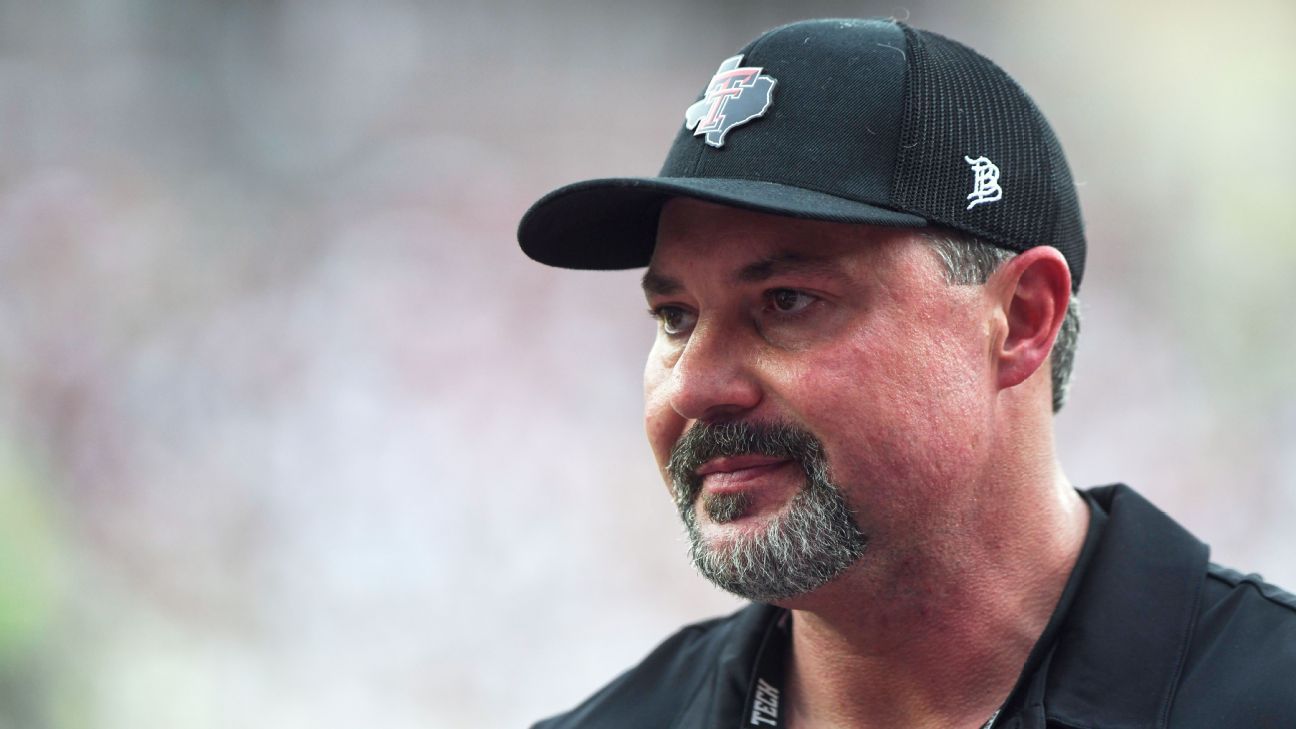
One of the most vocal and potentially powerful boosters in college sports lashed out at conference commissioners for stymieing changes he thinks could save the rapidly changing industry, and then the commissioners countered, with one of them saying the booster’s views “reflect a fundamental misunderstanding of the realities of college athletics.”
The dispute began with an argument Thursday by Cody Campbell, Texas Tech’s billionaire head of regents, about how the proposed pooling of college TV rights could feed additional billions into school coffers, but that progress is being held back because “the conferences are all represented by commissioners who are very, very self-interested.”
“The commissioners don’t really care what happens at the institutional level,” Campbell said at a panel discussion held by the Knight Commission, an oversight group that released a survey in which a majority of college executives who responded said Division I sports was headed in the wrong direction. “All they care about is what happens to them. And I think that is fundamentally the problem.”
Campbell said he supports elements of the recently introduced SAFE Act, a bill co-sponsored by Sen. Maria Cantwell, D-Wash., that features a call for a rewrite of a 1960s law that would lift a restriction on college conferences from combining to sell their TV rights together. Campbell told attendees the move could be worth $7 billion, and said commissioners had said to him “privately” that they know a modification of that law would generate more revenue “but I don’t want to give up control of my own media-rights negotiation.”
Southeastern Conference commissioner Greg Sankey told The Associated Press those conversations with Campbell never occurred.
“I have never stated — publicly or privately — that pooling media rights would increase revenue, nor do I believe that it would,” Sankey said. “His misrepresentation of my position raises serious concerns about the accuracy of his other claims. … His comments reflect a fundamental misunderstanding of the realities of college athletics.”
Big 12 commissioner Brett Yormark also denied making those remarks.
“Cody is entitled to his own opinion, but not his own facts,” Yormark said. “I’ve never said pooling media rights will increase revenue. The only thing I have said is that hope isn’t a strategy. There are unintended consequences to amending the [1961 Sports Broadcasting Act] that Cody and his team need to better understand.”
College sports has come under new financial pressure after the recent $2.8 billion House settlement that allows schools to directly pay players for use of their name, image and likeness (NIL) to the tune of up to $20.5 million per university, starting this season.
Media deals make up the backbone of most schools’ bankrolls. The Power 4 conferences each have different, multibillion-dollar arrangements with varied expiration dates spread across multiple networks. The proceeds for those deals then go to conference offices, which all have their own formulas for divvying it up. The Atlantic Coast Conference, for instance, recently reworked its formula to base a portion of its payouts on viewership numbers for specific schools.
The Big Ten, meanwhile, has made headlines recently for being in late-stage efforts to procure up to $2 billion from private equity, which would create a new entity that would market the league’s media rights and other properties.
“The fact that we’re bringing private equity into something that is, in my view, owned by the American public in college sports, is outlandish,” Campbell said. “We have halfway professionalized this thing. And so we have a professionalized cost model on one side where we pay coaches a lot. We’re now paying players a lot. But we have this amateurish media-rights marketing effort that makes absolutely no sense to anybody.”
The Big Ten did not respond to an AP request for comment. Sankey and Yormark, however, pushed back on the idea that commissioners are out of touch with what’s good for college sports.
“My responsibility lies with the institutions I serve and the student-athletes on our campuses,” Sankey said. “Mr. Campbell’s suggestion that commissioners are indifferent to the institutional level is both irresponsible and damaging to his own credibility.”
“Our decisions are rooted in collaboration, accountability, and a deep understanding of the institutional impact for student-athletes,” Yormark said. “The SCORE Act is the first step in solving the issues facing collegiate athletics.”
The SCORE Act, which has support from the NCAA and the Power 4 conferences, proposes limited antitrust protection for the NCAA, mainly from lawsuits involving eligibility issues, and a prohibition on athletes becoming employees of their schools — a development that NCAA executive Tim Buckley said would be “the budget buster of the century” for college sports.
Campbell portrayed the SCORE Act as too broad a giveaway to the NCAA and the conference commissioners he challenged for wanting to run their own fiefdoms instead of looking out for the good of college sports in general.
“Protecting your position and protecting your importance and your ego, I could not care less about that,” Campbell said. “Because I know that if we don’t change something and bring more revenue in, a lot of sports are going to be cut, a lot of scholarships are going to be cut, and a lot of kids are going to lose opportunity.”
Sports
George Kittle’s wife shares live reaction to husband’s Achilles injury: ‘Doesn’t make any f—ing sense’

NEWYou can now listen to Fox News articles!
San Francisco 49ers fans suffered a devastating blow when George Kittle went down with a torn Achilles on Sunday, but the star tight end’s wife may have taken it the hardest.
Claire Kittle and Kyle Juszczyk’s wife, Kristin, have shared their game-day memories on an Instagram page called “Wifed Up Mic’d Up,” and the page caught Claire’s live reaction to her husband’s injury.
“Get up. Get up,” Claire begged as her husband lay on the grass at Lincoln Financial Field.
CLICK HERE FOR MORE SPORTS COVERAGE ON FOXNEWS.COM
Tight end George Kittle of the San Francisco 49ers embraces his wife Claire Kittle on the sidelines prior to an NFL football game against the Los Angeles Rams, at Levi’s Stadium on Dec. 12, 2024 in Santa Clara, California. (Brooke Sutton/Getty Images)
Someone else in their suite said to Claire that it was likely an Achilles injury after seeing a replay. She then let out an emphatic, “F—,” and watched in shock as her husband was carted off the field.
“It’s all f—ing f—ed up. What’s that, a year?” Claire asked. “All next year, too. Doesn’t make any f—ing sense.”
The video then told viewers that the Kittles spent the rest of the game in the locker room together.
Despite the injury, Kittle was in “good spirits,” probably because of the Niners’ 23-19 victory to advance to the divisional round. He was then seen on camera belting out “Linger” by The Cranberries and “One Headlight” by The Wallflowers on a bus to the airport.
“See you next year,” Kittle told the cameras.

George Kittle of the San Francisco 49ers is carted off the field during the second quarter in the NFC Wild Card Playoff game against the Philadelphia Eagles at Lincoln Financial Field on Jan. 11, 2026 in Philadelphia, Pennsylvania. (Elsa/Getty Images)
FOX SUPER 6 CONTEST: CHRIS ‘THE BEAR’ FALLICA’S NFL DIVISIONAL ROUND PREDICTIONS
“Disbelief and stillness were all I felt as I yelled, get up, get up, over and over again. He always gets up. He’s George — he can do all things. He just does it. It hurts. There’s no preparing for it. I love this man with everything I have in me. He is a unicorn in this world, and he will be back stronger and better than ever before,” Claire captioned an Instagram post showing her and the 49ers star in the training room and on the sidelines at Lincoln Financial Field.
“The mind of a heartbroken athlete is a determined one. He is un-(expletive)-able, as is this entire team. I’m proud of these guys and the rally-together grit they fight with each week. It’s a special year, you can feel that and we’re not done yet. Thank you for loving G and carrying some of this pain for us,” she wrote.
Kittle responded to his wife’s post with his own message of gratitude, commenting, “You’re the best teammate for this journey.”
Kittle dealt with injuries during the regular season, which limited him to 11 games. He still recorded 628 receiving yards and hauled in seven touchdowns.
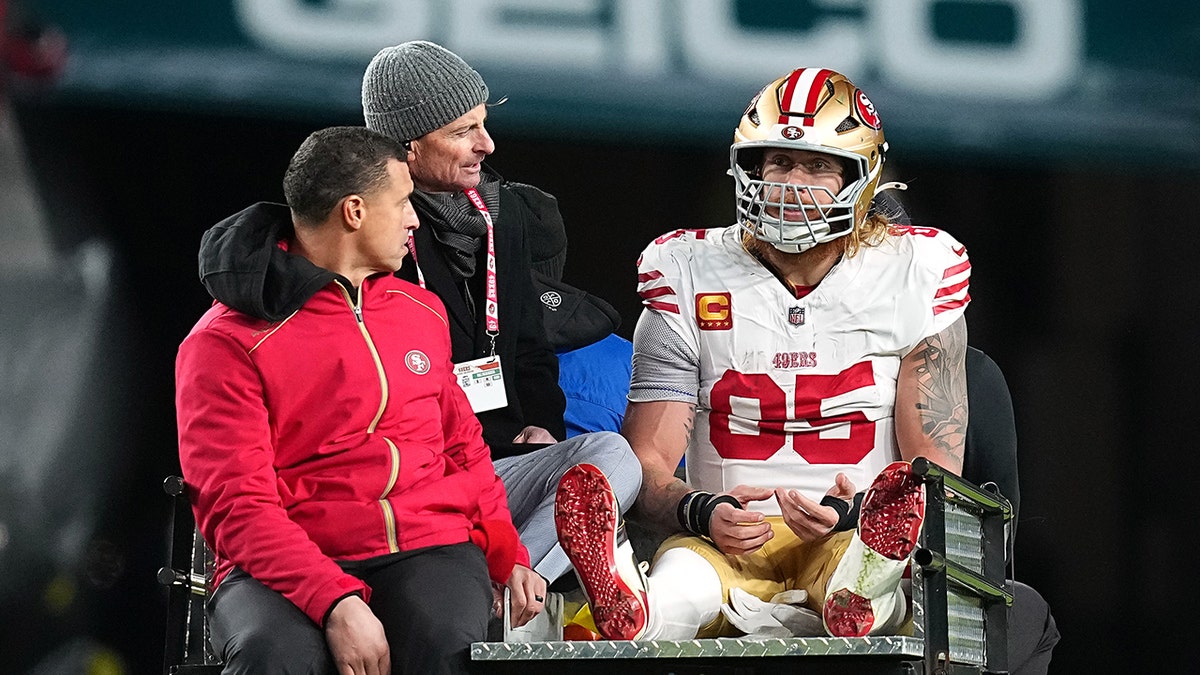
George Kittle of the San Francisco 49ers is carted off the field during the second quarter in the NFC Wild Card Playoff game against the Philadelphia Eagles at Lincoln Financial Field on Jan. 11, 2026 in Philadelphia, Pennsylvania. (Mitchell Leff/Getty Images)
CLICK HERE TO GET THE FOX NEWS APP
The Niners will face their division rivals, the Seattle Seahawks, on Saturday at 8 p.m. ET.
Follow Fox News Digital’s sports coverage on X, and subscribe to the Fox News Sports Huddle newsletter
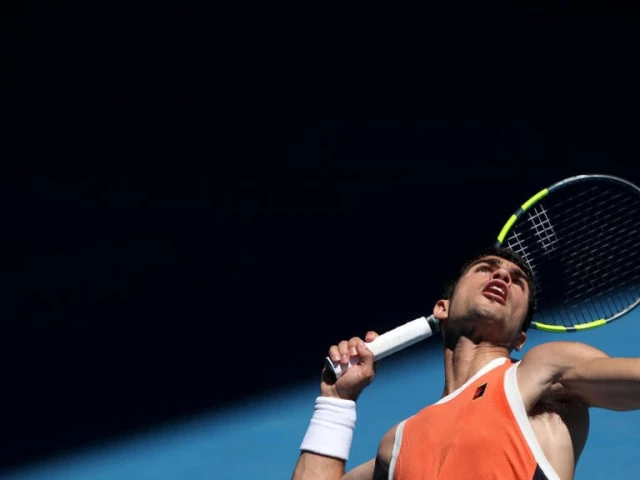
Spain’s Carlos Alcaraz is targeting a career Grand Slam at the Australian Open. Photo: AFP
MELBOURNE:
Carlos Alcaraz launches his bid for a career Grand Slam on Sunday “hungry” for an elusive Australian Open title, while Aryna Sabalenka is laser-focused on clinching a third Melbourne crown.
The first major of the year gets under way as a 15-day event for the third time running, aimed at cutting down on late-night finishes.
Top seed Alcaraz is desperate to win it, having failed to go past the quarter-finals in four previous trips to Australia.
The title is the only one missing from his major collection, which currently consists of two French Opens, two US Opens and two Wimbledons.
“This is my main goal for this year,” Alcaraz, who gets under way in the night match on Rod Laver Arena against home player Adam Walton, said.
“I’m just hungry for the title, hungry to do a really good result here.”
He has met the 79th-ranked Walton once before, at Queen’s in London last year, when he won 6-4, 7-6 (7/4).
Should the 22-year-old complete the career Slam he would join an exclusive club as just the sixth man to win all four major titles after Andre Agassi, Roger Federer, Rafael Nadal, Novak Djokovic and Rod Laver.
He would also become the youngest, surpassing Nadal, who was 24 at the time.
But he has a big roadblock in front of him, with Italy’s Jannik Sinner the two-time defending champion and in peak physical condition.
Sinner, who beat Alexander Zverev in last year’s final and went on to win Wimbledon, opens against France’s Hugo Gaston, who he has met twice before but not since 2021.
“We worked a lot physically,” Sinner said of his pre-season. “The physical part now is so, so important because the matches can get very long and also very intense.
“You have to be at the top physical level as long as you can.”
Assuming he gets that far, Sinner could meet 10-time champion Djokovic in the semi-finals before a potential clash with Alcaraz for the title.
Djokovic would surpass Margaret Court as the outright Slam leader on 25 titles should he turn back the clock and upstage his younger rivals.
He has a tricky opener against Spain’s Pedro Martinez.
Zverev, in the same half of the draw as Alcaraz, is also in action Sunday against Canadian Gabriel Diallo.
World number 10 Alexander Bublik takes on American Jenson Brooksby.
Sabalenka hot favourite
Top-ranked Sabalenka kicks off against French wildcard Tiantsoa Rakotomanga Rajaonah, preceding Alcaraz onto Rod Laver Arena.
The Belarusian went into last year’s final aiming to become the first woman since Martina Hingis to win three consecutive Australian Opens.
But she was stunned by Madison Keys, a setback she admitted “took me a little time to recover” from.
“I’m not really focusing on that result last year,” said Sabalenka, who won the Brisbane title last week. “But of course I would like to do just a little bit better than I did last year.”
Keys failed to really kick on from clinching a maiden Grand Slam and is in Australia as the ninth seed.
She will need to improve after clocking up nearly 50 unforced errors in her early exit at the warm-up Adelaide International.
She meets debutant Oleksandra Oliynykova of Ukraine and could face Jessica Pegula in the last 16 and Amanda Anisimova in the last eight.
“I’m really trying to push myself to kind of evolve and add more things to my game,” said the American.
Sabalenka’s chief rival, six-time Grand Slam winner Iga Swiatek is, like Alcaraz, angling for a career Grand Slam in Melbourne.
“Obviously it would be a dream come true,” said the Polish star, who is yet to go beyond the semi-finals.
She will begin against Chinese qualifier Yuan Yue.
Seventh seed Jasmine Paolini, 12th seed Elena Svitolina and veteran Venus Williams are also in action on Sunday.
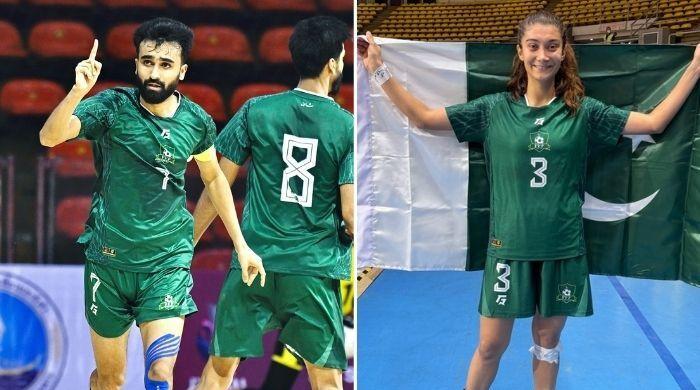
Pakistan’s futsal breakthrough continued at the SAFF Championship in Thailand as the men’s team secured their first-ever international win on Friday, a day after the women recorded Pakistan’s maiden futsal victory.
In the men’s event, Pakistan came back from a 2–0 deficit to beat Bhutan 4–2 at the Hua Mak Indoor Arena in Bangkok, registering their first international victory in futsal.
Bhutan’s Dawa Shering put his side ahead with two quick goals early on, but Pakistan responded through Hassan Zafar, who scored in the 28th minute to cut the deficit.
Asif Ahmed Chaudhry levelled the match in the 32nd minute before Adnan Ashfaq struck in the 34th and 35th minutes to complete the turnaround and seal the win.
Pakistan’s starting five for the match featured Tahir Khan, Hassaan Zafar, Humza Nusrat, Nisar Hussain and Salar Khan, with Abdul Wadud, Humza Khan, Asif Ahmad, Adnan Ashfaq, Ali Agha, Abdul Hannan, Zaid Khan, Muhammad Elham and Rajab Ali listed among the substitutes.
Pakistan had opened the tournament with a 7–1 defeat to the Maldives in their first match.
In the women’s event, Pakistan defeated Sri Lanka 3–2 on Thursday, with Azwa Chaudhry scoring a hat-trick to deliver the women’s team’s first-ever international futsal win.
Reacting to the landmark results, the Pakistan Football Federation (PFF) said on Instagram that Pakistan’s women’s and men’s futsal teams had “created history by winning their first-ever international matches at SAFF Futsal 2026”.
The PFF said the teams delivered the wins “despite a lack of Futsal infrastructure in the country and the challenges”, adding that Pakistan women beat Sri Lanka 3–2 while the men’s team “came from behind to win against Bhutan 4-2”.
PFF President Mohsen Gilani credited the achievement to the resilience and efforts of the coaches and players, saying: “our players and coaches have made history and we will build on this foundation to take Futsal to greater heights and make Pakistan a force in Futsal”.
The federation also said referees and coaches from Pakistan “completed their courses for Futsal during the SAFF Championship”.
The women’s team returns to face the Maldives today at 6:00pm Pakistan time, while the men’s team will play Sri Lanka in their next match on January 18.


George Kittle’s wife shares live reaction to husband’s Achilles injury: ‘Doesn’t make any f—ing sense’

Disney dominated the 2025 box office. Here’s how it could keep the crown in 2026

Trump ‘guilty for casualties’ in Iran protests: Khamenei

-

 Tech5 days ago
New Proposed Legislation Would Let Self-Driving Cars Operate in New York State
-
 Sports6 days ago
Clock is ticking for Frank at Spurs, with dwindling evidence he deserves extra time
-
Sports1 week ago
Commanders go young, promote David Blough to be offensive coordinator
-

 Entertainment4 days ago
X (formerly Twitter) recovers after brief global outage affects thousands
-

 Fashion6 days ago
South India cotton yarn gains but market unease over US tariff fears
-

 Fashion6 days ago
China’s central bank conducts $157-bn outright reverse repo operation
-
 Business1 week ago
SoftBank reduces Ola Electric stake to 13.5% from 15.6% – The Times of India
-

 Sports6 days ago
US figure skating power couple makes history with record breaking seventh national championship