

Fashion
Birks sales surge on European acquisition, strong retail performance


Published
December 8, 2025
Birks announced on Friday a 16.2% uptick in half-year sales to $93.1 million, on the back of the Canadian jeweller’s acquisition of European Boutique, and a strong retail performance.
The Montreal-based company also logged an increase in third-party branded timepieces across multiple brands for the 26 weeks ending September 27, in addition to gains in sales of Birks branded jewelry and third-party branded jewelry.
Meanwhile, comparable store sales rose 6.3%, attributable to strong sales in all product categories, particularly in third-party branded timepieces, but also in Birks branded jewelry and third-party branded jewelry, the company added.
In light of the strong sales performance, Birks narrowed its earnings loss during the six months to an operating loss of $0.2 million, compared to a reported operating loss of $0.3 million in the prior-year period.
“Our net sales, gross profit and comparable store sales for the first half of Fiscal 2026 are higher than the corresponding period in Fiscal 2025 due in part to the acquisition of the European business but also due to our strong retail performance, which speaks to the strength of our product offerings, both in terms of our Birks branded products and our third-party branded watches and jewelry,” said Niccolò Rossi di Montelera, executive chairman of the board and interim CEO.
“I would like to thank our teams for their dedication and hard work. The growth achieved in the first half of Fiscal 2026 is a testament of our commitment to our customers and I am grateful for the unwavering efforts of all our employees which contributed to these results and the successful integration of the European stores.”
In July, Birks acquired the luxury watch and jewellery business of European Boutique from its founders, the Sutkiewicz family, for a purchase price of $9 million.
Copyright © 2025 FashionNetwork.com All rights reserved.









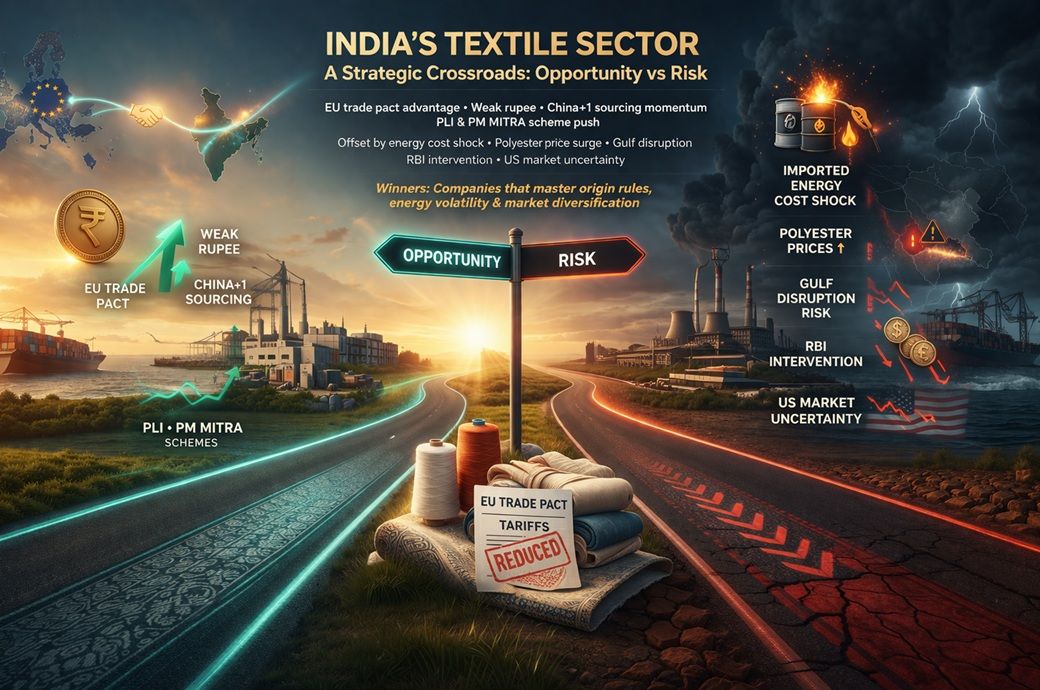
India’s textile outlook is turning structurally complex.
The EU pact targets ~99.5 per cent trade coverage with phased duty relief, while rupee weakness supports exports.
However, crude volatility, >80 per cent import energy dependence, polyester cost inflation and US market softness (≈28 per cent share) are fragmenting performance, reinforcing a shift towards cotton-led, EU-focused exporters.
Source link
Official data showed that 186 transactions were completed under the zero-tariff policy, covering goods worth nearly ¥1.7 billion (~$236 million), reflecting a 1.46-fold rise compared to the previous year. The policy also resulted in duty exemptions totalling ¥271 million (~$37.6 million).
The figures were released at a press conference held ahead of the 100-day milestone of the policy’s implementation.
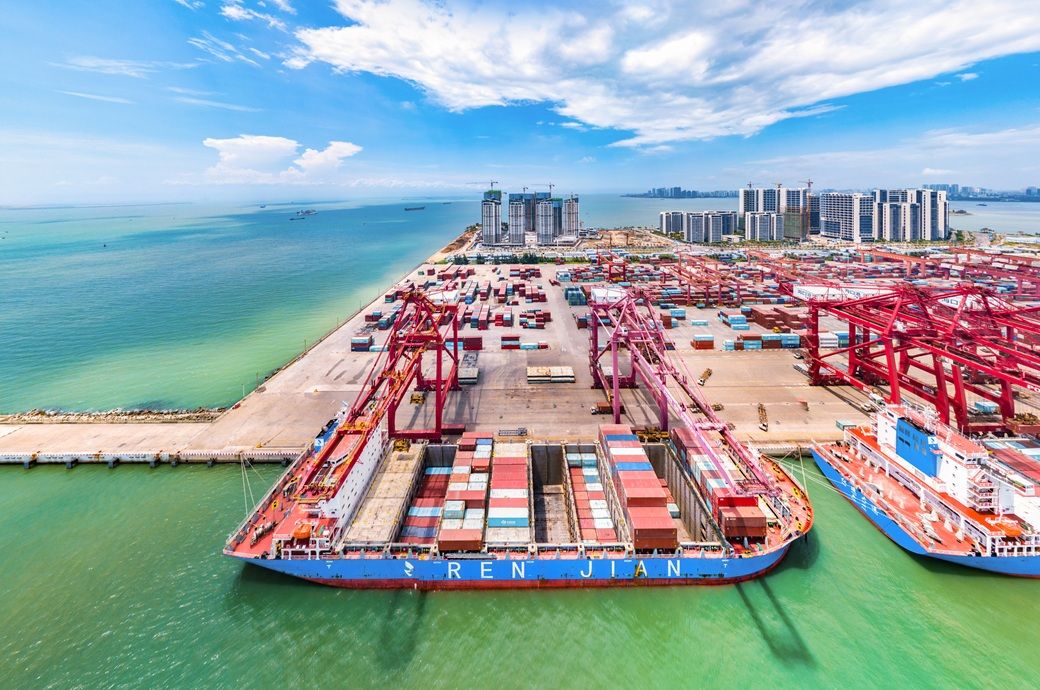
Hainan Free Trade Port recorded trade exceeding ¥80 billion (~$11.6 billion) in its first 100 days of special customs operations, up 32.9 per cent YoY.
A total of 186 zero-tariff transactions were completed, covering goods worth ¥1.7 billion (~$236 million), while duties worth ¥271 million (~$37.6 million) were exempted, reflecting strong early momentum.
Launched on December 18, the island-wide special customs operations aim to facilitate smoother entry of overseas goods, expand the scope of zero-tariff items, and create a more business-friendly trade environment.
Positioned as the world’s largest free trade port by area, Hainan FTP is expected to play a strategic role in advancing China’s trade liberalisation and economic openness.
Fibre2Fashion News Desk (JP)

The measure implements tariff reduction commitments made under the ‘Early Harvest Arrangement of the Agreement on Economic Partnership for Shared Development’ between the two countries.
China will implement preferential tariff rates on selected imports from the Republic of the Congo starting April 1 under the Early Harvest Arrangement of their economic partnership agreement.
The move announced by the Customs Tariff Commission, is aimed at fulfilling tariff reduction commitments, enhancing bilateral trade cooperation and advancing long-term economic ties between the two countries.
The commission said the move is in line with China’s tariff law and reflects the country’s continued efforts to expand opening-up and strengthen trade ties with African partners.
Officials stated that the preferential tariff treatment will help deepen bilateral economic and trade cooperation and support the development of a higher-level community with a shared future between China and the Republic of the Congo.
The Early Harvest Arrangement, signed in November 2025, marked the first such agreement of its kind between China and an African country, paving the way for broader market access and phased tariff reductions.
Fibre2Fashion News Desk (JP)


EU gains meet a harsh reality in India: War, rupee, energy shock

Hainan free trade port crosses $11.6 bn trade in 100 days

Antonio Banderas opens up on ethnic stereotyping in Hollywood

-
 Business1 week ago
Flipkart group CFO to leave co amid IPO plans – The Times of India
-

 Fashion7 days ago
China’s textile & apparel exports surge 17% to $50 bn in Jan-Feb 2026
-
 Business1 week ago
Video: The Effects of High Oil Prices
-

 Sports1 week ago
Rating Adidas’ 2026 World Cup away shirts: Argentina, Spain, Mexico and more
-
 Fashion1 week ago
The hidden $1.62 war tax now embedded in every garment you source
-

 Sports1 week ago
American Conference Commissioner Tim Pernetti thanks Trump for Army-Navy game executive order
-
Tech1 week ago
The Corsair 4000D RS PC Case Keeps Your System Cool
-

 Tech1 week ago
‘Uncanny Valley’: Nvidia’s ‘Super Bowl of AI,’ Tesla Disappoints, and Meta’s VR Metaverse ‘Shutdown’