

Business
‘Blatantly Untrue’: Reliance Industries Rejects Claims Of Russian Crude Vessels Heading To Jamnagar

Last Updated:
RIL has refuted reports that three vessels laden with Russian oil are on their way to its Jamnagar refinery

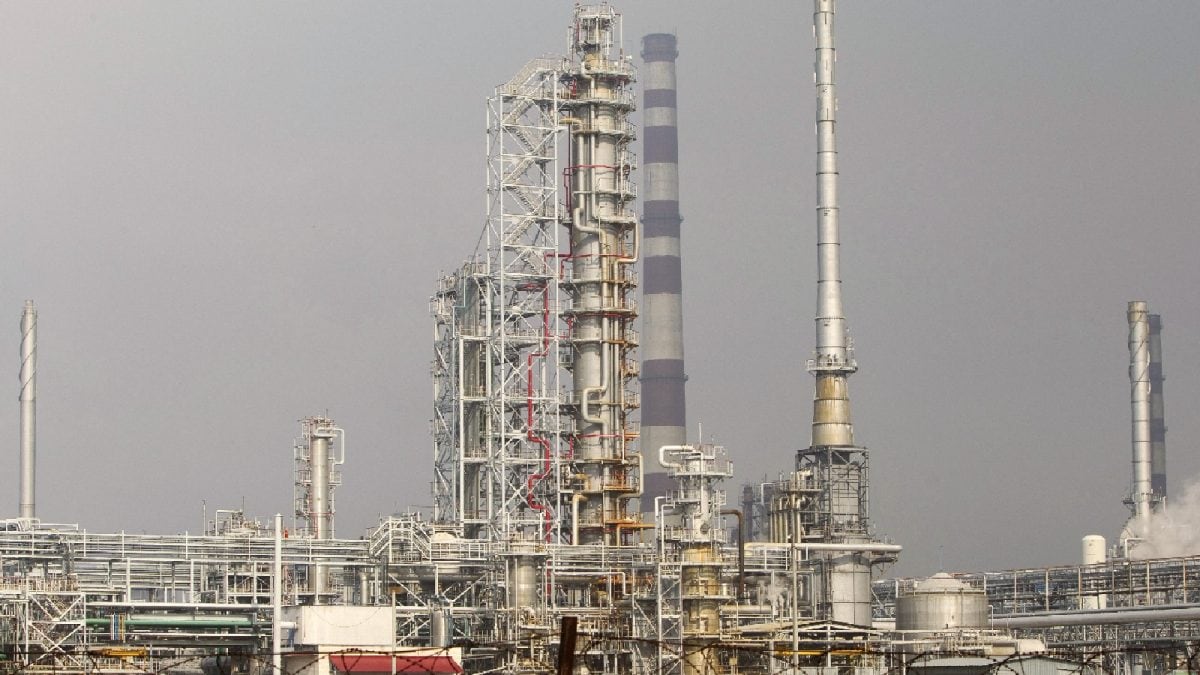
Oil (Representative Image)
Reliance Industries (RIL) has refuted reports that three vessels laden with Russian oil are on their way to its Jamnagar refinery.
In a post on X, RIL called the report “blatantly untrue”, adding that the refinery has not received any Russian oil cargo in around the past three weeks, nor is expecting any Russian crude oil deliveries in January.
Statement by Reliance Industries Limited:A news report in Bloomberg claiming “three vessels laden with Russian Oil are heading for Reliance Industries Limited’s Jamnagar refinery” is blatantly untrue.
Reliance Industries’s Jamnagar refinery has not received any cargo of…
— Reliance Industries Limited (@RIL_Updates) January 5, 2026
“We are deeply pained that those claiming to be at the forefront of fair journalism chose to ignore the denial by RIL of buying any Russian oil to be delivered in January and published a wrong report tarnishing our image,” it added.
Reliance also expressed disappointment that its denial was allegedly ignored in the report’s publication.
“A news report in Bloomberg claiming, ‘three vessels laden with Russian Oil are heading for Reliance Industries Limited’s Jamnagar refinery’, is blatantly untrue. Reliance Industries’ Jamnagar refinery has not received any cargo of Russian oil at its refinery in the past three weeks approx. and is not expecting any Russian crude oil deliveries in January,” RIL posted on X.
Saying that the report had hurt the company’s reputation, RIL added, ” We are deeply pained that those claiming to be at the forefront of fair journalism chose to ignore the denial by RIL of buying any Russian oil to be delivered in January and published a wrong report tarnishing our image.”
A Bloomberg report titled ‘Ships with Russian oil signal Reliance Plant as Destination’ had claimed that shipping data indicated the movement of Russian crude towards India’s west coast. According to Bloomberg, “A Reliance spokesman denied that the cargoes had been purchased by the company, adding that it didn’t have any committed shipments of Russian crude for delivery in January.”
Bloomberg further reported that, “At least three tankers carrying Russian crude are indicating Reliance Industries Ltd.’s plant on India’s west coast as their next destination, after the refiner restarted some purchases for domestic production.”
As per the report, “The vessels, laden with nearly 2.2 million barrels of Urals, are currently signalling the huge Jamnagar complex and are expected to deliver their cargoes early this month, according to data analytics firm Kpler.”
Explaining the basis of the data, Bloomberg said, “Kpler tracks the movement of vessels based on live signals sent by captains detailing their current location and upcoming discharge ports. Destinations can change as the ships approach India.”
Bloomberg reiterated the company’s denial in its report, stating, “A Reliance spokesman denied that the cargoes had been purchased by the company, adding that it didn’t have any committed shipments of Russian crude for delivery in January.”
The statement by RIL comes amid US imposing tariffs on the import of Indian goods as a “penalty” for India buying Russian oil. Congress president Mallikarjun Kharge, while referring to an audio clip of US President Donald Trump, claimed that Prime Minister Narendra is “under his control.”
Kharge told reporters, “I heard an audio today wherein Trump said (on Russian oil) that he knows that Modi respects him and listens to him. What does this mean? It means that Modi is under his control,” Kharge said. Drawing a pop-culture analogy, he added, “I am reminded of a dialogue from Mr India – ‘Mogambo Khush Hua’. After the Ambassador spoke to him, Trump said ‘Mogambo Khush Hua’.”
The opposition’s remarks come amid Trump’s threats of higher tariffs and possible sanctions on Indian exports for continued Russian oil imports.
Earlier, the Congress again cited Trump’s comments in a post on X.
“Donald Trump says India reduced its oil purchases from Russia because Modi wants to keep him happy. Trump says, ‘Modi wanted to make me happy. He knew I was not happy, and it was important to make me happy,'” the Congress post read, questioning whether India’s decision was influenced by US pressure.
Trump had earlier warned of higher tariffs if India continued importing Russian oil, saying, “PM Modi’s a very good man. He’s a good guy. He knew I was not happy. It was important to make me happy. They do trade, and we can raise tariffs on them very quickly.”
The controversy comes amid renewed global focus on oil geopolitics, including recent US actions against Venezuela, while India has consistently defended its energy imports as necessary for domestic energy security.
Disclaimer:Network18 and TV18 – the companies that operate news18.com – are controlled by Independent Media Trust, of which Reliance Industries is the sole beneficiary.
 Click here to add News18 as your preferred news source on Google.
January 06, 2026, 07:48 IST
Read More


Business
Donald Trump targets Fed chief Jerome Powell again, threatens to fire him if he is ‘not leaving on time’ – The Times of India
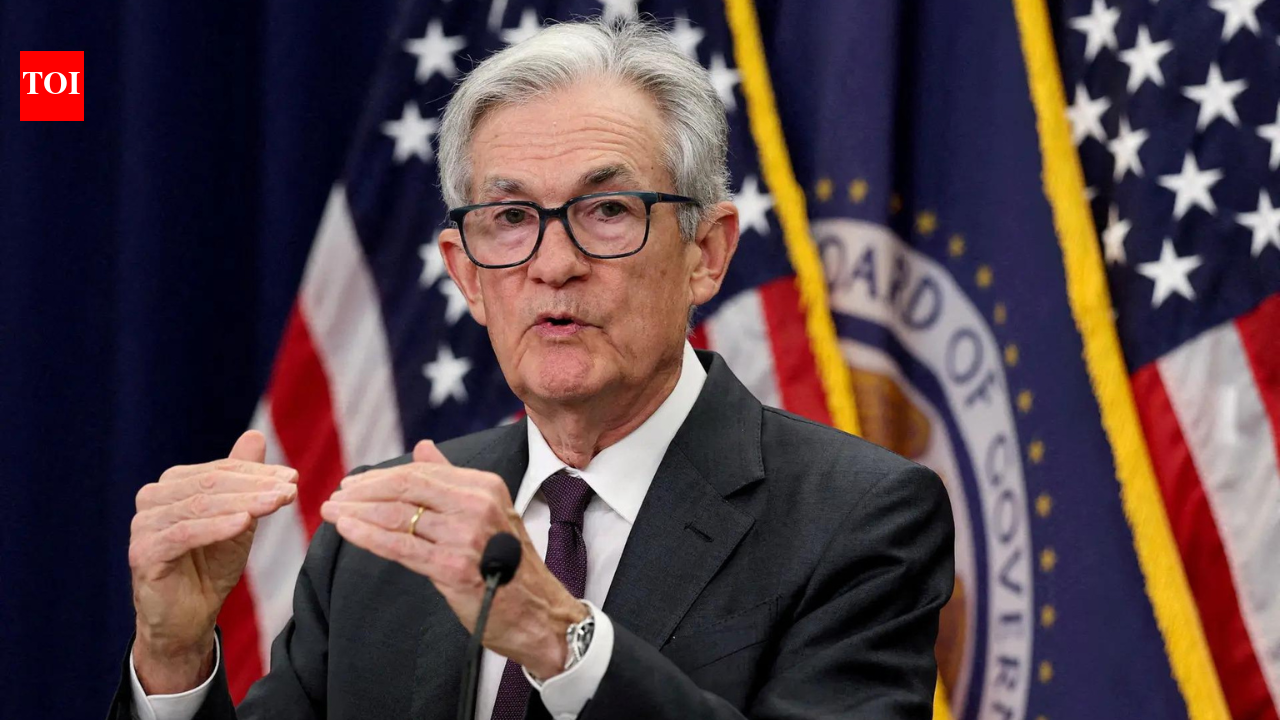
US President Donald Trump on Wednesday renewed his attack on Federal Reserve Chair Jerome Powell, saying he would fire him if he continues in the role beyond the end of his mandate.Powell’s term as Fed chair ends in mid-May, and Trump has repeatedly criticised him for not cutting interest rates more aggressively, AFP reported.
“I’ll have to fire him,” Trump told Fox Business, if Powell “is not leaving on time.”The president added: “I’ve wanted to fire him.”The remarks come as the Trump administration steps up pressure on the independent central bank, including initiating a Department of Justice probe into Powell over alleged renovation cost overruns and seeking to remove Fed governor Lisa Cook.Asked if he would drop the DOJ investigation, Trump said: “I’m not playing. I have to find out.”Trump has nominated former central banker Kevin Warsh to succeed Powell, but his appointment requires confirmation by the US Senate.Warsh is scheduled to appear before the Senate Banking Committee next Tuesday, though his confirmation faces resistance.Senator Thom Tillis, a Republican member of the committee, has said he would hold up the nomination while the probe into Powell remains unresolved.As long as the nomination process is delayed, Powell can legally continue as Fed chair.While uncommon, it is possible for a Fed chair to remain on the board even after their term as chief expires.Powell first became Fed chair in 2018 during Trump’s earlier presidency and was reappointed in 2022 under then president Joe Biden.

Morgan Stanley on Wednesday posted results that topped analyst estimates as the firm’s trading operations generated almost $1 billion more in revenue than expected.
Here’s what the company reported:
- Earnings: $3.43 a share vs. $3 LSEG estimate
- Revenue: $20.58 billion vs. $19.72 billion estimate
The bank said profit jumped 29% to $5.57 billion, or $3.43 a share. Revenue rose 16% to $20.58 billion, fueled by gains in the firm’s trading, investment banking and wealth management businesses.
Equities trading revenue jumped 25% to a record $5.15 billion, or about $450 million above the StreetAccount estimate. The firm cited strong volumes across its global equities franchise, especially in its prime brokerage business catering to hedge funds and its derivatives unit.
Fixed income revenue rose 29% to $3.36 billion, or about $540 million more than expected, helped by commodities trading that benefited from volatility in energy markets in the period.
Morgan Stanley, led by CEO Ted Pick since 2024, appears to have capably navigated the tumult of the first quarter, which saw rolling corrections in software stocks and the upheaval caused by the Iran war. Of note, the bank edged out rival Goldman Sachs in the key arena of fixed income trading, where Goldman posted an unusually large miss of $910 million versus the StreetAccount estimate.
Morgan Stanley’s investment banking revenue surged 36% to $2.12 billion, essentially matching the StreetAccount estimate, on rising fees from completed mergers, as well as stock and bond underwriting.
Wealth management revenue climbed 16% to a record $8.52 billion as the firm cited rising asset values and fee-generating transactions.
The firm’s smallest division, its investment management business, saw revenue drop 4.2% to $1.54 billion, or about $110 million below expectations. Morgan Stanley cited lower carried interest on private funds for the drop in performance.
Analysts will want to know what Pick has to say on the business outlook for the rest of the year as geopolitical tensions remain high.
This story is developing. Please check back for updates.

Bank of America, the nation’s second-largest lender, beat on the top and bottom lines during the first quarter, bolstered by equities sales and trading.
Here’s what the firm reported:
- Earnings per share: $1.11 per share vs. $1.01 LSEG estimate
- Revenue: $30.43 billion vs. $29.93 billion estimate
The bank said Wednesday that net income rose 17% to $8.6 billion, or $1.11 per share, Bank of America’s highest EPS in almost two decades.
Revenue rose 7.2% to $30.43 billion on rising net interest income, higher trading revenue, and fees from investment banking and asset management.
Tune in at 10:15 a.m. ET as Bank of America CEO Brian Moynihan joins CNBC TV to discuss the bank’s earnings report. Watch in real time on CNBC+ or the CNBC Pro stream.
Equities trading contributed to the beat, as the geopolitical environment roiled stock markets. Revenue in that business jumped 30% to $2.83 billion, topping the StreetAccount estimate by roughly $350 million and helping drive the bank’s trading operations to its best quarter in 15 years.
Investment banking also beat estimates and was up 21% to $1.8 billion, compared with StreetAccount consensus of $1.73 billion.
Net interest income, the profitability metric for loan-making, increased by 9% to $15.9 billion and beat expectations of $15.67 billion as well, according to StreetAccount. That was due to higher loan and deposit balances, fixed-rate asset repricing and markets activity.
In a sign that the bank’s borrowers weren’t deteriorating, the firm posted a $1.3 billion provision for credit losses in the quarter, lower than the $1.5 billion provision in the year earlier period and about $190 million below the estimate.
“We remain watchful of evolving risks. However, we saw healthy client activity, including solid consumer spending and stable asset quality, indicating a resilient American economy,” Bank of America CEO Brian Moynihan said in the release.
Still, like rival Goldman Sachs, the bank’s fixed income revenue came in below expectations. That business generated about $3.5 billion in revenue, missing the StreetAccount estimate by about $330 million.
The net-charge-off ratio, showing what proportion of total loans were deemed unable to be collected, improved 6 basis points during the quarter to 0.48%. The firm’s consumer banking and global wealth divisions each gained more than 20% in net income.
Return on tangible common equity, a measure of profitability, was 16%, a more than 200 basis point improvement.
— CNBC’s Hugh Son and Laya Neelakandan contributed to this report.
Correction: Bank of America previously guided to net interest income growth of between 5% and 7% this year. A previous version of this article misstated the range. And the firm’s consumer banking and global wealth divisions each gained more than 20% in net income. A previous version misstated the growth metric.


Breaking down the offseason for Michigan, Arizona, UConn, Illinois, Duke

MMA legend Ronda Rousey on her return and upcoming historic fight

Iran says to host Pakistani delegation as exchanges continue with US

-

 Fashion1 week ago
India’s exports face reset as EU links trade to carbon metrics: EY
-

 Entertainment1 week ago
Queen Elizabeth II emotional message for Archie, Lilibet sparks speculation
-

 Entertainment1 week ago
Lamar Odom shocking response to Khloé Kardashian account of his overdose
-

 Tech7 days ago
As the Strait of Hormuz Reopens, Global Shipping Will Take Months to Recover
-

 Tech1 week ago
Azure customers up in arms over ‘full’ UK South region | Computer Weekly
-

 Fashion1 week ago
CII submits 20-pt agenda to Indian govt to back firms hit by Iran war
-

 Tech6 days ago
This AI Button Wearable From Ex-Apple Engineers Looks Like an iPod Shuffle
-

 Tech1 week ago
A Single Strike Won’t Shut Off the Gulf’s Desalination System