

Entertainment
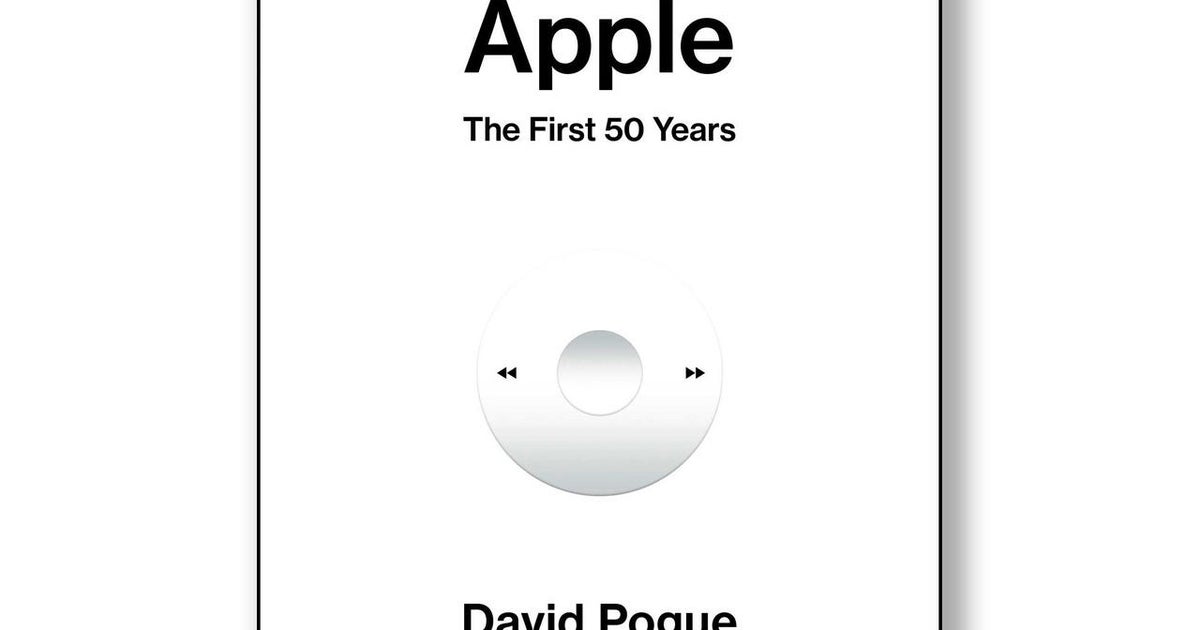
Book excerpt: “Apple: The First 50 Years” by David Pogue

Simon & Schuster
We may receive an affiliate commission from anything you buy from this article.
“CBS Sunday Morning” correspondent David Pogue’s new book, “Apple: The First 50 Years” (to be published March 10 by Simon & Schuster), examines how, in its first half-century, the company founded by Steve Wozniak and Steve Jobs remade the culture – and then, incredibly, remade itself.
Read the excerpt below, and don’t miss David Pogue’s report on the first 50 years of Apple on “CBS Sunday Morning” March 8!
“Apple: The First 50 Years” by David Pogue
Prefer to listen? Audible has a 30-day free trial available right now.
Steve Jobs had been away from the company he founded for 11 years. When he returned on July 6, 1997, Apple had been through three CEOs in four years, and it was in desperate shape.
Morale was at zero. Talented people were leaving in droves. There were too many divisions, too many fiefdoms. At one point, lawyers from two different Apple divisions showed up in the Patent and Trademark Office to sue each other.
The company had no CEO, no strategy, and, Jobs felt strongly, no soul.
Jobs tackled all of it at once. He threw himself fully, relentlessly, exhaustingly, into his nameless and unpaid role. “It was pretty bleak those first six months,” he said. “I was running on vapor.”
He fired most of the board. He drastically simplified the company’s structure. And he slashed the company’s 70 different Mac models down to only four: two laptops and two desktops.
Simon & Schuster 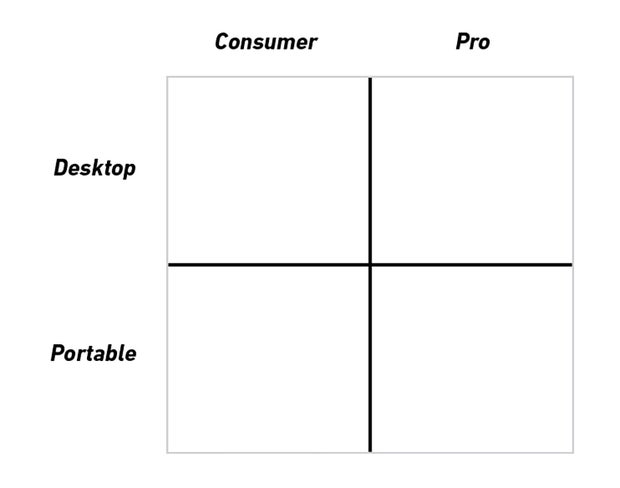
“There was huge turmoil, because you were killing products that people were working on,” says Eddy Cue, now senior VP of services. “It’s like: ‘We’re gonna go from all these different products for everybody to, like, two? Are you guys crazy?'”
But Jobs was emphatic. A very focused product line, he pointed out, meant that “we could put the A-team on every single one of them.”
Think Different
Jobs discovered that Apple was running 12 different ad campaigns. They weren’t coordinated; in fact, their messages often conflicted.
He wanted to replace them all with a single campaign that would pay tribute to creativity, independence, rebelliousness—the spirit of the old Apple and the new one.
Back in L.A., Chiat/Day creative director Rob Siltanen asked four of his teams to prepare some campaign ideas. They tacked up their ideas on wallboards: photos, pencil sketches, taglines. “But there was one campaign that jumped out at me, and it jumped out in a big way,” he says.
It was an idea for a poster-and-billboard campaign, featuring black-and-white photos of revolutionary people and events: Einstein, Thomas Edison, Gandhi. Above each photo was the striped Apple logo—the only color in the image—and the words “Think Different.”
“There was a purity about that I will never forget,” Jobs said. “I cried in my office as he was showing me the idea.”
Siltanen had always been moved by the monologues in the Robin Williams movie Dead Poets Society—for example, “Despite what anyone might tell you, words and ideas can change the world.”
So when he contemplated how to turn the print ads into a TV ad, Siltanen wrote in his journal: “To the crazy ones. Here’s to the misfits. The rebels. The troublemakers.” And, his favorite part, which he envisioned for the closing: “The people who are crazy enough to believe they can change the world … are the ones who actually do.”
But when Jobs saw the prototype ad, he went ballistic. “I thought you were going to write something like ‘Dead Poets Society’! This is crap!” he shouted at Siltanen. “It’s advertising-agency s***!”
Siltanen, furious and disappointed, told his boss to find someone else to finish the ad; he was done with Jobs.
Then, only 17 days before the ad was supposed to air, Jobs called to say he’d changed his mind. He wanted to proceed with the “crazy ones” script.
The agency now had the idea and Jobs’s blessing. Now came the hard part: securing the rights to use the famous people’s images. Most had never allowed their images to appear in ads.
Jobs plied his own connections. He called the families of John F. Kennedy and Jim Henson himself, and flew to New York to discuss the John Lennon clip with his widow, Yoko Ono. Almost all of his heroes, or their estates, agreed to participate. (Every participant received money and Apple products to donate to their favorite causes.)
The agency hired a parade of L.A. talent to try their hands at the narration: Richard Dreyfuss, Peter Gallagher, Sally Kellerman, and even Phyllis Diller.
Until the last moment, Jobs was torn between the Richard Dreyfuss version and the one he narrated himself. In the end, he went with Dreyfuss’s. “If we go with mine, it’ll become about me,” Jobs said. “And this can’t be about me. It’s about the company.”
On September 28, 1997, the “Think Different” ad debuted on ABC’s The Wonderful World of Disney, which happened to be airing the network premiere of Toy Story—from Pixar, of course.
In 60 seconds, backed by a gentle piano-and-strings theme, the ad presented clips of 17 “crazy ones”: Albert Einstein, Bob Dylan, Martin Luther King Jr., Richard Branson, Buckminster Fuller, Thomas Edison, Pablo Picasso, and so on.
Simon & Schuster 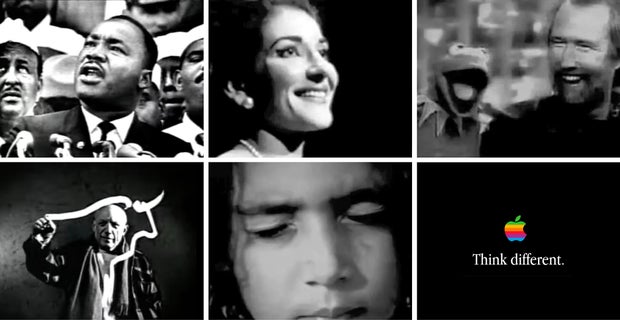
The ad said nothing about computers. It didn’t even show computers (not that Apple had any new computers to show). Furthermore, most people couldn’t identify many of the featured figures. Who would recognize, for example, the faces of Buckminster Fuller, Frank Lloyd Wright, or Martha Graham?
But Chiat/Day considered their obscurity a feature, not a bug. It prompted people to talk about the ad, to replay it, to research it—”Who was that guy?”
What the ad did say is that Apple did have a soul—and it had been there all along. All the fumbling during the Dark Years didn’t count. All the creative people who’d stuck with the Mac knew what they were doing. All the employees who kept the faith should be proud.
The ad was another historic success for Apple and Chiat/Day. It won one advertising award after another, and an Emmy. It was endlessly parodied and imitated. Best of all, as Jobs had hoped, the ad gave everyone at Apple a new sense of pride and hope.
Apple wound up spending $100 million on the campaign, which ran in various forms for five years.
At the San Francisco Macworld Expo in January 1998, only one year into the job, Jobs was nearly unrecognizable in his new mustache and full beard, streaked with gray. This time, his “one more thing” moment at the end of the keynote did not involve a product.
Instead, Jobs took the wraps off an Apple creation most had thought they’d never see again: a profit.
From “Apple: The First 50 Years” by David Pogue. Copyright © 2026 by David Pogue. Excerpted with permission by Simon & Schuster, a division of Simon & Schuster, Inc.
Get the book here:
“Apple: The First 50 Years” by David Pogue
Buy locally from Bookshop.org
For more info:









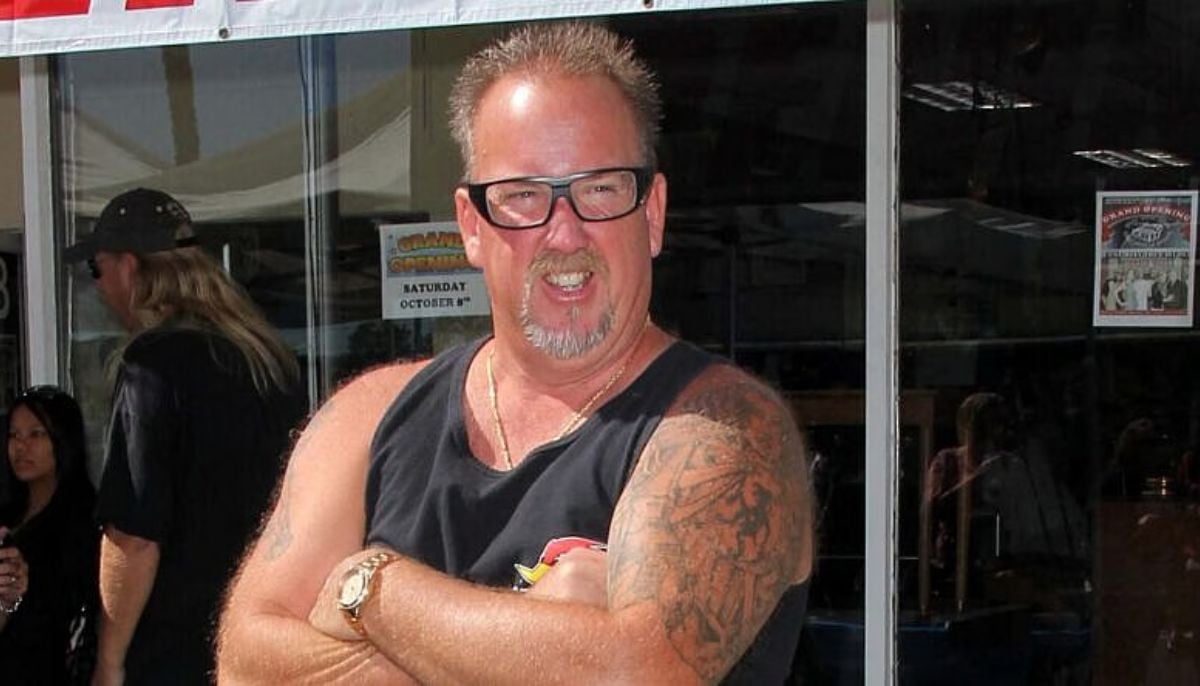
Storage Wars star Darrell Sheets has reportedly died by suicide at the age of 57. He died by an apparent self-inflicted gunshot wound to his head on Wednesday, April 22, 2026.
He was pronounced dead at the scene and his body was turned to the Mohave County Medical Examiner’s officer. Police have opened an investigation into the matter.
The Police press release reads, “On April 22, 2026, at approximately 0200 hours, officers with the Lake Havasu City Police Department were dispatched to a residence in the 1500 block of Chandler Drive in reference to a reported deceased individual.”
It added that the Police Department’s Criminal Investigations Unit has taken over the case.
“Additonal information will be released as it becomes available,” the police said.
Sheets rose to fame after his appearance on reality TV show Storage Wars, which featured bidders competing against each other to buy abandoned storage units.
Famously known as “The Gambler” for his reckless bids, Sheets appeared in 160 episodes of the show from 2010 to 2023.
Variety reports that the reality show star retired to Arizona after suffering a heart attack in 2019.
The outlet reports that he owned an operated a store named Havasu Show Me Your Junk in Arizona.

Google has introduced “Workspace intelligence” at its Cloud Next ‘26 conference on Wednesday, April 22.
This new feature aims at connecting emails, chats, files, and projects across Google Workspace for AI-powered context.
With this intelligence, Google will sync data across Gmail, Docs, Sheets, Drive, and Chat, enabling Gemini-powered agents to assess what a user is trying to accomplish.
“Ask Gemini in Google Chat” is one of the components, which functions as an integrated command line that facilitates work.
It enables users to ask for briefings for the day, create documents and presentations, get files from descriptions, and even book meetings, all through Chat itself. This feature works seamlessly with other applications such as Asana, Jira, and Salesforce.
Other significant updates are natural-language spreadsheet building in Sheets, infographic generation in Docs embedded with business data, and one-pass slide deck creation in Slides with the help of company templates.
While introducing the new sync system, Google also stressed data security. The officials confirmed that Workspace Intelligence operates using infrastructure that is compliant and does not use customer data for advertisements or machine learning without their consent.
The deployment includes administrative controls, client-side encryption, and sovereign data control capabilities for both the US and EU.
Additionally, the company also announced its eighth-generation TPU chips.
The new chips provide 2.8x better price-performance and the TPU 8i for inference, offering 80% better performance-per-dollar.
The series of new features is not completed yet, and the company is expected to roll out more in future.
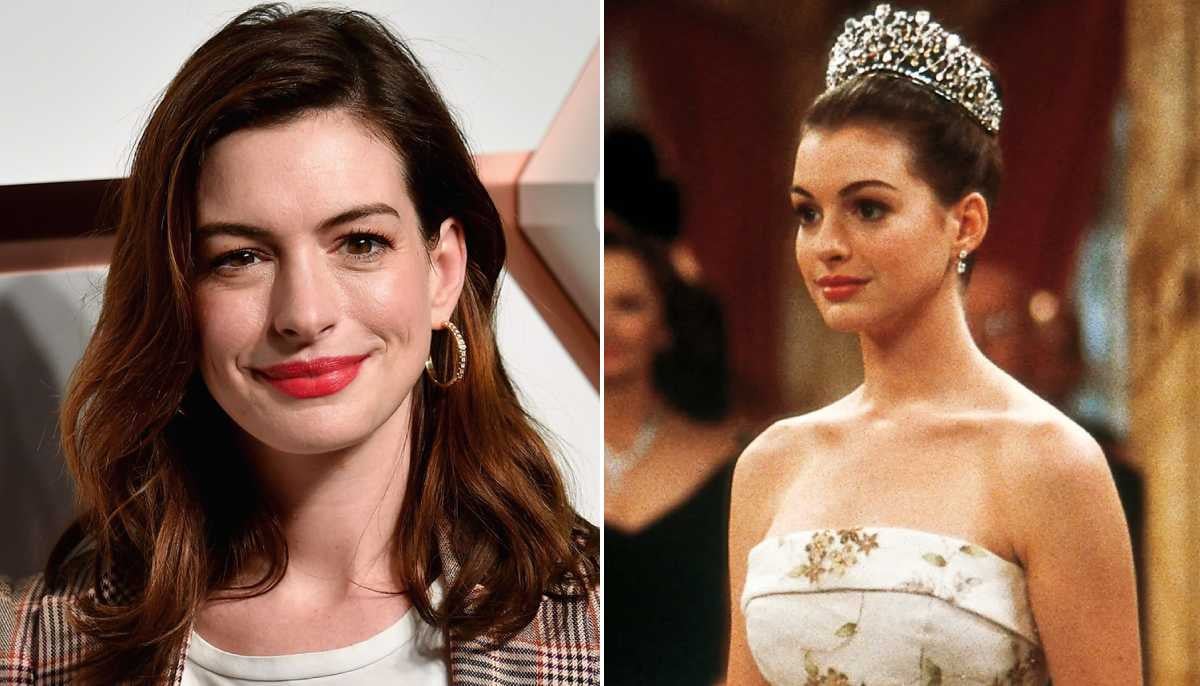
Anne Hathaway is ready to wear her crown again as Queen Mia of Genovia.
The Oscar-winning actress has given a major update on Princess Diaries 3 in a new interview with Entertainment Weekly, confirming that a new installment is actively in the works 22 years after Princess Diaries 2.
“One hundred percent, we’re constantly working on it,” she said, revealing that development briefly took a backseat while filming The Devil Wears Prada 2 — another of Hathaway’s highly-anticipated sequels, which hits theatres on May 1.
“[Devil Wears Prada 2] cropped up unexpectedly and took over the space,” Hathaway explained, adding that it became impossible to focus on both projects at once. But now, the plan is clearer.
“The intention is to make Princess Diaries hopefully next,” she declared, noting that the film “is not greenlit or confirmed yet.”
Still, the demand is undeniable. But Hathaway acknowledged that “everybody wants it,” she and her TDWP costar Meryl Streep emphasised that “you’ve got to wait for the right script.”
The original Princess Diaries released in 2001 introduces Mia Thermopolis, a regular teenager who discovers she’s heir to a kingdom — a role that turned Hathaway into a household name.
Looking back at the film, Hathaway tearfully told People magazine, “This is the role that changed my life. And I’m standing with Julie Andrews, which is just insane.”


2026 NFL Draft Odds: Draft Positions for Ty Simpson, Jeremiyah Love, More

Lululemon names former Nike exec Heidi O’Neill as new CEO

‘Storage Wars’ star Darrell Sheets dies at 57; death reported as suicide

-

 Fashion7 days ago
France’s LVMH Q1 revenue falls 6%, shows resilience amid Iran war
-

 Entertainment1 week ago
Is Claude down? Here’s why users are seeing errors
-

 Tech1 week ago
The Deepfake Nudes Crisis in Schools Is Much Worse Than You Thought
-

 Tech1 week ago
Bremont Is Sending a Watch to the Moon’s Surface
-

 Sports1 week ago
PSL 11: Peshawar Zalmi win toss, opt to field first against Quetta Gladiators
-

 Tech1 week ago
Human-machine teaming dives underwater
-
 Business1 week ago
Standard Life buys rival in £2b deal to create savings giant
-
 Business1 week ago
BP sees ‘exceptional’ oil trading result as Iran war sends crude costs soaring