

Business
Brain implants, falling Tesla sales and a $1tn deal: A year in the life of Elon Musk


Elon Musk is rarely out of the spotlight. But, even by his standards, 2025 has been a full-on year.
Over the past 12 months, the entrepreneur-turned-government adviser has reached massive business milestones and suffered serious setbacks. He was also knocked off the top spot as the world’s richest man – and is now further out in front than ever before.
All that amid a backdrop of an increasingly challenging economic environment, both across the US and globally – and without factoring in private life developments, which included the announcement of a reported 13th child being born months earlier.
But business wise, Musk has been all-action, all year – just not all of it as smooth as he might have wished. Here, The Independent takes a look at a year in the life of Elon Musk.
Doge – and Donald Trump
It feels a long time ago but the Department of Government Efficiency (Doge) only came into being in January 2025, with Musk appointed as a special government employee, effectively giving him a 130-day stint overseeing cuts to the US federal budget, slashing public sector jobs and planning cuts to the US foreign aid programme to the tune of almost $10bn. Naturally, plenty of this drew plenty of ire, with Bill Gates one of those to accuse “the world’s richest man [of] killing the world’s poorest children”.
While it might have been expected that he at least had the backing of the person who appointed him to the role during that spell – President Trump – the relationship proved to be fractious and volatile, descending into all-out personal attacks strewn over social media at one point.
In June, Musk called Trump’s “Big Beautiful Bill” an “abomination” and soon after suggested on X that “the really big bomb [was] Trump is in the Epstein files”. For his part, the president lambasted Musk as a disappointment. The petty squabbles continued as Trump said the administration would be looking at the subsidies paid to Musk’s companies, around potentially ending them – though noting it had “to be fair” to the nation and to the entrepreneur alike. Suggesting he’d “take a look” at deporting Musk was hardly “first buddy” material, either.
Musk officially ended his Doge tenure in May, weeks after telling Tesla shareholders that he would be spending “far more time” back to focusing on the EV firm, amid a falling share price and questions over product launches.
Business ups and downs
It would of course be remiss to not detail the successes and milestones that Musk has seen across the year around his many businesses.
Though – as is often the case in industry and especially where pushing new boundaries is concerned – many ups can be followed by a down, Musk’s companies do continue to produce.
Tesla, for example, launched their long-range Cybertruck variant partway through the year to much acclaim from fans – but a massive recall to tens of thousands of earlier models over parts concerns was a misstep.
Neuralink, Musk’s firm which is developing brain implants to be placed within human skulls to aid people with limited movement to be able control devices using their thoughts, has held multiple clinical trials. He says there’s a backlog of 10,000 people who are signed up for it, with the potential for positive reach here undeniable, yet there has also been criticism over possible animal treatment and for filing as a “small disadvantaged business” in the US despite a valuation of $9bn.
Elsewhere Grok 4 was launched in July as a new AI model, SpaceX performed a successful controlled splashdown landing with one of its Starship rockets and The Boring Company showed progress with its ZPIT (Zero People In Tunnel) approach: digging tunnels, moving earth and installing concrete wall segments with no humans inside, improving safety and efficiency along the way.
Tesla
But it’s impossible to separate Musk from one company in particular, and that one has had more downs than ups across 2025: Tesla.
The share price, as ever, tells its own story: from a high of around $480 near Trump’s vote victory last winter, it sunk to about $220 by April, decimated by public perception of its CEO, falling sales, widespread economic uncertainty over tariffs and questions over the company’s valuation.
If investing in Tesla – and investing in individual companies in general – has always been a bit of a rollercoaster, 2025 has perhaps marked the part of the ride with loops, turnbacks and rapid accelerations, heading quickly towards the highest peak as we race toward the end of the calendar year. Beyond it? As with any funfair ride, you never know until you get there – that’s the thrill and the fear of it.
Tesla showrooms faced vandalism, while Musk himself faced protests aplenty – collections of people, bus stop posters, even a car smashed to pieces.

Some came in the face of his Doge work, while others were furious at a perceived insulting salute gesture at Trump’s inauguration. Yet more came as comments emerged from the car maker’s chief executive seemingly trying to entangle himself in other nations’ politics or policies.
The upshot was simple enough: falling sales.
In Europe in particular, the drop-off has been spectacular – summer data showed Tesla sales fell by 40 per cent as competition from Chinese manufacturers, reputational damage and a lack of new models all played a part in BYD overtaking it as the dominant emerging EV brand on the continent. Tesla’s market share had fallen to below 1 per cent by that time, and sales are down year-on-year despite EV sales as a whole being up by more than a quarter.
Weak sales in India, China and the US add further worries, despite a pickup in September domestically, driven by buyers beating the expiration of tax credits.
In Norway, a similar effect gave a recent boost in Europe: Tesla broke records for sales by a single manufacturer in a month in November, but rather than this being a sustainable trend, it appears to have been spurred on by planned increases to taxes on buying EVs which come into effect next year.
But Musk has long felt that car sales are not the only, or the biggest, ace up Tesla’s long-term sleeves.
Self-driving cars, robotics, AI and data – all these factors are what many investors point to as future revenue prospects for the firm. And those inside and outside the company seem to feel the same way, given the recent events.
World’s richest person
Musk is already the world’s richest person and has been for some time – aside from a few hours when he very briefly lost top spot to Oracle’s Larry Ellison.
Since then, however, Musk has opened up a huge gap again and, at the start of December, had a net worth of $450bn (£340bn) per Bloomberg’s Billionaires Index.
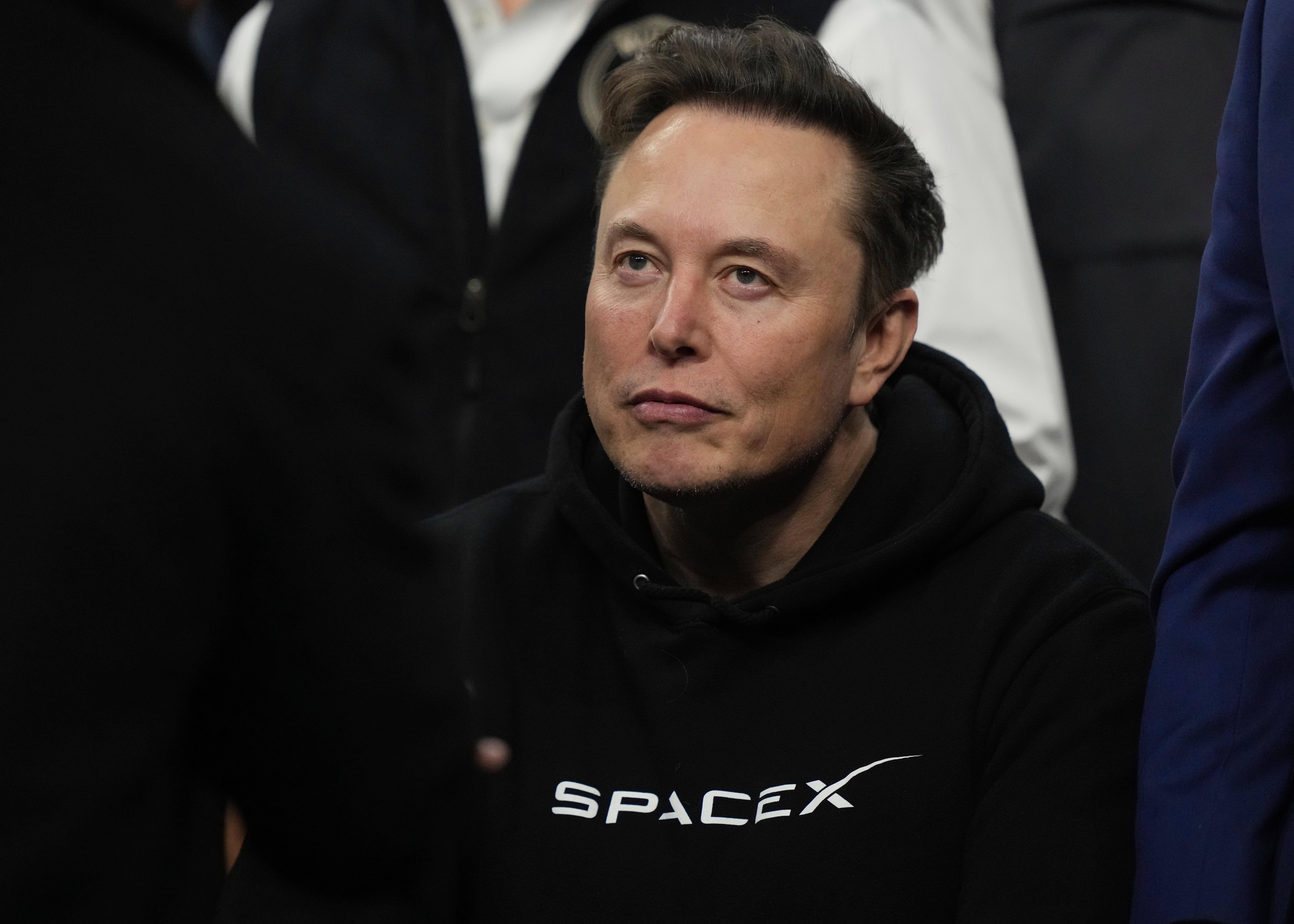
That places him a full $180bn (£136bn) ahead of now-second-placed Larry Page, of Alphabet. Musk’s net worth has grown by almost $17.5bn (£13.2bn) across the course of 2025 and he did become the first person to hit the $500bn mark for a short period. Yet it’s a figure way beyond even those riches where Musk’s year finishes in the spotlight.
Close to a full trillion dollars is at stake in his new Tesla pay package, voted for and approved by more than three-quarters of shareholders just last month. He’ll earn $878bn (£665bn) across a decade if he continues to lead the growth of the company to significant production and valuation milestones, the last of which would leave Tesla worth $8.5tn (£6.4tn) – the precise combined market capitalisation value of the world’s two biggest public companies right now as it happens, Nvidia and Apple.
The path to those riches is not just a “new chapter […] but a whole new book,” Musk declared after that pay packet was approved.
Whatever pages 2026 writes for Musk and his many projects, he’s unlikely to ever be far from dramatic progress, fervent criticism or eye-catching headlines – and the money milestones keep piling up too.

Indians sharply cut back on overseas travel spending in March, with remittances for foreign trips dropping by more than $212 million from the previous month, according to Reserve Bank of India data. The fall in outbound travel expenditure came amid rising oil prices linked to the Middle East conflict and persistent pressure on rupee, even as travel remained the single largest component of outward remittances under the Liberalised Remittance Scheme (LRS).In March, travel-related remittances fell to $1.09 billion from $1.3 billion in February and $1.65 billion in January. The decline came at a time when the West Asia conflict pushed oil prices higher and weakened rupee to record lows. Amid the situation, Prime Minister Narendra Modi urged citizens to cut down on foreign travel and adopt measures such as carpooling. Lower overseas travel spending could reduce foreign exchange outflows and help ease pressure on rupee.According to the RBI’s data on outward remittances by resident individuals, travel continued to account for the largest share of money sent abroad under the LRS in March. Total remittances during the month stood at $2.59 billion.The RBI tracks overseas spending across categories including travel, studies abroad, maintenance of close relatives, overseas investments, and property purchases. Under the LRS framework, resident individuals, including minors, can remit up to $250,000 in a financial year for permitted current or capital account transactions.Within the travel segment, the biggest component remained the ‘other travel’ category, which covers holiday spending and international credit card settlements. Indians spent $623.05 million under this category in March, accounting for nearly 57 per cent of total travel-related remittances during the month.Expenditure linked to education travel, including hostel and fee payments, stood at $450.16 million. Business travel, pilgrimage, and overseas medical treatment together accounted for $21.39 million.The data also showed a rise in remittances meant for the maintenance of close relatives abroad. Such transfers increased to $389.78 million in March from $266.18 million in February.At the same time, spending under the ‘studies abroad’ category declined. This category includes payments made for educational services accessed remotely without travelling overseas, such as correspondence courses. Remittances under this head stood at $151.71 million in March, compared to $175.68 million in February and $267.42 million in January.For the financial year 2024-25, Indians remitted a total of $29.56 billion under the LRS. Travel made up the largest portion of this amount at $16.96 billion.The RBI figures further showed that investments by Indians in overseas equity and debt instruments rose significantly to $440.22 million in March from $265.99 million in February.Meanwhile, outward remittances for the purchase of immovable property overseas declined to $38.68 million in March, down from $51.36 million a month earlier.
Business
Stock market this week: Middle East tensions, oil prices, FII flows & more — what will guide Dalal Street

Dalal Street is heading into the new trading week with global uncertainty firmly in focus, as investors keep a close watch on the evolving situation in the Middle East, fluctuations in crude oil prices and the behaviour of foreign investors. Analysts said that sentiment is likely to remain fragile and heavily influenced by developments in negotiations between the United States and Iran, while movements in the rupee, global equities and the US dollar are also expected to shape market direction in the days ahead.Trading activity during the week is also expected to be shaped by the rupee’s movement against the US dollar, while investors continue to assess the impact of global uncertainty on risk appetite. Markets will remain closed on Thursday for Bakri Id.A key trigger for sentiment emerged over the weekend after US Secretary of State Marco Rubio said negotiations between Washington and Tehran had shown some progress, raising expectations that the ongoing conflict in West Asia could move closer to resolution.Ajit Mishra, SVP, Research at Religare Broking Ltd, said investors would closely track developments tied to crude oil, global currencies and bond markets. “This week is expected to remain highly sensitive to global macroeconomic developments and currency movements. Investors will also monitor crude oil prices, developments in US-Iran negotiations, and the trajectory of the US dollar and bond yields, all of which are expected to influence foreign flows and overall risk appetite,” he said.Apart from geopolitical developments, the Reserve Bank’s decision to transfer a record Rs 2.87 lakh crore dividend to the government for the year ended March 2026 is also expected to remain in focus. The announcement comes at a time when rising import costs and supply chain pressures linked to the West Asia conflict continue to weigh on the economy.According to Mishra, market participants are expected to evaluate how the RBI payout could affect liquidity conditions, fiscal flexibility and government spending in the months ahead.Ponmudi R, CEO of Enrich Money, said market behaviour in the coming sessions is expected to remain sensitive to fresh headlines surrounding diplomatic negotiations and oil prices. “Markets are expected to remain volatile and heavily headline-driven in the coming week, with investor attention firmly focused on developments surrounding the US–Iran situation, broader diplomatic negotiations and movements in crude oil prices,” he said.“While hopes of a diplomatic breakthrough and easing geopolitical tensions have improved sentiment modestly, investors continue to remain cautious as uncertainty surrounding the final outcome of the negotiations remains elevated,” Ponmudi added.He further said investors are expected to watch institutional flows, global equity trends, macroeconomic indicators and the rupee for further market cues. “With global uncertainty still elevated, market participants are likely to remain selective and cautious despite the recent improvement in sentiment,” he said.Vinod Nair, Head of Research at Geojit Investments Limited, said markets would require stronger support factors to build a more constructive setup. According to him, a meaningful decline in crude oil prices, steady foreign institutional investor flows and stable Q1FY27 earnings expectations without major downgrades would be important for sustained momentum.In the previous week, the BSE benchmark index rose 177.36 points, or 0.23%, while the NSE Nifty advanced 75.8 points, or 0.32%.
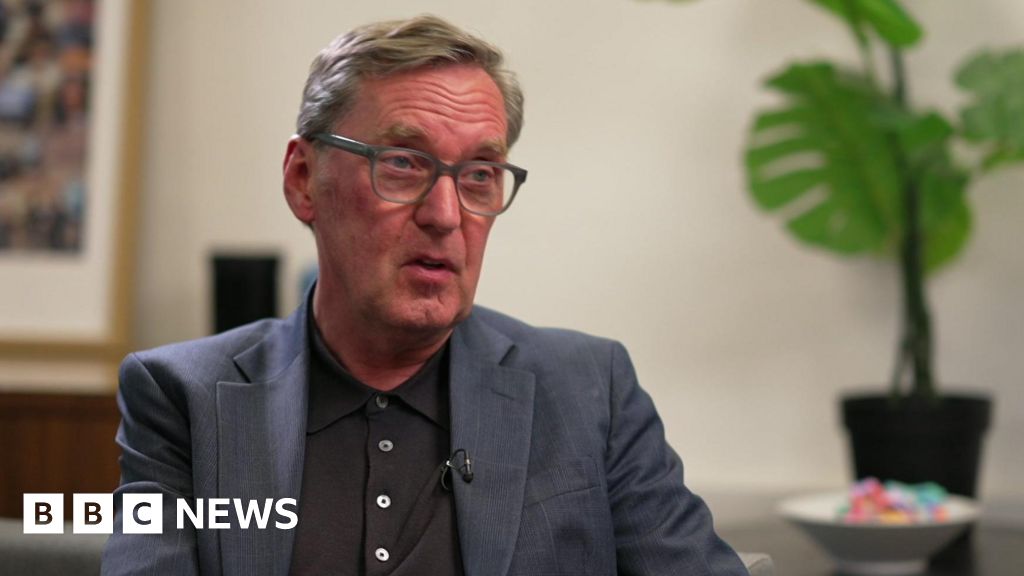
Reforms are needed of the welfare system to tackle the high numbers of young people not in work or education, says Alan Milburn.
Source link


Christopher Nolan’s ‘The Odyssey’ trailer sparks major backlash online

2026 NASCAR Odds: Denny Hamlin Favored At Coca-Cola 600, Tyler Reddick Second

5/24: Sunday Morning

-

 Entertainment1 week ago
Where Pete Davidson, Elsie Hewitt stand after breakup: Details revealed
-

 Politics1 week ago
Rising diesel costs from Iran war strain US school budgets
-

 Tech1 week ago
Why Is Your Grill So Dumb? The Best Grills Set Temp Like an Oven
-

 Tech1 week ago
This Solar-Powered Smart Sprinkler Keeps My Lawn Watered Without Any Power Cables
-

 Fashion1 week ago
RMG trade bodies seek policy support from Bangladesh PM
-

 Fashion6 days ago
Nigeria Kwara Garment Factory, KWS Garment Production Village ink pact
-
 Fashion1 week ago
India calls for aligning standards, customs procedures with Africa
-

 Sports1 week ago
Pakistan steady after Das ton | The Express Tribune