

Sports
Breaking down every conference title game, plus CFP chaos scenarios

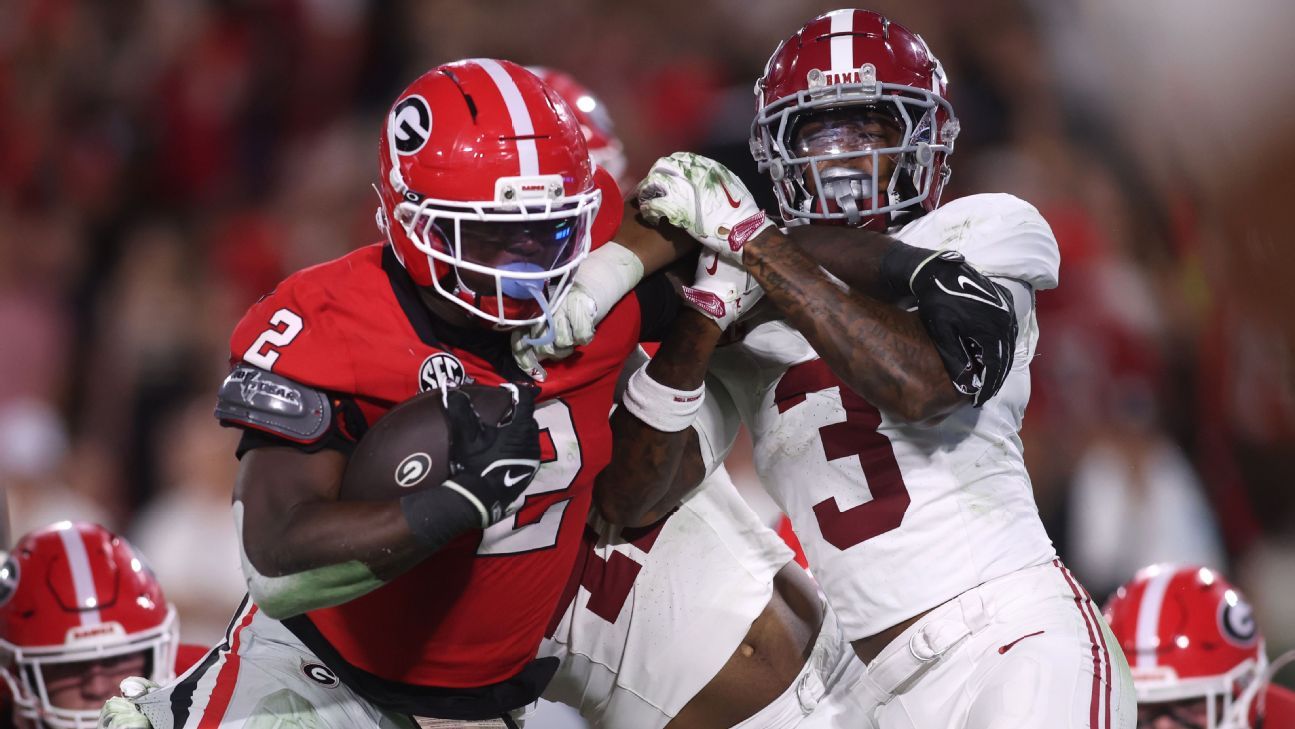
It took a while for college football to orient itself this season. Three of the top four teams in the preseason AP Top 25 poll started poorly, and only one really recovered. Nine of the preseason top 17 went 8-4 or worse. Meanwhile, some teams that were expected to be good — preseason No. 20 Indiana, No. 21 Ole Miss and No. 23 Texas Tech — turned out to be playoff-caliber dynamite.
Things were pretty messy for a while as the sport figured itself out, but once the hierarchy was established, it was established. Over the past three weeks, teams ranked 14th or higher in the AP poll have gone a combined 35-3, and all three losses were to opponents ranked 16th or higher.
The ACC and the coaching carousel did their best to ensure that there was always something messy and/or chaotic happening, but we’ve reached Championship Week with the balance of power firmly set. Now we get to find out if college football decides to offer one last burst of absolute nonsense. Here’s everything you need to follow during what is likely to be either a very orderly or incredibly fraught Championship Week.
All times Eastern

Championship Week chaos scenarios
This weekend is basically setting up like college football’s version of one of those “We can do this the easy way or the hard way” moments in a mob movie. If Texas Tech and Virginia win as favorites in the Big 12 and ACC championship games, respectively, and if Alabama beats Georgia as it almost always does — since 2017, Kirby Smart’s Bulldogs are 1-7 against the Crimson Tide and 107-8 against everyone else — then college football will have chosen the easy way.
If it unfolds that way, we’ll be able to predict with near certainty who will be in the College Football Playoff. The at-large bids will go to current No. 1 Ohio State or No. 2 Indiana (whichever loses the Big Ten championship game), No. 3 Georgia, No. 5 Oregon, No. 6 Ole Miss, No. 7 Texas A&M, No. 8 Oklahoma and either No. 10 Notre Dame or No. 12 Miami, depending on how much overthinking the playoff committee decides to undertake. Per SP+, however, there’s only a 22% chance we get those three results. And things could get weird if we stray from the script.
(* If No. 11 BYU’s ranking slips, therefore putting Notre Dame and Miami next to each other in the rankings, the committee could decide to move Miami ahead because of the Hurricanes’ head-to-head win. It’s what they tend to do when teams with a head-to-head result end up next to each other. I personally think that win is the only reason Miami deserves to rank even as high as 12th — they have neither played nor beaten any other ranked teams, and they lost to two unranked teams in by far the worst of the power conferences. Notre Dame’s résumé undoubtedly has similar holes, but the committee had many weeks to rank Miami ahead of Notre Dame and didn’t do it, and it would be impossibly silly to do it after a week in which neither team — and only one of their 2025 opponents — played a single game. I’m extremely ready to go back to a BCS-like formula.)
What if BYU beats Texas Tech (23% chance, per SP+)? Last year, Clemson became the first official bid thief of the 12-team playoff era with its win over SMU in the ACC championship game. This year, BYU appears to be the designated thief. The Cougars have lost only to No. 4 Texas Tech and, at 11th, could claim to have been slighted by the committee. They clearly need to win to get in, and if they do, they will likely steal Notre Dame’s (or Miami’s?) ticket. The Fighting Irish, who have won 10 straight games by an average of 43-14, were ranked ninth for three straight weeks before mysteriously slipping to 10th on Tuesday. That puts them in line to get snubbed with a Big 12 upset.
What if BYU wins and Alabama loses (13% chance)? Last season, SMU made the CFP despite losing in the ACC championship game; from that, we derived that the committee had decided not to punish a team for earning a 13th game when others around it in the rankings had not. The Mustangs did fall from eighth to 10th, however. It wasn’t enough to knock them from the playoff field, but they still dropped.
So what will happen if Alabama loses to Georgia, perhaps by a solid margin? Will Bama fall behind Notre Dame? And if BYU has also won … will that mean the Cougars steal the Tide’s bid?
Tuesday’s rankings give us reason to doubt that Bama would move at all, of course. In fact, the only real justification for the Tide jumping Notre Dame this week is that the committee was giving itself a cushion in case of a Bama loss. There is, after all, no universe in which the Tide beating 5-7 Auburn in the last minute was more impressive than Notre Dame beating 4-8 Stanford by 29, and I wouldn’t think that A&M falling from third to seventh would make the Irish’s loss to the Aggies look significantly worse. Regardless, now the committee might not have to worry about eliminating Bama with a bad performance in Atlanta. But what if BYU wins and the Tide lay an absolute egg?
What if Duke wins (32% chance)? BYU aside, Championship Week’s biggest chaos agent is clearly Duke. Manny Diaz’s 7-5 Blue Devils eked out an ACC championship bid thanks to a set of tiebreakers that will almost certainly be redrawn soon. They are only 3.5-point underdogs against Virginia, and a Blue Devils win could give a playoff ticket to a second Group of 5 champion. James Madison would be first in line, though an 11-2 UNLV team will be intriguing if JMU loses and the Rebels finally figure out how to beat Boise State for the Mountain West championship.
Of course, with the lengths the committee went to avoid ranking another G5 team besides Tulane — JMU and North Texas didn’t make it in until this week, and barely at that — Duke itself could still simply hop JMU. The Blue Devils hold about four teams’ playoff hopes in their upset-minded hands.
And before you complain about undeserving teams making the field, this is how playoffs work! Teams with bad records reach the high school playoffs all the time. So do the champions of various lower-budget FCS, Division II or Division III conferences. Four teams with losing records have made the NFL playoffs since 2010. This is the way it should be. We should let more conference champs in, actually.
These are the chaos scenarios to watch for. Now let’s talk about the actual games.
Saturday, 8 p.m., Fox
Back in the BCS days, the people in charge would change the way the computer ratings portion of the BCS formula worked anytime they disagreed with the results. Constantly saying, “I don’t like that, let’s change something” creates a worse process as often as not.
One year into the 12-team playoff era, the college football world declared, “I don’t like that, let’s change something.” When the “top four conference champions receive first-round byes” rule produced odd results in Year 1 — namely, byes going to No. 9 Boise State and No. 12 Arizona State — the title-winner byes were immediately ditched. As a result, we get the most low-consequence No. 1 versus No. 2 December game imaginable. Barring an absolute blowout, Ohio State and Indiana are likely to receive top-four seeds and first-round byes no matter what happens in Indianapolis on Saturday.
Now, Indiana is playing for its first Big Ten title in 58 years; that’s pretty big. Plus, since both quarterbacks, IU’s Fernando Mendoza and OSU’s Julian Sayin, are among the three betting favorites in the Heisman race, it’s hard not to look at this game as a winner-take-all situation for that award. (Root for a defensive slugfest, Diego Pavia!) But this might turn out to be the first of two Hoosiers-Buckeyes games, and the second one will be much bigger.
This one will still be educational, though, and I have two huge questions:
Will Indiana’s offensive line hold up? In 2024, the Hoosiers lost to only the two national title game participants, Ohio State and Notre Dame. In both games, the IU defense mostly held up, but the offense vanished: Whereas the Hoosiers averaged 464 yards in wins, they gained a total of 429 yards in the two losses. Quarterback Kurtis Rourke’s injury limitations didn’t help, but IU running backs averaged only 4.0 yards per carry, and Rourke took eight sacks in 60 pass attempts.
This season, Indiana ranks first in rushing success rate* and a solid 35th in sack rate allowed. Backs Roman Hemby and Kaelon Black keep the Hoosiers on schedule, and Mendoza gets the ball out of his hands quickly. The offense performed well enough against a pair of SP+ top-10 defenses (Iowa and Oregon), but Ohio State’s defense is the best in the country. How well will the Hoosiers hold up, especially up front?
(*Success rate: How frequently an offense is gaining 50% of necessary yardage on first down, 70% on second and 100% on third and fourth.)
Can Ohio State turn on the explosiveness? Ryan Day and coordinator Brian Hartline have created a sturdy offensive structure for maximizing Sayin’s ridiculous accuracy and keeping the redshirt freshman out of awkward downs and distances. The Buckeyes operate with one of the nation’s slowest tempos, and Sayin throws the ball as quickly as possible. He has completed a record 78.9% of his passes, and with a good-not-great run game as a complement, Ohio State ranks second nationally in success and three-and-out rates.
The tradeoff, however, is a major lack of big plays.
The Buckeyes rank just 111th in yards per successful play (11.5), and while we know all about the epic talent of receivers Jeremiah Smith and Carnell Tate, Sayin very selectively looks deep. That keeps both the negative and big-play counts low.
Big plays are the way to score on Indiana, however. The Hoosiers have allowed only 11 offensive touchdowns this season: Six were from 44 yards or longer, and two more were set up by gains of 40-plus. IU is fifth in success rate allowed and ninth in sack rate — the Hoosiers don’t let you dink and dunk all the way down the field. Can Ohio State create chunk plays without exposing Sayin to hits and mistakes?
Current line: OSU -4 (down from -5.5 at open) | SP+ projection: OSU by 0.9 | FPI projection: IU by 0.1


Saturday, 4 p.m., ABC
If Alabama beats Georgia, we could end up with a situation in which a) the extremely top-heavy Big Ten gets only three CFP teams, but they all get top-four seeds and first-round byes, and b) the SEC gets five teams, but none of them are in the top four. Granted, there’s also a chance that the committee surges Bama up to fourth in this scenario, but based on the season the SEC has had, “five bids and no byes” would be apt. It currently has no top-five teams in the SP+ rankings, but it still has seven of the top 13 and, comfortably, the best average rating.
Of course, for all the talk of parity within this conference, we’re getting our fourth Bama-Georgia title game in eight years, and a Georgia win — the Dawgs are favored — will be its third title in four years. Plus ça change, plus c’est la même chose and whatnot.
Writing about Alabama this season has been a strange experience. The Crimson Tide have mostly been “little things” masters, owning the red zone on both ends, winning the field position and turnover battles and closing games out beautifully, going 4-1 in one-score games. But they have also only rarely looked dominant despite the legion of former blue-chippers on their roster. They’ve ranked between ninth and 12th in SP+ for the past seven weeks, and in that span, they’ve played almost precisely to projections (which suggests that the ranking is pretty accurate).
They beat Georgia 10 weeks ago, however, and that brings them back to Atlanta to face a Georgia team that … has rarely dominated despite the legion of former blue-chippers on their roster. The Dawgs are also 4-1 in one-score finishes, and while they had to lean heavily on offense early in the season — they beat Tennessee 44-41 and beat Ole Miss 43-35 — they’ve allowed just 22 total points in their past three games, a run that includes their one truly resounding performance, a 35-10 blowout of Texas.
In the teams’ first meeting, two major habits came to bear. Alabama, which ranks eighth nationally in points per drive in the first half (and only 33rd in the second), bolted to a 14-0 lead and led 24-14 at halftime. In the second half, however, Georgia took control, tilting the field and creating a pair of red zone opportunities to Bama’s zero. A fourth-down stop in the fourth quarter, however, made the difference in a 24-21 Tide win. For the game, the Dawgs averaged 6.7 yards per play to Bama’s 5.2, but the Tide won 19 of 27 total third downs and finished plus-1 in turnovers. That was just enough.
This was one of five games in which Georgia took snaps while trailing in the second half. It was the only one the Dawgs didn’t win. For whatever their upside might be this year, there’s never going to be any question about their ability to brawl for 60 full minutes.
Georgia’s defense has rounded into form of late, but the Dawgs still face an awkward matchup with the Tide offense, in that it defends the run far better than the pass and Bama is happy to abandon the run and put the game in Ty Simpson‘s hands. Regardless, the early going will be huge: Georgia is more experienced and more effective at playing from behind. And if you’re rooting for the “What happens if Bama gets genuinely thumped?” scenario, Georgia going up early is an obvious step one.
Current line: UGA -2.5 | SP+ projection: UGA by 2.8 | FPI projection: Bama by 0.3


Saturday, noon, ABC
I don’t think we’ve talked enough about how good Texas Tech is this season. I mean, everyone knows the Red Raiders are good — they’re 11-1, they’re fourth in the CFP rankings and defenders Jacob Rodriguez and David Bailey are surefire All-Americans. They aren’t exactly flying under the radar. But while SP+ has locked in pretty well on most teams, it continues to underestimate Tech’s capabilities, even while ranking it third nationally. The Red Raiders overachieved against projections by an average of 14.0 points in November, winning four games (including one against BYU) by an average of 42-9. In fact, the only time they’ve really underachieved all season was in their 26-22 loss to Arizona State, when they were without starting quarterback Behren Morton. They even managed to overachieve in three other partial or whole games without Morton. This is a scary team.
BYU has all the motivation in this one, however, knowing that its playoff hopes are now fully win or bust. (The Cougars might also get an “Our head coach just chose us over Penn State” boost.) Will that make a difference? Or is Tech just too damn good?
BYU’s defense played brilliantly in the teams’ first meeting, a 29-7 Tech win on Nov. 8. The Cougars held Tech to just a 33.3% success rate, 13 percentage points below its season average, and allowed the Red Raiders just two touchdowns in seven red zone trips. The score was only 13-0 at halftime, and wasted opportunities made it seem like Tech could be vulnerable to a comeback, but the BYU offense just couldn’t deliver. For just about the only time all season, BYU’s Bear Bachmeier looked like the true freshman he is, throwing for just 188 yards at 4.5 yards per dropback and losing an interception and fumble. Given enough opportunities, Tech finally put the game away.
An upset will require the same high level of defensive play and far better execution on offense. Having running back LJ Martin at full strength will help — Martin was hurt the week before the first matchup and gained just 35 yards in 10 carries against Tech. His 222-yard performance two weeks ago against Cincinnati suggests he’s playing at a high level, and BYU should get another couple of recently banged-up starters back as well. But we just don’t know what exactly will beat the Tech defense because almost nothing has.
The Red Raiders have given up more than 17 points just twice all season and only allowed one team, Kansas State, to top 4.8 yards per play (the Wildcats averaged a still pedestrian 5.2). BYU might be able to hold Tech under 28 points with another strong effort, but it might take the best performance of Bachmeier’s life to hit 28 or more.
Current line: Tech -12.5 | SP+ projection: Tech by 11.7 | FPI projection: Tech by 4.3


Saturday, 8 p.m., ABC
As fun as it’s been to envision wild scenarios that might unfold if Duke wins the ACC, Virginia could put an end to all of this creativity by simply repeating what happened the last time the Cavaliers met the Blue Devils. Three weeks ago, they put together probably their most complete performance of the season in a 34-17 romp.
Success rate: Virginia 40.3%, Duke 31.0%
Yards per play: Virginia 7.0, Duke 4.4
Field position margin: Virginia plus-6.7 per drive
Third downs: Virginia 12-19, Duke 4-15
Sacks: Virginia 4, Duke 0
Turnovers: Virginia 2, Duke 1
UVA played far more efficient ball than the Blue Devils, enjoyed eight gains of 20-plus yards to Duke’s three and won 23 of 34 total third downs (67%). The only reason the game finished as close as 17 points was because of two Hoos turnovers, one of which was a pick-six.
Virginia has been the better team in 2025, but these teams’ first game was a bit of an outlier. UVA’s seasonlong averages aren’t quite as advantageous, and Duke’s offense has been especially strong down the stretch. The Blue Devils have scored more than 30 points in four of the past five games (UVA being the exception), and Darian Mensah finished the regular season first in the ACC in passing yards and third in Total QBR.
Mensah has been a high-volume, high-accuracy playmaker, and Duke has improved from 71st to 23rd in offensive SP+ in a single season.
Unfortunately for Duke, the defense has fallen from 31st to 91st. Against seven top-60 offenses this season, including Virginia’s, Duke allowed 36.4 points per game. Virginia’s offensive production trailed off over the back half of the season, but the Hoos still torched the Blue Devils: Chandler Morris threw for 316 yards, Trell Harris caught eight balls for 161 yards and J’Mari Taylor rushed for 133 yards in 18 carries.
Mensah and receivers Cooper Barkate and Que’Sean Brown torched Clemson and Wake Forest — defenses that grade out about as well as UVA’s — and Duke could absolutely turn this into a track meet. But Virginia probably has the advantage in a track meet too.
Current line: UVA -3.5 | SP+ projection: UVA by 7.3 | FPI projection: UVA by 1.5


Friday, 8 p.m., ABC
With four of five Group of 5 title games taking place Friday night, we’ll have a clear view of the stakes of Virginia-Duke by Saturday morning. But it’s safe to assume that the winner of this game, pitting two ranked teams with soon-departing head coaches (UNT’s Oklahoma State-bound Eric Morris and Tulane’s Florida-bound Jon Sumrall) in potentially very rainy conditions, is in.
For all of the money being thrown around to stars in today’s college football landscape, the best offense in the country, per SP+, was crafted in Denton, Texas, and features a true freshman (RB Caleb Hawkins), a redshirt freshman who didn’t start in high school (QB Drew Mestemaker) and transfers from Kent State, Abilene Christian, Shepherd University and the now-closed Limestone University. North Texas is averaging 46.8 points and 511.8 yards; the Mean Green have topped 50 points seven times and even scored 36 in their lone loss.
The Mean Green’s schedule, however, has lacked. They’ve played only one team currently ranked higher than 57th in SP+ (South Florida), and they lost to the Bulls by 27 points. Granted, that margin was mostly due to the worst middle eight of all time — USF went on a 28-0 run between the 0:02 mark of the second quarter and 11:35 of the third — but it still counts, and UNT hasn’t had another chance to prove itself against a particularly good opponent.
Tulane is good. Granted, the Green Wave have allowed 38.5 points per game and 7.1 yards per play to the only two top-20 offenses they’ve faced. But they’re improving on D — they solidly overachieved against defensive projections down the stretch — and they have an offense that can keep up in a track meet: They’re 10th nationally in passing success rate, with Jake Retzlaff combining 2,717 passing yards with a solid 621 non-sack rushing yards.
Neither of these defenses is amazing, but neither gives up a ton of big plays either. This one will probably come down to which defense allows the fewest big shots and easy points
Current line: UNT -2.5 | SP+ projection: UNT by 8.2 | FPI projection: UNT by 2.0


Friday, 7 p.m., ESPN
Troy has reached the Sun Belt championship game through sheer perseverance. Gerad Parker’s Trojans won three straight wild one-score games early in the season. They also overcame an early-season QB injury, with Tucker Kilcrease filling in for Goose Crowder, who is back in the lineup and slinging the ball around well. Good pass defense and random offensive spurts have given them a chance at a third Sun Belt title in four years.
The odds, of course, aren’t great. JMU did lose four times as a favorite last year, and distractions can always strike when your coach is leaving, but Troy is a three-touchdown underdog, and JMU will be hunting for style points in super-chilly Harrisonburg.
JMU’s defense ranks first in success rate allowed and has allowed more than 5.1 yards per play just once all season. They boast difference-makers at each level, from defensive ends Sahir West and Aiden Gobaira up front to safety Jacob Thomas in the back. The offense was surprisingly inconsistent early in 2025 but ignited against Old Dominion and hasn’t looked back: In their past six games, the Dukes have averaged 48.5 points and 7.4 yards per play. Alonza Barnett is 14th nationally in Total QBR in that span, distributing the ball beautifully to five different pass catchers.
The only close call JMU has suffered since the offensive ignition came against Washington State: The Cougars kept the tempo at a crawl, won third and fourth downs and limited the Dukes to just 50 snaps. It still didn’t work — JMU scored on two long second-half touchdowns and won 24-20. But if Troy pulls a scare, it will be from a similar recipe. The Trojans can land some shots defensively, and they’re pretty good on third down and willing on fourth. But the margin for error here is minimal.
Current line: JMU -23.5 (up from -21.5) | SP+ projection: JMU by 20.2 | FPI projection: JMU by 18.4


Friday, 8 p.m., Fox
Since the start of 2023, UNLV is 30-10 overall, an incredible run for a program with minimal historical success. The Rebels have gone 5-3 against power conference programs in that span, and they’re 18-7 in the Mountain West. Just imagine how great things might be if they could actually beat Boise State: The Rebels are 0-4 against the Broncos in this span, including losses in back-to-back MWC championship games. If momentum means anything in this sport, however — I often doubt it does — and the Rebels can adapt to cold and rainy conditions in Boise, the timing might finally be right.
Five weeks ago, this matchup seemed unlikely. UNLV had lost two straight games, giving up 96 combined points to Boise State and New Mexico and falling to 123rd in defensive SP+. BSU, meanwhile, had just lost quarterback Maddux Madsen to injury and had fallen 30-7 to Fresno State. The Broncos would lose to San Diego State in their next game, too.
BSU quarterback Max Cutforth found his footing, however, and helped to lead a blowout of Colorado State and a comeback win at Utah State. UNLV, meanwhile, suddenly found a defense and beat its past four conference opponents by an average of 38-16. The Rebels have looked so good that they rose from 71st to 41st in SP+ in just four weeks.
Madsen, who is scheduled to return Friday, threw for 253 yards and four touchdowns in BSU’s 56-31 win over UNLV in Week 8, while Dylan Riley rushed for 201 yards in just 15 carries. Even in the Rebels’ improved state, they still aren’t defending the run well. UNLV can keep up in most track meets, and holding the Broncos under 35 will give it a chance. But that might not be guaranteed.
Current line: BSU -4.5 (up from -1.5) | SP+ projection: UNLV by 0.4 | FPI projection: BSU by 4.0


Friday, 7 p.m., CBSSN
For the second straight season, a second-year FBS program will play for the CUSA title. Last year, second-year Jacksonville State wiped the floor with Western Kentucky; now Kennesaw State gives it a go against the champs.
Jerry Mack’s first KSU team has found success by raising its floor: The Owls don’t rank high in many of the categories I track, but they’re also near the bottom in almost none. They defend the run well — linebacker Baron Hopson is ridiculously good in this department — they hit on some deep passes to Gabriel Benyard and Christian Moss, and they wait for you to make mistakes.
JSU lost a ton from last year’s conference title squad, but after a wobbly 3-3 start, the Gamecocks found an offensive rhythm by running the hell out of the ball: Cam Cook has rushed for 1,588 yards, and not including sacks, quarterback Caden Creel has added 1,008. The defense is decent but clutch offensive play has allowed the Gamecocks to win six of seven games despite five finishing within one score.
These two met three weeks ago in a game decided by big plays and turnovers. Jax State scored on a second-quarter Hail Mary, Creel produced completions of 50 and 52 yards (plus a 40-yard rush), and the Gamecocks picked off three passes in the red zone in a 35-26 win. None of that’s particularly sustainable, though, especially since KSU has been the better overall red zone team in 2025.
Current line: KSU -2.5 (flipped from JSU -1.5) | SP+ projection: KSU by 1.4 | FPI projection: KSU by 0.3


Saturday, noon, ESPN
Miami is playing in the MAC championship game for the third straight season — the Redhawks won in 2023 and lost last year — while WMU is enjoying its best campaign, and first title game appearance, since 2016.
Chuck Martin’s Redhawks lost basically every offensive starter and half the defense after last season and landed only a few major contributors from the transfer portal. But they got rolling after an 0-3 start, and when quarterback Dequan Finn left the program in November, redshirt freshman Thomas Gotkowski took over and led comfortable wins over Buffalo and Ball State.
WMU also started 0-3, but the Broncos have since won eight of nine — losing only to Miami, in fact. Thanks in part to otherworldly outside linebacker Nadame Tucker (18.5 TFLs, 12 sacks, 4 forced fumbles), their defense ranks 46th in defensive SP+, their highest ranking since 2000.
Miami turned the tables late in their Week 9 matchup. WMU took a 17-9 lead into the fourth quarter, but the Redhawks outgained the Broncos 160-61 in the fourth, forced a turnover and finished the game on a 17-0 run. Gotkowski has gotten away with mostly quick passes to the sideline, but the Redhawks might need him to ramp up the playmaking to maintain their Week 9 advantages. Otherwise WMU could seize its first title in nine years.
Current line: WMU -2.5 | SP+ projection: Miami by 1.2 | FPI projection: WMU by 0.2
Smaller-school showcase
Let’s once again save a shout-out for the glorious lower levels of the sport. The smaller-school playoffs are hitting top speed, so here’s a game you should track at each level.
Division II quarterfinals: No. 16 Newberry at No. 13 Albany State (ESPN+, 1 p.m.). The Division II quarterfinals feature projected blowout wins for the three best teams — Ferris State, Harding and Kutztown — but the last semifinal spot will go to one of two upstarts.
Both Albany State and Newberry are seeking their first D-II semifinal appearance. ASU is the projected favorite because of defensive end Derrick Drayton and a defense that allows just 13.3 points per game. Newberry, however, just upset No. 4 West Florida thanks to 416 passing yards and two touchdowns from quarterback Reed Charpia. Do the Wolves have another upset in them?
SP+ projection: Albany State by 7.3
Division III round of 16: No. 6 Saint John’s (Minn.) at No. 4 Wisconsin-River Falls (1 p.m., ESPN+). Saint John’s has been to only one semifinal since winning the 2003 D-III national title, but the Johnnies are flying thanks to quarterback Trey Feeney and an offense averaging 50.4 points per game. UWRF, meanwhile, is looking for its first quarterfinal appearance in 30 years, and Kaleb Blaha and the Falcons also wing the ball around like crazy and score lots of points (47.5 PPG)! Track meet in River Falls!
SP+ projection: Johnnies by 1.4
NAIA quarterfinals: No. 7 Lindsey Wilson at No. 1 Grand View (1 p.m., local streaming). It’s the No. 1 team in the NAIA polls vs. the No. 1 team in NAIA SP+. Grand View is NAIA’s standard bearer; the Vikings are the defending national champions and have gone a cool 83-5 since 2019. The defense allows 8.4 points per game thanks to ace pass rusher Jackson Filer (23 TFLs, 11 sacks). But Lindsey Wilson is scoring 44.8 points per game with absurd run-pass balance. And there’s a chance of afternoon snow in Des Moines!
SP+ projection: LWU by 1.5
FCS round of 16: No. 18 South Dakota State at No. 4 Montana (2 p.m., ESPN+). So is South Dakota State suddenly South Dakota State again? The Jackrabbits needed a miracle finish against North Dakota to assure themselves a spot in the playoffs, but with quarterback Chase Mason healthy and back in the lineup, they crushed New Hampshire 41-3 in last week’s first round. Mason’s in-season injury might end up being Montana’s misfortune — SDSU is unbeaten when he starts, and now the Grizzlies have to beat the Jacks just to reach the quarterfinals. Luckily they have quarterback Keali’i Ah Yat and a pretty fantastic offense themselves.
SP+ projection: Montana by 5.6
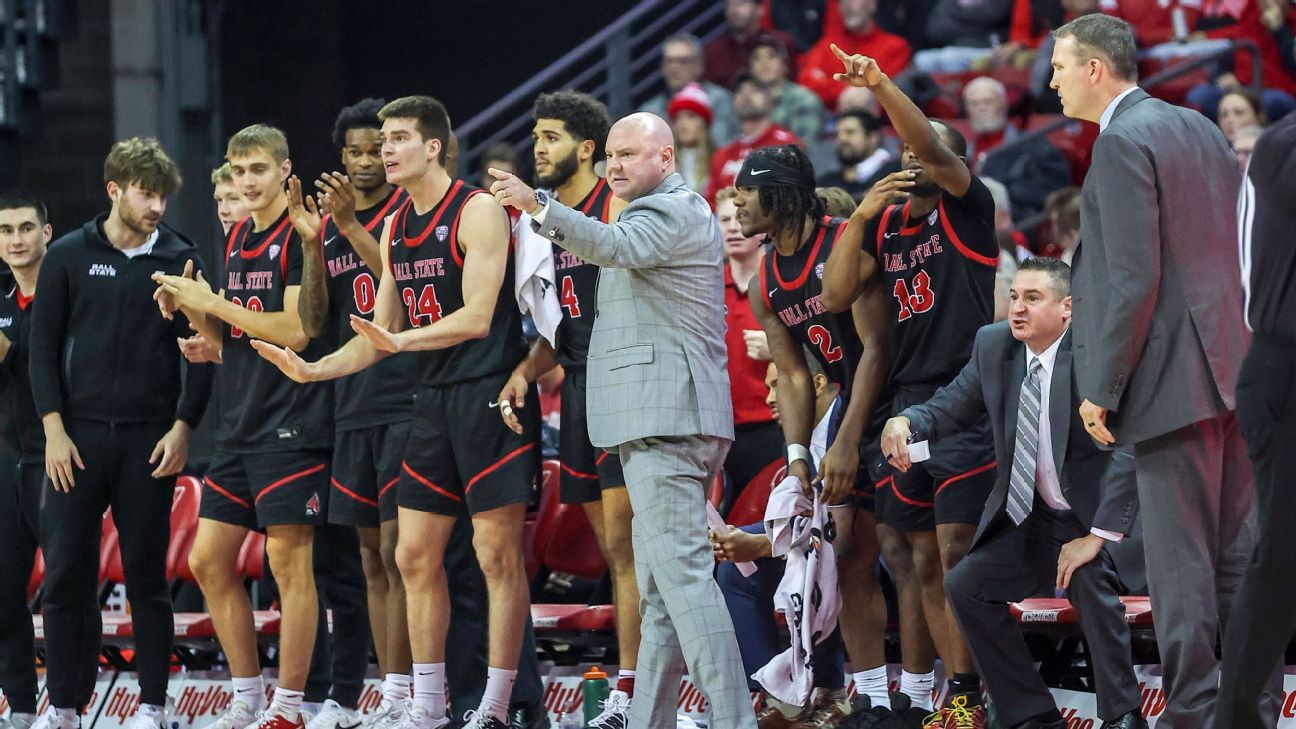
Ball State has fired men’s basketball coach Michael Lewis after four seasons, the school announced Saturday.
The Cardinals ended their season with an 85-69 win over Central Michigan in the regular-season finale Friday to finish on a four-game winning streak but still missed the Mid-American Conference tournament after posting a 12-19 (7-11 MAC) record.
“We are grateful to Coach Lewis for the passion and commitment he brought to our program the past four years,” athletic director Jeff Mitchell said in a statement. “We appreciate the time and effort he invested in our student-athletes.”
Lewis went 61-64 in his four seasons at the helm of the Cardinals. He won 20 games in Year 1, finishing fourth in the MAC, but was unable to replicate his early success. Ball State has finished 7-11 in conference play in each of the past three seasons, going 41-52 during that time.
Lewis was a longtime power conference assistant before being tapped to take over at Ball State in 2022. He spent time on staffs at UCLA, Nebraska and Butler, working under three different coaches during his time with the Bulldogs. He was an assistant coach at Eastern Illinois and Stephen F. Austin prior to Brad Stevens hiring him at Butler.
His coaching career began as a graduate assistant at Texas Tech under Bob Knight, whom he played for in college at Indiana. Lewis was the Hoosiers’ team captain and an all-conference performer as a senior in 1999-00.
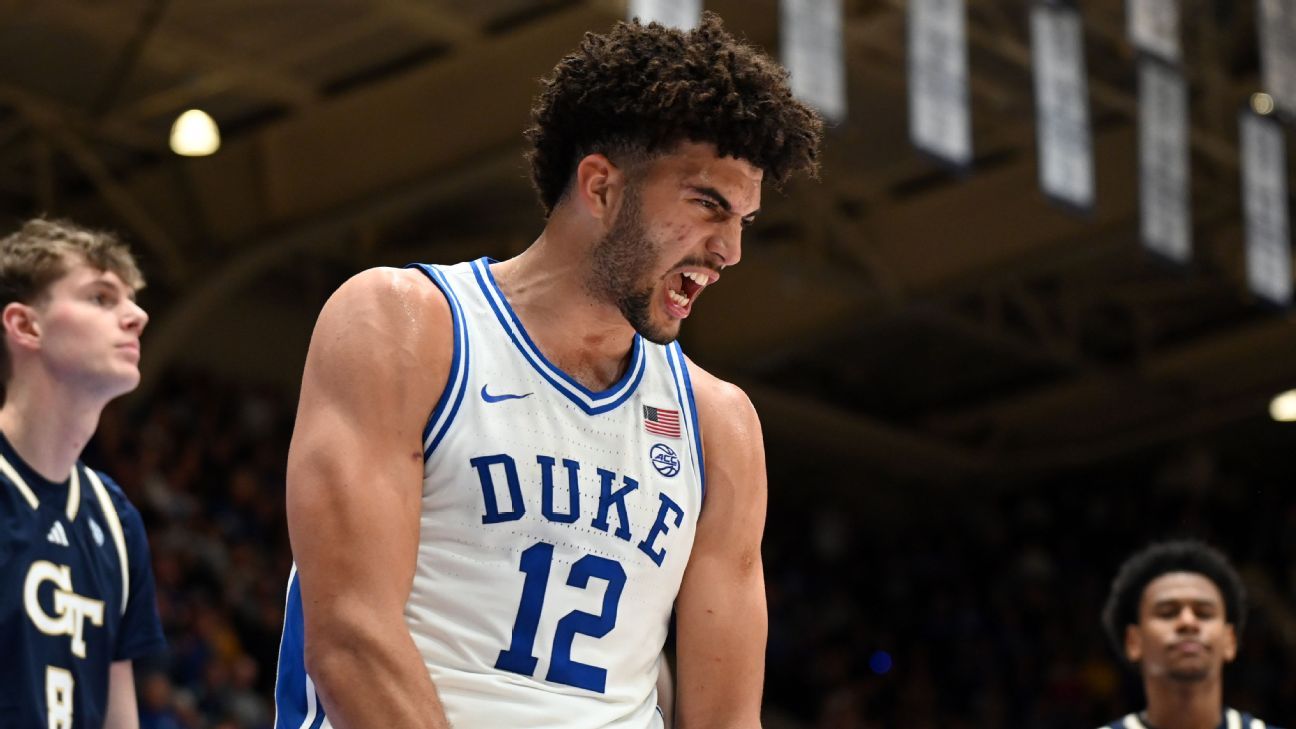
Had Michigan star Yaxel Lendeborg just seen a ghost?
His Wolverines — then the No. 1 team in the country — were used to overwhelming opponents on the glass and in the paint. Instead, they had just been outrebounded and outscored by Cameron Boozer and the No. 3 Duke Blue Devils, and Lendeborg couldn’t find the words to describe the superstar freshman.
“Um … man … um,” Lendeborg hedged when asked about Boozer’s play after the Feb. 21 game, shaking his head and trailing off.
Boozer has had that mystifying effect on every opponent he has faced when the stakes are high.
Clutch performances throughout the 2025-26 campaign have made him the clear favorite for national player of the year honors in a season that features arguably the most talented freshman class of the one-and-done era, not to mention multiple returning All-Americans. The gap between the 18-year-old and the country’s other elite players was widened in the win over Michigan, thanks to his game-altering 3-pointer and the draw of a key goaltending call in the final minutes.
Lendeborg was not the first star Boozer humbled this season. He had 24 points and 23 rebounds against Tennessee’s Nate Ament in a preseason win. Projected NBA draft lottery picks Darius Acuff Jr. and Thomas Haugh could only watch in awe as Boozer scored 64 points combined in wins over Arkansas and Florida, respectively. Boozer also bulldozed Jeremy Fears Jr. and Michigan State to the tune of 18 points and 15 rebounds. Meanwhile, the ACC is still trying to catch its breath from Boozer’s spectacular efforts throughout conference play, with rival North Carolina up next in Saturday’s regular-season finale (6:30 p.m. on ESPN) — a game that could seal Duke’s bid for the No. 1 overall seed in the NCAA tournament.
“We’ve been in a lot of big-time games, a lot of close games, against a lot of highly ranked teams or talked-about teams,” Boozer said about himself and his brother Cayden, also a five-star freshman for the Blue Devils. “So I feel like just being in a lot of those moments prepares you for this.”
Those who have watched the rise of Boozer — son of Carlos Boozer, a former NBA All-Star who won a title with Duke in 2001 — would agree. There is a common thread that ties his basketball career together, from middle school to present day: He’s a defensive dilemma not only because of his size, relentless motor, intellect and a skill set that has made a him a projected top-three pick in the 2026 NBA draft, but also because of the way the game seems to slow down for him in the highest-pressure moments.
Boozer won four state titles with Columbus High School at Florida’s highest level of prep basketball. He led the Explorers to a national title in 2025. His AAU team, the Nightrydas, won three consecutive Nike EYBL crowns. He was co-MVP of last year’s McDonald’s All American game. He won Gatorade Player of the Year twice, plus two gold medals with USA Basketball. That level of dominance means the same question opponents have always asked about Boozer will take center stage in March: How do you stop him?
Kansas’ Darryn Peterson might have the highest NBA ceiling in this freshman class. And BYU’s AJ Dybantsa is its most entertaining and explosive talent. But Boozer is, well, the winningest.
Every time championships have been on the line in his career, Boozer has won. And in the clutch moments of crucial games, he has delivered.
“It’s his greatest tool. It’s his greatest asset,” Miami head coach Jai Lucas, a former Duke assistant who recruited Boozer, said. “It’s like he’s been there before, and he’s been that way since he was in seventh, eighth grade. He’s always played with an older vibe, a veteran vibe about him.
“No moment, no situation is too big for him.”
Andrew Moran’s phone buzzed the night before a regional matchup in the 2022 Florida state playoffs.
As the Columbus High School coach was preparing his squad to face its next opponent, Boozer — a team captain as just a 14-year-old freshman — had watched the film and written a scouting report. He noted the hand signals the opposing coach had used for each set.
“It had descriptions of their plays and it had the time stamps in which it happened during the game. And at first I was confused,” said Moran, who is now an assistant at Miami. “I looked at it and I was like, ‘What the hell is he sending me?’ And then I realized, ‘Oh man, this guy is sending me detailed stuff.’ So for me, I was like, ‘This is another level of preparation at this age.'”
Boozer fell in love with the game early.
There is video of a seventh-grade Boozer blocking shots into the parents section of former NBA All-Star Chris Paul’s middle school combine in 2019, dribbling behind his back and throwing full-court passes. He already had a bag of skills players his age clearly couldn’t match.
“That’s a throwback. I think I had yellow hair back then,” Boozer said, referencing the gold hairstyle he sported at the time.
When the pandemic closed schools and gyms around the country, Boozer and his buddies played pickup games every day, sometimes in the rain, often on the full court at his house. That’s when his friends noticed a shift.
Dante Allen was Boozer’s AAU teammate then. He asked his father, Malik Allen, an assistant coach for the Miami Heat, to put their pickup crew through drills before playing 5-on-5. It was already evident Boozer had the tools to be a great player, but the drills showcased how his intensity was growing.
“I think that’s definitely when he started to get a lot better as a basketball player,” Dante Allen said. “I’d say every drill, he was very intentional with it. There was no point where he was going anything less than a 100% speed with it, just trying to be the best that he can. And then once we started playing pickup, it was just carrying over everything that we’d been doing, all the lessons he’d learned.”
During his freshman year at Columbus High School, Boozer’s combination of brains and brawn thrust his team into the state championship game against Dr. Phillips High School’s roster of now-Division I players Denzel Aberdeen (Kentucky), Ernest Udeh Jr. (Miami) and Riley Kugel (UCF). Boozer scored a team-high 17 points to help Columbus High capture its first state title.
“It was the biggest matchup that we had at that point, and he was just really poised and got us to the win,” Cayden Boozer said.
The victories piled up from there as Cameron’s game evolved.
Coach Mark Griseck figured his Windermere High School team would have its hands full against Boozer and a Columbus team seeking its fourth consecutive state title last year. Early in the game, he said, Boozer set the tone.
“The first time my point guard got hit with a ball screen from Boozer, he goes, ‘Man, it took me about three or four trips back down the court to get my senses back,'” said Griseck, whose team lost 68-36. “Because Boozer set a screen on him and it almost knocked him out. And it wasn’t illegal. It was just a screen by a tree.”
The opposing players in that lopsided affair noticed not only Boozer’s skills and dominance, but also the way he orchestrated the action on the court.
“He was anchoring his offense and not only anchoring it but calling out the plays,” said TJ Drain, a Windermere alum who now plays at Liberty. “He was very vocal with his teammates in encouragement, and that really stood out to me. Whether it was a good pass or a great cut or he’d say, ‘I know you’re going to finish the next one.'”
Boozer’s family background gave him a head start in basketball. His determination did the rest. To those who have witnessed his development, his success at Duke isn’t surprising. They saw the seeds of what he blossomed into a long time ago.
“He’s getting wherever he wants to,” Allen said. “It doesn’t matter if it’s a 7-foot, 300-pound player in front of him or if it’s a pesky guard in front of him, Cam is going to get wherever he wants, regardless. And I think the really hard part about that is that he can get wherever he wants to and then the fact that he’s going to make the right play.”
Exactly 32 hours before Notre Dame was set to tip off against Duke, Fighting Irish head coach Micah Shrewsberry was concerned about how his team would handle Boozer.
Those worries were justified. Notre Dame scored only 22 points in the first half. Boozer had 20 on his own. The Blue Devils went on to win 100-56.
“I’m pretty sure he and his brother were probably dominating when they were 8-year-olds, all the way through,” said Shrewsberry, who left the game in a walking boot after suffering an Achilles injury while he coached his team. “He plays as hard as anybody out there. There is no arrogance to him. It looks like winning’s really important to him, and he’s going to do whatever it takes to win.”
1:05
Cameron Boozer tallies a double-double in Duke’s win
Cameron Boozer scores 24 points and grabs 13 rebounds in Duke’s rout over Notre Dame.
Howard head coach Kenny Blakeney knows what it takes to win, too. He was on the Duke team that won its second straight national title in 1992. Having played with Christian Laettner, Grant Hill and Bobby Hurley, Blakeney also knows talent. And he realized Boozer is a lot more than that when his Bison played the Blue Devils in November, saying the “ginormous” Boozer plays like a “baby Jokic” — comparing him to three-time NBA MVP Nikola Jokic.
“If you watch the Duke game against us, Duke was closing out the game, running ball screens for a 6-foot-9, 250-pound dude to get downhill and make decisions,” Blakeney said. “He shoots it well. He’s an incredible passer. He can do whatever he wants to do on the low block.
“It’s like the criticism from what I hear is that he’s not bouncy enough. Well, you can’t stop the stuff that he can do, so he doesn’t need to be.”
It was only this time last year that Cooper Flagg was authoring one of the greatest freshman campaigns in the one-and-done era. And Boozer is arguably outplaying him.
Boozer is averaging more points (22.6 vs. 19.2) and rebounds (10.0 vs. 7.5) than Flagg, and nearly as many assists (4.0 vs. 4.2). Boozer is also a better 3-point shooter and is playing more minutes. His current 135.3 offensive rating would set a record in the KenPom era (since 2003-04) if it holds. And he has led Duke to its best start (28-2) since 1998-99, when that squad started 29-1 (and won 32 games in a row).
Boozer has an opportunity to end his career as one of the greatest freshmen of all time — not just at Duke. According to data scientist Evan Miya, Boozer is having the best season in college basketball since at least 2009-10, surpassing Zach Edey’s second consecutive Wooden Award season in 2023-24 (25.2 PPG, 12.2 RPG, 2.0 BPG).
“I just think he’s wired for it. He lives it,” Duke head coach Jon Scheyer said. “He’s incredibly prepared going into the games of understanding the different coverages he can see. I mean, we’ve seen so many different defenses, whether it’s doubles or single coverage or heavy plugs, whatever it is. I credit his preparation. I credit the fact that he just lives it every single day.”
At the next level, Boozer will compete against players who might have traits he lacks. He’s not an above-the-rim threat or walking “SportsCenter” highlight like Dybantsa and Peterson, who are projected to go ahead of him in the NBA draft. But Boozer is a complete player with a knack for navigating adversity to win games.
“One of his biggest intangibles is a winning pedigree. Championships, MVPs, gold medals, he’s won at every stop, at a high level, and is a primary contributor on a team that is in position to win it all in April,” one NBA executive told ESPN. “He seems to be about all the right things.
“His actions indicate that he cares about winning, playing the game the right way, handling his business with maturity and professionalism.”
On Saturday, Boozer will lead Duke into its regular-season finale against North Carolina, the ACC outright title already in hand. After that, the Blue Devils will ask him to do what he has done throughout his career: lead them to a championship — their first since 2015.
Accepting that responsibility is all Boozer knows. He always has done his best work when the stakes are highest.
“There is a lot that comes with being at Duke, but you wouldn’t come to Duke if you were afraid of that or didn’t want to be a part of that,” Boozer said. “It’s the biggest brand in college basketball. There is always a spotlight, always a target on your back, so you come to Duke to play in these moments — to be in these moments.”

ISLAMABAD: Eight Pakistani officials have been appointed to key committees of the International Tennis Federation and the Asian Tennis Federation for the 2026–2027 term, marking a significant achievement for Pakistan’s tennis community.
The appointments are being viewed as a recognition of Pakistan’s growing role in the development and governance of tennis at both regional and international levels.
Representation in ITF Committees
Pakistan’s top tennis player and President of the Pakistan Tennis Federation, Aisam-ul-Haq Qureshi, has been selected as a member of the ITF Athlete Commission.
Other Pakistani officials appointed to ITF committees include:
Sara Mansoor – ITF Coaches Commission
Syed Muhammad Ali Murtaza – ITF Juniors Committee
Pakistani Officials in ATF Committees
Several Pakistani representatives have also been appointed to committees of the Asian Tennis Federation:
Salim Saifullah Khan – Finance Committee, Development Advisory Group, Legal, Constitution & Ethics Committee
Ziauddin Tufail – Junior and Coaches Development Committee
Rashid Malik – Marketing and Sponsorship Committee
Shehzad Akhtar Alvi – Tournament Officiating Committee
Sara Mansoor – ATF Advantage All Committee
Muhammad Khalid Rehmani – Senior, Wheelchair and Beach Tennis Committee
Recognition for Pakistan Tennis
Speaking on the occasion, Salim Saifullah Khan said the appointments demonstrate the trust of international tennis bodies in Pakistani officials to contribute to the global development of the sport.
PTF President Aisam-ul-Haq Qureshi also described the development as a proud moment for Pakistan, saying it will strengthen the country’s role in international tennis and open new opportunities for the sport’s growth in the region.
PTF Secretary General Ziauddin Tufail congratulated the appointed officials and expressed confidence that they would represent Pakistan effectively at the international level.


Ball State fires Michael Lewis after 3 straight losing seasons

Paul McCartney's overlooked work

Timothee Chalamet’s ‘insensitive’ joke sparks response from Met Opera

India Us Trade Deal: Fresh look at India-US trade deal? May be ‘rebalanced’ if circumstances change, says Piyush Goyal – The Times of India

LPGA legend shares her feelings about US women’s Olympic wins: ‘Gets me really emotional’

Bobby J. Brown, “The Wire” and “Law & Order: SUV” actor, dies of smoke inhalation after reported fire

-
Business1 week ago
India Us Trade Deal: Fresh look at India-US trade deal? May be ‘rebalanced’ if circumstances change, says Piyush Goyal – The Times of India
-
 Sports1 week ago
LPGA legend shares her feelings about US women’s Olympic wins: ‘Gets me really emotional’
-
 Entertainment1 week ago
Bobby J. Brown, “The Wire” and “Law & Order: SUV” actor, dies of smoke inhalation after reported fire
-

 Fashion1 week ago
South Korea’s Misto Holdings completes planned leadership transition
-

 Fashion1 week ago
Texwin Spinning showcasing premium cotton yarn range at VIATT 2026
-
 Entertainment1 week ago
Pakistan’s semi-final qualification scenario after England defeat New Zealand
-
 Entertainment1 week ago
What’s new in Pokémon? Every game, update, surprise from 30th anniversary event
-
 Business1 week ago
Greggs to reveal trading amid pressure from cost of living and weight loss drugs