

Politics
Britain, Canada, Australia recognise state of Palestine

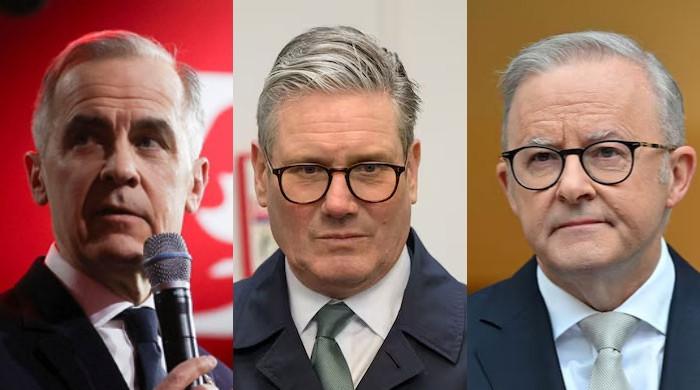
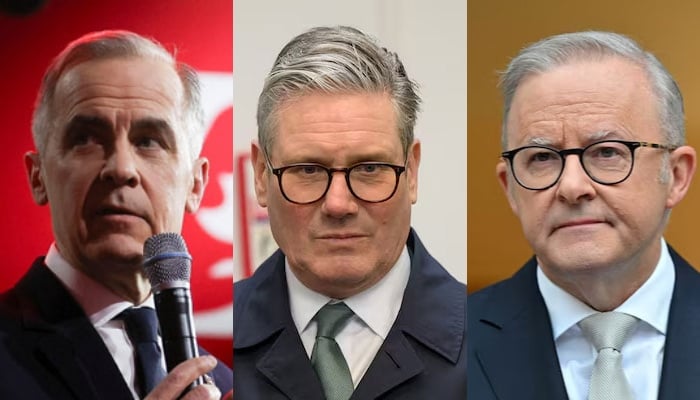
- Canadian PM offers partnership for peaceful future.
- Three major Western nations all boost Palestinian cause.
- Move sure to irk Israel and its closest ally US.
Britain, Canada, and Australia all recognised a Palestinian state on Sunday in a move borne out of frustration over the Gaza war and intended to promote a two-state solution but which is also bound to anger Israel and its main ally, the United States.
The three nations’ decision aligned them with about 140 other countries which also back the Palestinians’ aspiration to forge an independent homeland from the Israeli-occupied territories.
“Today, to revive the hope of peace for the Palestinians and Israelis, and a two-state solution, the United Kingdom formally recognises the State of Palestine,” said PM Starmer.
Canada and Australia also recognised a Palestinian state today and other countries are expected to do so this week at the United Nations General Assembly in New York.
In a statement, Canadian Prime Minister Mark Carney announced that his country now recognises the state of Palestine.
“Canada recognises the State of Palestine and offers our partnership in building the promise of a peaceful future for both the State of Palestine and the State of Israel,” said Carney.
Similarly, Australian Prime Minister Anthony Albanese said his country was recognising Palestine as part of an effort to revive momentum for a two-state solution that starts with a ceasefire in Gaza and the release of hostages held there.
In a move that put Starmer at odds with US President Donald Trump, Britain had issued Israel with an ultimatum in July saying it would recognise a Palestinian state unless Israel took steps to end the “appalling situation” in Gaza.
Husam Zomlot, head of the Palestinian Mission in London, called the decision a “long-overdue recognition” that “is not about Palestine, but about Britain’s fulfilment of a solemn responsibility”.
“It marks an irreversible step towards justice, peace, and the correction of historic wrongs,” he added in a statement.
Starmer had said in July that Britain would recognise a Palestinian state unless Israel reached a ceasefire with Hamas, let more aid into Gaza, made clear there would be no annexation of the West Bank, and committed to a peace process delivering a two-state solution.
“Since that announcement in July, in fact, with the attack on Qatar, a ceasefire at this point lays in tatters, and the prospects are bleak,” Lammy said, noting Israel had also moved forward with a settlement plan.
Starmer has been under pressure from many of his own lawmakers, angry at the rising death toll in Gaza and images of starving children.
Britin’s historic involvement
Israeli Prime Minister Benjamin Netanyahu said this month there will never be a Palestinian state.
Londoners voiced mixed reactions.
“A whole lot needs to happen and peace needs to come to that region,” said 56-year-old charity director Michael Angus. “This is the first step in actually acknowledging that those people have a right to have somewhere to call home.”
Retiree Stephen, who declined to give his last name, said the government “probably means well” but argued the move was misguided: “They are sort of abandoning Israel… and with Hamas, (they) are almost sort of supporting them.”
Lammy previously said Britain has a historic responsibility to facilitate a two-state solution, dating back to the 1917 Balfour Declaration, which pledged that the creation of a Jewish state would not infringe on Arab rights.
“While a welcome step, Britain owes Palestine far more than recognition,” said Victor Kattan, public international law professor and adviser to the “Britain Owes Palestine” campaign, arguing for an apology and reparations for engineering violent divisions.
The decision may mean the Palestinian Mission in London is upgraded to embassy status. It could also result in banning products that come from Israeli settlements in the occupied Palestinian territories.
‘Recognition brings independence closer’
Palestinian Foreign Minister Varsen Aghabekian Shahin said countries recognising a Palestinian state this week were taking an irreversible step that preserved the two-state solution and brought Palestinian independence and sovereignty closer.
“Now is the time. Tomorrow is a historic date we need to build on. It’s not the end,” Shahin told reporters in Ramallah.
“It is a move bringing us closer to sovereignty and independence. It might not end the war tomorrow, but it’s a move forward, which we need to build on and amplify,” she said, referring to Israel’s nearly two-year military campaign in Gaza.
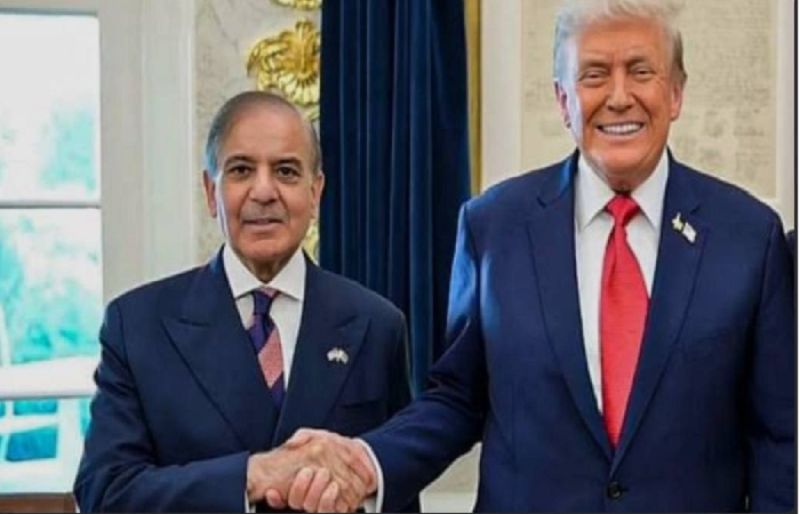
US President Donald Trump has reiterated his claim of having stopped a war between Pakistan and India, while also saying that Pakistan Prime Minister Shehbaz Sharif thanked him for saving at least 10 million lives.
He made the remarks at the renaming of Southern Boulevard to Donald J Trump Boulevard in Washington on Friday.
“In a year, we made eight peace deals and ended the conflict in Gaza. We have peace in the Middle East…We stopped India and Pakistan from fighting, two nuclear nations…The Pakistani Prime Minister said Donald Trump saved at least 10 million people, and it was amazing,” he said.
The US president further recalled that the Pakistani prime minister’s remarks were an honour for him.
Trump cited his administration’s foreign policy record and repeated assertions of brokering peace between the two nuclear-armed neighbours.
Trump has made similar claims multiple times since May 10 last year, arguing that US pressure helped defuse tensions between India and Pakistan.
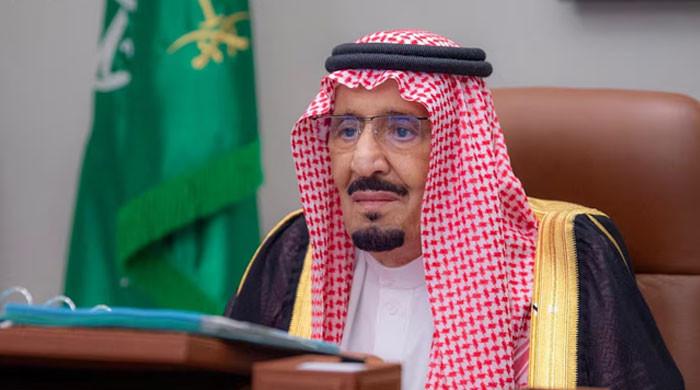
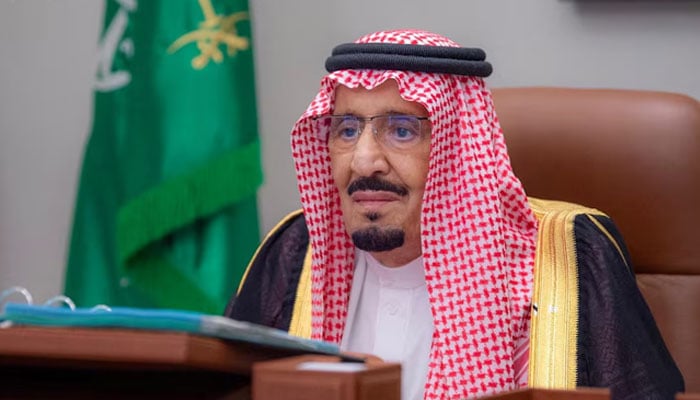
Saudi Arabia’s 90-year-old King Salman was discharged from hospital after undergoing medical tests in the capital Riyadh, the kingdom’s Royal Court said on Friday, adding that the results were “reassuring”.
The monarch “left the King Faisal Specialist Hospital in Riyadh today (Friday) after undergoing medical tests that proved reassuring”, the royal court said in a statement shared on state media, having announced his admission earlier in the day.
Saudi Arabia, the world’s biggest crude oil exporter, has for years sought to quell speculation over King Salman’s health.
He has been on the throne since 2015, though his son Mohammed bin Salman was named crown prince in 2017 and acts as de facto ruler.
The monarch’s well-being is rarely discussed, but he has been admitted for surgery and tests on multiple occasions in recent years.
In 2024, the Royal Court said he suffered from lung infections, which he recovered from.
He was hospitalised in May 2022, when he went in for a colonoscopy and stayed for just over a week for other tests and “some time to rest”, the official Saudi Press Agency reported at the time.
He was also admitted to hospital in March 2022 to undergo what state media described as “successful medical tests” and to change the battery of his pacemaker.
In 2020, he underwent surgery to remove his gall bladder.
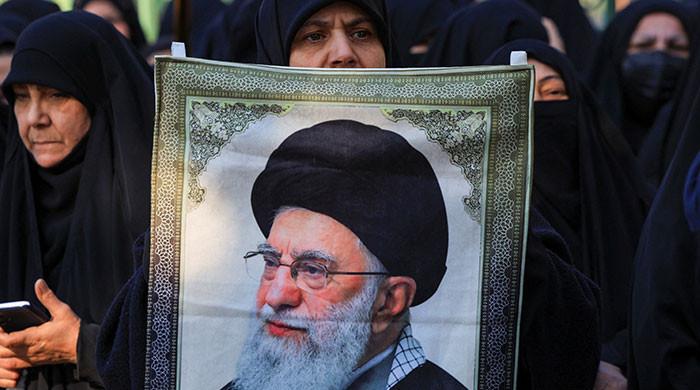
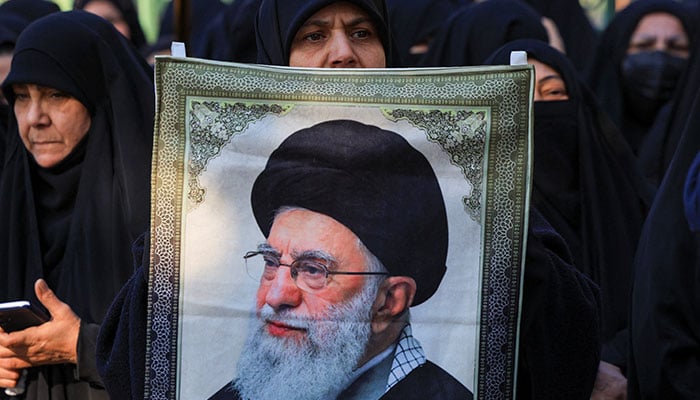
- Trump says Iran cancelled mass hangings of protesters.
- Thanks Tehran, calls move ‘greatly respected’.
- Claims more than 800 executions were scheduled.
DUBAI: US President Donald Trump has thanked Iran’s leaders for cancelling what he said were hundreds of planned executions of protesters after a crackdown.
Taking to his social media platform, he said the mass hangings had been called off and praised Tehran for the move, as deadly unrest across the country appears to be easing after a harsh crackdown.
US President Donald Trump, whose repeated threats to act had included a vow to “take very strong action” if Iran executed protesters, said Tehran’s leaders had called off mass hangings.
“I greatly respect the fact that all scheduled hangings, which were to take place yesterday (Over 800 of them), have been cancelled by the leadership of Iran. Thank you!” he posted on social media.
Iran has not publicly announced plans for such executions or said it had cancelled them.
The protests erupted on December 28 over economic hardship and swelled into widespread demonstrations calling for the end of present rule, culminating in mass violence at the end of last week. According to opposition groups and an Iranian official, more than 2,000 people were killed in the worst domestic unrest since Iran’s 1979 Islamic Revolution.
But several residents of Tehran reached by Reuters said the capital had now been comparatively quiet for four days. Drones were flying over the city, but there had been no sign of major protests on Thursday or Friday. Another resident in a northern city on the Caspian Sea said the streets there also appeared calm. The residents declined to be identified for their safety.
Prospect of US attack retreats
The prospect of a US attack has retreated since Wednesday, when Trump said he had been told killings in Iran were easing. But more US military assets were expected to arrive in the region, showing the continued tensions.
US allies, including Saudi Arabia and Qatar, conducted intense diplomacy with Washington this week to prevent a US strike, warning of repercussions for the wider region that would ultimately impact the United States, a Gulf official said.
Israel’s intelligence chief David Barnea was also in the US on Friday for talks on Iran, according to a source familiar with the matter, and an Israeli military official said the country’s forces were on “peak readiness”.
As an internet blackout eased this week, more accounts of the violence have trickled out.
One woman in Tehran told Reuters by phone that her daughter was killed a week ago after joining a demonstration near their home.
“She was 15 years old. She was not a terrorist, not a rioter. Basij forces followed her as she was trying to return home,” she said, referring to a branch of the security forces often used to quell unrest.
The US is expected to send additional offensive and defensive capabilities to the region, but the exact make-up of those forces and the timing of their arrival was still unclear, a US official said, speaking on condition of anonymity.
The US military’s Central Command declined to comment, saying it does not discuss ship movements.
Pahlavi calls for increased pressure
Reza Pahlavi, the US-based son of Iran’s last shah who has gained increasing prominence as an opposition figure, on Friday urged the international community to ramp up pressure on Tehran to help protesters overthrow the present setup.
“The Iranian people are taking decisive action on the ground. It is now time for the international community to join them fully,” said Pahlavi, whose level of support inside Iran is hard to gauge.
Trump this week appeared to downplay the idea of US backing for Pahlavi, voicing uncertainty that the exiled royal heir who has courted support among Western countries could muster significant backing inside Iran. Pahlavi met US envoy Steve Witkoff last weekend, Axios reported.
Iranian-Kurdish rights group Hengaw said that there had been no protest gatherings since Sunday, but “the security environment remains highly restrictive”.
“Our independent sources confirm a heavy military and security presence in cities and towns where protests previously took place, as well as in several locations that did not experience major demonstrations,” Norway-based Hengaw said in comments to Reuters.
Reports of sporadic unrest
There were, however, still indications of unrest in some areas. Hengaw reported that a female nurse was killed by direct gunfire from government forces during protests in Karaj, west of Tehran. Reuters was not able to independently verify the report.
The state-affiliated Tasnim news outlet reported that rioters had set fire to a local education office in Falavarjan County, in central Isfahan Province, on Thursday.
An elderly resident of a town in Iran’s north-western region, where many Kurdish Iranians live and which has been the focus for many of the biggest flare-ups, said sporadic protests had continued, though not as intensely.
Describing violence earlier in the protests, she said: “I have not seen scenes like that before.”
Video circulating online, which Reuters was able to verify as having been recorded in a forensic medical centre in Tehran, showed dozens of bodies lying on floors and stretchers, most in bags but some uncovered. Reuters could not verify the date of the video.
The state-owned Press TV cited Iran’s police chief as saying calm had been restored across the country.
A death toll reported by US-based rights group HRANA has increased little since Wednesday, now at 2,677 people, including 2,478 protesters and 163 people identified as affiliated with the government.
Reuters has not been able to independently verify the HRANA death toll. An Iranian official told the news agency earlier this week that about 2,000 people had been killed.
The casualty numbers dwarf the death toll from previous bouts of unrest that have been suppressed by the state, including in 2009 and 2022.


Bangladesh, Nepal agree to fast-track proposed PTA

Michelle Pfeiffer, Kurt Russell to lead ‘Yellowstone’ spinoff ‘The Madison’
Trump sanctions fail to stop inflow! Some Indian refiners step up Russian crude oil intake; Indian Oil, Nayara boost purchases – The Times of India

-

 Tech4 days ago
New Proposed Legislation Would Let Self-Driving Cars Operate in New York State
-
 Sports6 days ago
Clock is ticking for Frank at Spurs, with dwindling evidence he deserves extra time
-
Sports1 week ago
Commanders go young, promote David Blough to be offensive coordinator
-

 Fashion6 days ago
South India cotton yarn gains but market unease over US tariff fears
-

 Entertainment4 days ago
X (formerly Twitter) recovers after brief global outage affects thousands
-
 Fashion6 days ago
China’s central bank conducts $157-bn outright reverse repo operation
-
 Business1 week ago
SoftBank reduces Ola Electric stake to 13.5% from 15.6% – The Times of India
-

 Sports6 days ago
US figure skating power couple makes history with record breaking seventh national championship