

Business
British Gas took 15 months to refund me £1,500. It’s absurd


Dan WhitworthMoney Box reporter, London
 Beth Kojder
A woman says it is “absurd” it took British Gas 15 months to produce a final bill and refund more than £1,500 of credit, despite the energy ombudsman telling the firm to do so nearly one year ago.
Beth Kojder moved out of her one-bed flat in south-east London in October 2024 but complained to the ombudsman a few months later when the company did not send her a final bill or refund her credit.
In February 2025 the ombudsman decided in Beth’s favour and told British Gas to carry out her request. But it has no legal powers to force it.
Beth only received the offer of her money this week, just days before her case was due to be heard in a small claims court.
British Gas said it was “implementing the ombudsman’s remedy” for Beth, adding it was “very sorry” for how long it had taken.
Beth told the BBC the process had been “relentless and it’s tiring and it’s completely draining”.
When she moved out of her flat, she asked British Gas for a final bill using the meter readings she provided. She also asked it to refund her £1,700 less a few hundred pounds she expected to owe for her final bill.
“It’s a significant amount of money. Maybe not to British Gas but it is to me,” said Beth, who had her first baby in December. “That’s almost £2,000 I could have done with. Then there’s all the admin.”
Not legally enforceable
When she didn’t receive her final bill or refund she complained to British Gas.
But Beth said she “got nowhere” so took her complaint to the energy ombudsman.
It is an independent, impartial dispute resolution scheme that energy customers can complain to eight weeks after first complaining to their supplier.
Energy suppliers are legally obliged as part of their licence conditions to be a member of an independent customer dispute scheme.
But the energy ombudsman is not a statutory body and it cannot legally force suppliers to act.
In 2024, there were 93,000 complaints accepted by the energy ombudsman with around 70% of those cases ruled in favour of consumers, with suppliers required to take action within 28 days.
In the vast majority of cases, suppliers met that deadline, but in many thousands of cases the deadline was either missed or no action was taken at all.
It has prompted the Department for Energy to look at ways to strengthen the energy ombudsman saying the number of decisions not being implemented quickly enough was too high.

 Beth Kojder
In Beth’s case the ombudsman issued four resolutions in February 2025.
British Gas actioned three minor ones including a written apology and a goodwill credit of £100 for shortfalls in service.
But the decision also required British Gas to “complete the final billing of the account… based on the [meter] readings already provided by Beth.” But 11 months on and that still hadn’t happened.
Beth said the only option she had left was to go down a legal route via a small claims court.
“I just felt completely desperate and like it was the only option to try to get some traction,” she said.
 Beth Kojder
BBC Radio 4’s Money Box first contacted British Gas about this case in early December and, up until late Thursday night, Beth was resigned to having to go to the small claims court to get what she strongly feels she’s owed.
Then, British Gas came back with an offer of everything Beth was asking for, which she has happily accepted.
Beth said she was pleased to get the matter resolved but said she was frustrated that it had taken so many months to do so and felt British Gas had “completely failed” to engage with the ombudsman process.
“I still think the fact it’s taken this long to reach [a resolution] is absurd. And the level of intervention that’s been required on my part as a consumer is unbelievable.”
British Gas said: “We’re implementing the Ombudsman’s remedy and, together with Ms Kojder, are finalising a resolution to her claim. We appreciate this has been difficult for her and we’re very sorry for the length of time it has taken to put things right.”
Ofgem’s deputy director of retail compliance, Jackie Gehrmann, told the BBC that in the last year suppliers have paid out £27m in fines and voluntary payment agreements in consumer related issues.
“The message to suppliers is really, really clear. When the ombudsman makes a ruling they should implement that ruling as quickly as possible,” she said.
The DESNZ told the BBC: “We are strengthening the Energy Ombudsman so consumers can be confident that when it has ruled in their favour, action will be taken.”
Business
Asian stocks today: Kospi drops 1.6% as Middle East tensions weigh on markets – The Times of India

Asian stocks mostly fell on Friday as the ongoing conflict in the Middle East continued to unsettle global markets, while oil prices remained elevated despite some efforts to ease supply concerns.After a difficult week on trading floors, investors are heading into the weekend uncertain about when the US-Israel war on Iran and Tehran’s attacks across the Gulf region might end.Global equities have been battered by the crisis, which has pushed crude prices sharply higher and raised fears of renewed inflation that could weigh on the global economy. Oil prices have surged by about a fifth since last Friday, the day before the attacks began.Although markets saw a rebound in the middle of the week, analysts warned that the longer the conflict continues, the more pressure it will put on financial markets.“It is too soon to suggest that stocks have bottomed,” wrote IG chief market analyst Chris Beauchamp, as quoted by AFP.“Unless the war ends soon- and if anything a more intense conflict seems more likely- markets will struggle. Volatility remains elevated, which means we should expect plenty of two-way price action, but a continued decline for the moment seems likely, even with short-term bounces along the way.”The conflict also appears unlikely to ease soon. Iranian foreign minister Abbas Araghchi said Thursday that Iran was neither seeking a ceasefire nor negotiations with the United States.Asian markets largely followed losses on Wall Street, where all three main indexes ended lower despite staging late rallies.Seoul again saw sharp movement. The Kospi index, which plunged nearly 19 percent on Tuesday and Wednesday before rebounding more than nine percent on Thursday, fell another 1.5 per cent.Sydney, Singapore, Wellington, Manila and Jakarta were also down, while Tokyo, Hong Kong, Shanghai and Taipei managed gains.Concerns about rising crude prices have also intensified fears that inflation could climb again, potentially forcing central banks to reconsider plans to cut interest rates, with some analysts warning that rate hikes could even return.While Iran has not officially shut off the Strait of Hormuz, shipping through the key waterway has all but dried up. Around a fifth of the world’s crude supply and large volumes of gas normally pass through the strait.There was some relief in oil markets after US Interior Secretary Doug Burgum said officials were considering measures to ease the surge in prices.The White House also temporarily eased sanctions against Russia on Thursday, allowing Russian oil currently stranded at sea to be sold to India until April 3.Treasury Secretary Scott Bessent said the waiver was issued “to enable oil to keep flowing into the global market.”Earlier this week, US President Donald Trump pledged to protect ships passing through the Strait of Hormuz.Other countries have also taken steps to secure supplies. According to Bloomberg News, China has asked its largest oil refiners to suspend exports of diesel and gasoline amid fears of shortages.Despite the small pullback, oil prices remain high. By the end of trading Thursday, Brent crude had risen about 19 percent since last Friday, while West Texas Intermediate had climbed more than 22 percent, briefly crossing $80 a barrel for the first time since January last year.Investors are also watching the release of US jobs data later on Friday for clues about the strength of the world’s largest economy.At around 0230 GMT, oil prices were higher, with West Texas Intermediate rising 2.0 percent to $79.38 per barrel and Brent North Sea Crude up 1.5 percent at $84.10 per barrel. In equity markets, Seoul’s Kospi fell 1.6 percent to 5,497.51, while Tokyo’s Nikkei 225 rose 0.4 percent to 55,490.04. Hong Kong’s Hang Seng Index gained 0.9 percent to 25,557.59 and Shanghai’s Composite edged up 0.1 percent to 4,111.86. In currency trading, the euro strengthened to $1.1617 from $1.1604 on Thursday, while the pound rose slightly to $1.3367 from $1.3357. The dollar slipped to 157.51 yen from 157.55 yen, and the euro rose to 86.91 pence from 86.87 pence.

Last Updated:
Every $10 rise in global crude oil prices could shave around 0.5 percentage points off India’s GDP growth, say experts




India imports nearly 50 percent of crude oil from the Middle East
Every $10 rise in global crude oil prices could shave around 0.5 percentage points off India’s GDP growth, underscoring the country’s heavy reliance on imported oil and vulnerability to global energy volatility, Vandana Bharti, Research Head–Commodity at SMC Global Securities, told ANI.
In an interview with ANI, Bharti said escalating geopolitical tensions in West Asia pose a significant economic risk for India as crude prices climb and supply chains face potential disruptions.
“Every $10 increase in crude oil prices impacts India’s GDP by roughly 0.5%. We have already seen prices rise by about $10–$15 recently, and the economic impact will eventually reflect in growth numbers,” she said.
West Asia tensions driving oil prices higher
The surge in oil prices follows intensifying tensions involving the United States, Israel and Iran, particularly around the Strait of Hormuz — a critical maritime corridor through which roughly 20–25% of global oil shipments pass.
Bharti said the conflict has injected additional uncertainty into global energy markets and added what she described as a “war premium” to crude prices.
“It’s not just about the possibility of the Strait of Hormuz closing. Insurance costs and freight charges are rising, and shipments are being rerouted. All these factors add a war premium to crude oil prices and increase market uncertainty,” she said.
Risks extend beyond shipping
According to Bharti, the risks go beyond maritime routes and extend to energy infrastructure itself.
“Energy sites such as crude oil facilities and LNG plants are potential targets. There are also concerns about seabed cables and other critical infrastructure. So the threat is not only to energy supply but also to broader global trade and connectivity,” she noted.
Crude prices rise sharply
Oil prices have already surged as tensions intensified in the region.
Bharti said crude climbed from around $69 per barrel to nearly $78 per barrel within a week.
“In just one week we have seen prices move from about $69 to $78 per barrel. If tensions persist, crude could rise further to around $85–$87 per barrel in the coming days,” she said.
India’s reliance on Middle Eastern crude
India remains particularly vulnerable to such price shocks due to its heavy dependence on imported oil.
Bharti noted that roughly half of India’s crude imports come from the Middle East, and many domestic refineries are specifically configured to process Middle Eastern crude grades.
“India imports nearly 50% of its crude from the Middle East, so any disruption in the region directly impacts supply availability and pricing,” she said.
India maintains strategic petroleum reserves that can help cushion short-term disruptions, but Bharti emphasised that these are primarily meant for emergencies.
“We have reserves that can last about 25–30 days in emergency situations, but the structural dependence on Middle Eastern supply remains,” she said.
She added that even brief supply disruptions could trigger volatility across Asian financial markets.
“Even a two-week disruption could create significant volatility in Asia. We are already seeing pressure on currencies, equity outflows and rising economic uncertainty,” Bharti said.
Diversification may cushion the impact
Bharti said India could mitigate some risks by diversifying crude supply sources.
“Russia has been offering crude at discounted prices, so India may increase purchases from Russia or other suppliers if required. Adjusting supply chains and renegotiating trade arrangements can provide some relief,” she said.
She also pointed out that members of the Organization of the Petroleum Exporting Countries (OPEC) may attempt to stabilise prices, although security concerns could limit immediate production increases.
Impact on fertilisers and agriculture
Higher crude prices could also ripple into other sectors of the economy.
Bharti warned that rising energy costs may push up fertiliser prices and agricultural input costs, potentially affecting the upcoming kharif crop season.
“Higher energy costs could make fertilisers and farm inputs more expensive, which may increase the cost of cultivation for farmers,” she said.
Renewables gain strategic importance
Bharti added that the ongoing geopolitical tensions highlight the need for countries to accelerate the transition to renewable energy.
“Events like this are a wake-up call. Governments may increasingly prioritise renewable energy such as solar to reduce dependence on volatile fossil-fuel supply routes,” she said.
 Click here to add News18 as your preferred news source on Google.
Follow News18 on Google. Join the fun, play games on News18. Stay updated with all the latest business news, including market trends, stock updates, tax, IPO, banking finance, real estate, savings and investments. To Get in-depth analysis, expert opinions, and real-time updates. Also Download the News18 App to stay updated.
March 06, 2026, 08:16 IST
Read More

Chocolates, bars, gummies and drinks promise to help you sleep, but is the science behind them sound?
Source link


Mexico’s apparel imports down 9% on weak consumer demand

PCB Demands Public Apology Over ‘Fake News’ Targeting National Cricketers – SUCH TV

Save up to $600 With These Mattress Firm Coupons and Deals

What are Iran’s ballistic missile capabilities?

India Us Trade Deal: Fresh look at India-US trade deal? May be ‘rebalanced’ if circumstances change, says Piyush Goyal – The Times of India
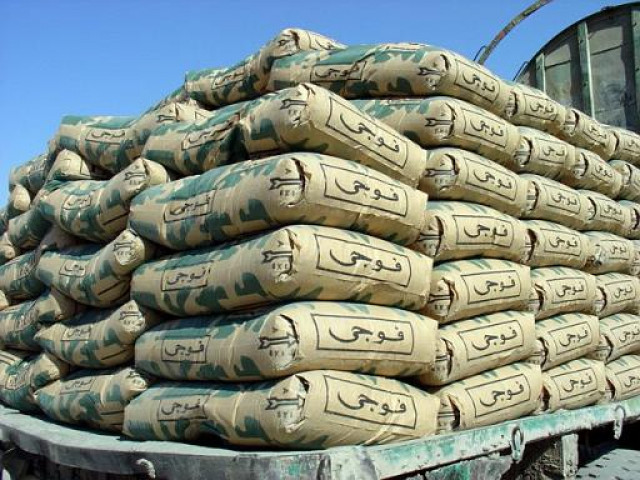
Attock Cement’s acquisition approved | The Express Tribune

-
Business1 week ago
Attock Cement’s acquisition approved | The Express Tribune
-

 Fashion1 week ago
Policy easing drives Argentina’s garment import surge in 2025
-
 Politics1 week ago
What are Iran’s ballistic missile capabilities?
-
Business1 week ago
India Us Trade Deal: Fresh look at India-US trade deal? May be ‘rebalanced’ if circumstances change, says Piyush Goyal – The Times of India
-

 Politics1 week ago
US arrests ex-Air Force pilot for ‘training’ Chinese military
-
 Business7 days ago
Greggs to reveal trading amid pressure from cost of living and weight loss drugs
-

 Sports1 week ago
Sri Lanka’s Shanaka says constant criticism has affected players’ mental health
-

 Sports7 days ago
LPGA legend shares her feelings about US women’s Olympic wins: ‘Gets me really emotional’